
Single Layer vs Lined Motorcycle Riding Jeans
This post contains affiliate links. As an Amazon Associate, we earn from qualifying purchases.
Single-layer jeans are a single shell of abrasion-resistant fabric. Lined jeans have a separate protective inner layer, often removable. For most riders, the choice comes down to your primary riding climate: single-layer excels in heat with superior airflow, while lined jeans add a windbreak and often higher abrasion ratings for cooler or long-distance riding.
That distinction in construction drives everything else — the protection level, the feel on your skin, and the seasons you can comfortably ride in. It’s not a minor detail. It’s the whole decision, which is why the choice between single layer vs lined motorcycle riding jeans is so fundamental.
What follows is a breakdown of the materials, the certified protection levels (and where those ratings can be misleading), and the specific riding scenarios where each type wins. By the end, you’ll know which construction fits your bike, your climate, and the miles you actually put down.
Key Takeaways
- Your climate picks the winner. Single-layer jeans are for warm weather; their breathability is unmatched. Lined jeans work for cooler mornings, fall rides, or anywhere you want a built-in windbreak.
- CE ratings are not the whole story. A CE AAA rating is the highest abrasion standard, but some AA-rated lined jeans can outperform some single-layer AAA jeans in independent abrasion tests. The liner itself is a second layer of material.
- Fit changes with a liner. Lined jeans often fit tighter through the thigh and calf when you’re standing. Always check the fit while seated on your bike, especially around the knees.
- Maintenance is different. Washing a lined jean usually means removing the liner first to preserve its protective qualities and prevent shrinkage. Single-layer jeans are simpler to care for.
- For versatile year-round use, buy both. A single-layer jean for summer and a lined jean for spring/fall covers more bases than one “all-season” pair that compromises on comfort.
What’s the Real Difference in Construction?
The core difference isn’t about style. It’s about layers. A single-layer riding jean is exactly that: one shell of fabric engineered to resist abrasion. Brands like Rev’It! And Klim use proprietary blends like Tencate Force® (65% Cordura®, 35% Dyneema®) or Karbonite® polyamide matrix to replace traditional denim. There is no separate inner lining for protection; the shell does all the work.
A lined riding jean adds a second, dedicated protective layer inside the outer denim. This liner can be fixed or removable. For example, the Klim K Fifty 2 uses a fixed Karbonite® mesh liner with Dyneema® fiber in key zones. The Rev’it! Lombard 3 features a removable Knox® Microlock AAA-rated liner. This inner layer is what earns many lined jeans their higher CE AAA or AA ratings.
The CE certification standard EN 17092 defines performance levels (AAA, AA, A) based on lab tests for abrasion, burst strength, and cut resistance. A CE AA certification per EN 17092-2:2020 requires the jean material to withstand a minimum of 2.5 seconds of abrasion on a 40-grit sanding belt under the specified test conditions.
The construction choice directly impacts everything you feel. The single-layer approach prioritizes airflow directly to your skin. The lined approach uses the inner layer as a barrier — against wind, against cold, and, crucially, against the road, which is the core of the single layer vs lined motorcycle riding jeans debate.
The CE Rating Breakdown: AAA, AA, A
CE ratings tell a specific, lab-tested story. AAA is the top tier for abrasion resistance under the EN 17092 standard, followed by AA, then A. It’s tempting to see a AAA label and assume unbeatable protection. The situation is more complex, and the construction type changes what that rating actually means on the road.
A CE AAA rating on a lined jean, like the Rev’it! Lombard 3 (certified per EN 17092-4:2020), means the combined outer shell and its removable AAA-rated liner passed the highest threshold. A CE AA rating on a single-layer jean, like the Klim Induction Pro, means that single shell of Karbonite® polyamide met the AA threshold on its own.
Here’s where sources disagree. Independent testing consortiums like MotoCAP have found that some single-layer AAA-rated jeans can actually score lower in real-world-style abrasion tests (time to hole formation) than some CE AA-rated, multi-layer lined jeans. The lab standard and real-world performance don’t always line up perfectly.
| CE Rating | Required Abrasion Resistance (EN 17092) | Typical Construction | What It Means for You |
|---|---|---|---|
| AAA | Highest threshold | Often lined (removable or fixed) | Maximum lab-rated abrasion protection. Ideal for high-speed road riding. |
| AA | 2.5 seconds minimum | Common in single-layer; also in lined | Solid protection for most street riding. The baseline for serious gear. |
| A | Lowest threshold | Basic reinforced denim | Better than street clothes, but a significant step down from AA. |
The rating is a starting point, not the finish line. When you compare a single layer vs lined motorcycle riding jeans, a well-fitted AA jean with properly positioned CE Level 2 knee and hip armor might offer better impact protection in a crash than a loose-fitting AAA jean. The armor matters as much as the fabric.
Heat vs. Chill: Weather Suitability Decides It
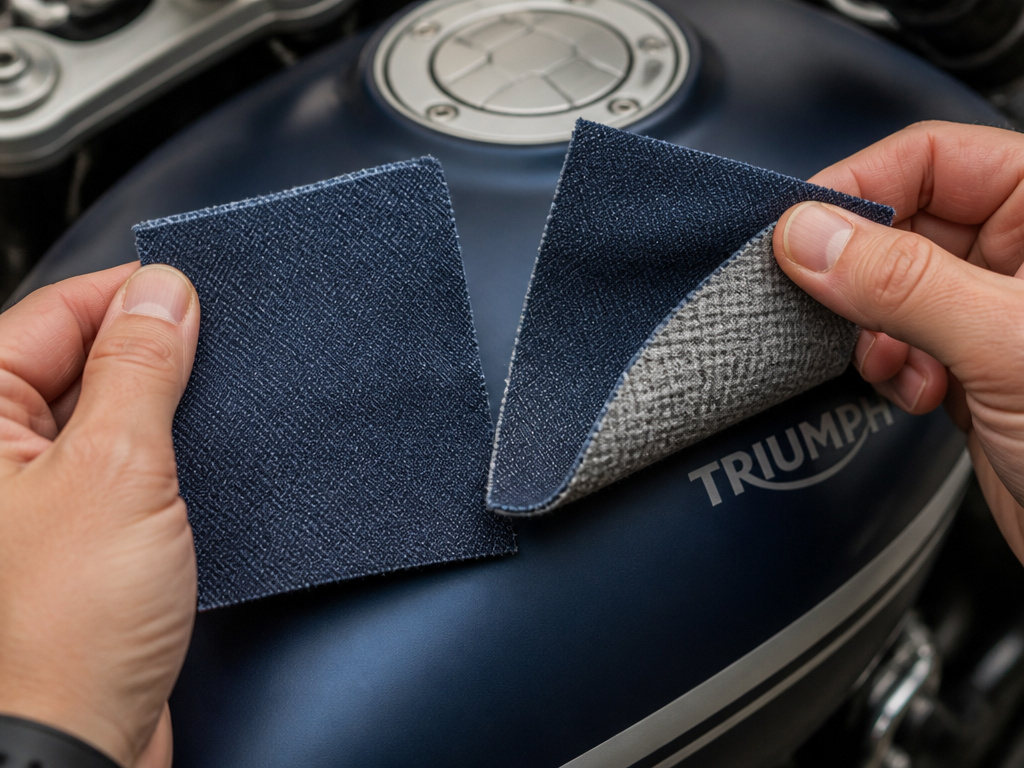
This is the most practical split. Your local climate and riding season should drive your choice more than any marketing claim about “all-season versatility.”
Single-layer jeans are warm-weather gear. Their advantage is breathability. Without an inner liner, air moves directly through the abrasion-resistant shell. Reviews, like one from Motorcycle.com on the Klim Induction Pro, note they “excel in warm weather due to exceptional breathability.” For summer commuting, touring in heat, or any ride where you’ll stop sweating, they are the clear choice.
Lined jeans are cool-weather companions. The inner liner acts as a windbreak. A review of the Klim K Fifty 2 on Motorcycle.com stated they provide “an effective windbreak” and are “ideal for cooler morning commutes or riding in fall/spring conditions.” That fixed or removable layer traps a thin layer of air, taking the bite out of a chilly highway.
Where this goes sideways: Marketing a lined jean as “all-season” in a hot climate. Owners on forums like ADVRider in the Southern U.S. Report that fixed liners in models like the K Fifty 2 become “unbearable in summer,” effectively making them three-season gear. Trust your climate, not the tag.
What if you want to ride a single-layer jean in cooler weather? You layer underneath. A thin merino wool or synthetic base layer adds warmth without sacrificing the single-layer’s moisture-wicking advantage. It’s more versatile than trying to make a lined jean work in a heatwave.
Material Tech: What’s Actually in the Fabric?
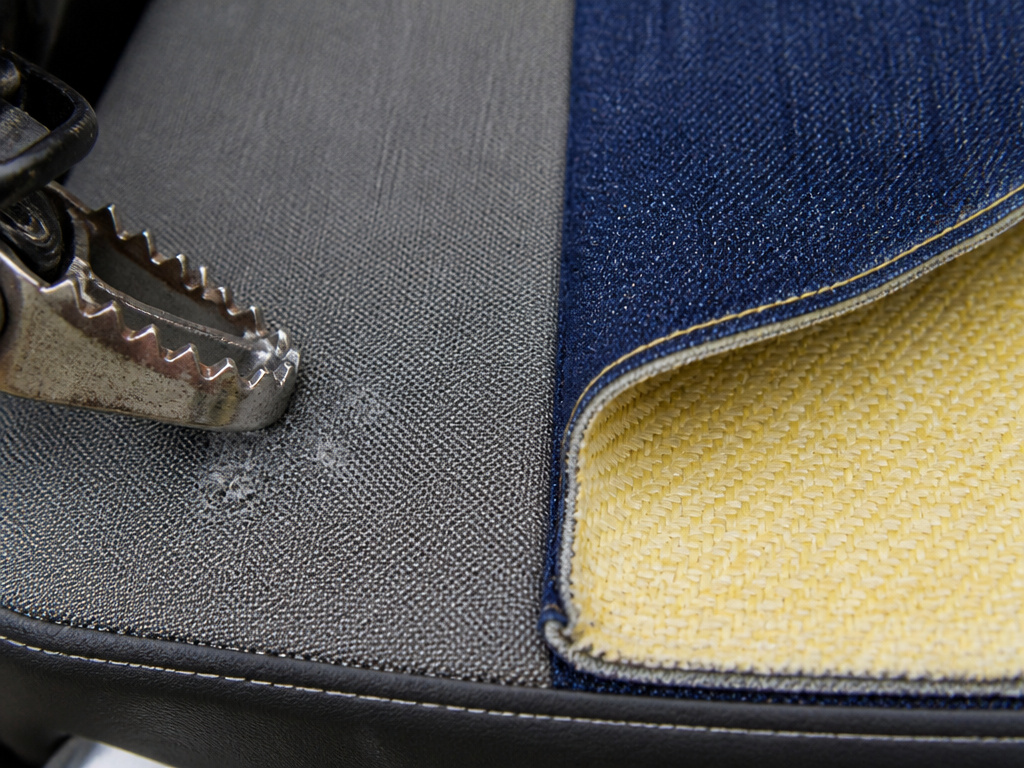
The words “Kevlar” or “Dyneema” on a tag don’t tell you much. It’s the specific blend and construction that matter. Both single-layer and lined jeans use advanced materials, but they apply them differently.
Single-layer fabrics are engineered to be tough throughout. They replace every thread of cotton denim with a synthetic alternative.
- Klim Induction Pro: Uses Karbonite® polyamide matrix.
- Rev’It! Sand 3: Uses Tencate Force®, a blend of 65% Cordura® and 35% Dyneema®. These materials aim to be abrasion-resistant while remaining flexible and breathable as a single sheet.
Lined jean fabrics often use a more traditional outer denim (sometimes blended with Cordura® for stretch) and then concentrate the high-tech material in the inner liner.
- Klim K Fifty 2: Karbonite® mesh liner with Dyneema® fiber blend.
- Pando Moto Capri Evo: Liner made of a Kevlar® blend attached via laser-cut perforations.
- Oxford Hinterland 2.0: Outer shell is 13.75oz waxed cotton canvas with a CE Level 1 certified removable liner.
There’s a noted disagreement among owners about the real-world durability of these proprietary materials. While marketed as highly durable for crash protection, some owners on forums report the exterior fabric of single-layer jeans can show pilling, snagging, or wear from regular use—like brushing against a bike’s rough footpeg—faster than expected. The crash protection is there; the daily scuff resistance might not be.
Comfort, Fit, and Day-to-Day Wear
How jeans feel in the saddle for hours is a deal-breaker. The construction dictates the fit profile and where you’ll notice compromises.
Single-layer jeans generally fit closer to regular jeans. They are less bulky through the thigh and calf because there’s no extra layer. The break-in period is shorter, and they drape more naturally when you’re off the bike. The trade-off is they offer zero insulation; on a 55-degree morning ride, you’ll feel the cold immediately.
Lined jeans add bulk. Even a thin mesh liner adds a millimeter of material through the legs, which can make the fit feel snugger, especially in the calf when you’re standing. You must try them on while seated in a riding position. Knee armor that sits perfectly when standing can migrate down your shin once you’re bent at the knee on the bike.
Common mistake: Buying for standing fit only. The seated riding position pulls fabric tight across the thighs and knees. If the jeans are tight standing up, they’ll be restrictive on the bike.
Breathability is the other major comfort divide. Sources clash here. A Klim review notes its Karbonite mesh liner “manages moisture and provides some airflow.” Another professional review from BikeSocial counters that any liner, mesh or not, significantly reduces breathability compared to a single-layer jean worn with a separate moisture-wicking base layer.
Protection Coverage and the Armor Factor
Abrasion resistance is one thing. Impact protection is another. The best jeans combine a good shell with well-placed, high-level armor.
Both single-layer and lined jeans come with pockets for knee armor (and often hip armor). The critical point is that the armor is independent of the CE rating for the fabric. You can have a AAA-rated jean with basic CE Level 1 knee pads, or an AA-rated jean with superior CE Level 2 armor.
The armor’s quality and placement are arguably more important than the fabric’s AA vs. AAA rating in a typical street crash. Your knee and hip are hitting the ground with force; the armor absorbs that energy. The fabric then resists the slide.
Lined jeans sometimes have an advantage here: the fixed inner liner can help hold the armor pockets in place more securely, preventing the knee pad from shifting during a crash. Some removable liners, like the one in the Rev’it! Lombard 3, even have the armor pre-installed in the liner itself, ensuring perfect placement every time you wear it.
The bottom line: don’t buy a jean for its fabric rating alone. Ensure it has compatible armor pockets and budget for CE Level 2 knee and hip armor as an upgrade. That combination does more for your safety than chasing a AAA tag on a poorly fitted pair.
Weight, Care, and Long-Term Value
The small details add up over years of ownership.
Weight: A lined jean is heavier. The Klim Induction Pro Jeans in size 32 weigh 680 grams. A comparable single-layer jean will be lighter, reducing fatigue on long, hot rides and feeling less cumbersome off the bike.
Care and Washing: This is a major differentiator. Single-layer jeans are simpler: wash cold, hang dry, avoid harsh detergents. Lined jeans require more steps. You almost always must remove the liner (and any armor) before washing. Washing them together can cause uneven shrinkage, damage the liner’s protective fibers, or degrade its bond to the outer shell. It’s an extra five minutes of hassle per wash cycle.
Durability: As noted, some high-tech single-layer fabrics may show cosmetic wear from daily use faster than thick denim. Lined jeans, with a traditional outer denim, might look more classic for longer, but the liner’s integrity after repeated washes is a question. Follow the manufacturer’s washing instructions religiously to preserve the protection you paid for.
Cost: There’s no clear winner. Advanced single-layer fabrics are expensive to produce, and high-end lined jeans with removable AAA liners also command a premium. You’re paying for technology and certification in both camps.
The Direct Comparison: Which One for Your Ride?
The final choice isn’t abstract. It’s about matching the jean to your actual riding life. This table cuts through the noise.
| Consideration | Single-Layer Jeans | Lined Jeans (Removable or Fixed) |
|---|---|---|
| Best For Climate | Warm weather, summer riding | Cool weather, spring/fall, variable conditions |
| Breathability | Excellent. Unmatched airflow. | Reduced. The liner is a barrier, even if mesh. |
| Wind/Cold Protection | None. Requires separate base layers. | Good. Liner provides a built-in windbreak. |
| Typical CE Rating | Often AA, sometimes AAA | Often AAA or AA (due to dual-layer system) |
| Fit & Feel | Lighter, less bulky, like premium jeans. | Snugger, more structured, can feel restrictive. |
| Maintenance | Simpler wash-and-wear. | More complex: liner removal, separate care. |
| Ideal Use Case | Hot-weather commuting, summer tours, urban riding. | Cool-weather commuting, long-distance touring, riders who want max abrasion rating. |
Think about your last season of riding. Was heat management your biggest gripe? Then single-layer is your answer. Did you find yourself cutting rides short because of the chill? Look at a lined option. For detailed information on specific models that fit these profiles, our guide on the best motorcycle jeans breaks down top picks in both categories.
How to find motorcycle jeans that look normal
Both single-layer and lined motorcycle jeans are designed to look like regular denim. The protective fabrics, whether a proprietary blend in a single-layer jean or a hidden inner liner, are integrated to maintain a casual appearance. Your choice won’t drastically change the look. Focus on the cut, wash, and detailing that match your personal style. Since the protective elements are not visible, you can prioritize fit and aesthetic preference just as you would with any pair of jeans, knowing the safety features are built into the construction.
Examples of single-layer and lined riding jeans
Single-layer jeans, like those using Klim’s Karbonite polyamide matrix or Rev’It!’s Tencate Force blend, are one shell of protective fabric. They are noted for superior airflow in warm weather and are ideal for city riding where abrasion resistance is key. Lined jeans add an internal protective layer. The Klim K Fifty 2 uses a fixed Karbonite mesh liner with Dyneema fiber, while the Rev’it! Lombard 3 features a removable Knox Microlock AAA-rated liner. Lined models can provide a windbreak for cooler commutes and are often recommended for extended highway riding.
Frequently Asked Questions
What are the best single layer motorcycle jeans?
The “best” depends on your priority. For maximum breathability in heat, look at the Klim Induction Pro with its Karbonite® fabric. For a balance of abrasion resistance and everyday style, the Rev’It! Sand 3 with its Tencate Force® (Dyneema/Cordura) blend is a strong contender. Always try them on with your riding posture in mind.
Can I wear lined jeans in the summer?
You can, but you’ll likely be uncomfortable in true summer heat (85°F+). The liner traps heat and moisture. If you must have one pair for all seasons, a lined jean with a removable liner gives you the option to strip it out on the hottest days, though the outer shell alone may not be as breathable as a dedicated single-layer jean.
How important is the CE AAA rating?
It’s important as a benchmark for high-speed abrasion resistance. However, don’t sacrifice fit or armor quality for it. A well-fitted AA jean with CE Level 2 armor is safer than a baggy AAA jean with poor armor placement. Independent tests also show some AA lined jeans can outperform AAA single-layer jeans in abrasion.
How should motorcycle jeans fit?
They should fit snugly but not tight when standing, with enough room in the thigh and knee to allow full movement when seated on your bike. The knee armor should center directly over your kneecap in your riding position. Our full motorcycle pants fit guide walks through the specific checkpoints.
Are riding jeans safer than regular jeans?
Exponentially. Even a CE A-rated riding jean offers vastly more abrasion resistance than standard denim, which can shred in milliseconds on pavement. When you add CE-certified armor at the knees and hips, the protection gap becomes enormous. For details on how this protection works, see our article on riding jeans protection.
The Bottom Line
Stop looking for one perfect jean. Buy for your dominant season. If you live where summers are long and hot, get a single-layer jean. Its breathability is a real, tangible benefit you’ll feel every ride. If your riding stretches into cool spring mornings and fall evenings, a lined jean’s built-in wind protection is worth the trade-off in bulk.
Ignore the “all-season” marketing unless the liner is fully removable. And no matter which you choose, budget for and install CE Level 2 knee and hip armor. That upgrade does more for your safety than any debate over AA versus AAA.
Finally, understand that this is gear, not fashion. Its job is to protect you. The right choice is the one you’ll wear every time you swing a leg over the bike, regardless of the distance. If a lined jean is too hot for your summer commute, you’ll leave it in the closet. And the best gear in the closet is no gear at all.
