
Full Face vs Modular Motorcycle Helmet: Which Is Safer?
This post contains affiliate links. As an Amazon Associate, we earn from qualifying purchases.
In the full face vs modular motorcycle helmet choice, a full face wins on crash protection because its chin bar can’t unlatch. A modular trades some of that certainty for flip-up convenience. ECE 22.06 never tests a modular’s locking mechanism, so check its SHARP latch score. A score of 100% is the only result SHARP calls high confidence.
The real argument sits in that unlatch risk, and the groups that test helmets don’t agree on how to measure it. SHARP, the UK government’s rating scheme, counts how often a modular’s chin guard stays locked across 30 impacts. Snell asks for the bar to stay locked through the first three.
What follows: where faces actually hit in real crashes, two AGV recalls traced to chin-bar parts, a weight argument between two reviews of the same Shoei, and the in-shop fit test I trust more than any label.
Key Takeaways
- In a UK study of 125 crashes, 50.4% of primary helmet impacts landed on the face. Chin-bar and upper-face hits did more harm than visor hits.
- Treat a modular’s SHARP latch score as a filter. SHARP reads anything from 70% to 99% as a lock that has the potential to open.
- Ride with the bar up only in a dual-homologated P/J helmet. Snell’s standard describes flipping it up for stops, not for riding.
- If the helmet shifts when you shake your head with the strap done up, its type and its rating stop mattering.
Does a Modular Chin Bar Actually Stay Shut in a Crash?
A good one stays shut, and you can check its SHARP latch score before you buy. The check is a single percentage that sits next to the star rating on SHARP’s site.
The SHARP latch score is the percentage of 30 impact tests, run at different speeds, in which a modular helmet’s lower face cover stays fully locked. ECE 22.06 tests a closed chin guard for strength, retention and impact protection, but conducts no test on the locking mechanism. SHARP publishes the score separately from the star rating.
The Gap in ECE 22.06
ECE 22.06 is the European approval printed on most helmet labels sold outside the US. Its testers check a closed chin guard for strength, retention and impact protection. According to the SHARP helmet latch score explainer, nobody tests the part that keeps the guard locked.
Read that twice.
Think of it as joinery. A full face chin bar is a glued mortise and tenon, one piece with the shell. A modular chin bar is a knock-down fitting: handy, and only as strong as the hardware holding it shut.
A fixed chin bar has no latch to load.
SHARP is upfront about one limit. So a low score flags the risk without naming the faulty part.
What the Percentage Means
SHARP gives its own reading of each score band. Here’s that reading next to what I do with it.
| SHARP latch score | What SHARP says | What I do |
|---|---|---|
| 100% | High confidence, not a guarantee | Shortlist it |
| 70-99% | Potential to open in a collision | Keep looking |
| Around 50% | Coin toss for face exposure | Skip it |
| Under 20% | Seen and reported; cause for concern | Walk away |
The middle row trips people up. At around 50%, SHARP says your brain still gets good protection, but there’s a 50% chance your face is exposed in a crash. A brain that’s protected and a face that isn’t makes a strange bargain for something you bought for the chin bar.
I won’t shortlist a modular below 100% on the SHARP latch score. SHARP itself calls 100% a strong indicator rather than a guarantee. If the top of the scale comes with a caveat, I’m not betting my jaw on anything lower.
Run every one of the modular helmets on your list through that filter before you look at graphics or comms mounts. SHARP lists the latch score separately, so you won’t see it baked into the stars.
Half of All Primary Helmet Impacts Land on the Face
In a UK study of 125 motorcyclists, 50.4% of primary helmet impacts hit the facial region. That one number explains why the chin bar argument matters at all.
The figure comes from the UK motorcycle collision head impact study by Baker and colleagues, published in 2026. They used Great Britain’s Road Accident In-Depth Studies (RAIDS) records, covering 353 riders. Investigators pinned down the main impact point for 125 of them.
Here’s what else turned up:
- Upper face and chin bar hits dominated visor hits when a facial impact caused a head injury.
- 12.2% of riders had facial injuries, and 4.4% had a facial fracture.
- 24.9% had a traumatic brain injury on the Mayo scale (a clinical grading of brain injury), with 19.0% moderate to severe.
- The authors want helmet standards and consumer ratings to add facial impact tests. Neither does that today.
A sample of 125 riders on one country’s roads is modest. Still, it’s the most current crash data on face impacts I can point you to, and it points straight at the chin bar.
Snell got there early. According to the foundation’s director, Snell’s 1980 standard was its first to test full-face chin bars. The current Snell M2025R helmet standard drops a weight onto the chin bar to force it toward the face. The bar fails if it deflects past a set limit.
That rigidity is the strongest case for a full face helmet. Its chin bar is molded into the shell, so a face hit loads the same structure that protects your skull. There’s no pivot in the way.
If you ride fast enough to need a chin bar, ride with it locked. A modular with the bar raised leaves your face as open as an open face helmet does.
Two AGV Recalls, One Weak Spot
Two recalls, two different failures, one location: the hardware a fixed chin bar never needed.
AGV’s parent company Dainese filed NHTSA recall report 25E-031 for the AGV Tourmodular DOT (E2206). The chin guard plate can break over time. The filing lists 2,278 helmets potentially involved. Dainese estimated that 1% carry the defect.
The cause sits upstream. Dainese said its plate supplier, Keentech Composite Tech Co. In China, appeared to lack proper quality controls. The recall covers the Multi MPLK and Solid MPLK versions.
Scale matters here too. Dainese found about 13 cracked plates worldwide, none on US helmets. An earlier recall had already started on 23 June 2023 in Europe, Asia and South America.
The 2018 case is odder. AGV recalled 325 Carbon Modular helmets, model 580, under campaign 18E-006. Glue on the chin-bar screws touched the polycarbonate chin base and broke it down early, so the base could detach in an impact. Dealers replaced the helmets free.
None of this singles out AGV. AGV’s failures happen to sit in public filings, and the lesson fits every hinged chin bar: more parts, more places to fail.
The 2025 filing names the warning signs plainly. You’ll see cracks in the chin guard plate mechanism, or the helmet feels loose and moves when you test it before a ride.
If you own a Tourmodular DOT (E2206), work through this in order:
- Read the serial on the label. Skip this and you’re guessing whether your helmet falls in the affected batch.
- Email [email protected] with your serial number and a photo of the label. Leave out the photo and the team has nothing to check your serial against.
- Inspect the plate before every ride until the recall is sorted. A visible crack, or any movement when you shake your head, means the helmet stays home.
- Use the free return kit Dainese sends. It repairs and returns the helmet, or replaces or refunds it if a repair isn’t feasible.
Easy to miss: Sold or gave away a Tourmodular? Skip it and the next rider wears that plate without ever hearing about the defect.
Long-term hinge wear is the blind spot here. I haven’t found published wear data on modular hinges from any source I’d trust. So I treat the pre-ride shake and look as routine on every modular, recalled or not.
Weight and Noise: Two Testers, One Helmet, Opposite Verdicts
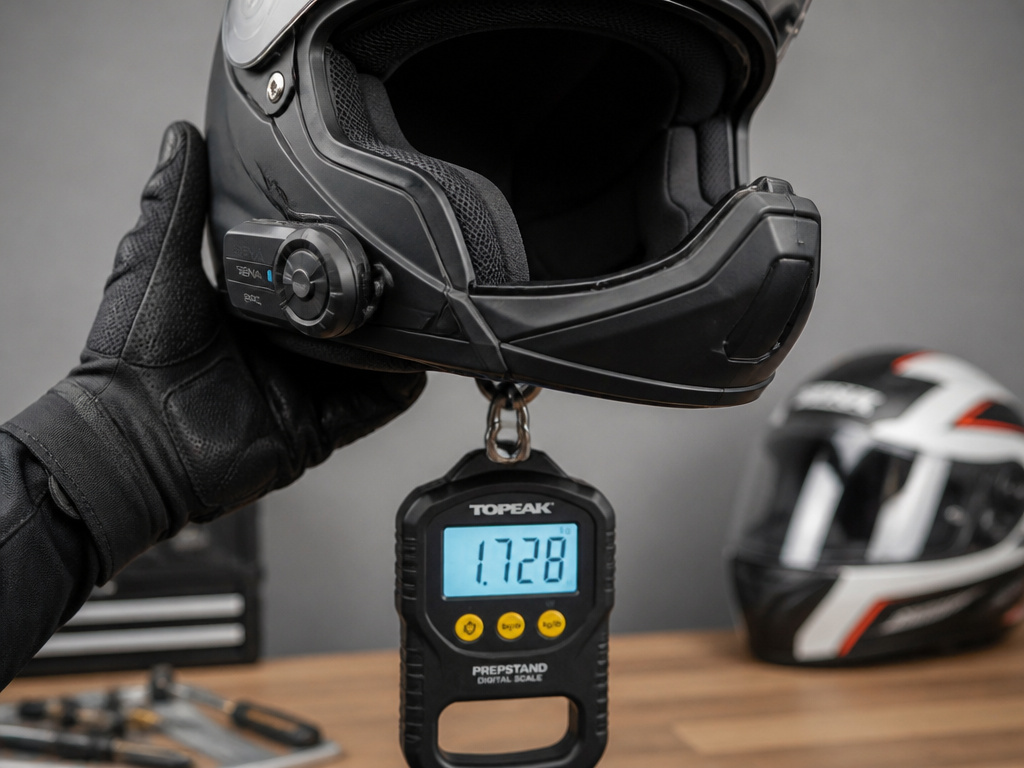
You’ll read everywhere that modulars are heavy. On the Shoei Neotec 3, two seasoned reviewers can’t even agree on that.
Rider Magazine wore a medium Neotec 3 for nine straight days and more than 4,200 miles. That meant 12 to 14 hours a day, from freezing to over 100 degrees F. The tester weighed it at 4 lb 1.5 oz, half an ounce lighter than his Neotec II. He said he forgot he had it on.
Cycle News went the other way. With a Sena SLR3 Bluetooth unit fitted, the reviewer’s helmet weighed 4.35 lb. After an hour, his neck muscles were sore.
| Source | Neotec 3 figure | Context |
|---|---|---|
| Rider Magazine, own scale | 4 lb 1.5 oz (medium) | 0.5 oz lighter than his Neotec II |
| Shoei claim, via Cycle News | 4.15 lb | 0.03 lb heavier than Neotec 2 |
| Cycle News, own scale | 4.35 lb | Sena SLR3 fitted |
Part of the gap has a plain cause. Cycle News notes the US Neotec 3 is DOT-only and weighs a little more than the ECE version sold in Europe. Add a comms unit and the number climbs again. Neither review weighs a matching full face, so treat any blanket “modulars weigh X more” claim with suspicion.
My take? Neck fatigue is personal. Ride it before you trust it.
Noise went Shoei’s way in both reviews. Rider called the helmet quiet and comfortable. Cycle News said wind noise stayed largely to a minimum at speed, and that the helmet flowed plenty of air.
One niggle from Rider: the new central shield lock occasionally won’t lock closed, and it doesn’t always give a clear click. That’s the click your gloved thumb feels for at the start of every ride. On this helmet, it isn’t always there.
Shoei sells a Comlink communicator for the Neotec 3 at $359. I’ll be straight: electronics are the weakest part of my testing, so judge the comms side on other reviews. For solo commuting I think a headset adds more distraction than it’s worth.
If your riding looks like Rider’s nine-day test, put the Neotec 3 on your list of touring helmets and judge the weight on your own neck. A medium-weight answer from a scale won’t settle it.
Can You Ride a Modular With the Chin Bar Up?
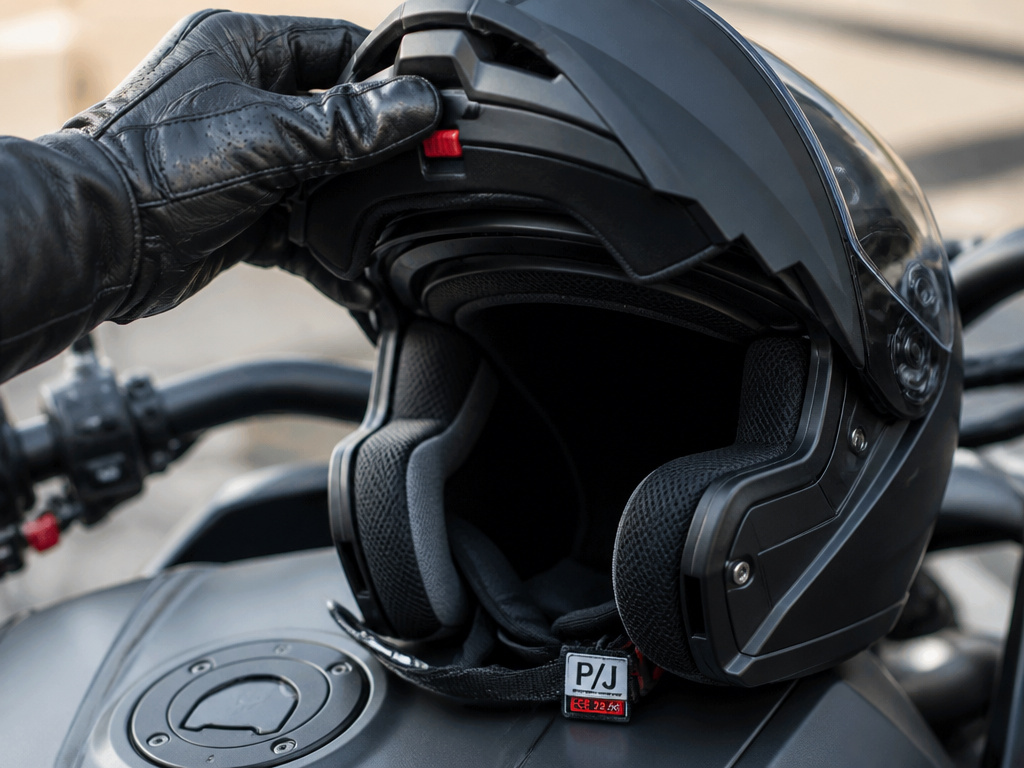
Only if the label says P/J, and I’d still keep it down at speed.
A P/J helmet has been approved with the chin guard down (P) and with it up (J). FC-Moto, a German retailer, describes the Schuberth C5 as the first helmet approved to ECE 22.06, with P/J double homologation. A helmet marked P only is approved for riding with the bar closed, full stop.
The sources split on what that approval means for you on the road:
- Billy’s Crash Helmets, a UK retailer that toured a SHARP lab, reports that SHARP always tests modulars with the guard down and locked. Its advice: riding a modular like a full face is fine, and a dual-homologated one suits guard-up riding.
- Snell’s M2025R describes the hinge as a way to adjust eyeglasses, eat, drink or talk “when not actually riding.”
I side with Snell. The UK crash data put half of all primary impacts on the face, and a raised bar leaves the face open. The mistake I see most with modulars is the bar flipped up through town because it’s warm out.
Where this goes sideways: Riding with the bar up because you’re stuck in hot traffic. SHARP’s drops and ECE’s chin guard tests both run with the bar closed. Raise it and the rating you paid for no longer describes your helmet.
US riders, check the label twice. FC-Moto states that ECE 22.05 and 22.06 helmets don’t comply with FMVSS No. 218, the federal DOT helmet standard. Cycle News reports the US Neotec 3 is sold DOT-only.
Glasses, Fuel Stops and Getting It On
Glasses are the modular’s best argument. Flip the bar, set your frames, close it, and you never drag the helmet over the arms of your glasses.
The same move covers a fuel stop, a drink of water or a word with a toll booth attendant. With a full face, all of that means unstrapping and lifting the whole helmet off. That trade is real, and on a long day it adds up.
The Shake Test I Run Before Reading Any Spec Sheet
Strap fastened, I shake my head side to side in the shop. If the helmet slides around on my skull, it goes back on the shelf.
I learned that the slow way. I once rode in a helmet that wobbled at highway speed, and my neck was stiff by the end of the ride from holding it steady. Now the shake test comes first, before I even look at the label.
Fit decides more of the full face vs modular motorcycle helmet argument than safety ratings do, because a helmet that moves can’t do its job. It comes in sizes XS to 2XL across three shells (XS-M, L and XL-2XL).
Modulars add one physical check a full face doesn’t need. The Neotec 3’s chin bar has two fully open positions. Practice closing it from each open position with gloves on.
Take this list to the shop:
- Strap it and shake it. Any slide means the wrong size or the wrong head shape, and it’ll wobble at highway speed.
- Close the chin bar from every open position while wearing your riding gloves. A bar you can’t seat with gloved hands gets left half-latched at a fuel stop.
- Look up the SHARP latch score for any modular before the salesperson gets to features. Skip it and you’re buying a latch on faith.
- Wear it as long as the shop will let you. A pressure point that feels mild at the counter gets worse after an hour on the road.
Once a helmet passes all four, start comparing the best modular helmets on comfort and noise. Never the other way around.
Full Face vs Modular Motorcycle Helmet by Riding Style
Snell certification settles the track question before you even start. Snell’s director says nobody has yet built a complete Snell-certified modular line in sizes S through XL.
| How you ride | My pick | Why |
|---|---|---|
| Track days | Full face | Snell rarely certifies modulars |
| Sport and backroads | Full face | Fixed chin bar, no latch |
| Daily commute in glasses | Modular, 100% latch | Glasses on without lifting it off |
| Long-distance touring | Modular, 100% latch | Talk and drink at stops |
| Mixed street and gravel | Dual-sport full face | Peak plus a fixed chin bar |
That last row is my underrated pick. A dual-sport full face with a peak handles a gravel detour without giving up the solid chin bar, and I don’t see enough riders wearing them.
Open face helmets sit at the far end of the helmet types list. I’d keep them on slow city streets and nowhere else.
Why Snell Barely Touches Modulars
Snell holds a modular to every full-face requirement and adds one more. In the director’s words, the chin bar must stay locked for the first three impacts. The written standard puts it as a release mechanism secure enough to prevent inadvertent opening in a crash.
Few have passed. Snell approved the LS2 FF394 Epic to its M2010 standard, but it didn’t recertify for M2015 and you can’t buy it now. Snell says it has invited modular submissions since the late 1990s.
Can you compare Snell’s three impacts with SHARP’s 30 drops? Honestly, no. They’re different tests with different goals, and I can’t tell you which is the tougher bar for a given latch.
Snell’s own fallback advice is refreshingly practical. If no Snell-certified helmet fits your needs, wear a DOT modular from a reputable company.
If you want one answer: buy a full face from Shoei or Arai, the two brands I reach for first, and start with the best full face helmets that fit your head. Pick a modular only if glasses, touring stops or a passenger make the flip-up worth a latch you have to trust. Then shortlist the Schuberth C5 or Shoei Neotec 3, and check the latch score yourself before you pay.
Which helmet breathes better, full face or modular?
The fact sheet has nothing measured on vents, fog or wind noise, so this comes down to how the two designs are built. A full face shell is one piece, which leaves fewer seams for wind and rain to find. A modular adds a hinge, a latch and a gap where the chin bar meets the shell. Each of those is a place where a draft or a drip can sneak in, especially as seals age.
The upside for a modular is that you can open the front at a stop and get fresh air right away. That helps on a hot day in traffic or a long fuel break.
In the shop, close the chin bar and listen for whistling while you turn your head. Run a finger along the seam and the visor seal to feel for gaps. Check that the vents slide with gloves on. Rain and cold are the real test, so ride a wet day before you decide a seal is good enough.
How did full-face and modular helmets develop?
The fact sheet gives only a few dates here, so this is a short story. Snell began testing chin bars with its 1980 standard, which tells you that protecting the lower face was already a concern by then. A full face chin bar is built as part of the shell, so it fits that approach naturally.
Modulars came later and brought a harder question: how do you prove a hinged chin bar stays shut when it matters? Snell has invited modular submissions since the late 1990s, and it now requires them to meet every full-face requirement. The release mechanism must also be secure enough to prevent inadvertent opening in a crash impact.
SHARP added its own latch score, since ECE 22.06 does not test the mechanism that keeps the chin guard locked. Newer standards keep closing the gap between the two designs, but the hinge remains the part to inspect.
Frequently Asked Questions
Are modular helmets better than full-face helmets?
They’re more convenient, and that’s their edge. For crash protection, a full face keeps a fixed chin bar with no latch to fail. A modular with a 100% SHARP latch score narrows that gap, though SHARP calls even 100% a strong indicator rather than a guarantee.
What are the disadvantages of a full-face helmet?
You have to unstrap and lift it off to drink, eat, talk at length or adjust glasses. Riders in glasses feel that most. The Cycle News reviewer who found the Neotec 3 too heavy still went back to his full face helmets, so weight isn’t automatically a full face problem.
Are modular helmets less safe?
The shell and liner can protect your brain well, but the chin bar adds a latch that ECE 22.06 doesn’t test. SHARP’s latch scores show some modulars stay locked in every test, and SHARP has reported others staying locked in fewer than 20%. Check the score before you buy.
Can I ride with a modular helmet open?
Only if the helmet carries P/J approval, which covers the bar both up and down. Snell’s standard describes raising the bar for stops, not for riding. With the bar up, your face loses the protection the closed-bar tests measured.
What should AGV Tourmodular owners do about the recall?
Check whether yours is a Tourmodular DOT (E2206) Multi MPLK or Solid MPLK, then read the serial number on the label. Email [email protected] with the serial and a photo of the label. Dainese repairs it free, or replaces or refunds it if a repair isn’t feasible.
Before You Go
One threshold covers most of this decision. If a modular’s SHARP latch score is under 100%, take it off your list, whatever the star rating or the graphics say. SHARP reads every score from 70% to 99% as a lock with the potential to open.
Your first step this week costs nothing. Put on the helmet you already own, do up the strap and shake your head hard side to side. If it moves, that’s your next purchase settled, regardless of type. If it’s a Tourmodular, check the serial too.
A concession: my long-distance miles are thinner than Rider Magazine’s nine-day test, and I’ve done little sub-freezing riding. If you tour all day across changing climates, weigh that review’s comfort verdict above my neck.
Bottom line: buy a full face if you ride sport, track or backroads; buy a modular with a verified 100% latch score only if glasses or touring stops make the hinge earn its keep, and keep the bar down whenever the wheels are turning.
