
How to Fix a Motorcycle Engine Overheating: Step-by-Step
This post contains affiliate links. As an Amazon Associate, we earn from qualifying purchases.
To fix a motorcycle engine overheating, stop riding immediately, let the engine cool, then diagnose the cause. The fix is either refilling coolant, fixing a leak, replacing a faulty thermostat, unclogging the radiator, or correcting a lean fuel mixture. Ignoring it melts pistons and warps heads.
The engine tells you it’s hot. The smell is faintly sweet, like burnt antifreeze, and the temperature gauge is pinned. Knowing how to fix a motorcycle engine overheating is critical because you have a short time before metal starts to warp.
What follows: the safe shutdown drill, a diagnostic path that splits for air-cooled and liquid-cooled bikes, and the model-specific quirks that break the standard rules of how to fix a motorcycle engine overheating, like the Honda GL1800 campaign and fanless dirt bikes in mud.
Key Takeaways
- Pull over immediately, riding another mile can warp the cylinder head.
- Never open a hot radiator cap. The superheated coolant will erupt and cause severe burns.
- For liquid-cooled bikes, low coolant is the #1 cause; for air-cooled, it’s often clogged fins or a lean mixture.
- The Honda CRF250X and similar fanless dirt bikes overheat quickly in mud, an optional fan is Honda’s fix.
- After a severe overheat, check the oil for coolant contamination before running the engine again.
Immediate Steps When Your Motorcycle Overheats
You smell it before you see the gauge. Pull over now. Do not try to “make it home.”
Turn the engine off. Do not idle it to “cool down.” An idling engine with no airflow is still generating heat. Put the bike in neutral and get it to a safe, flat spot off the road. Let it sit for at least 30 minutes. Do not touch the radiator or any coolant hoses.
Never open a hot radiator cap. The cooling system is pressurized. Opening it while hot releases superheated steam and coolant, causing severe burns. Wait until the engine is completely cool to the touch.
If you’re stranded in traffic and must move, use a very fine water mist from a bottle sprayed from a distance onto the radiator fins, not the engine block, as part of how to fix a motorcycle engine overheating. The goal is evaporative cooling, not thermal shock. A direct stream of cold water onto a scorching aluminum head can crack it. This is a last-resort move to gain a few hundred yards of limp-mode riding.
The Quick Diagnostic Flowchart
Most overheating fits into a few categories. This chart cuts the guesswork. Start at the top and follow the questions.
| Your Bike Is | First Check | If That’s OK, Check | Likely Fix |
|---|---|---|---|
| Liquid-Cooled | Coolant level in reservoir & radiator (cold) | Radiator fan operation (key on, temp up) | Refill coolant, replace thermostat, repair fan |
| Air-Cooled | Oil level & quality | Cylinder head & fin cleanliness | Top up oil, clean fins, adjust fuel mixture |
| Overheats in Traffic Only | Fan fuse & wiring | Thermostat opening temperature | Replace faulty thermostat |
| Overheats in Mud/Sand | Engine load at low speed | Cooling fan (if equipped) | Install optional fan, change riding technique |
| Overheats After Recent Work | Coolant system air bubbles | Hose clamp tightness | Bleed cooling system, tighten clamps |
The chart assumes basics are covered: you’re using the right coolant, the radiator isn’t packed with mud, and the water pump impeller isn’t sheared. If your bike fits the “Overheats in Mud/Sand” box, you’re likely on a fanless dirt bike like the 2006 Honda CRF250X. Honda’s manual states it has no cooling fan and will overheat quickly in those conditions. Their solution is an optional cooling fan kit.
Liquid-Cooled: Start with the Coolant
Nine times out of ten, a liquid-cooled bike overheats because it’s low on coolant. It leaked out, boiled over, or wasn’t filled right after service.
Check the overflow reservoir first. If it’s empty, check the radiator itself, but only when the engine is stone cold. Remove the radiator cap. The coolant should be right at the top. If it’s low, you’ve found the problem. Top it up with a 50/50 mix for aluminum engines. Using plain tap water corrodes the system and lowers the boiling point.
Where this goes sideways: Topping up without finding the leak. Coolant doesn’t just evaporate. If the level drops again within a week, you have a leak. Common spots: radiator seams, hose clamps, the water pump weep hole, or the cylinder head gasket.
If the coolant level is fine, move to the thermostat. It’s a valve that opens when the engine warms up, allowing coolant to flow through the radiator. If it’s stuck closed, the coolant circulates only inside the engine, a short loop that quickly overheats.
Testing a thermostat is straightforward. Pull it out (drain the coolant first). Suspend it in a pot of water with a thermometer. Heat the water. The valve should begin to open within the temperature range specified in your service manual. For a Yamaha VMX, that’s 80–84°C (176–183°F). If it doesn’t open, or opens late, replace it.
The radiator fan is next. With the bike idling and warmed up, the fan should kick on before the temperature gauge hits the red. If it doesn’t, check the fuse, the temperature sensor, and the fan motor itself. A simple 12v jumper wire from the battery to the fan connector tests the motor.
Finally, the water pump. Look for coolant dripping from the weep hole underneath the pump. A failed pump seal allows coolant to leak there. Internally, a plastic impeller can shear its drive pins, stopping circulation entirely. Replacing a water pump is a deeper job, but the weep hole clue is free.
Air-Cooled: It’s About Oil and Airflow
No radiator, no coolant. An air-cooled engine sheds heat through the cylinder head and block fins. Anything that insulates those fins or robs the oil of its cooling job causes overheating.
First, check the oil. Check both the level and the quality. Oil cools the bottom end. Dark, sludgy oil holds heat. Low oil level means less thermal mass to absorb combustion heat. Change it if it’s old, and always keep it at the full mark.
The fins must be clean. Mud, grass, and bug guts packed between the cooling fins act like a blanket. A quick brush or compressed air blast can significantly drop operating temperature. It’s the most overlooked fix.
The part nobody mentions: Engine lugging. An air-cooled engine run at too low an RPM in too high a gear builds heat fast. The solution is downshifting. Keep the revs in the meat of the powerband where combustion is efficient and piston cooling is optimal.
Lean fuel mixture is a stealth culprit. Too much air, not enough fuel burns hotter. Symptoms include overheating, popping on deceleration, and generally feeling “flat.” If you’ve recently changed the exhaust or air filter without re-jetting the carburetor or adjusting the fuel injection map, this is your likely cause. A mechanic with a gas analyzer can confirm it.
Model-Specific Failures and Official Fixes
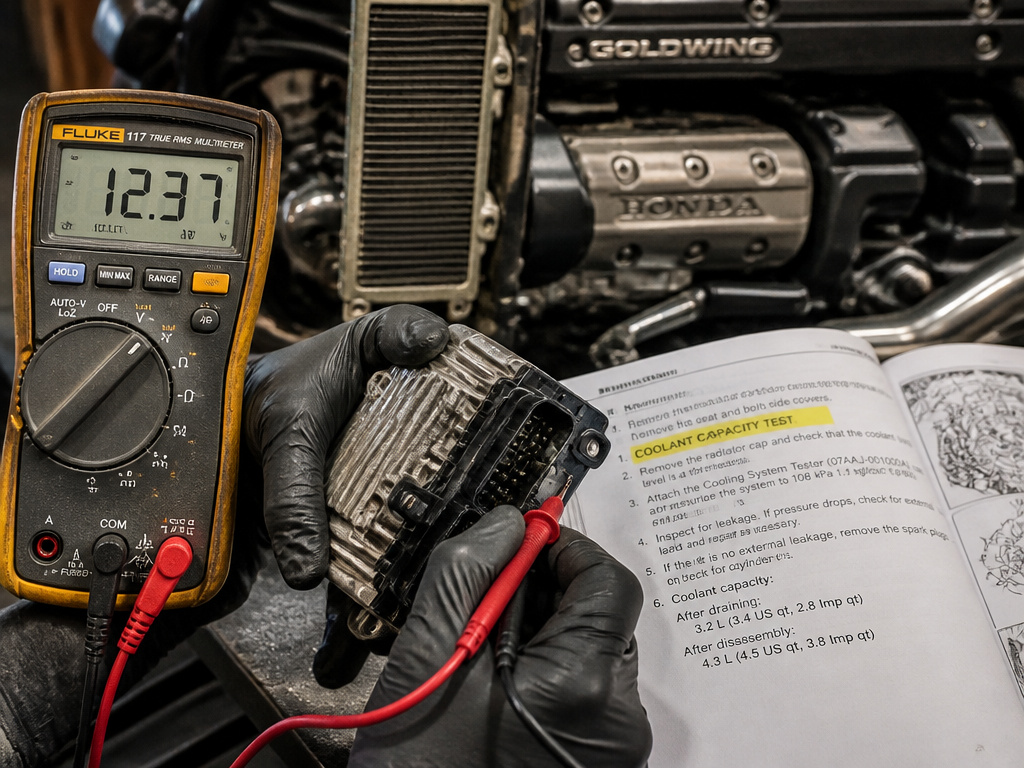
Sometimes the problem is a known design flaw, not a maintenance issue.
American Honda issued a Product Improvement Campaign for 2001-2003 GL1800/A Gold Wings. These bikes could show high coolant temperature readings during “prolonged low speed/low gear/high-ambient temperature conditions,” like parade riding. The official fix was an ECM replacement and a cooling system inspection. If you own one of these models, that campaign work should already be done, but it’s worth verifying with a dealer.
Some failures require a specific test. For that same GL1800 campaign, Honda’s procedure included a cylinder head coolant capacity test. If less than 560cc of water could be added before overflow, the cylinder head itself had to be replaced, a manufacturing defect no amount of flushing would fix.
Then there’s the altitude warning. The Honda CRF250X manual notes that running the bike below 5,000 feet (1,500 m) with high-altitude carburetor modifications installed can cause overheating. The jetting becomes too lean for the thicker air. If you ride at varying elevations, this is a real check.
These are service campaigns or documented failure modes, not traditional recalls. Finding them means digging into official service bulletins, like the NHTSA technical service bulletin repository, where manufacturers file technical notices.
What to Check After a Severe Overheat
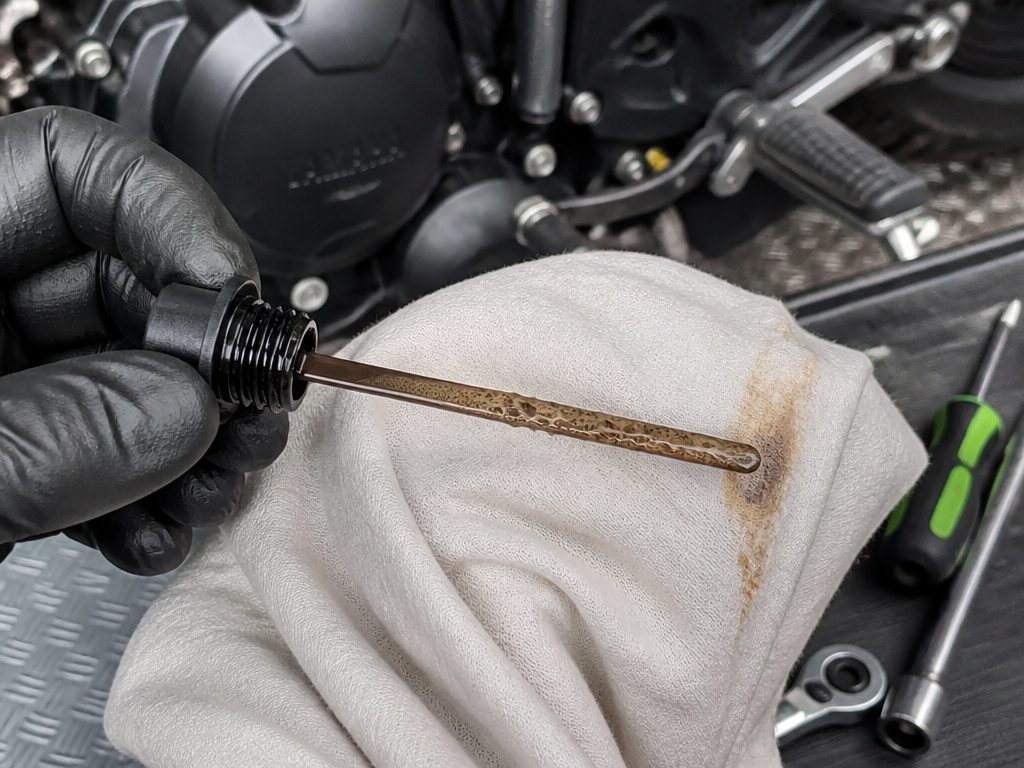
You got it cooled down and fixed the leak. Is the engine okay? Maybe not.
Severe overheating can warp the cylinder head, blow the head gasket, or scuff pistons. Before you ride it hard, do two checks.
First, check the engine oil. Pull the dipstick. Does the oil look milky or frothy? That’s coolant mixing with oil, a sure sign the head gasket is blown. Does the oil smell burnt, like a sharp, acrid scent? That’s evidence of extreme thermal breakdown.
Second, do a compression test. A significant drop in compression on one or more cylinders points to a warped head or damaged rings. This is a more involved check, but it’s the only way to know the internal damage before you rack up more miles on a wounded engine.
If either test fails, the repair escalates from a simple coolant change to a top-end rebuild. It’s a hard stop, but it beats seizing the engine five miles later.
Regular Maintenance is the Best Fix
Overheating is usually a failure of prevention. The service schedule exists for a reason.
Kawasaki’s maintenance chart for several models calls for cooling system inspection at the first 1,000 km (600 mile) interval. Coolant, hoses, and O-rings should be replaced every 3 years or 36,000 km (22,500 miles), whichever comes first. Honda recommends using the proper coolant for the model.
Stick to the book. It’s cheaper than a new engine.
This also means using the right fluids. The wrong coolant can gel and block passages. The wrong oil can foam and lose its cooling properties. Our guide on the best coolant breaks down the chemistry.
And don’t tamper with emissions systems in the name of “better cooling.” As that Kawasaki NHTSA technical service bulletin notes, violating the Clean Air Act by removing emission devices carries federal civil penalties up to $10,000 per violation. Those systems are part of the engine’s thermal design.
Frequently Asked Questions
What should I do first if my motorcycle overheats?
Pull over and shut the engine off immediately. Let it cool for at least 30 minutes without touching the radiator cap. If you must move, use a fine water mist on the radiator fins from a distance, not a stream of cold water on the engine.
Can an overheated motorcycle engine be fixed?
Yes, if caught early. The fix can be as simple as refilling coolant or cleaning radiator fins. If severe overheating has warped the cylinder head or blown the head gasket, the repair involves engine disassembly and is significantly more expensive.
What’s the most common cause of overheating?
For liquid-cooled motorcycles, it’s low coolant due to a leak. For air-cooled bikes, it’s often a combination of low engine oil, clogged cooling fins, or a too-lean fuel mixture from modifications.
How hot is too hot for a motorcycle engine?
It depends on the cooling system. A liquid-cooled engine’s normal operating range varies by model. Consistently running above the normal range is a warning. Air-cooled engines run hotter, but sustained excessive temperatures risk oil breakdown and metal damage.
Is it safe to use water instead of coolant in an emergency?
Only as a temporary get-you-home measure. Pure water boils at a lower temperature, freezes, and causes corrosion in aluminum engines. Drain and refill with proper coolant as soon as possible.
Before You Go
One rule cuts through all of this: heat is a symptom, not a cause. Find the leak, the clog, the bad sensor, or the lean mixture. The bike is telling you where to look.
If your bike overheated once and you fixed it, change the oil. You don’t know how much thermal life that oil lost. It’s a $30 insurance policy.
And if you ride a fanless dirt bike in technical terrain, just get the optional fan. Honda wrote the manual knowing you’d need it. Fighting the difference between cooling systems is a battle you can’t win with willpower. Cool it right, ride longer.
