
How Motorcycle Gear Reduces Injury Severity: Key Takeaways
This post contains affiliate links. As an Amazon Associate, we earn from qualifying purchases.
Motorcycle gear reduces injury severity by providing two distinct layers of protection: an abrasion-resistant outer shell that prevents road rash and soft-tissue wounds, and CE-certified impact armor that absorbs and distributes force to lower the risk of fractures. The data shows gear cuts upper-body open wounds by more than half, but its fracture prevention is less consistent and depends on multiple factors, including armor quality and impact energy.
That 35 kN number changes how you shop. The European EN 1621-1 standard allows armor to transmit up to 50 kN, but a 2017 hospital study found a high probability of impact injury at that limit. Most of the armor that actually worked transmitted under 35 kN, which is linked to a less than 20% probability of injury. This illustrates how motorcycle gear reduces injury severity. So a CE label isn’t a guarantee; it’s a starting point.
What follows is a breakdown of how each piece works, where the standards fall short, and the two specs that matter more than any marketing claim.
Key Takeaways
- A jacket cuts your risk of upper-body open wounds by more than half, from 57% to 26%, according to The Gear Study data.
- Look for armor with a transmitted force under 35 kN, not just a CE tag. A 2017 study found a high probability of impact injury at the EN 1621-1 standard’s 50 kN limit, associating a force below 35 kN with a less than 20% probability of impact injury.
- Outer shell materials like leather or cotton do not melt and have good abrasion resistance; nylon 6 can melt onto skin in under two seconds during a slide, so thermoplastic polymers should be avoided or separated from the skin with a non-melting layer.
- Gear is most effective at preventing soft-tissue injuries and road rash; evidence for preventing fractures in higher-speed impacts is less consistent.
- Always inspect your gear after any drop or crash; real-world failure rates for jackets and pants are near 30%, even at low speeds.
How a Good Outer Layer Prevents Road Rash
The first job of your gear is to stay between your skin and the pavement. This isn’t about fashion textiles. A 2011 analysis of real crashes, known as The Gear Study, put numbers to it: only 26% of riders wearing a motorcycle jacket sustained open wounds to their upper body. For riders without a jacket, that number jumped to 57%. That’s a straightforward, massive reduction in injury severity before you even consider impacts.
The mechanism is simple abrasion resistance. Your jacket and pants are a sacrificial layer. As the EU’s EN 13595 standard lays out, high-risk zones like shoulders, elbows, and knees need to withstand a laboratory abrasion test for a minimum number of seconds. The problem is quality control. A 2015 study found only 2 out of 10 jackets and 4 out of 11 pants met EN 13595’s minimum 4-second requirement, even though some were sold as certified. The certification can be on the label while the performance isn’t in the fabric.
Where this goes sideways: Assuming a CE tag on the garment means it will last through a slide. Lab tests show certified gear can still fail dramatically, and The Gear Study reported a 29.7% failure rate (a hole in the protective layer) for jackets in real-world crashes.
Material choice is your first defense. The MotoCAP manufacturer guide is blunt: avoid thermoplastic polymers like basic nylon in areas that contact skin. In a slide on asphalt at just 28 km/h, nylon 6 can generate enough heat to melt in 1.8 seconds. That molten polymer then drips into the wound. Leather and cotton don’t melt. High-performance synthetics like Cordura (nylon 6,6) have a higher melt point but should still be separated from the skin by a non-melting liner.
This is why fit is critical. Armor that swims in a loose sleeve will rotate away from your elbow before you hit the ground. A jacket that rides up your back exposes kidney belt territory to raw asphalt. When you try on a new jacket, get in a riding tuck. If more than an inch of your lower back is exposed, it’s not your size.
The Armor That Actually Works
Your outer layer handles the slide. The armor inside, the hard or soft pads at your shoulders, elbows, knees, and back, handles the hit. This is where the specs get critical in the how motorcycle gear reduces injury severity equation, and where the standard advice of “just get CE armor” starts to fray.
The European standard for this armor is EN 1621-1. It sets a maximum transmitted force limit of 50 kN. For years, that was the number to look for. Then researchers actually tested armor from crashed riders in a 2017 study. They found a high probability of impact injury at that 50 kN limit. The safer threshold was under 35 kN, which correlated with a less than 20% probability of injury.
| Transmitted Force (kN) | EN 1621-1 Standard | Injury Probability per 2017 Study |
|---|---|---|
| 50 kN | Maximum allowed limit | High probability of impact injury |
| 35 kN | Not defined by standard | <20% probability of impact injury |
| <35 kN | Exceeds standard | Lowest measurable risk |
The allowable transmitted force of EN 1621-1 may be too high to effectively reduce the probability of impact injury… A reduction in the maximum force limit would improve rider protection and appears feasible, as 77% of tested IP recorded a maximum force <35 kN. . Conclusion from the 2017 study in the International Research Council conference proceedings
The good news is that the study found 77% of the impact protectors they tested already transmitted less than 35 kN. The bad news is you can’t tell by looking. A CE Level 1 tag doesn’t tell you the kN number. This is where manufacturer transparency matters. Some brands, like Dainese and Alpinestars, publish more detailed spec sheets for their higher-end armor. If the information isn’t available, you’re trusting the brand’s internal standards, which, given that 83% of impacted protectors in the Australian study met the EN standard, is a bet, but not a certainty.
Bottom line: Look for armor with a transmitted force under 35 kN when information is available, and prioritize brands known for rigorous testing. Higher-end armor may be engineered to more rigorous protocols, but specific performance should be verified through available test data.
Where Gear Reaches Its Limits
Protective clothing isn’t a force field. The research consistently draws a line around what it can and cannot do. Understanding this line stops you from having false confidence in a 40 mph impact.
The strongest evidence for how motorcycle gear reduces injury severity is for preventing abrasions, lacerations, and other soft-tissue injuries. An EU project deliverable summarizing multiple studies states it clearly: gear “protects against light injuries (AIS 1 or 2) but not necessarily against more severe injuries.” It ensures protection against burns on soft tissue but is “less efficient in preventing fractures.”
Some studies appear to conflict. One 2017 hospital study (PMC3855950) found motorcycle jackets were not protective against thoracic, spinal, abdominal, or pelvic injuries or upper extremity fractures, while confirming they reduced soft-tissue trauma. Other analyses, such as the PIONEERS Project Deliverable, agree that the greatest benefits are in soft-tissue injury prevention, with benefits for fracture prevention not being consistently detected. The jacket’s abrasion-resistant shell prevented road rash. Its armor may not have been sufficient to prevent a collarbone from snapping under direct, high-energy impact.
Common mistake: Thinking a motorcycle jacket will save you from all broken bones. The evidence shows its superpower is saving your skin. Fracture prevention depends on armor quality, impact angle, and pure impact energy.
This is why your choice in protective gear is a system. Protective boots are an important part of a full gear system, though the fact sheet notes that protective clothing’s benefits for fracture prevention are not consistently detected. Motorcycle gloves can reduce the incidence of hand soft-tissue injuries, though one study found they were not protective against hand and wrist fractures. Your jacket alone can’t protect every part of you.
Furthermore, gear can fail. The same EU deliverable noted “relatively high protective clothing failure rates, even at estimated impact speeds below 40 km/h (about 25 mph).” This points to quality control issues. After any incident, even a low-side drop, you need to know how to inspect motorcycle gear for compromised seams, holes, or displaced armor.
The Helmet’s Role and the Gear You Wear With It
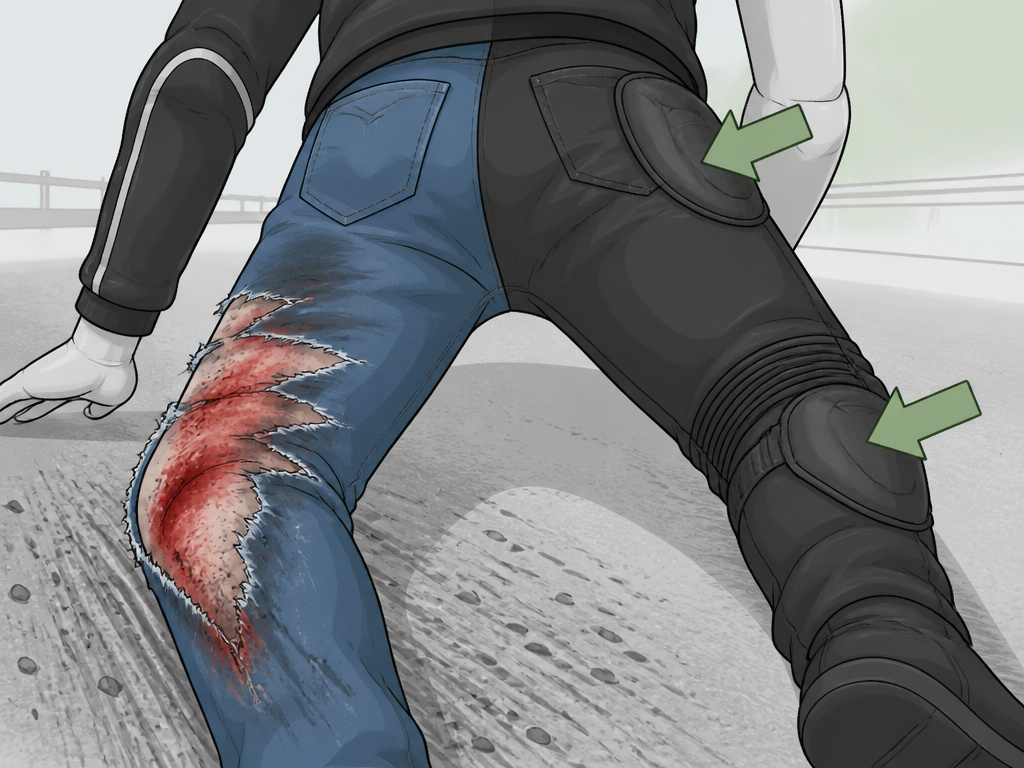
Helmets are the primary tool for injury reduction, credited with cutting rider fatalities by 40% and head injuries by 60%. In places like Australia with near-universal use, head injuries now make up only 8% of hospitalized rider injuries. This success story is why we wear them. But it also reframes the entire injury landscape.
When head injuries are managed, the focus shifts to the rest of the body. This is where the gear gap is most deadly. A rider in a full-face helmet, a armored jacket, but wearing jeans and sneakers has protected only their top half. In a crash, the body follows a natural trajectory: you often impact with your hands, knees, and feet first.
One NIH research on protective gear efficacy found that riding without protective clothing was associated with driving without a license, use of a light motorcycle, and alcohol consumption. The decision to forgo gear is rarely an isolated one. It’s part of a risk profile.
The takeaway isn’t judgmental. It’s practical. It changes the outcome from “survived with critical road rash and broken ankles” to “walked away sore but intact.” Understanding motorcycle accident statistics helps frame why this systemic approach matters.
How does not wearing gear affect insurance and liability?
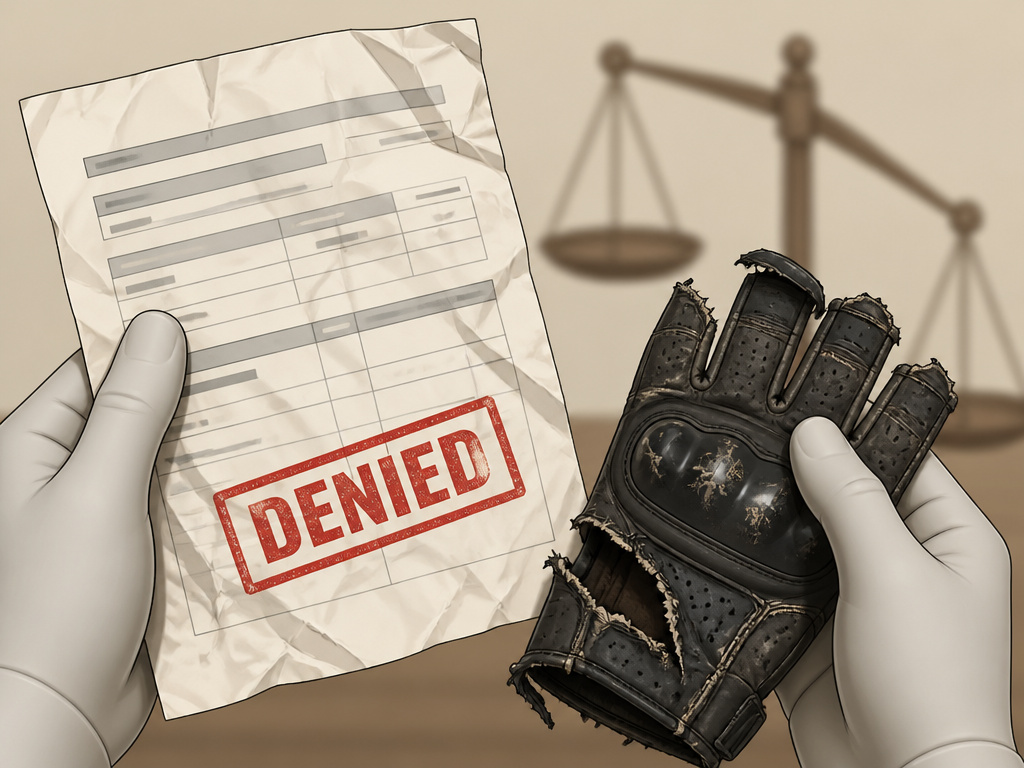
Riding without proper gear can complicate insurance claims and legal liability. Studies show a clear association between riding without protective clothing and other high-risk behaviors, such as driving without a license and alcohol consumption. From an insurer’s or court’s perspective, this pattern can be seen as demonstrating a disregard for personal safety, which may influence determinations of contributory negligence or fault. While gear primarily protects against soft-tissue injuries and open wounds rather than preventing all fractures, its documented role in reducing injury severity and hospitalization rates is a key factor. Choosing not to wear it can be interpreted as failing to take reasonable steps to mitigate harm, potentially affecting compensation outcomes after a crash.
Frequently Asked Questions
Does motorcycle gear really help?
Yes, decisively. Peer-reviewed research, including The Gear Study, shows gear significantly reduces injury severity, particularly for soft-tissue injuries like road rash and lacerations. For example, wearing a jacket cuts the rate of upper-body open wounds by more than half. Its effectiveness against fractures is more dependent on the quality of the impact armor inside.
The core idea is that helmet materials degrade over time and with exposure to sweat and UV light, and any impact can compromise the foam liner’s integrity.
This highlights the critical importance of defensive riding, high-visibility gear, and assuming you are not seen by other drivers.
How do I know if my armor is still good?
Inspect it visually and manually. Look for cracks, deep gouges, or crumbling in hard armor. For soft armor, check if it has permanently compressed or lost its resilient “bounce back.” Any armor that has been impacted in a crash should be replaced. The foam is designed to compress once to absorb energy; it cannot do so effectively a second time.
The Bottom Line
Motorcycle gear reduces injury severity through a two-part mechanical strategy: abrasion resistance and force distribution. The outer shell saves your skin. The armor inside, ideally rated for under 35 kN of transmitted force, saves your bones.
The one rule most guides skip: if your gear has been through a slide or shows signs of damage, its performance is compromised. Synthetic materials degrade, and armor has a one-hit lifespan. Newer gear built to updated standards like EN 13595 for abrasion and EN 1621-1 for armor represents the best available technology. Your helmet is your most important piece, but your jacket, pants, gloves, and boots are what determine whether you leave the hospital the same day or six weeks later.
Fit first, features second. Gear that doesn’t stay in place during a crash might as well be left in the closet.
