
What Motocross Gear Do You Need: The 10 Non-Negotiables
This post contains affiliate links. As an Amazon Associate, we earn from qualifying purchases.
Essential gear includes a certified helmet, goggles, a jersey, pants, gloves, boots, and a chest and back protector, with knee protection, a neck brace, and a base layer also recommended for full safety. The FIM’s 2026 technical regulations make a chest and back protector compulsory for all riders and require riders to wear either a suit or trousers and a long-sleeve shirt; handlebar levers must have ball ends at least 16mm in diameter. KTM and Yamaha manuals tie maintenance intervals and bike longevity directly to whether you use the machine for its intended purpose, motocross, enduro, or trail riding.
That last clause, intended use, is where most off-road gear guides stop. They list the helmet and boots and call it a day. The actual decision is whether your gear matches the abuse your specific type of riding delivers. A KTM 450 EXC-F manual states the bike is not for motocross use; using it on an MX track may increase wear on both the bike and your protective gear. This raises the question: what motocross gear do you need? Your gear isn’t just apparel. It’s wearable maintenance.
What follows: the ten required items that answer what motocross gear you need, the two FIM rules that override all marketing, and where to spend your first dollar if your budget is tight. We’ll use the OEM service schedules and the governing body’s rulebook as the baseline, not a product catalog.
Key Takeaways
- The FIM 2026 regulations make a certified chest/back protector and full trousers with a long-sleeve shirt compulsory for all motocross, sidecar, and quad riders.
- Fit your helmet first, a mid-price ECE 22.06 helmet that fits perfectly is safer than a top-tier model that shifts on your head during a jolt.
- Knee braces beat guards for aggressive riding; they limit hyperextension and twisting, which is the common failure in off-axis impacts.
- The FIM recommends against suits fully constituted of nylon or spandex (e.g., Lycra, Elastane) to avoid degradation from abrasion, though many popular base layers marketed to riders are made from such synthetic, stretch materials.
- Maintain your gear with the same schedule as your bike; clean your air filter every race (about 2.5 hours) as Yamaha recommends, and clean your goggles regularly to maintain performance.
The 10-Piece Motocross Gear Checklist (And What Happens If You Skip One)
Forget the flashy jersey. Start with the parts that meet a standard or have a measurable job. The FIM rulebook and OEM manuals treat gear as part of the machine’s safety system, not fashion.
Before you start: Motocross involves high-impact falls, flying debris, and extreme heat. Riding without certified gear risks skull fracture, degloving injuries, broken ankles, and burns from exhaust contact. A single crash without proper protection can cause permanent injury.
1. Helmet: The Single Most Important Purchase
Your helmet is a wearable crumple zone. Its job is to manage deceleration forces and prevent penetrating impacts. The certification on the inside label is the only thing that proves it can do that job.
Look for the ECE 22.06 certification. It’s the current global standard that tests for oblique impacts, the glancing blows that cause brain-stem injuries. DOT-only certification is a legal minimum, not a performance benchmark. A proper fit means the cheek pads press firmly and the helmet doesn’t rotate on your head when you grab the chin bar and twist. A loose helmet will shift in a crash, directing impact energy to your jaw or temple.
I’ve seen riders buy a flagship helmet one size up because it was on sale. The visor fogged uncontrollably because the shell was too large for their head shape, creating an air gap. They spent more for less safety.
2. Goggles: See the Track, Protect Your Eyes
Goggles seal your eyes from dirt, roost, and branches. The lens is a consumable part. Yamaha’s maintenance schedule for the YZ250X treats the air filter as a every-race (about 2.5 hours) item; your goggles also require regular cleaning to maintain visibility. A single muddy ride can scratch a lens, turning sunlight into a blinding glare for the rest of its life.
A goggle must have a dual-pane lens to fight fogging and a wide field of view. The strap should lock securely to your helmet. The best motocross goggle options balance lens clarity, venting, and strap durability. Learn how to wear motocross goggles with your specific helmet to avoid gaps.
3. Jersey & Pants: The Abrasion Layer
These aren’t just for looks. The jersey wicks sweat and the pants take the slide. Modern gear uses durable polyester and nylon blends with strategic stretch panels. The FIM specifically warns against suits “fully constituted of nylon or spandex (e.g. Lycra, Elastane) to avoid degradation from abrasion.” That thin compression layer you wear underneath? It’s not outerwear.
Fit is critical. Baggy pants can catch on the bike’s footpegs or seat. A tight jersey restricts shoulder movement. Our guide on how motocross jersey and pants should fit breaks down the measurements that matter. After a ride, know how to clean motocross gear properly, mud left in the fabric breaks down the fibers.
4. Gloves: Grip and Palm Protection
Your hands are the first point of contact in most falls. Gloves need palm sliders, hard plastic pieces, to let your hand slide, not grip and tumble. The knuckles should have flexible armor against roost and branches. Avoid gloves with bulky seams across the palm; that ridge will blister you within an hour.
A worn-out glove is a hidden danger. The leather palm thins, the stitching frays, and the slider wears smooth. When it fails, it fails during a slide.
5. Boots: Ankle and Shin Armor
Motocross boots are rigid exoskeletons. Their job is to prevent your ankle from twisting past its natural range and to shield your shin from impact with the footpeg, the ground, or the bike itself. Street boots or work boots flex at the ankle. That flex in a motocross crash is a break.
Choose a boot with a hinged ankle system, it allows forward flex for shifting and braking but locks out lateral and hyperextension movement. Break them in slowly over several rides; a stiff boot is safe, a painful boot is a distraction. The best boots for motocross hinge, protect, and last.
6. Chest & Back Protector (Roost Guard)
This is compulsory. The FIM 2026 regulations state: “It is compulsory that all riders and passengers, in all categories, wear chest and back protectors.” It guards against rocks kicked up from other bikes (roost) and impacts from the handlebars or ground in a crash.
You have two main types: a lightweight roost guard that mainly stops debris, and full motocross chest and back protection with hard plastic plates and sometimes integrated shoulder and bicep armor. For motocross, the full armor is the better choice. Make sure it fits under your jersey without restricting arm movement.
7. Knee Protection: Guards vs. Braces
Your knees are complex and vulnerable. Knee guards are hard plastic shells that strap over your knees to deflect impacts. Knee braces are medical-grade devices with hinges and straps that limit hyperextension, hyperflexion, and lateral movement, the motions that tear ligaments.
| Protection Type | Best For | What It Stops | Risk If You Choose Wrong |
|---|---|---|---|
| Knee Guards | Trail riding, beginners, budget-conscious | Direct impacts, scrapes | Ligament tears from twisting forces |
| Knee Braces | Motocross, aggressive enduro, previous injury | Impacts + ligament over-extension | Higher cost, bulkier fit |
For motocross, where landings are hard and impacts are off-axis, knee braces are the investment. A torn ACL ends a season; a brace is cheaper than surgery.
8. Neck Brace: Controversial but Critical
A neck brace is a carbon-fiber or plastic collar that sits on your shoulders. In a crash, it’s designed to transfer compressive forces from your helmet to your shoulders and torso, potentially reducing the risk of certain neck and spinal injuries. The FIM states a crucial rule: “A neck-brace is prohibited if the rider is using an airbag.”
If you don’t use an airbag vest, a neck brace is a strong layer of protection for your cervical spine. It takes getting used to, it limits how far you can tilt your head back, but many riders won’t ride without one.
9. Base Layer: Moisture and Chafe Management
This is the thin layer against your skin. It should wick sweat away to keep you cool and dry, and it should be seamless in high-friction areas (armpits, inner thighs) to prevent chafing. Remember the FIM’s warning: avoid materials that are 100% nylon or spandex for abrasion resistance. Look for blends with merino wool or polyester designed for high-heat activity.
A wet base layer makes you cold when you stop. A chafing one will make you cut a ride short.
10. Optional but Recommended: Elbow Guards & Hydration Pack
Elbow guards protect a joint that’s often overlooked. A simple fall onto an outstretched arm can fracture an elbow. Lightweight guards strap on easily under your jersey. A hydration pack isn’t safety gear, but dehydration causes fatigue, and fatigue causes crashes. Carry water.
Where the Rules and Real-World Practice Diverge
The manuals and the rulebook set a baseline. Riders in the field often operate outside it for performance or practicality. Knowing these gaps helps you make an informed choice.
KTM manuals state service ‘must be carried out by an authorized KTM workshop’ to maintain warranty, while community practice often involves more frequent, self-performed maintenance, accepting potential warranty implications. The community consensus is different. Riders clean air filters after every ride and change oil well before the manual’s hour-based intervals, especially in sandy or muddy conditions. They accept that this self-maintenance may void the warranty for the sake of bike longevity. Your gear maintenance should follow this more aggressive, real-world schedule. Clean your gear more often than you think you need to.
The KTM 2025 450 EXC-F manual states the bike is “not designed for use in racing on closed circuits or for Motocross use,” while other sources and community practice note such bikes can be used on tracks but are not designed for it as a primary purpose. If you do this, understand that the bike, and your gear, will wear faster. Gear designed for less intense riding disciplines may not provide the same level of protection or durability required for frequent motocross use. Match your gear’s quality and replacement schedule to your actual riding intensity, not the bike’s marketing category.
Budgeting Your First Kit: What to Buy First
You don’t need the most expensive kit to be safe. You need the right kit, bought in the right order.
Common mistake: Buying a flashy jersey and pants before a proper chest protector. The clothing is the abrasion layer; the protector is the impact layer. A crash in a jersey without armor is a direct transfer of energy to your ribs.
Follow this priority list if funds are limited:
- Helmet & Goggles. Essential. Protect your head and sight.
- Boots. Ankle injuries are debilitating and common.
- Chest/Back Protector. FIM-compulsory and stops debilitating roost impacts.
- Knee Protection. Start with guards, move to braces when possible.
- Gloves. Protect your primary control points.
- Jersey & Pants. The durable outer shell.
- Neck Brace. Advanced protection for your spine.
You can build a functional kit over time. Buying a complete set of low-quality gear is worse than buying two or three high-quality key pieces and adding the rest later. Look for previous-season closeouts on dirt bike helmets and dirt bike boots from reputable brands.
Gear Maintenance Is Performance Maintenance
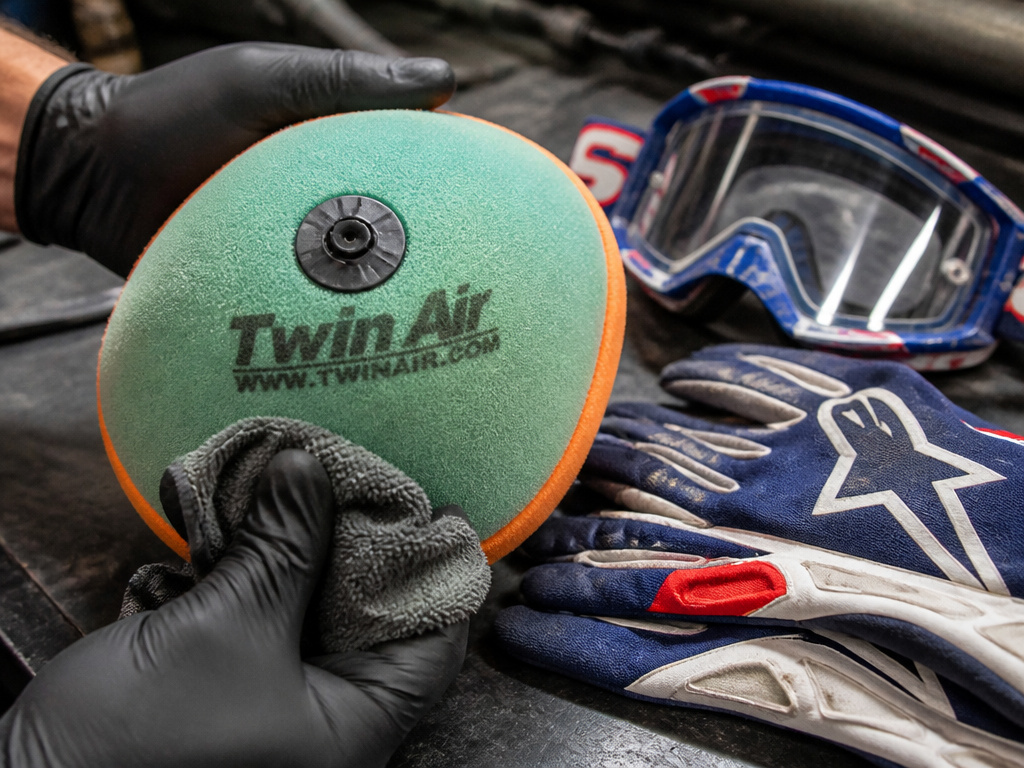
Your gear degrades with use. Sunlight weakens helmet shells. Mud and sweat break down glove stitching. Abrasion thins jersey and pant material.
Create a simple schedule. Tie it to your bike’s maintenance, which is already time-based. When you clean your bike’s air filter (every 2.5 hours per Yamaha’s “every race” interval), use that time to also inspect and clean your gear, including goggles and gloves. When you change your bike’s gear oil, inspect your boots for cracked soles or loose buckles.
Wash your jersey, pants, and base layer after every ride to remove sweat and dirt that degrade fabrics. Never store wet gear in a bag; mildew ruins materials and creates odors that never leave. A detailed gear cleaning guide walks through the specifics for each material.
What helmet safety certifications do I need?
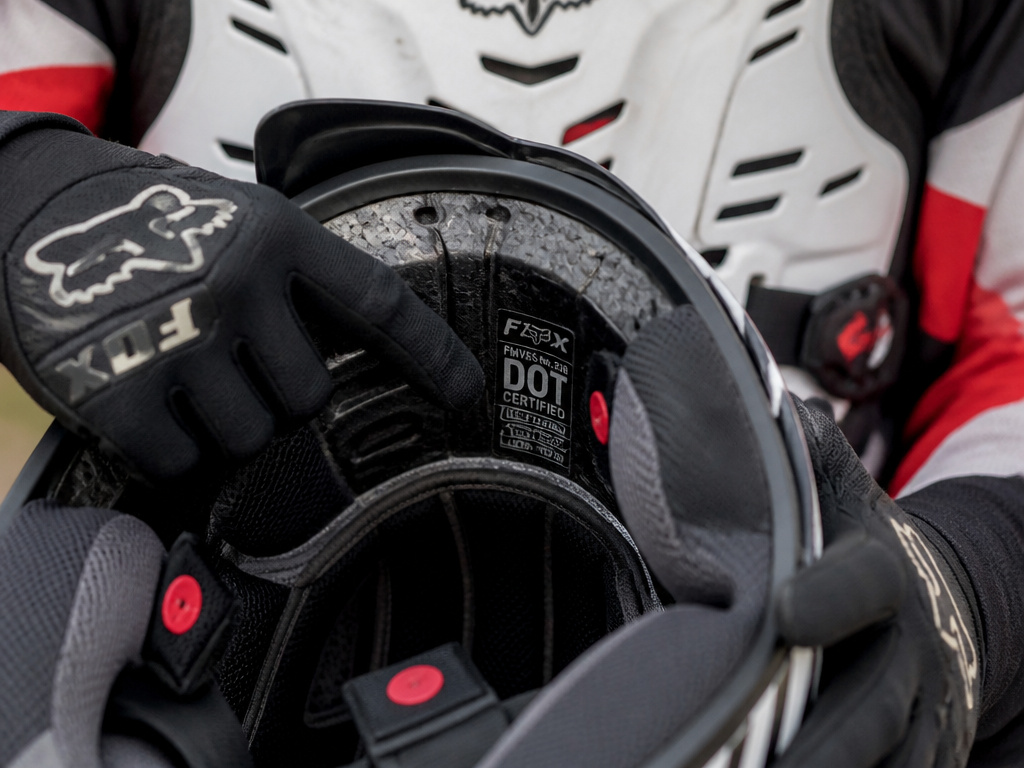
The certification label inside your helmet is your proof it meets a tested safety standard. For organized competition, check the specific rulebook, as governing bodies often mandate certain certifications. Beyond the sticker, look for a construction designed to manage impact forces. The materials matter; some organizations recommend against suits made entirely of certain synthetic materials due to abrasion concerns, which is a useful principle for all gear. Your chest and back protector is also compulsory in many racing formats. Never assume gear is safe without that verified certification.
How should motocross gear fit?
Protective gear must stay in place to work. A helmet should fit snugly without pressure points, and your goggles should seal without the strap pulling the helmet out of position. Your boots need to allow precise control but prevent your foot from twisting inside them. For clothing like jerseys and pants, consider that they must accommodate a chest protector and knee braces underneath. Gear that is too loose can snag or shift in a fall, while gear that is too tight restricts movement and blood flow. Always try gear on while wearing the other pieces you plan to use.
Frequently Asked Questions
Is a neck brace really necessary for motocross?
For motocross, where high-speed crashes and landings are common, a neck brace is a highly recommended layer of protection for your cervical spine. The FIM rulebook addresses its use, prohibiting it only if you are using an airbag system. For riders without an airbag, a neck brace can help manage crash forces that might otherwise be focused on the neck.
Can I wear my street motorcycle jacket for motocross?
No. Street jackets are designed for abrasion resistance at highway speeds in a seated position. They lack the ventilation, flexibility, and impact protection for the standing, active riding position of motocross. They also won’t accommodate a chest protector underneath and will overheat you quickly.
How often should I replace my motocross helmet?
Replace your helmet immediately after any significant impact, even if you can’t see damage. The foam liner compresses permanently. Otherwise, most manufacturers recommend replacement every 5 years due to the degradation of materials from UV exposure, sweat, and temperature cycles. If you ride frequently, consider replacing it sooner.
Are knee braces worth the high cost?
For serious motocross riders, yes. Knee braces are designed to prevent ligament injuries by limiting harmful ranges of motion. The cost of a pair of braces is significantly less than the cost and downtime of surgery and rehabilitation for a torn ACL, MCL, or meniscus. For casual trail riders, knee guards may be sufficient.
What’s more important: boot protection or comfort?
Protection, always. Motocross boots are stiff by design. Comfort comes from a proper fit and a gradual break-in period over several rides. A comfortable but flexible boot offers false security and can lead to a severe ankle or foot injury in a crash. Prioritize a boot with a proven hinge and protection system, then break it in.
The Bottom Line
Your gear list starts with the FIM rulebook and your bike’s manual, not a magazine ad. The compulsory chest protector and the warning against all-spandex suits are in the regulations for a reason. The jersey and pants fit matters because loose gear catches and tight gear restricts.
Spend your first dollars on the parts that meet a verifiable standard: the helmet certification, the boot’ hinge, the chest protector’s coverage. Maintain that gear on the same schedule you maintain your bike, after every ride for basics, with deep cleans on the service intervals. The gear is part of the machine. Treat it that way, and it will do its job when you need it most.
