
How to Clean Motocross Gear: Brand-Specific Rules
This post contains affiliate links. As an Amazon Associate, we earn from qualifying purchases.
Clean motocross gear by following the specific instructions from each brand’s official care guide. Ignore universal advice. Alpinestars, Leatt, and REV’IT! Each have different rules for washing temperature, drying methods, and cleaning agents. The wrong step can void safety certifications and shorten a jacket’s life.
That gap between what works on a cotton t-shirt and what protects a technical shell is where gear fails. Mud is an abrasive. Dried sweat degrades elastic. But household detergents and heat can damage materials. This guide on how to clean motocross gear walks you through the manufacturer-mandated steps for jerseys, pants, gloves, boots, and armor, with the exact numbers and warnings pulled from their service PDFs.
What follows: the one rule that overrides every tip below, the brand-by-brand breakdowns where their advice directly conflicts, and the storage parameters that stop mold before it starts.
Key Takeaways
- The care label is the final authority. If a jacket has a detachable liner, check the label in each layer. REV’IT! States these instructions lead over any general guide.
- Never use detergent on hard armor. Leatt’s manual for knee guards allows only tap water; cleaners can reduce the protection level.
- Boots need 24-48 hours to dry completely. Per Alpinestars, stuff them with newspaper, replace it every 2-3 hours, and never use direct heat.
- Replace your body protector every three years. Leatt Corporation defines this as the maximum service life for its body protectors under normal use.
- Storage environment matters. Alpinestars specifies ideal conditions: 15-25°C (59-77°F) and 40-60% humidity, with boots elevated off concrete floors.
The Golden Rule That Overrides Everything
Before you touch a hose or a bucket, find the care label. This isn’t a suggestion. REV’IT! Support states it clearly: the wash and care label instructions are leading over any other instructions given. If your gear has multiple layers, a shell and a detachable waterproof liner, for example, you must consult the label in each layer. They often have different rules.
Common mistake: Assuming all textile gear washes the same. A label might permit a 40°C wash for the shell but demand a 30°C max for the liner. Mix them, and you compromise the laminate.
I’ve watched riders ruin a perfectly good jacket by tossing the whole thing in, liner attached, on a heavy cycle. The result is a detached, bunched-up thermal layer that never sits right again. The label isn’t there for decoration. It’s the manufacturer’s contract for the how to clean motocross gear process without breaking the safety features you paid for.
The Pre-Wash: Stop Mud from Wrecking Your Machine
Never throw caked gear straight into a washing machine. The mud acts like sandpaper in the drum, and the clay can harden in the pipes. Your first job is a field strip.
- Knock off bulk mud. Tap boots together. Use a garden hose on a gentle spray setting to rinse pants and jerseys. Alpinestars emphasizes removing mud immediately after riding; dried mud is harder to clean and degrades materials.
- Turn everything inside out. This exposes the sweat-soaked interior and allows you to rinse trapped grit from seams.
- Secure all closures. Zip up zippers fully. Fasten every Velcro strap, especially on gloves and boot cuffs. An open Velcro strip will grab and pull every other fabric in the wash.
- Remove what’s designed to come out. Take out boot liners, detachable armor from jackets and pants, and any neck braces. These items follow their own, often stricter, cleaning protocols.
Skipping this turns a cleaning cycle into a demolition cycle for your how to clean motocross gear routine. The grit you leave in becomes embedded, grinding away at fabric coatings and stitching with every future movement.
Washing Jerseys, Pants, and Textile Jackets
For the main textile components, the process is straightforward but temperature-sensitive. Consensus says use a mild, non-bleach detergent. But the brands disagree on the specifics, and that’s where you need to pay attention.
| Gear Type | Wash Temperature | Cycle & Detergent | Critical Warning |
|---|---|---|---|
| REV’IT! GORE-TEX® Garments | 40°C (105°F) | Warm permanent-press cycle. Mild detergent. | Do not use fabric softener. |
| REV’IT! Textile/Waterproof (Non-GORE-TEX) | 30°C Max | Gentle cycle. Mild detergent. | Do not dry in a dryer. |
| General Motocross Jersey/Pants | Cold to Lukewarm | Gentle cycle. Mild detergent, avoid oxy-cleaners. | Secure all Velcro and zippers. |
The temperature difference between GORE-TEX and non-GORE-TEX wash temps is a material constraint. Exceeding the 30°C limit on a standard waterproof laminate can damage it.
Cleaning Gloves and Leather
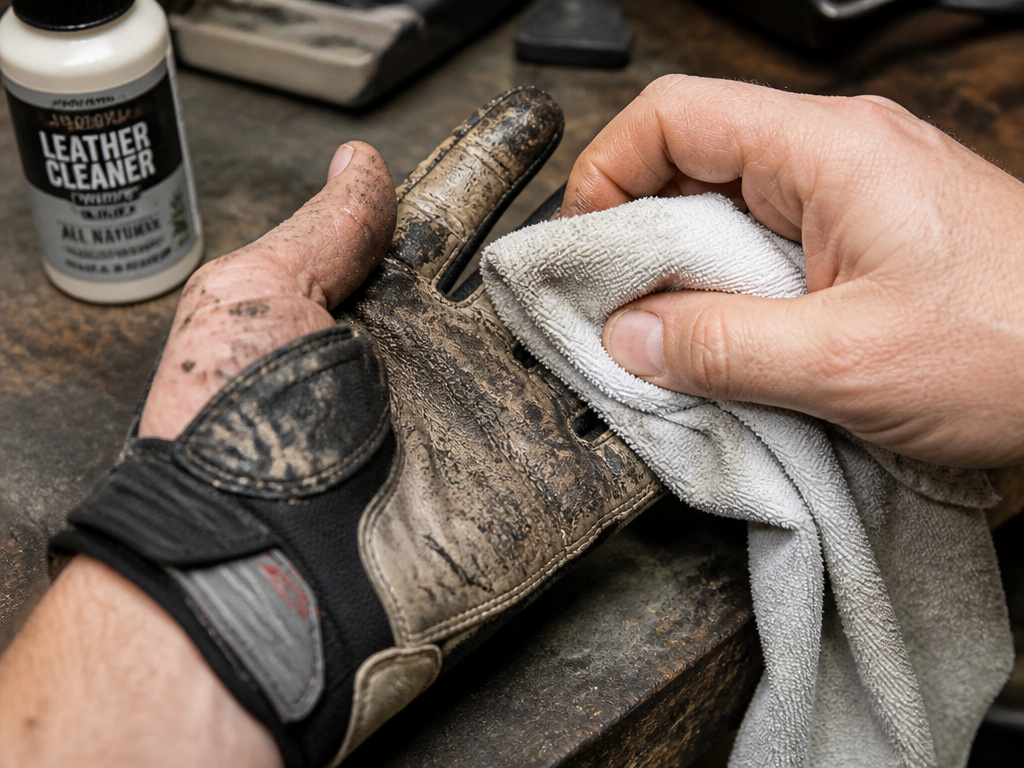
Your hands sweat the most, and gloves take the brunt of trail grime. The manufacturers are unanimous here: be gentle.
For textile or leather motorcycle gloves, REV’IT! Instructs:
- Clean by hand using a damp cloth (not hot water).
- For stains, use a mild cleaner suitable for the material.
- Never use a washing machine, dry cleaner, or high-pressure spray.
- Dry at room temperature, away from direct heat or sunlight.
For leather garments from brands like REV’IT!, the rule is similarly hands-off. Use a damp cloth with lukewarm water. Let it dry at room temperature, away from direct heat or sunlight. Heat turns leather brittle and cracked.
Where this goes sideways: Putting gloves on a radiator or in direct sun to dry fast. The leather stiffens, the seams become brittle, and the next time you need flexibility in a grip, the glove fights you. It’s a great way to damage the gloves.
Boots: The 24-48 Hour Dry Window
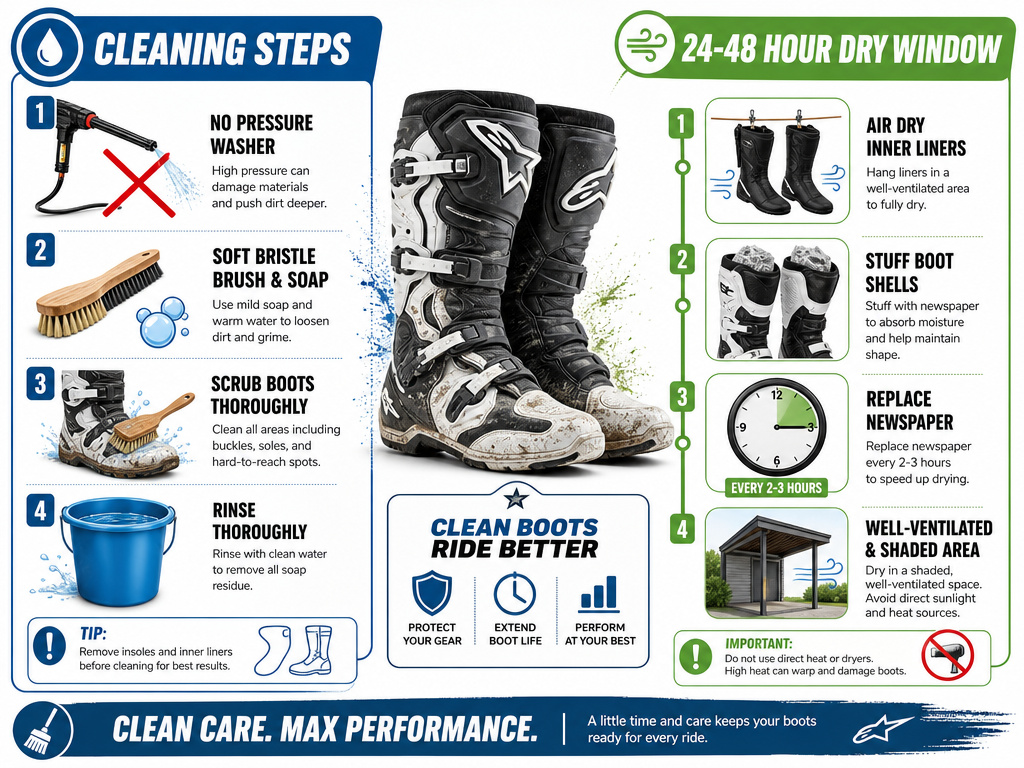
Motocross boots are a protective system, not just footwear. Alpinestars provides detailed guidance for its MX boots.
Cleaning Steps:
- Never use a pressure washer. It forces water into buckle mechanisms and past seals.
- Use a soft-bristle brush and mild soap or boot cleaner with warm water.
- Scrub the sole, buckles, and shell. A soft brush can be used for buckle pivots.
- Rinse thoroughly with clean water.
Drying Steps (This is the critical part):
- Remove the inner liners. Hand wash them in lukewarm water with mild detergent. Do not wring or twist. Air dry completely (24-48 hours).
- Stuff the boot shells with newspaper or clean rags. This absorbs moisture and maintains shape.
- Replace the newspaper every 2-3 hours until the paper comes out dry.
- Let boots air dry in a well-ventilated area for 24-48 hours. Never use a radiator, hair dryer, or direct sunlight.
Why so long? The multi-layer construction and dense padding trap water. Wear them damp, and your feet macerate while mildew sets up camp inside. Moisture inside boots can lead to mold and odors.
Armor and Body Protectors: The Detergent Ban
This is the most drastic departure from normal cleaning. For hard armor like Leatt knee guards, the manufacturer’s manual is absolute.
Only use tap water. Never use cleaners or detergents, or launder the knee guards, the product will be damaged… And the level of protection provided severely reduced.
Wipe the surface with a damp cloth. Use a soft brush dampened with water to clean perforations. That’s it. Soap residues can compromise the product’s protective qualities. This isn’t about cleanliness; it’s about preserving the product’s safety certification.
Furthermore, Leatt states its body protectors should be replaced every three years under normal use. The materials degrade over time with use. The calendar is as real a threat as the crash.
Where the Manuals Disagree (And Why It Matters)
You can’t follow “expert advice” when the experts, the brands themselves, contradict each other. The biggest conflicts are on drying.
| Brand & Gear Type | Tumble Dry Instruction | Contradicts With |
|---|---|---|
| REV’IT! GORE-TEX® Jacket | Yes. Tumble dry on warm, gentle for 20 min to reactivate DWR. | REV’IT!’s own rule for non-GORE-TEX textile gear, and Alpinestars’ “air dry only” rule for boot liners. |
| REV’IT! Standard Textile Jacket | No. “DO NOT dry your REV’IT! Textile garment in a dryer.” | The GORE-TEX instruction above. It’s product-line specific. |
| Alpinestars Boot Liners | No. Air dry only. Never use direct heat sources. | The REV’IT! GORE-TEX rule. |
The takeaway? There is no universal rule. The 20-minute tumble for GORE-TEX is a functional requirement to reset the water-repellent coating. For other materials, heat from a dryer can cause damage. Your garment’s label is the only vote that counts.
Storage: It’s Not a Closet, It’s a Climate Zone
Storing clean gear wrong undoes all your work. The manuals agree on the principles but Alpinestars gives you numbers.
- Clean & Dry: Ensure everything is completely dry. REV’IT! Warns that storing gloves wet causes deformation and damage.
- Ventilated & Dark: Store in a dry, well-ventilated place away from direct sunlight. Leatt warns against sunlight and temperature extremes.
- Ideal Climate: Alpinestars recommends 15-25°C (59-77°F) and 40-60% humidity for boots.
- Elevate Boots: Keep boots off concrete floors during long-term storage, as concrete can wick moisture.
- No Pressure: Don’t pile heavy objects on top of gear. Leatt notes this can damage fabrics and plastics.
Storing damp gear in a hot environment promotes mold and mildew. In humid climates, ensure gear is completely dry before storage and consider using a dehumidifier in the storage area.
How to Clean Motocross Gloves
Always secure the Velcro straps before cleaning to prevent them from snagging on other gear or themselves. Clean your gloves by hand using only a damp cloth; do not use hot water. Never put them in a washing machine, take them to a dry cleaner, or use high-pressure devices like a pressure washer. After cleaning, let the gloves dry completely at room temperature, away from direct heat sources or sunlight. Store them in a dry, well-ventilated place only after they are fully dry.
Frequently Asked Questions
Can I use Dawn dish soap to clean my motocross gear?
Maybe, but it’s risky. Most manuals specify “mild soap” or dedicated cleaners. Dish soap is a degreaser designed to strip oils, which can also strip durable water-repellent (DWR) treatments from fabrics and dry out leather. For less expensive gear, it might be acceptable, but for technical garments like GORE-TEX jackets, follow the label and use a recommended cleaner.
How often should I wash my motocross gear?
Wash it after every muddy ride. For non-muddy rides, airing-out might suffice, but you should still wash jerseys and base layers frequently. Sweat and body oils can degrade fabrics and elastic over time. Clean gear also simply lasts longer.
Can I put my motocross helmet in the washing machine?
Absolutely not. Never submerge a helmet or its liners in a machine. Remove the cheek pads and liner (if possible) and clean them according to the helmet manufacturer’s instructions. Wipe the shell with a damp cloth. Let all parts air dry completely before reassembly.
What’s the best way to dry gear in a humid climate?
Skip the dryer unless your label explicitly requires it (like GORE-TEX). Use air circulation instead. Hang gear in a room with a fan or a dehumidifier running. For boots, the newspaper-stuffing method is recommended. A boot dryer that uses gentle, room-temperature air can also be used.
Why does my gear still smell after washing?
Odor often lives in the padding and liners, not the outer shell. Ensure liners are removable and washed separately. For stubborn smells, ensure gear is thoroughly rinsed. Always follow the manufacturer’s cleaning instructions, especially for armor which may have specific prohibitions.
The Bottom Line
Cleaning motocross gear is scheduled maintenance for your personal protective equipment. The single most important item in your garage is the magnifying glass you use to read the care labels.
When the labels conflict with each other, trust the one sewn into the specific layer you’re cleaning. When they conflict with “common knowledge,” the label wins. That three-year replacement clock on a Leatt protector starts ticking the day you buy it, not the day you first crash it. Stuff those boots with newspaper until the paper stays dry, even if it takes two full days.
This process saves you money. It definitely saves you from stink. And by keeping the safety materials intact, it might just save your skin.
