
Motorcycle Gear Guide for Tall Riders
This post contains affiliate links. As an Amazon Associate, we earn from qualifying purchases.
Finding motorcycle gear as a tall rider means solving for length first, not width. The answer is in published tall sizes (LT, XLT), brands with long-cut options like Tourmaster and FLY Racing, and a hard rule against sizing up for length, doing so misplaces armor. For a tall rider, a jacket needs sufficient sleeve and back length, and pants need an inseam measured in the seated riding position. Off-the-rack tall sizes exist, with some jackets available up to 5XL and some pants up to 6XL, but the fit ceiling is real.
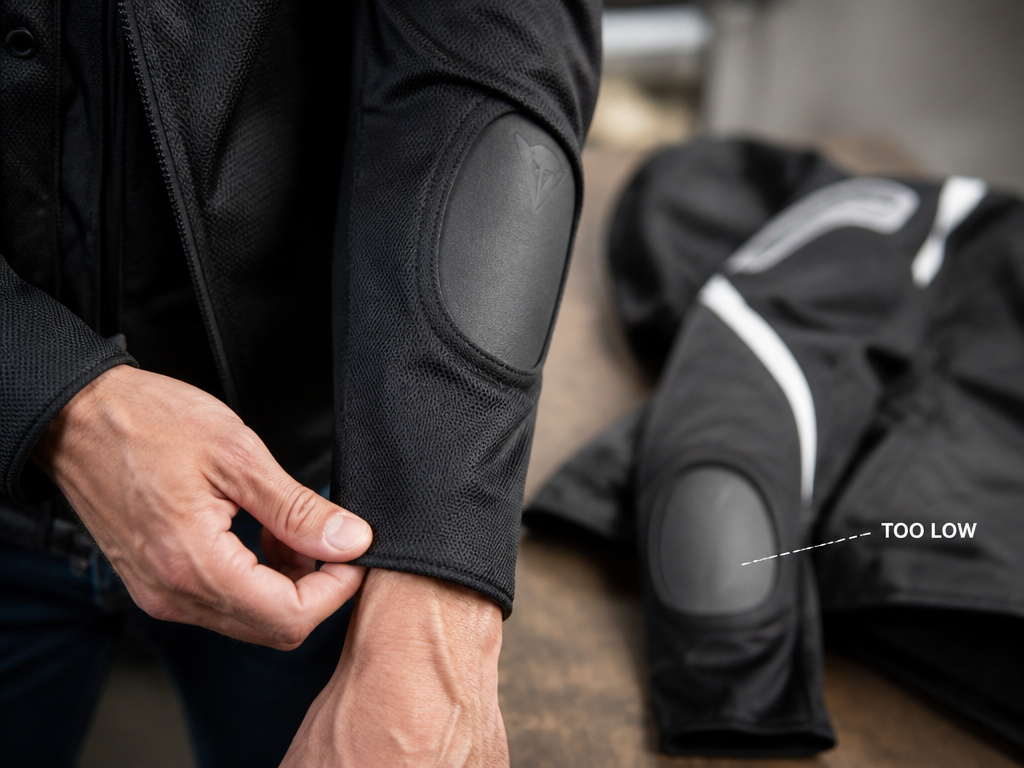
That length requirement changes how you read every size chart. The armor pockets are fixed, so a garment that’s too wide puts the elbow protector on your forearm. This isn’t a cosmetic problem, which is why a motorcycle gear guide for tall riders is essential.
What follows is a map of the brands that publish tall cuts, the measurements that actually matter in a riding position, and where the size run genuinely ends, as detailed in this motorcycle gear guide for tall riders. We will look at jackets, pants, gloves, and boots, separating the choices by riding style since an adventure jacket’s cut is not the same as a cruiser’s. By the end, you’ll know whether your build fits a published tall size or needs a custom path.
Key Takeaways
- “Big” and “Tall” are different problems. Big adds girth; tall adds sleeve, torso, and inseam length. Solve for your specific need.
- Never size up for length. A jacket two sizes too large puts the shoulder armor on your collarbone. Look for dedicated tall (LT/XLT) variants instead.
- Some jackets are published up to 5XL and some pants up to 6XL, but availability varies by brand and model. Brands like Leatt and Alpinestars publish these ranges; beyond that, you’re in custom territory.
- Measure for the riding position, not standing. Your seated inseam is 1–3 cm longer than your standing measurement, which changes pant fit.
- Tall cuts typically add 1.5 to 2 inches in sleeve and torso length compared to the standard version of the same letter size.
The Big vs. Tall Sizing Difference (And Why It Matters)
Most gear advice lumps “big and tall” together. That’s the first mistake. They are separate engineering problems with opposite solutions.
A “big” sizing problem is about circumference, chest, waist, hips. The garment needs more material around you. A “tall” problem is about linear measurements, sleeve length from shoulder to wrist, back length from collar to waist, and inseam from crotch to ankle. The garment needs longer panels. Buying a 4XL to get longer sleeves gives you a tent that drowns your shoulders and shifts all the armor out of position.
A tall cut typically adds 1.5 to 2 inches in the sleeve and torso compared to the standard version of the same size. This is the difference between a shirt that rides up when you lean forward and one that stays in place.
This is why the label matters. Look for “Tall,” “LT,” “XLT,” or “Long” on the size tag. Some European brands use numbered sizing (e.g., 52 Long) for the same purpose. If the product page doesn’t explicitly mention a tall variant, assume the sleeves and back are cut for an average proportion. This rule filters out a significant portion of the catalog immediately, which is honest.
How to Measure Yourself (For the Riding Position, Not the Mirror)
Throw out your standing measurements. You sit on a bike. Your spine curves, your shoulders round forward, and your legs stretch out to the pegs. Your gear must fit that shape.
- Sleeve Length: Sit on a chair or a bike. Have someone measure from the center of your spine, over the curve of your shoulder, down the outside of your slightly bent arm to your wrist bone. That’s your riding sleeve length.
- Back Length: Sitting upright, measure from the base of your neck (where a collar sits) down your spine to where your pants’ waistband sits. Now lean forward into a riding tuck. The measurement will increase, that’s the length you need to prevent the jacket from riding up.
- Inseam (Seated): Sit on a flat surface with your legs bent at a 90-degree angle, feet flat on the floor. Measure from your crotch down along your leg to the floor. Denimotto notes this seated inseam will be 1–3 cm longer than your standing inseam. This is the number to use for pants, not the one on your jeans tag.
Forget the “size up” advice. If your measurements land between sizes, choose the one that fits your shoulders and chest snugly with a base layer on. Length can sometimes be adjusted; armor placement cannot.
Jackets and Pants: What Actually Comes in Long Cuts
The market for verified tall sizes is smaller than you’d hope, but it’s specific. Brands that publish their size runs in writing are the only ones worth your time here, a key principle in any motorcycle gear guide for tall riders. The rest are guessing.
| Gear Type | Brand & Model | Published Size Range | Tall Variant? | Best For |
|---|---|---|---|---|
| Adventure Jacket | Leatt ADV DriTour 7.5 | S–5XL | No (but long cut) | All-weather, long-torso riders |
| Mesh Jacket | Tourmaster Ridgecrest Mesh | S–5XL | Yes, Tall options | Hot-weather touring |
| All-Rounder Pants | Alpinestars Andes v3 Drystar | 2XS–6XL | No (adjustable waist/bib) | Big & tall, needing maximum size range |
| Adventure Pants | FLY Racing Terra Trek | S–4XL | Yes, Regular & Tall inseams | Off-road/ADV, needing inseam choice |
The Leatt ADV DriTour 7.5 Jacket is certified to EN 17092-3 Class AA and runs to 5XL. It’s cut longer in the torso and arms than a standard street jacket, aiming for the adventure riding posture. The Tourmaster Ridgecrest Mesh is the rare mesh jacket that publishes tall options within its S-5XL range, if you need airflow and length, start here.
For pants, the Alpinestars Andes v3 Drystar holds the crown for published range: 2XS to 6XL. It uses an adjustable waist and removable bib braces to accommodate different torsos. The FLY Racing Terra Trek is more focused, offering a choice between Regular and Tall inseams within its S-4XL range. This is perfect for the tall, lean rider who doesn’t need extra waist room.
Where this goes sideways: Buying a size up for sleeve length. The elbow armor pocket is sewn into the jacket based on the dimensions of its intended size. In a 2XL jacket worn by someone who needs a Large-Tall, the elbow pad rests on your forearm. In a crash, it’s just a loose pad, not a protector.
The ceiling is real. Among ranked gear, 5XL is the practical ceiling for a jacket. For pants, 6XL exists but the field thins out fast. Above these sizes, you are looking at custom makers like Motoport or Aerostich, or unbranded gear that doesn’t publish armor certifications.
Gloves and Boots: The Forgotten Fit for Long Limbs
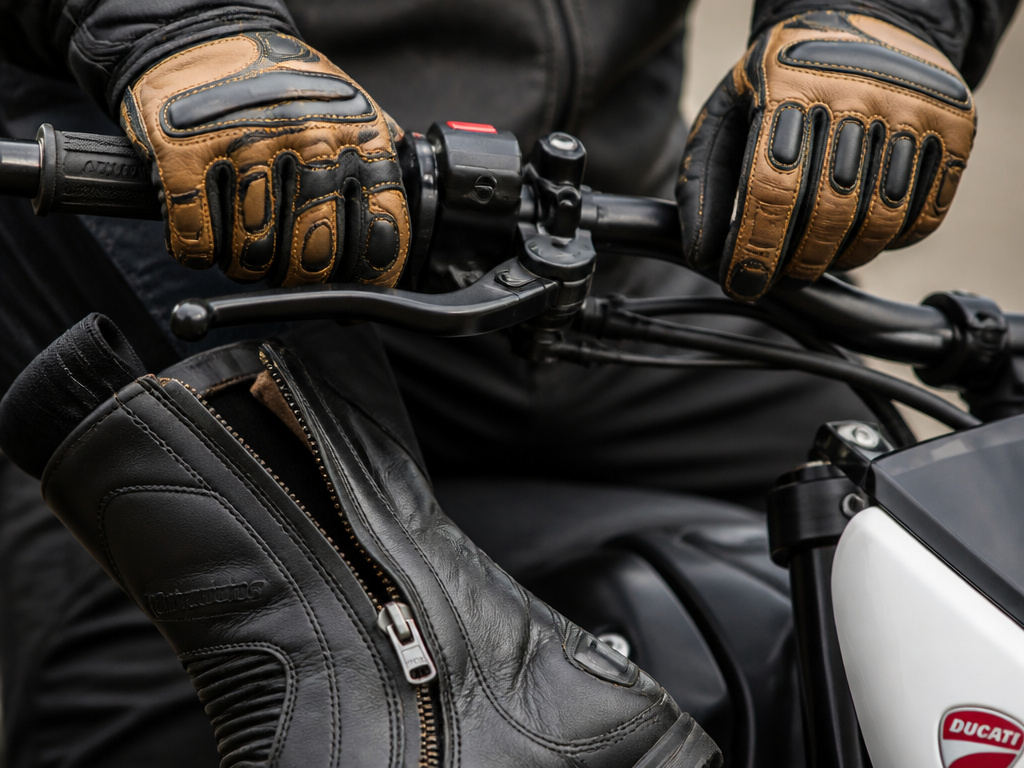
Jackets and pants get the attention. Gloves and boots break the trip. If you have long fingers or big feet, the standard “XL” designation means nothing.
Gloves: Hand length is not hand circumference. You can have long, slender fingers (a “length” problem) or wide palms (a “volume” problem). Most glove makers scale everything up proportionally with size. Your fix is to seek out brands known for longer finger patterns. Held and Rukka are often cited in rider forums for this. Failing that, a custom glove maker is the only sure path. Don’t settle. A glove with fingertips that don’t fully close leaves material to bunch and can compromise lever control.
Boots: Here, the standard US/EU sizing usually accommodates length. The problem for tall riders is often the shaft height and calf circumference. A tall rider with long legs may find that a boot shaft that’s perfect for ankle protection is too short to fit under their riding pants comfortably, or too narrow to zip over their calf. Look for boots described as having an “adventure” or “tall” shaft. Some touring boots offer adjustable calf panels.
The guide for plus size riders dives deeper into volume-focused fit, which can intersect with tall needs if you’re a bigger build.
Tall Gear by Riding Style: Adventure, Cruiser, and Sport
Your riding position dictates where you need length. An adventure rider standing on the pegs needs torso room. A sportbike rider in a tuck needs back length and forward-rotated sleeve seams. A cruiser rider needs arm length for a relaxed reach.
Adventure/ADV: This is where the most off-the-shelf tall options live. Brands like Leatt, FLY Racing, and Klim design for a taller, more upright posture with room for layering. Look for features like longer back panels, pre-curved sleeves, and adjustable hems. The best motorcycle pants for adventure riding often include these tall-friendly features.
Cruiser: The challenge here is often arm length for the wide, pulled-back handlebar stance. Some cruiser-specific brands offer tall sizes, but the selection is smaller. The aftermarket can help, for example, It changes your reach, which can make a standard-cut jacket fit better.
Sport: This is the hardest category. Sport-cut gear is designed to be snug and aerodynamic, with shorter torsos and sleeves that assume a tightly tucked position. Tall sport riders frequently end up in custom one-piece suits or tailored two-piece sets. The principles in our leather suit fit guide are critical here, every centimeter matters.
When Off-the-Rack Isn’t Enough: Custom and Alteration Paths
The published size runs end. If you’re beyond a 5XL jacket or a 36″ sleeve, or if your proportions are unusual (very long torso, short arms), custom gear is your next step.
- Made-to-Measure (MTM): Companies like Aerostich, Motoport, and Dainese’s custom program will build a garment to your measurements. This is the gold standard for fit and protection, but it’s a significant investment and lead times are long.
- Alteration Services: Some specialist tailors can alter motorcycle gear. Common jobs include lengthening sleeves (if there’s enough material in the cuff) or letting out seams. Warning: Never alter the area around armor pockets or major seams, as it can void the garment’s safety certification. This is best for minor tweaks, not complete resizing.
- Modular Approaches: Sometimes the answer is mixing gear. A tall-sized jacket from one brand paired with pants from another that offers a long inseam. Use a jacket fit guide to dial in each component separately.
Denimotto, for example, offers made-to-order jeans if your waist or inseam falls outside their standard men’s (28–40) or women’s (25–34) ranges. This is a smart half-step between off-the-rack and full custom.
Brands offering tall-specific sizes
Several manufacturers publish gear in tall-specific sizes, which add length to sleeves, torsos, and inseams without increasing the circumference. For example, the Tourmaster Ridgecrest Mesh Jacket and FLY Racing Terra Trek Pants are both offered in tall options. The Terra Trek Pants specifically list Regular and Tall inseam choices. Tall cuts typically add 1.5 to 2 inches in the sleeve and torso compared to the standard version of the same size. This approach solves the length problem directly, unlike simply sizing up, which creates excess material and misplaces protective armor.
Solutions for tall & skinny vs. Tall & athletic vs. Big & burly body types
Your body type dictates the search. Tall and skinny riders need brands with tall-specific sizing that adds length without width. Tall and athletic builds with broader shoulders and chests may find a better fit in standard sizes from brands with longer cuts, checking that armor placement aligns when the jacket is snug. For big and burly riders where circumference is the primary challenge, the focus is on finding brands that extend their size runs to 5XL or 6XL. Remember, your riding inseam is longer than your standing measurement, so always prioritize fit in a seated, riding position.
Frequently Asked Questions
What is the largest size motorcycle jacket you can actually buy?
Among gear from brands that publish certifications, 5XL is the practical ceiling. The Leatt ADV DriTour 7.5 and Tourmaster Ridgecrest Mesh both publish S–5XL ranges, with Tourmaster offering tall options within that. Beyond 5XL, the market shifts to unbranded gear or custom order.
Should I just buy a size up if nothing fits?
No, not as a protection decision. Armor sits in fixed pockets. A garment two sizes too large places the shoulder pad on your collarbone and the elbow pad on your forearm. Look for a tall variant, an adjustable waist, or adjustable armor pockets first. A slightly loose garment with pads in the right place is safer than a bigger one with pads in the wrong place.
How do I know if a motorcycle will fit my height?
Seat height is one data point, but the relationship between seat, pegs, and bars (the “rider triangle”) matters more. A tall rider needs room for their knees. The best test is to sit on the bike. As a rough heuristic, some riders and sources use a formula where your inseam multiplied by 0.85 to 0.90 gives an approximate maximum comfortable seat height, while other sources, like official motorcycle specifications, provide only measurements and leave fitment to trial. This is a starting guess, not a rule. Our guide on checking seat height walks through the real-world fit test.
Do I need different gear for different types of riding?
Yes, because the riding posture changes. An adventure jacket is cut longer in the torso and arms for a standing or upright position. A sport jacket is cut shorter and tighter, with sleeves designed for a forward tuck. Your primary riding style should dictate your first major gear purchase. The best motorcycle jackets for bigger riders often break down options by style.
Before You Go
Fit first, features second. That is the essential rule for tall riders. The sequence is simple: find brands that publish tall sizes (Tourmaster, FLY Racing), take your measurements in a riding pose, and never trade correct armor placement for extra sleeve length.
The market has gaps. If your fingers are long, expect to search harder for gloves. If you’re all torso, a custom jacket may be your only real option. The data point that changes the game is the 1.5–2 inch added by a true tall cut, that’s the difference between a jacket that works and one that just hangs in your closet.
Start with one piece. Get a jacket that fits your shoulders and your sleeves. See how it feels on the bike for an hour, not just in the mirror. Then build the rest of your kit around that standard. Proper gear protects you and also allows you to stop thinking about it and focus on riding.
