
Merino Wool vs Synthetic Motorcycle Base Layer
This post contains affiliate links. As an Amazon Associate, we earn from qualifying purchases.
Choosing between a merino wool and a synthetic motorcycle base layer isn’t about which material is better, but which rider you are. For multi-day touring where odor control is king, merino wins. For high-intensity, stop-and-go commutes where rapid drying matters most, synthetics take the lead. The fabric weight (GSM), blend, and fit decide comfort, not the marketing claims.
That odor advantage has a specific, physical timeline you can measure. Synthetics can turn pungent within hours, while merino can go days. But in a sudden downpour or a humid traffic jam, that same merino layer will cling wet and heavy long after a synthetic top has shed its moisture. The choice isn’t universal, as seen in the debate over a merino wool vs synthetic motorcycle base layer.
This guide examines the real trade-offs between merino wool and synthetic motorcycle base layers: we’ll compare odor resistance, drying speed, warmth, and durability from a motorcyclist’s perspective, not a hiker’s, as detailed in our motorcycle base layer guide. You’ll get specific brand breakdowns, washing instructions most riders skip, and a verdict based on whether you tour, commute, or ride in deep winter.
Key Takeaways
- Merino wool’s odor resistance is unmatched, often allowing multiple days of wear before becoming offensive, while synthetics can sour within a single long, hot ride.
- Synthetics dry significantly faster than merino after a soaking, a critical advantage in humid climates or unexpected rain.
- The optimal fabric weight (GSM) is contested: Klim promotes 150 GSM for versatility, REV’IT! Uses 200 GSM for multi-season use, and Rapha deploys 340 GSM panels for extreme cold, proving there’s no universal “best” weight.
- Blends are a pragmatic choice for many riders, combining merino’s comfort with synthetic durability, as seen in the Rab Syncrino (47% merino, 53% polyester). However, some sources like Voler advocate for 100% merino for optimal performance.
- Never use fabric softener or high heat when washing either material; it degrades moisture-wicking performance and can permanently shrink merino.
Odor Control: Why Merino Wins the Weekend Tour
You’ve felt it. Three hours into a summer commute, a faint sour note rises from your collar. By the time you get home, that synthetic shirt is a biohazard. A merino wool base layer, like the Klim Teton or a 100% RWS-certified option from Voler, buys you time.
The science is straightforward. Merino wool fibers have a scaly outer layer that resists bacteria, the source of odor, from embedding and multiplying. Synthetic fabrics, no matter their antimicrobial treatments, are smoother and offer less natural resistance. On a multi-day moto-camping trip, this isn’t a minor luxury. It’s the difference between packing one base layer or three.
Where this goes sideways: Assuming all merino is equal. Sub-par merino or a low wool percentage in a blend (like some budget options) loses this advantage quickly. Look for specifics like sub 17 micron fibers (as Klim uses) or clear blend ratios.
When you compare a merino wool vs synthetic motorcycle base layer, I judge gear by the hour after I stop sweating, not the first ten minutes in the driveway. Everything feels fine at the start. After a full day in the saddle, a synthetic layer often feels clammy and stale against your skin the moment you cool down. Merino generally wins that hour. It stays drier to the touch and doesn’t hold that sharp, acrid smell.
The Sweat Timeline: A Stop-and-Go Reality Check
For commuters stuck in traffic, the odor game changes. Synthetics wick faster, pulling sweat away from your skin immediately. But in that hot, stagnant air, bacteria feast. A Dainese Dry LS shirt, made from 80% Dryarn®, will feel drier while you’re moving, but its odor resistance may differ from merino during prolonged stops. Merino manages the overall microbial load better, even if the initial dampness lingers slightly longer.
Moisture Wicking and Drying Speed: The Synthetic Edge
When you’re caught in a rain shower without your rain gear, or sweating through a humid afternoon, drying speed isn’t comfort, it’s safety. A wet base layer under a jacket saps heat fast. Here, synthetic fabrics like Dryarn® (Dainese) or the proprietary blend in the Zerofit Heatrub Ultimate have a clear, mechanical advantage.
Synthetic fibers are hydrophobic by nature. They don’t absorb water into the fiber structure like merino does; they move it along the surface and let it evaporate. This is why synthetic base layers can often be wrung out and feel noticeably drier within minutes.
According to Zerofit, a standard baselayer would have a Heat Retention Rating of 0.1-0.14, while a sweater would typically have a rating of around 0.3. The Zerofit Heatrub Ultimate scored 0.78 in Boken Institute testing.
That independent score explains why a high-tech synthetic like Zerofit’s can claim to cover temperatures as low as minus 10° Celsius without relying on compression for heat.
The trade-off is sensory. That rapid evaporation can sometimes feel “cold” as it happens, a sensation less pronounced with merino’s more gradual moisture release. It’s a worthwhile trade for a rider in changeable, wet conditions.
| Scenario | Winner | Why & Product Example |
|---|---|---|
| Unexpected Rain Soak | Synthetic | Dries fastest, reducing hypothermia risk. (Dainese Dry LS) |
| High-Humidity Commute | Synthetic | Wicks speedily during stop-and-go traffic. (e.g., Dainese Dry LS) |
| All-Day Dampness Management | Merino | Feels less clammy over many hours. (REV’IT! Heliox – 200 GSM) |
| Post-Ride Comfort | Merino | Remains more comfortable after sweating stops. (Klim Teton) |
Warmth and Temperature Regulation: It’s Not Just Thickness
The old rule was simple: thicker equals warmer. With modern base layers, that’s a shortcut to sweating and then freezing. True temperature regulation balances insulation with breathability. Merino wool’s natural structure allows it to trap warm air in the cold and release moisture in the heat. Synthetics rely on fabric engineering, things like EKOI’s Outlast® technology or Zerofit’s Heatrub Ultimate blend.
Fabric weight (GSM) is your first clue, but the numbers don’t agree. Klim promotes 150 GSM for “extreme versatility” across seasons. REV’IT! Uses a denser 200 GSM knit in its Heliox shirt for what it calls “multi-season adaptability.” Meanwhile, Voler markets its 170 GSM 100% merino tank specifically for temperatures of 30° and up. For extreme cold, Rapha uses a 340 GSM merino panel, which can be paired with the best neck gaiters for full protection.
This disagreement means you must match the GSM to your typical ride, not a chart.
- Under 150 GSM (Lightweight): Best for cool-weather riding or as a summer layer under a mesh jacket. Think the Rab Syncrino (125 GSM).
- 150-200 GSM (Midweight): The versatile sweet spot for three-season riding in most climates. The Klim Teton (150 GSM) and REV’IT! Heliox (200 GSM) live here.
- 200+ GSM (Expedition Weight): Reserved for deep winter or static cold. The Zerofit Heatrub Ultimate and Rapha’s 340 GSM panels are designed for deep winter or extreme cold.
The fit is the other half of the equation. A “Tight fit” like the REV’IT! Heliox is designed to conform snugly, maximizing skin contact for efficient moisture transfer, similar to a compression undersuit. A “Regular fit” like the Rab Syncrino prioritizes ease of movement and layering over maximal wicking. A baggy base layer, regardless of material, is a failure, it can’t do its job.
Durability, Care, and Riding-Specific Demands

Motorcycle gear lives a hard life. It faces abrasion from jacket liners, constant UV exposure, and the stress of being pulled on and off over protective armor. On paper, synthetic fibers like nylon and polyester are often considered tougher. The durability of a base layer depends on its specific construction and quality.
The real longevity killer is care. Most riders ruin their base layers in the wash.
For Merino (and Merino Blends):
- Hand wash in cold water with a gentle detergent. If you must machine wash, use a cold, delicate cycle.
- Never use fabric softener or bleach. They coat the fibers and destroy their natural wicking and odor-resistant properties.
- Air dry flat, away from direct heat. Tumble drying, even on low, will shrink merino permanently. Tumble drying, even on low, will shrink merino permanently.
For Synthetics:
- Machine wash cool is generally fine. Avoid high heat.
- Fabric softener is still a no-go, it clogs the synthetic fibers’ moisture-moving channels.
- Tumble dry on low is acceptable, but air drying preserves elastic components like the 5% elastane in the REV’IT! Heliox blend.
Common mistake: Washing a base layer after every single ride. Proper care according to the label extends its life significantly.
Under gear, construction matters, especially when wearing under leathers. Seamless construction, like in the Dainese Dry LS, or roundknit construction, like in the REV’IT! Heliox, eliminates bulky seams that can chafe under a tight jacket or chest protector. This is essential for sport riding or adventure touring where you’re in a riding position for hours.
Choosing Your Base Layer: A Rider’s Decision Matrix
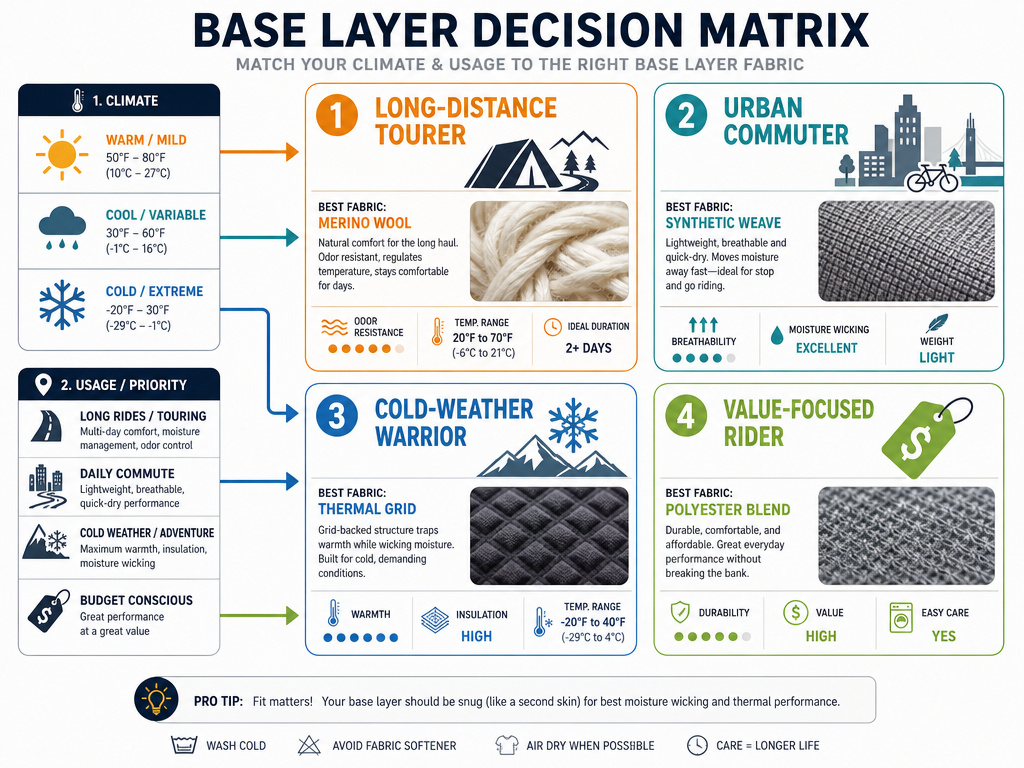
Forget “which is better.” The question is “which is better for my ride?” Your typical mileage, climate, and tolerance for laundry dictate the answer.
For the Long-Distance Tourer / Moto-Camper: You need odor resistance above all. A merino-rich blend or 100% merino is a strong choice. The Klim Teton (80/20 blend) is a proven performer, balancing durability with merino’s benefits. Pack one, wear it for days, and thank yourself later.
For the Urban Commuter / Stop-and-Go Rider:
Drying speed and durability under daily abuse are key. A high-quality synthetic like the Dainese Dry LS or a merino-synthetic blend like the Rab Syncrino (53% polyester, 47% merino) offers the best mix. The synthetic component ensures it dries fast if you get caught in rain, and the merino takes the edge off the odor during your evening ride home.
For the Cold-Weather / Winter Warrior:
When the temperature plummets, technology beats tradition. A purpose-built thermal synthetic like the Zerofit Heatrub Ultimate (with its 0.78 Heat Retention Rating) or an EKOI Racing OUTLAST layer rated for -10°C to +10°C will outperform a standard merino layer. If you insist on wool for extreme cold, you must step up to a heavyweight (200+ GSM) merino like Rapha’s 340 GSM panel.
For the Value-Focused Rider:
Blends are your friend. They offer most of merino’s comfort at a lower cost and with better durability. The Rab Syncrino or the REV’IT! Heliox represent this pragmatic middle ground perfectly. The quality of merino wool can vary between products.
Frequently Asked Questions
Which is better for a base layer, merino or synthetic?
Neither is universally better. Merino wool is superior for long-term odor control and all-day comfort. Synthetic fabrics win for rapid moisture wicking, faster drying, and often, lower cost and higher durability. For most riders, a blend of the two offers the best balance.
What is the best base layer for motorcycle riding?
The “best” depends on your primary use:
- Touring/Camping Example: Klim Teton Merino Short Sleeve (80% merino, 150 GSM).
- Commuting/All-Round Example: REV’IT! Heliox Shirt (47% merino blend, 200 GSM).
- Hot Weather/High Sweat Example: Dainese Dry LS (80% Dryarn® synthetic).
- Extreme Cold Example: Zerofit Heatrub Ultimate (synthetic blend, 0.78 Heat Retention Rating).
Is 100% merino worth it over a blend?
For multi-day trips without laundry access, yes, a high-quality 100% merino layer like Voler’s offers the peak odor resistance. For daily riding, weekend trips, or value, a merino-synthetic blend (like a 50/50 or 80/20 mix) provides nearly all the comfort with better durability and often faster drying.
How should I wash my motorcycle base layer?
Always check the label first. General rules: Wash in cold water on a gentle cycle with a mild detergent. Never use fabric softener or bleach. Turn the garment inside out. Air dry flat is best for merino; synthetics can tumble dry on low. Washing too frequently, especially for merino, shortens its life.
The Bottom Line
Stop looking for a single winner. Start matching the material to the mission.
If your rides are measured in days, not hours, and you live out of saddlebags, the merino wool choice is clear. Its odor resistance is a tangible, trip-changing advantage. If your riding is defined by volatile weather, daily commutes, or you simply want the most durable, set-and-forget layer, a high-performance synthetic is the smarter skin-to-shell interface.
The practical rider, which is most of us, should default to a quality blend. It hedges your bets, giving you merino’s comfort where it counts and synthetic performance where it matters. Your first investment shouldn’t be the most expensive 100% merino top. It should be a well-reviewed blend from a brand that understands motorcycle-specific fit, like the REV’IT! Heliox or Klim Teton. Ride it. Learn what you like and hate. Then you’ll know exactly what to look for, or avoid, on your next purchase.
Everything else is just fabric theory. The real test is your next long ride home in the rain.
