
Magnetic vs Strap Motorcycle Tank Bag: How to Choose
This post contains affiliate links. As an Amazon Associate, we earn from qualifying purchases.
Magnetic tank bags use rare-earth magnets to stick to steel fuel tanks and come off in seconds, while strap-mounted bags use nylon or Velcro straps to secure to any tank material. For a steel-tank bike and frequent fuel stops, a magnetic bag wins on convenience. For an adventure bike with a plastic tank, rough roads, or heavy loads, a strap bag is the only secure choice. The core difference is universal compatibility versus instant on/off convenience.
That split defines the choice. It’s not about which one is better overall, but which one fits the physical reality of your motorcycle and how you actually ride it. The core decision is often magnetic vs strap motorcycle tank bag. A magnetic bag on a plastic tank is a paperweight. A strap bag on a daily commuter is a hassle you’ll come to resent.
What follows is a breakdown of the five specs that actually decide it: tank material, riding style, security, paint risk, and long-term wear. By the end, you’ll know which mount to buy without second-guessing the marketing.
Key Takeaways
- Some sources state magnetic bags only work on steel tanks, while others, like the Nelson Rigg Commuter Lite, offer a dual system for metal and composite tanks.
- For highway commuting and touring, the instant on/off convenience of a magnetic bag is worth its weight in gold at every fuel stop.
- In rough conditions or with a full load, strap mounting is objectively more secure. The nylon webbing distributes force; magnets rely on a single point of contact.
- Protect your paint with a dedicated tank pad or clear film regardless of mount type. Both can cause wear, just in different ways.
- Choose capacity based on security: a half-full magnetic bag is stable; a fully packed strap bag stays put. Overloading either is asking for trouble.
The Core Difference: What Each Mount Actually Does
Forget features for a second. A mounting system has one job: keep the bag attached to the motorcycle under real riding conditions. How each type accomplishes that dictates everything else.
Magnetic tank bags use powerful neodymium or monopole magnets embedded in a soft base. They create a strong, localized holding force against a ferromagnetic surface, a steel fuel tank. Strap-mounted bags use nylon webbing, often with quick-release buckles or hook-and-loop, that wraps around the frame, forks, or under the tank to create a distributed, mechanical attachment.
The magnetic bond is simple and clean. You hear a solid thunk when the bag seats correctly on a clean tank. The strap system is more involved. You route the webbing, tighten the buckles, and check that nothing is touching hot or moving parts. One is a button; the other is a knot.
This fundamental contrast creates the entire pros and cons list. A magnet’s strength is also its limitation: it only works where it works. A strap’s flexibility is its burden: you have to use it every time.
Tank Material: The Non-Negotiable First Filter
Your bike’s fuel tank construction is the first and most important decision point. This isn’t a recommendation, it’s a law of physics.
Magnetic bags require a steel tank. The magnets in bags like the Rynox Optimus Tank Bag V2 mounts via magnets for metal tanks and includes straps for non-metal tanks, while the GEARS IWire uses magnets. They will not hold to aluminum, plastic, or carbon fiber. If your bike has a non-metal tank, the choice is made for you.
Where this goes sideways: Assuming a “magnetic” bag will work on a modern adventure bike. Most ADVs from the last decade, like the BMW R1250GS or KTM 1290 Adventure, use plastic fuel tanks or have extensive plastic shrouds. You place the bag, it doesn’t stick, and you’re left scrambling for straps you didn’t buy.
Strap bags are universally compatible. The SW-MOTECH PRO Enduro or the strap mode of the Nelson Rigg Commuter Lite will fit any motorcycle ever made. The straps go around the physical structure of the bike, not the tank material. This is why strap bags are the default for the adventure riding world, where plastic tanks are the norm.
There is a hybrid approach. Some bags, like the Nelson Rigg Commuter Lite, offer a dual mounting system. This gives you the option to use magnets on a steel tank or straps on anything else. It’s a versatile solution, but often at the cost of a slightly bulkier base plate.
| Your Bike’s Tank | Magnetic Bag Viable? | Strap Bag Viable? | Default Pick |
|---|---|---|---|
| Steel (most cruisers, classics, older sportbikes) | Yes | Yes | Magnetic for convenience; keep straps for heavy loads. |
| Aluminum (some Ducatis, Triumphs) | No | Yes | Strap bag only. |
| Plastic/Composite (most modern ADVs, many nakeds) | No | Yes | Strap bag only. Consider a tank-ring system (e.g., Touratech TMACS). |
| Steel with Full Paint Wrap/Protection | Yes, with caution | Yes | Either, but paint protection is mandatory. |
Mounting: Convenience vs. Universal Fit
How long are you willing to spend attaching and removing your gear every day? For a commuter, this question matters more than any spec sheet.
Magnetic bags are the kings of convenience. The process is: clean the tank, place the bag. Removal is a firm, vertical pull. On a long tour, this speed changes everything. You’re not fumbling with cold, stiff buckles at a gas station in the rain. You pull the bag, fuel up, and click it back on quickly.
Strap bags take time and care. You must route the straps clear of brakes, clutch cables, ignition barrels, and radiators. A poorly routed strap can melt, chafe a wire, or lock your steering at full lock. The first installation might take some time and care. Even after that, daily on/off is a multi-step process.
The trade-off is clear when you compare a magnetic vs strap motorcycle tank bag. Magnetic mounting offers a quick-release speed that strap systems cannot match. Strap mounting offers a fit guarantee that magnetic systems cannot provide. Your riding pattern dictates which is more valuable.
Security: Staying Put at Speed and Over Bumps
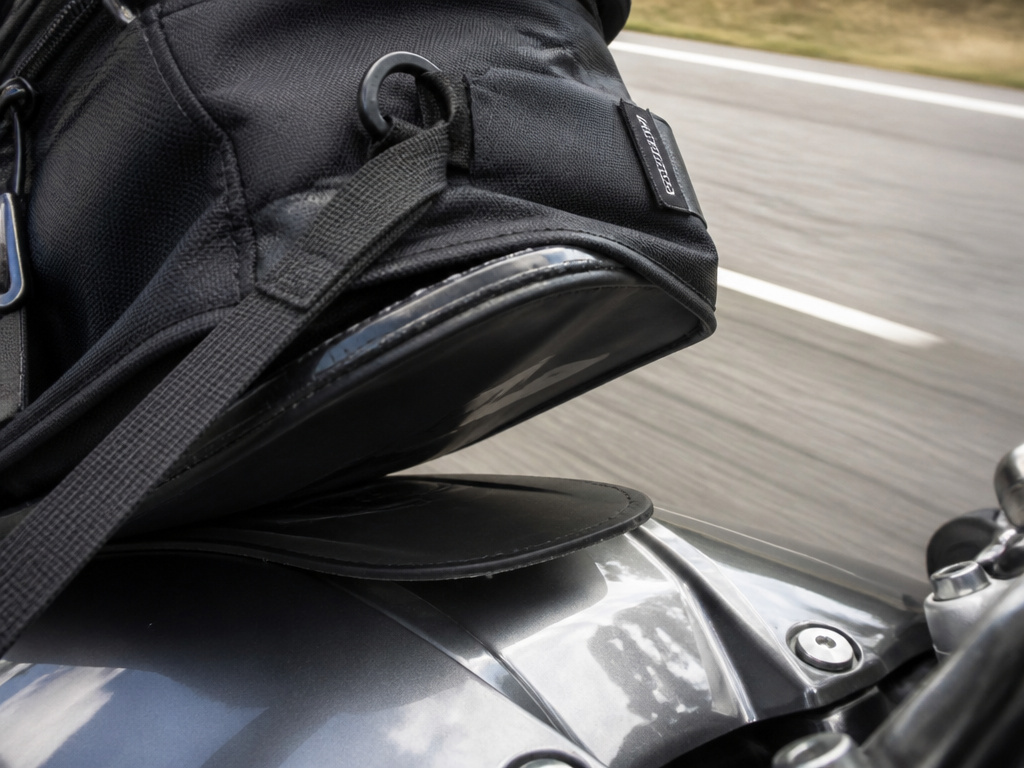
Will the bag stay on when you need it to? Security isn’t about the parking lot; it’s about the 80-mph crosswind, the pothole, and the day you packed it a little too full.
Manufacturers disagree on the safe use of magnets alone. Rynox explicitly states that for “any real load, highway speeds, or rough roads, the straps are what keep the bag on, even on metal tanks.” They recommend using both systems together. Conversely, Touratech markets its TMACS magnetic ring system as secure enough for off-road use with no mention of supplemental straps.
I learned this the hard way on an old steel-tank sportbike. The magnetic bag held fine for months of commuting. Then I loaded it with a heavy camera kit for a weekend trip. On a high-speed highway merge, the front corner lifted and flapped violently. The magnets held, but the scare was real. Now, for anything over 5 pounds, I use the straps too. The magnets are for positioning; the straps are for peace of mind.
The physics are straightforward in the magnetic vs strap motorcycle tank bag debate. Magnets create a point force. Hit a big bump, and the bag can pivot on that point, breaking the seal. Wind can get under a leading edge and lever it up. Straps distribute load across multiple anchor points, preventing pivot and lift. Some sources, like Rynox, state straps are essential for security in rough conditions, while others, like Touratech, market magnetic systems as sufficient for off-road use.
| Scenario | Magnetic-Only Risk | Strap-Mount Security | Verdict |
|---|---|---|---|
| Highway cruising (light load) | Low. Stable air pressure. | High. | Either is fine. |
| Aggressive backroad riding | Moderate. Lateral G-forces can shift bag. | High. | Strap recommended. |
| Off-road/gravel roads | High. Impacts can break magnetic seal. | Very High. | Strap essential. |
| Heavy load | High. Leverage promotes lift. | High. | Use straps; magnets optional for alignment. |
Paint and Surface Protection
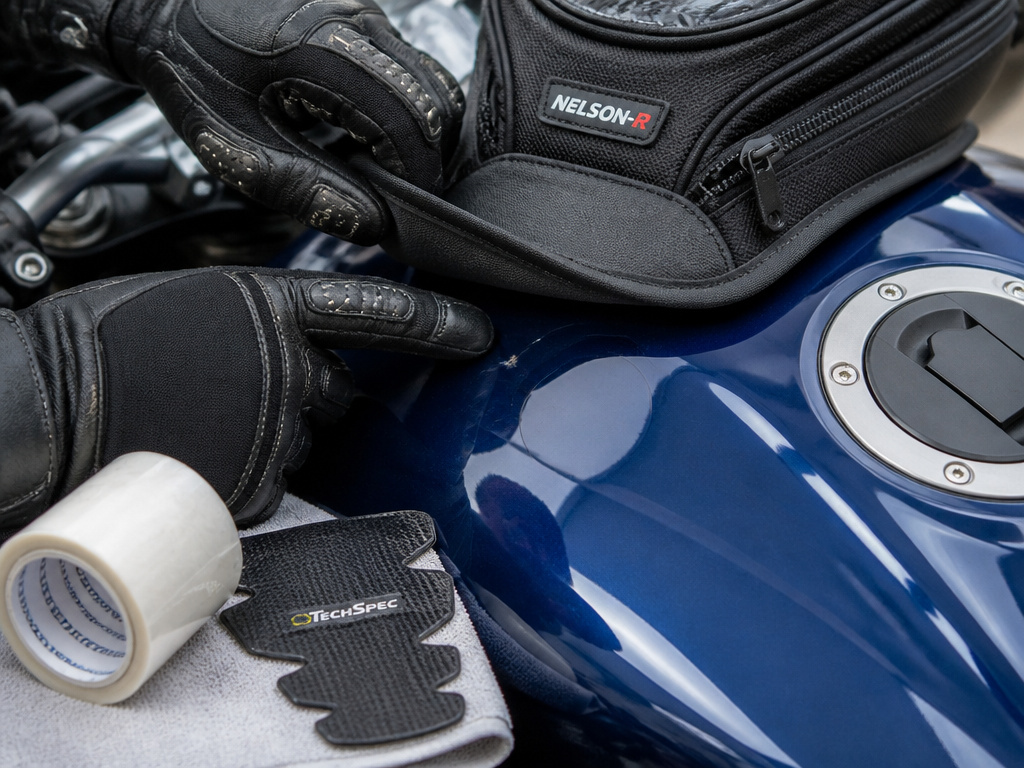
All tank bags can damage your paint. The question is how, and how you can prevent it.
Magnetic bags risk microscratches and “halo” marks. Even with a soft base, microscopic grit can get trapped between the magnet and the tank. Every slight movement, a tiny shift from wind or bike vibration, grinds that grit into the clear coat. Over time, this creates a circular, dull patch exactly where the magnet sits. The Rynox manual warns to “lift the magnets up clear from the tank without dragging them” and to keep the flaps “clean and free of debris.”
Strap bags risk abrasion at contact points. The nylon webbing itself is soft, but the buckles, plastic adjusters, or dirt trapped under the straps can rub the paint on the sides of the tank. A strap that’s a fraction too long will flap and wear a spot raw on a long ride.
The solution for both is a barrier. A clear paint protection film cut to the bag’s footprint is the most effective and invisible option. A dedicated tank pad made of grippy material like TechSpec also works and can enhance grip for a magnetic bag. Never mount any tank bag directly onto a dirty or dusty surface. Wipe the tank clean first, every time.
Capacity, Handling, and Ergonomics
A tank bag changes how you interact with your bike. A bad choice here makes every ride worse.
Capacity directly impacts security. A magnetic bag’s hold weakens as weight increases. A magnetic bag’s hold weakens as weight increases, so consider the load for high-speed stability. A strap bag can handle more weight, but you must balance the load. Heavy items go low and centered. The GIVI EA130 expands from 20 to 26 liters, which is a significant volume to place on the tank, regardless of mounts.
Ergonomics are critical. A bag that’s too tall blocks your view of the instrument cluster. It can also hit the handlebars at full lock, a dangerous surprise in a parking lot. Before you buy, check the bag’s height against your bike’s layout. A “low-profile” bag like the 4.5-inch tall Nelson Rigg Commuter Lite is often a better fit on sporty bikes than a taller expedition bag.
The bag also becomes part of your riding position. On long rides, you might rest your chest or arms on it. A stiff, well-padded bag can be a welcome comfort. A floppy one is useless. This is where reading detailed tank bag reviews from riders who’ve logged miles matters more than marketing specs.
The Third Option: Tank Ring Systems (Like Touratech TMACS)
There’s a third path that splits the difference: the dedicated tank ring. Systems like the Touratech TMACS involve installing a permanent ring around your fuel cap. The bag then locks onto this ring with a mechanical twist-lock, often assisted by magnets for alignment.
Pros: It’s incredibly fast, often quicker than a magnetic bag. It’s extremely secure, with a positive mechanical lock. It eliminates paint contact entirely. Cons: It’s bike-specific and often expensive. Installation is permanent (though usually requires no tank modification). It locks you into a single brand’s bag ecosystem.
This option shines for riders who use one bike for serious long-distance touring and want the ultimate blend of speed and security. For a multi-bike owner or a casual rider, it’s often overkill. This system deserves attention because it addresses the core trade-offs of the magnetic vs strap debate in a clever, if costly, way.
Long-Term Durability: What Wears Out First?
Gear ages. How these two mounting systems fail tells you which is a better long-term buy.
Magnet strength can degrade. While rare-earth magnets are generally stable, physical impacts, extreme heat, and corrosion can weaken them over many years. The protective cover over the magnets may wear over time. The Rynox Optimus warranty is 6 months.
Straps and buckles face mechanical wear. Nylon webbing degrades with UV exposure. Buckle teeth can wear down, reducing their grip. The hook-and-loop (Velcro) used on many strap systems can lose its grab over time. The SW-MOTECH PRO Enduro uses 1680D ballistic nylon.
In my experience, a strap bag’s failure is gradual and obvious, a fraying strap, a loose buckle. A magnetic bag’s failure could be sudden, one day it just doesn’t hold as tight. For long-term reliability, the strap system’s wear is easier to inspect and anticipate. This is a small point, but it matters if you plan to own the bag for a decade.
How to Choose: A Rider Profile Checklist
Stop overthinking. Answer these four questions, and the right type for you becomes obvious.
-
What is your fuel tank made of? (Check your owner’s manual or a magnet.)
- Steel: Proceed. Plastic/Aluminum: Buy a strap bag. Stop here.
-
What is your primary riding style?
- Commuting/Touring with frequent stops: Magnetic bags save real time and hassle.
- Adventure/Off-road/Spirited Backroad Riding: The security of a strap bag is essential.
-
How much are you typically carrying?
- Phone, wallet, snacks, small camera: A magnetic bag is perfectly adequate.
- Large camera, lunch, layers of clothing, heavy tools: You need the distributed hold of straps.
-
How important is paint perfection to you?
- “It’s a tool, scratches happen”: Either, just keep it clean.
- “I want to keep it showroom-fresh”: Use a tank protection film with either type, or consider a tank-ring system.
If you’re still stuck, buy a dual-mount bag like the Nelson Rigg Commuter Lite. It’s the pragmatic choice that allows you to test both methods on your bike. You can start with magnets for daily use and add the straps for trips. Understanding motorcycle luggage types helps frame this choice within your whole packing system.
Popular Tank Bag Models Compared
Several established brands offer distinct approaches to mounting and capacity. The Nelson Rigg Commuter Lite uses a dual mounting system with four shielded magnets and straps, offering an expandable capacity. For purely magnetic options, the GIVI EA130 Easy Range bag uses pockets with magnets and straps, expanding significantly in volume. The SW-MOTECH PRO Enduro is a dedicated strap-mounted bag made from ballistic nylon with a specific volume range. Other models like the Rynox Optimus and GEARS IWire rely on multiple powerful magnets, with the Optimus including straps for a combined mounting approach. The Rhinowalk Mechanic Series uses a unique fuel-cap ring mount with a magnetic release.
Frequently Asked Questions
Do Magnetic Tank Bags Scratch Paint?
Yes, they can. Microscopic dirt trapped between the magnet and the tank acts like sandpaper. The risk is managed by always wiping the tank clean before mounting and using a paint protection film or tank pad. Magnets themselves, when clean, are less abrasive than a stray nylon strap buckle.
Are Magnetic Tank Bags Secure at High Speed?
They can be, but with caveats. For light loads on smooth roads, yes. For heavy loads, high winds, or rough surfaces, the holding force can be overcome. Manufacturers like Rynox explicitly recommend using the included backup straps for highway speeds or real loads, even on metal tanks.
What Is the Best Tank Bag for a Motorcycle?
There is no single “best.” The best tank bag is the one that matches your tank material and riding style. For a steel-tank tourer, the Rynox Optimus Tank Bag V2 offers a dual mounting system. For a plastic-tank adventure bike, the SW-MOTECH PRO Enduro is a strap-mounted option. Our best motorcycle bag guide breaks this down by category.
Can You Use a Magnetic Bag on a Plastic Tank?
No. The magnets will not adhere. You must use a strap-mounted bag, a tank-ring system, or a magnetic bag that includes and requires the use of its backup strap system for non-metal tanks.
What About Theft? Are Tank Bags Easy to Steal?
Both types are relatively easy for a thief to remove quickly. Magnetic bags are the fastest to steal. The best deterrent is to never leave valuables in a tank bag when unattended. Take the bag with you, or at a minimum, remove phones, wallets, and electronics. The bag itself is rarely the target.
The Bottom Line
Here is what actually held up after testing both types across different bikes: your tank material makes the first and final call. Ignore that, and you’ve bought a problem.
For the majority of riders on modern bikes, especially adventure bikes with plastic tanks, a strap-mounted bag is the default, safe choice. It works everywhere, and its security on rough roads is proven. The inconvenience is a tax you pay for versatility and peace of mind.
If you have a steel tank and live on the highway, a magnetic bag is a legitimate upgrade to your daily ride. Just respect its limits. Use the straps when it’s full, keep the magnets clean, and protect your paint. That convenience is real, but it’s not free.
When in doubt, get a dual-mount bag. It’s the one-piece answer that allows the bike and the road to teach you what you really need. Pack it, ride it, and see what stays put. Your own experience is the final review that matters.
