
Light up Motorcycle Vest Pros and Cons: How to Choose
This post contains affiliate links. As an Amazon Associate, we earn from qualifying purchases.
A light-up motorcycle vest is a piece of safety gear, not a protective one. It uses active LEDs or electroluminescent material to make you more conspicuous at night or in low light. The pros are increased visibility and attention-grabbing illumination, while the cons include cost, added bulk, battery dependence, and a legal gray area for flashing modes. For daytime riding, a high-visibility color and passive reflective material are often more effective and less complicated.
That distinction, safety gear versus protective gear, is the whole point. One helps drivers see you. The other is designed to save your skin in a slide. Confusing the two is how riders end up with a false sense of security. A light-up vest is a visibility aid, and its value depends entirely on when, where, and how you use it. Considering the light up motorcycle vest pros and cons is therefore essential.
What follows is a breakdown of what the research actually says, where manufacturers and regulators disagree, and how to layer a light-up vest with your real riding jacket without creating a tangled, uncomfortable mess.
Key Takeaways
- Daytime benefit is contested. A 2003 Transport Research Laboratory study concluded reflective vests “do not ensure greater visibility for daytime riders,” while other sources advocate for bright colors in low-light situations.
- Battery life is a real logistical chain. The Roadgear LED vest claims about 150 hours per CR 2032 battery, but forgetting to check or replace them leaves you with a dark, non-reflective mesh bib.
- Flashing modes exist in a legal gray zone. The NHTSA states legality for rider-worn active lighting is determined by state law, and a webBikeWorld reviewer notes it’s “mostly illegal to have a flashing light on the motorcycle when riding.”
- It is an add-on layer, never a replacement. The LEDWear Aurora jacket review explicitly warns: “we do not recommend wearing the Aurora jacket as a replacement for a protective motorcycle jacket.”
- Integration with your jacket is the comfort key. A vest that twists, binds, or traps heat because it doesn’t fit over your armor will get left in the garage.
The Daytime Visibility Debate
Where sources disagree: The 2003 Transport Research Laboratory study, cited by the U.S. Army when it dropped its vest mandate, states reflective vests “do not ensure greater visibility for daytime riders,” while U.S. Army Regulation 385-10 advises bright colors or reflective coating for low-light situations. The same study found daytime headlamps were far more beneficial for driver attention.
That study flips the script. It suggests that for your daily commute in sunshine, the money and hassle of an LED vest might be better spent on upgrading your motorcycle’s lighting or simply wearing a bright-colored jacket.
The Army’s regulation still advises bright colors or reflective coating for low-light situations, which makes sense. But the core finding is that passive reflection needs contrast to work. Against the chaotic backdrop of traffic, signs, and buildings, a vest can blend in.
| Visibility Factor | Daytime Effectiveness | Night/Low-Light Effectiveness |
|---|---|---|
| High-Vis Color (Yellow/Orange) | High – creates contrast against most backgrounds | Low – color disappears without light source |
| Passive Reflective Material | Low – needs direct light to reflect | Very High – reflects car headlights directly |
| Active LED/EL Lighting | Moderate – adds a novel element | Very High – self-illuminating and novel |
| Motorcycle Headlight (on) | High – unexpected, moving light source | Essential – primary forward illumination |
The “novel” element is key. Both the Transport Research Laboratory and other reviewers point out that unexpected colors or lights, like the USTEK Night Armor‘s vibrant blue electroluminescent piping, can break a driver’s pattern recognition. That split-second of “what is that?” is what gets you seen.
So, should you wear one during the day? If your goal is maximum conspicuity and you’re willing to manage batteries, it adds a layer. But don’t assume it’s a magic shield. A bright helmet and a hi-vis jacket or high-visibility vest might deliver 90% of the benefit with 10% of the fuss.
Battery Logistics & Emergency Use
The promise on the box is long life. The reality in your garage is another chore. The numbers are clear.
The Roadgear LED vest is powered by a single CR 2032 battery per light tube, with a claimed battery life of about 150 hours. The LEDs themselves are rated for 150,000 hours. That sounds fantastic until you realize the human element. Those batteries don’t die predictably. One tube goes dark a week before the other. You’re now riding with a single, off-center point of light that might confuse more than it helps.
Common mistake: Assuming “set and forget” battery life. A vest with a dead battery is often just a thin, dark mesh shell with poor passive reflectivity. You’ve lost both your active and primary passive visibility aids.
Here is the honest take on the light up motorcycle vest pros and cons. You need a system.
- Track your hours. If you ride two hours a night, twice a week, that’s 16 hours a month. Change the batteries every season, no questions asked.
- Carry spares. Tuck a two-pack of CR 2032s in your bike’s tool kit or a vest pocket. They’re tiny.
- Do a pre-ride light check. Turn it on before you put it on. Fumbling for hard-to-reach switches with gloves on is a recipe for skipping the check.
What happens if the power fails mid-ride? This is the emergency use case. A vest like the VUZ LED model is made from 50D Waterproof Polyester with an inner mesh liner. Even dark, that reflective material will work when car headlights hit it. A cheap vest might skimp on that material, leaving you invisible if the lights die.
Your best visibility at night strategy is layers: active lights plus quality passive reflectives plus a bright helmet. One failing shouldn’t wipe you off the radar.
Integration with Existing Gear
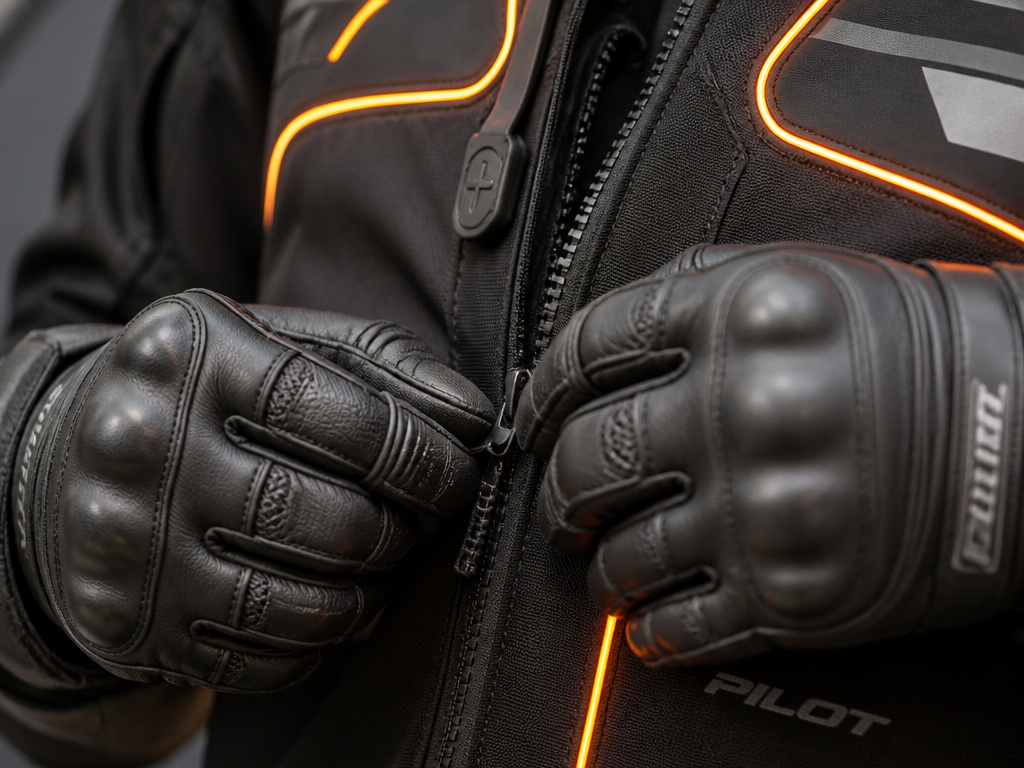
This is where most reviews of the light up motorcycle vest pros and cons fall short. They’ll talk about the vest’s specs but not how it actually feels over a touring jacket at mile 300. The goal is to add visibility, not discomfort.
The webBikeWorld reviewer put it bluntly about the Roadgear vest: it’s “difficult to actually wear.” The thin material twists, the tubes have a natural curl, and the switches are hard to find. If a piece of gear is annoying, you won’t wear it. It’s that simple.
I prefer vests designed to be worn over armor, not instead of it. The USTEK Night Armor ANSI-2 style complies with the ANSI/ISEA 107-2004 standard for Class II garments. That’s the right starting point.
When evaluating fit, ask these questions:
- Sleeve Holes: Are they large enough for the armored shoulders on your jacket to pass through without binding?
- Torso Length: Does it cover your kidney belt or the back protector in your jacket, or does it ride up when you’re in a riding position?
- Closure: Can you operate the zipper or clips with winter gloves on?
- Bulk: Does it create a parachute effect at highway speed, or is the material relatively trim?
A mesh liner, like in the VUZ vest, helps with breathability. But on a hot day, any extra layer traps heat. Sometimes the best way to be more visible is to buy a riding jacket with integrated hi-vis panels and reflective piping from the start, eliminating the layer altogether.
Legal Concerns and Flashing Modes
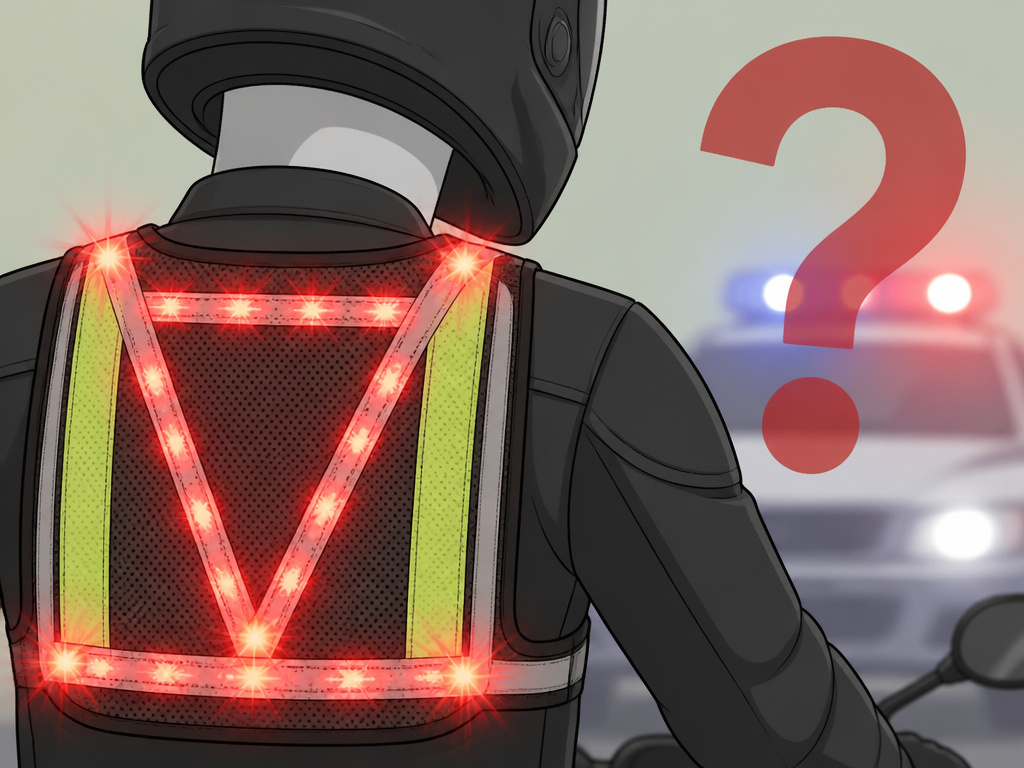
This is the murkiest water. You buy a vest with a cool strobe function to break through driver inattention. Is it legal to use?
The answer is: it depends, and the burden is on you to find out. The NHTSA’s interpretation letters clarify that while no Federal Motor Vehicle Safety Standard directly prohibits selling a helmet-mounted light accessory, its use may violate FMVSS 218 (if attached to the helmet) or FMVSS 108 (if wired to the bike). For rider-worn vests, the NHTSA states legality is determined by state law.
Many states have laws prohibiting red or blue flashing lights on non-emergency vehicles, and some broadly ban any forward-facing white strobe. A flashing light on your back might be interpreted as an imitation emergency vehicle, which could land you a ticket.
The part nobody mentions: Using a strobe might make you more noticeable, but it can also irritate other drivers, potentially making them act aggressively. It can also destroy the night vision of drivers behind you, possibly making them a hazard.
The safe play is to use a solid mode. The attention-grabbing benefit of an unexpected, solid colored light, like the 6 white front and 4 red rear LEDs on the VUZ vest, is a feature at night without stepping into legal ambiguity. Always check your specific state’s vehicle code before relying on a flashing mode. Your local motorcycle safety foundation instructor or riders’ group often has the best on-the-ground knowledge.
Real-World Effectiveness vs. Reflective Tape
Is a light-up vest like the VUZ model (about $70) worth it compared to reflective tape? The answer hinges on your riding profile.
For the occasional night rider or someone who just wants a boost for dusk commutes, strategic tape is hard to beat. Apply it to your helmet, jacket shoulders, and bike cases. It’s always on, never needs batteries, and adds zero bulk or heat. The science behind reflective gear shows it’s incredibly effective when hit by headlights.
But active lighting has two unique advantages:
- It creates its own light. In predawn hours, in fog, or in rain where other drivers’ headlights are scattered, your vest is a beacon. Reflective tape needs light to hit it; LEDs provide their own.
- The novelty factor. As cited earlier, an unexpected light source, a steady glow from electroluminescent piping or soft LED tubes, can trigger a driver’s cognitive response faster than another reflective strip in a sea of road signs.
Consider a hybrid approach. A high-quality hi-vis vest with substantial reflective panels (like the VUZ) gives you passive protection. The active LEDs are for when conditions are worst. This way, you’re covered if the batteries die or you choose not to turn them on for a short trip.
Accident Performance & Crash Protection
This is the essential point. A light-up vest offers zero abrasion resistance, zero impact protection, and its electronics could become a snag hazard in a crash.
The materials tell the story. The Roadgear LED vest is a piece of safety gear. The VUZ vest is made from 50D Waterproof Polyester. These are shells designed for light and reflection, not for pavement.
Before you start: Never confuse a safety vest with a riding jacket. The wires, batteries, and plastic light tubes inside a vest are not designed to withstand impact or sliding forces. In a crash, they could break and create sharp edges or entanglement points.
Your protective layer must be underneath. This is why the integration section is so critical. The vest must fit over your CE-armored motorcycle jacket, not in place of it. The entire discussion about motorcycle vests for protection is about armored or abrasion-resistant vests, not illuminated ones.
Think of the light-up vest as the outermost, sacrificial layer. Its job is to get you seen. Your jacket, gloves, pants, and boots have the job of protecting you if, despite your best efforts, that visibility fails.
Do Light Up Vests Make You Look Like a New Rider?
Some riders worry that wearing a light-up vest over their gear can project an inexperienced image. The concern is that prioritizing high-visibility over a traditional motorcycle jacket aesthetic marks you as overly cautious or new to riding. However, safety considerations often outweigh style. A reviewer explicitly warns against wearing an LED jacket as a replacement for a protective motorcycle jacket, confirming these vests are an accessory, not core gear. The choice comes down to prioritizing visibility to other drivers over perceived rider culture. You can always remove the vest once you reach your destination if image is a primary concern.
Light Up Vest vs. Leather, Textile, or Armored Vests
A light-up vest is not a substitute for a protective motorcycle vest. Unlike leather, textile, or armored vests designed for abrasion resistance and impact protection, a light-up vest is solely a visibility aid. Its construction is typically thin material, sometimes with a mesh liner, offering no crash protection. You must wear it over or under your proper riding gear, which can lead to a bulky, uncomfortable fit. One reviewer noted a specific LED vest was ‘difficult to actually wear’ due to its design. Think of a light-up vest as an electronic accessory similar to auxiliary lights, not as part of your protective armor layer.
Frequently Asked Questions
Are light-up vests legal in all states?
The legality of the sale of light-up vests is generally not restricted. However, the use of them, especially flashing modes, is governed by state vehicle codes. Some states prohibit flashing lights on non-emergency vehicles. The NHTSA defers to state law on this matter, so you must check your local regulations. Solid, non-flashing modes are far less likely to cause legal issues.
How long do the batteries really last?
Manufacturer claims vary. The Roadgear LED vest claims about 150 hours on a set of two CR 2032 batteries. Real-world life depends on the mode (steady vs. Flashing), temperature, and battery quality. Plan to replace them seasonally with name-brand batteries to avoid premature failure.
Can you wash a light-up motorcycle vest?
Almost never with the electronics installed. You must remove the battery packs, light tubes, or control units according to the manufacturer’s instructions. The fabric shell may be hand-wiped or, if specified, gently machine-washed. Submerging the electronic components will destroy them. Always check the care label first.
Is a light-up vest better than a hi-vis vest?
“Better” depends on conditions. For pure daytime visibility, a high-quality hi-vis vest with ample reflective material is simpler and very effective. For night, dawn, dusk, or foul weather, a light-up vest provides its own illumination, which can be superior. Many riders opt for a hybrid: a hi-vis vest with integrated LEDs for both passive and active visibility.
Do motorcycle cops use light-up vests?
Some do, particularly for traffic control or night-time roadside stops where maximum conspicuity is critical for their safety. They typically use specialized, ruggedized versions. The principles are the same: active lighting grabs attention in complex visual environments.
The Bottom Line
A light-up vest is a tool for a specific job: enhancing your conspicuity in low-light or poor-visibility conditions. It is not a substitute for a protective jacket, a motorcycle’s own lighting system, or smart riding.
The data shows its daytime benefit is debatable, and its value comes with strings attached: battery management, fit over your real gear, and legal caution around flash modes. If you do a lot of night riding, commuting in the rain, or touring through changing conditions, the investment and hassle can be worth the added visual footprint. For everyone else, a solid high-visibility gear strategy with reflective elements and a bright helmet is the simpler, more reliable path.
Either way, the goal is the same. Make yourself an object drivers can’t help but notice. How you get there is a choice of tools, but the work is required.
