
How to Remove Scratches From a Motorcycle Visor: The Test
This post contains affiliate links. As an Amazon Associate, we earn from qualifying purchases.
How to remove scratches from a motorcycle visor starts with the fingernail test. If a nail catches, replace the visor. Sources disagree on polishing: HelmetsAdvisor says light surface haze on uncoated visors may be reduced with Novus 2 or Meguiar’s PlastX, while Polaris endorses polishing compounds for polycarbonate. KYT bans abrasive powders, and Clearline says polish removes coatings.
That test separates a surface scuff from a scratch that already breaks the optical surface. A nail catches means the plastic or coating is cut deep enough to scatter light.
What follows: the coating check, the polish-or-replace call, the DIY methods that sources disagree on, and the cleaning habits that prevent glare, all part of the broader how to remove scratches from a motorcycle visor process.
Key Takeaways
- Run the fingernail test before any abrasive touches the visor.
- Sources disagree on polishing coated visors: KYT and Clearline advise against abrasives, while Polaris endorses polishing compounds for polycarbonate surfaces. Check your helmet maker’s guidance.
- Use water and a soft cloth for routine cleaning, not paper towels or gloves.
- Replace deep or central-vision scratches instead of sanding them flat.
- Keep an anti-fog solution ready because fogging prompts risky wiping.
Does That Mark Pass the Fingernail Test?
The nail test separates a scuff from a cut. I replace scratched visors immediately now.
HelmetsAdvisor says a scratch that catches a fingernail cannot be fixed safely by polishing. KYT Americas says damaged visors may limit visibility, especially at night, and must be replaced immediately.
A scratch that catches a fingernail has cut below the optical surface. On coated visors, abrasives can remove anti-scratch, anti-fog, or UV layers. Light surface haze on an uncoated visor may be reduced with dedicated plastic polish, but deep scratches scatter light at night and should be replaced immediately before riding.
The test is blunt. It still beats guessing. If the mark sits in your direct line of sight, HelmetsAdvisor says treat it as a safety issue. If the mark is only dirt, washing fixes it. KYT says wash with water and mild detergent using a soft cloth.
What Happens to Coatings When You Polish
The KYT Americas visor care instructions ban solvents, alcohol, oils, and abrasive powders. They also say not to use paper cloths, heat sources, or cleaners not marketed by KYT, even if labeled suitable.
Clearline Moto’s motorcycle visor care guide says almost every motorcycle visor made in the last three decades is injection-moulded polycarbonate. That plastic is soft enough that a dry glove or paper towel can leave marks.
HelmetsAdvisor’s scratch removal guidance says most modern visors carry anti-fog, UV, or anti-scratch coatings. Once abrasives remove those layers, they cannot be restored. I would treat any visor as coated until proven otherwise.
The Breath Test for Anti-Fog
Breathe on the visor and watch the fog. A fan-pattern spread that clears slowly points to an anti-fog coating. Droplets that bead may point to a hydrophobic outer coat or no inner coat. When in doubt, assume coated.
Before any polish, wash the visor with helmet visor cleaners or mild soap and water. Do not confuse visor care with car windshield cleaners, which may contain alcohols or abrasives.
Never use these on a visor:
- Ammonia glass cleaner strips coatings and attacks polycarbonate.
- Petrol, white spirit, brake cleaner, and acetone cause crazing that can appear days later.
- Dry paper towels, gloves, sleeves, and jeans legs leave wood-fiber or grit scratches.
- Silicone spray and furniture polish leave a film that smears in rain.
What polishing products work on a visor?
Sources directly conflict on this. Polaris states minor scratches can be removed with a high-quality polishing compound designed for polycarbonate. HelmetsAdvisor notes that light surface scratches on uncoated visors can sometimes be reduced with a dedicated plastic polish. However, KYT Americas warns against using abrasive powders, and Clearline Moto lists polish and cutting compound as unsafe. The key factor is your visor’s coating. Most modern visors have anti-scratch or anti-fog coatings that abrasives will destroy. If you attempt polishing, use only products specifically formulated for plastic and understand you risk damaging the coating permanently.
How do I polish scratches out step-by-step?
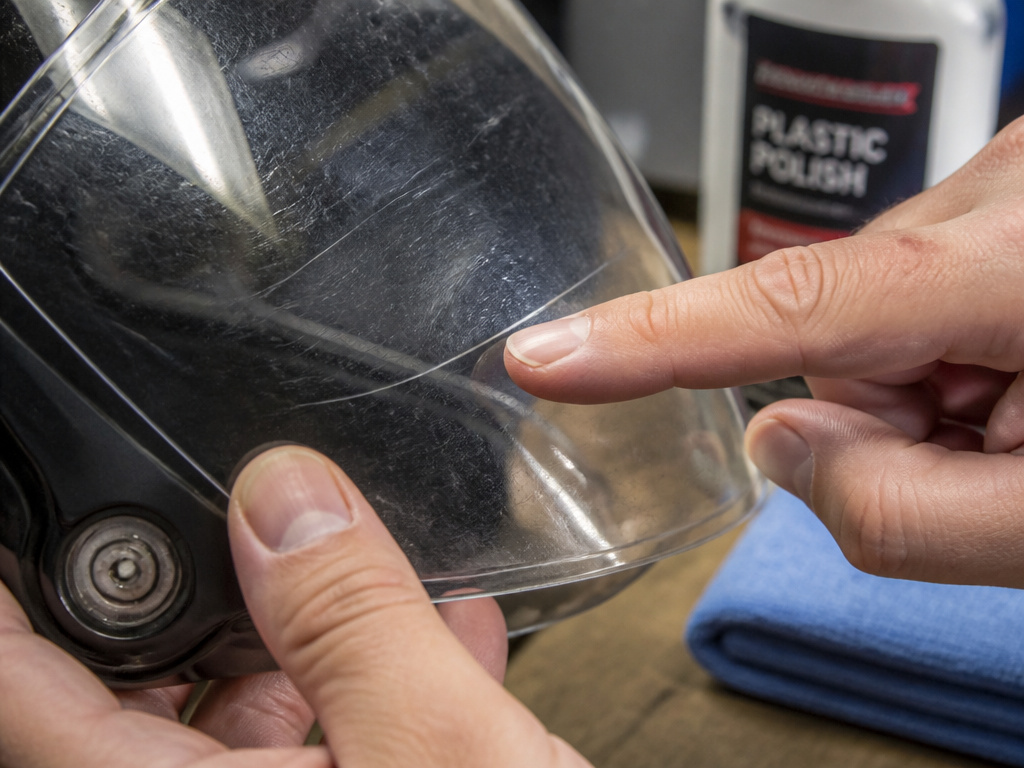
First, determine if polishing is even viable. Perform the fingernail test; a scratch you can catch is too deep. Check for coatings by breathing on the visor; a slow-clearing fan pattern suggests an anti-fog layer, which polishing will ruin. If the visor is uncoated and the scratch is superficial, start by thoroughly cleaning the area with water and mild detergent and a soft cloth. Apply a small amount of a plastic-specific polishing compound to a clean, soft cloth. Using light pressure, rub in small, circular motions over the scratched area. Frequently wipe the area to check your progress. Stop immediately if the surface becomes hazy.
Can I use a power tool to buff my visor?
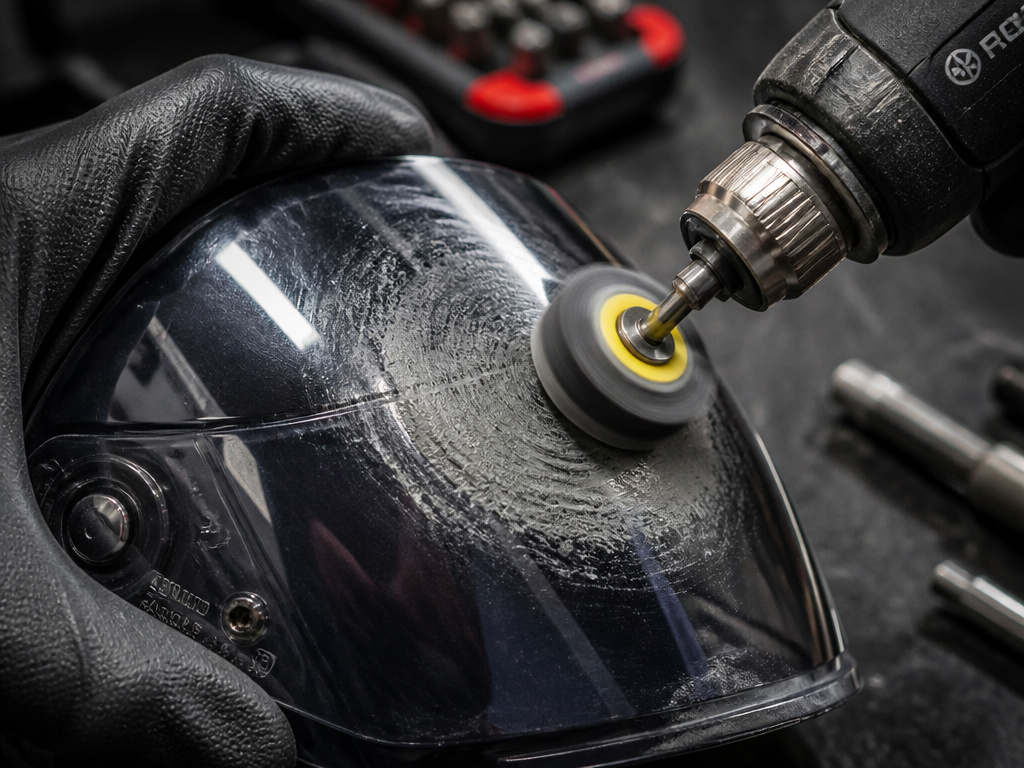
Using a power tool like a drill with a polishing head carries significant risk. While some anecdotal sources mention using a rotary buffer machine with auto polish, other sources like KYT and Clearline caution against abrasives. The high speed and concentrated friction can generate excessive heat and pressure. More critically, it will almost certainly destroy any anti-scratch or anti-fog coatings on the visor’s surface, leaving a permanently cloudy or damaged area. This damage can scatter light, potentially creating glare. For safety, manual methods with extreme caution are the limit for attempted repair; a power tool aggressively removes material and coatings, likely making the visor unsafe to use.
How to Remove Scratches From a Motorcycle Visor Without Ruining Coatings?
The safe order is test, clean, then decide. The sources split hard on polishing compounds. Polaris says minor scratches on polycarbonate windshields can be removed with a compound made for that material. Helmet-focused sources treat a visor differently because coatings are part of the optical surface.
Polaris is talking about a windshield, not a helmet visor. That distinction matters. HelmetsAdvisor says anti-fog is on the inside and anti-scratch hardcoat is on the outer surface.
| Method | Source position | Main risk |
|---|---|---|
| Polishing compound | Polaris endorses it for polycarbonate windshields | Helmet coatings may be stripped |
| Dedicated plastic polish | HelmetsAdvisor allows it on uncoated visors | Coated visors lose the hard coat |
| Wet sanding | Motorcycleheart and Not Sealed describe it | Abrades coating and optics |
| Toothpaste | Not Sealed suggests it; Clearline says no | Hard coat removal |
| Dedicated visor cleaner | Clearline says safe; KYT says KYT-marked only | Coating or warranty conflict |
Stop guessing. If your visor has a coating, the “fix” can create a clear patch that looks fine in daylight and scatters
Frequently Asked Questions
Can I use toothpaste to polish out a visor scratch?
While some DIY guides suggest it, using toothpaste is not recommended. Toothpaste is a mild abrasive designed for enamel and can be inconsistent, potentially damaging delicate visor coatings or creating new micro-scratches. For any polishing attempt, it is safer to use a product specifically formulated for clear plastics, like a dedicated plastic polish.
Will polishing a scratched visor affect its anti-fog properties?
Yes, polishing will very likely degrade or completely remove any applied anti-fog coating. Most modern visors have these coatings on the interior surface, and using any abrasive compound, even a gentle polish, will strip this layer away. You may fix a scratch but then need to rely on aftermarket anti-fog treatments or a new visor to prevent fogging.
Is it safe to sand a deep scratch to make it smooth?
Sanding a deep scratch is generally not considered a safe repair for a motorcycle visor. Sanding removes material and can create a distorted optical area that scatters light, causing glare and halos, especially at night. This permanent alteration compromises clarity and safety, making professional replacement the only reliable solution for a deep scratch.
How can I tell if my visor has a protective coating that shouldn’t be polished?
Manufacturer documentation is the most reliable source. If that’s unavailable, look for labels like “anti-fog,” “anti-scratch,” or “Pinlock® ready” on the visor or its packaging. As a general rule, most contemporary visors have some form of coating, so assuming a coating is present and avoiding abrasives is the safest approach to prevent unintended damage.
