
How to Condition a Leather Motorcycle Jacket: Step-by-Step
This post contains affiliate links. As an Amazon Associate, we earn from qualifying purchases.
Conditioning a leather motorcycle jacket means applying a leather conditioner, grease, or oil to maintain the material’s protective qualities. Typically, it is applied to a clean, dry exterior, though some manufacturers recommend applying conditioner when the leather is almost dry after getting wet.
That’s the core job. The disagreement starts right after you hear it. One manufacturer says clean after every ride. Another says every three to six months. One says a little mild soap is fine for grime. Another says never use detergent. They’re not wrong; they’re describing different priorities. The guy who rides daily in summer sweat wants the salt off before it etches. The weekend cruiser wants a calendar reminder. This is the central debate on how to condition a leather motorcycle jacket.
What follows: the step-by-step from the brands that make the gear, the visual and tactile signs that tell you it’s time, and how to navigate the conflicting advice without wrecking a $700 jacket.
Key Takeaways
- Clean the jacket first with a damp cloth or a manufacturer-approved leather cleaner; some manufacturers advise against using detergent, while others say a small amount of mild soap is acceptable for stubborn grime.
- Apply conditioner when the leather is dry, using a thin, even layer and massaging it in with circular motions on high-wear areas like shoulders and elbows.
- Conditioning frequency varies: Indian Motorcycle recommends applying dressing at least once a month, while Tapir suggests a maintenance care every 3–6 months.
- Dry the jacket naturally at room temperature away from heat, sunlight, or fans; applying heat removes the natural oils you’re trying to replace.
- Store on a wide, padded hanger in a dark, well-ventilated area; never wrap it in plastic, and avoid gasoline or chemical fumes.
Why Conditioning Isn’t Optional
Leather is skin. Ride in the sun, and the heat pulls moisture out. Park near the engine or exhaust, and the ambient warmth does the same. Get caught in the rain, and the water evaporating from the surface takes oils with it. The material doesn’t just get stiff. It loses its ability to slide, which is why understanding how to condition a leather motorcycle jacket is critical.
That’s the abrasion resistance you bought the jacket for. A dry, cracked jacket can tear where a supple one would glide. The Indian Motorcycle manual states it plainly: exposure to moisture causes structural changes and permanent damage. Regular conditioning prevents that type of damage.
You’ll feel it before you see it. A jacket that needs conditioning loses its soft drape over your arms. It starts to feel like cardboard, not hide. The color may look faded or chalky in spots, especially on the shoulders. That’s the leather crying out for oil.
The Step-by-Step Conditioning Process
For oil-tanned leather, apply the conditioner with a clean cloth using a straight wiping motion rather than a tight swirl. Wipe off any excess and allow it to dry before riding, typically one hour. Be cautious not to allow droplets or globs to sit on an area, as that spot will darken permanently. . Indian Motorcycle Leather Care Instructions
Follow this sequence. Miss a step, and you risk stains or a greasy mess that attracts dirt.
- Clean the Jacket. Wipe down the entire exterior with a damp, soft cloth to remove dust, bug splatter, and road film. For stubborn grime, Indian Motorcycle says a small amount of mild soap in the water is acceptable, followed by a clean-water rinse. ICON says never use any form of detergent, use a garment leather cleaner like their ICON leather cleaner and conditioner. When in doubt, use a dedicated leather cleaner.
- Dry Completely. Hang the jacket on a wide, padded hanger in a temperature-neutral area. Never use a heater, hair dryer, fan, or direct sunlight. Hang the jacket on a wide, padded hanger in a temperature-neutral area. This step is essential. Applying conditioner to damp leather can be problematic; ICON recommends applying conditioner when the leather is almost dry after wetting, and a second coat when completely dry.
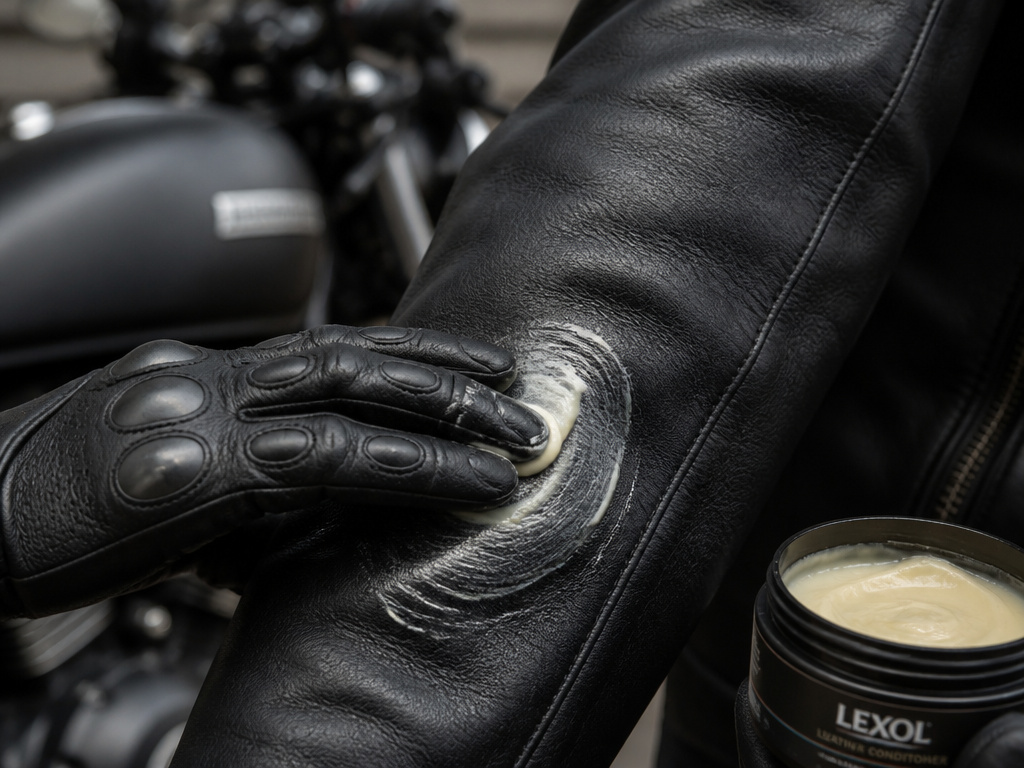
- Apply Conditioner. Pour a small amount of your chosen leather conditioner, grease, or oil onto a clean, soft cloth or sponge. Apply a thin, even layer over the entire jacket. Do not pour the product directly onto the leather.
- Focus on High-Wear Areas. Spend extra time massaging the conditioner into the shoulders, elbows, collar, and sleeves with circular motions. These spots flex, rub, and lose oils fastest.
- Let It Absorb. Walk away. Let the jacket sit for the recommended time, typically one hour as suggested by Indian Motorcycle. The leather will drink in the conditioner.
- Buff Lightly. After the absorption time, take a fresh, dry cloth and lightly buff the surface. This removes any residual product that would feel tacky and collects dust. Alpinestars notes to buff lightly after absorption.
When to Condition and How Often
Here’s where the brands disagree. You have two legitimate schedules, and which one you follow depends on your riding life.
| Riding Profile | Recommended Frequency | Source & Rationale |
|---|---|---|
| Daily rider, parked in sun, exposed to elements | At least once per month | Indian Motorcycle: Apply as part of regular maintenance. More often in extreme conditions. |
| Weekend rider, fair-weather use, garage-stored | Every 3–6 months | Tapir: A maintenance care every few months keeps leather supple and prevents cracking. |
| After the jacket gets wet (rain, sweat) | After drying, before storage | Tapir: Clean and re-grease after drying (but not directly at the heater!). |
| New jacket or stiff leather | Condition after initial cleaning | Helps soften the hide and begin the break-in process. |
| End-of-season storage | Once per year, deep condition | Tapir: Intensive cleaning and conditioning before storage preserves the jacket. |
Sources disagree on cleaning frequency: Dainese suggests cleaning after every ride if needed, while Tapir recommends cleaning with a damp cloth when dirty and a more thorough clean every 3-6 months. The leather is losing oils every time you wash it.
Short version: If you’re putting miles on the bike, condition monthly. If it’s a fair-weather jacket, mark your calendar for every spring and fall.
Choosing a Conditioner: Grease, Oil, or Branded Cream?
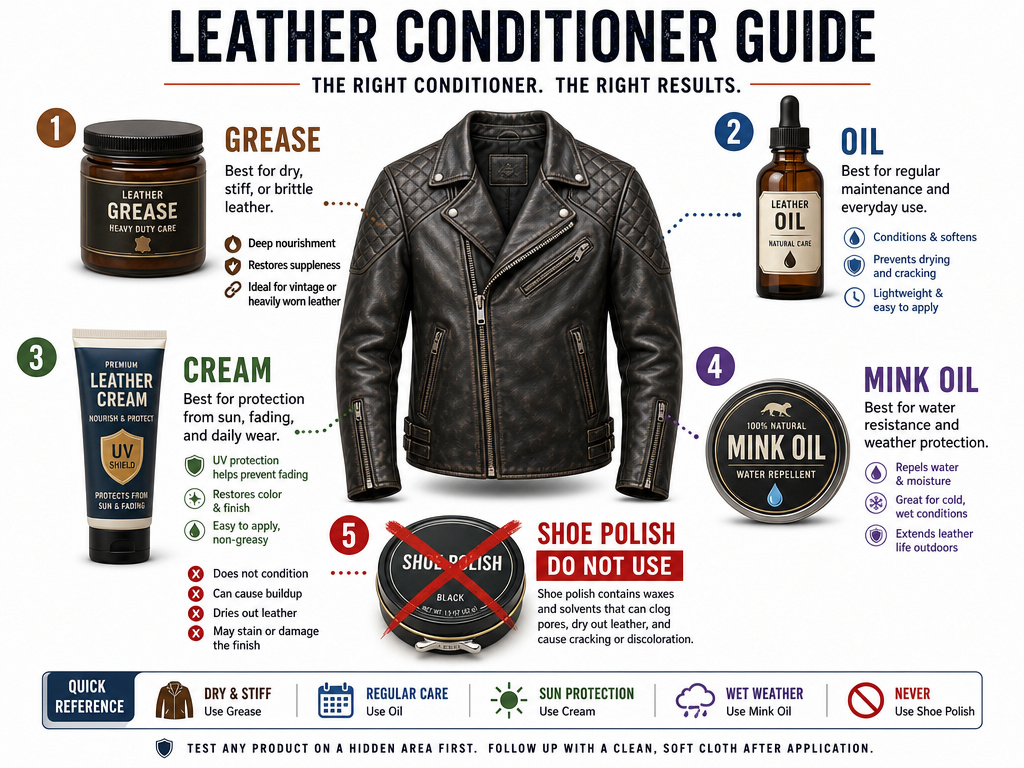
Not all conditioners are the same, and “never use on suede” is the first filter. The Indian Motorcycle dressing, ICON cleaner and conditioner, and Dainese kit are all formulated for oil-tanned motorcycle leather. They’re safe bets.
For a deeper dive:
| Product Type | Best For | Considerations |
|---|---|---|
| Leather Grease (e.g., Tapir) | Dry, stiff, or heavily worn leather; pre-storage treatment | Thicker, provides a robust moisture barrier. Can darken leather slightly. |
| Leather Oil (e.g., Tapir) | Regular maintenance, keeping leather supple | Lighter absorption, good for frequent use. Less likely to alter color dramatically. |
| Branded Cream/Conditioner (ICON, Dainese, Alpinestars) | General use, especially with that brand’s gear | Formulated to match their leather’s tannage. Often include UV protection. |
| Mink Oil | Traditional water resistance | Can darken leather significantly. May stay tacky if over-applied. |
| Shoe Polish | Never use | Contains dyes that can damage leather and stain clothing (per Indian Motorcycle). |
I keep a bottle of ICON leather cleaner and conditioner in my gear bin. It does both jobs, and the conditioner buffs out clean without a greasy feel. For a jacket that’s been through a wet season, a more intensive cleaning and conditioning before storage, as Tapir recommends, can help preserve it.
Common mistake: Using a household or automotive cleaner on leather. ICON’s instructions explicitly state: DO NOT use any form of detergent, bleach, automotive cleaner, or dry cleaning chemicals. These items will damage the garment.
What to Do After Your Jacket Gets Soaked
Rain happens. Sweat happens. A wet jacket is an emergency, but not a complex one.
First, don’t panic and don’t apply heat. Wipe off any surface mud or grime with a damp cloth. Then, hang it on that wide, padded hanger in a room with normal airflow. Hang the jacket on a wide, padded hanger in a room with normal airflow to dry. Keep it away from heaters, fans, and sunny windows.
According to ICON, when the leather is almost dry, apply a conditioner to keep it flexible. When it has completely dried, apply an additional coat. This two-stage approach helps lock in moisture before the hide fully tightens up.
Tapir agrees on the sequence but adds a warning: clean and re-grease after drying, but not directly at the heater. The principle is the same, moisture strips oils, so you must replace them as part of the drying recovery.
Storage: The Final Step in the Cycle
Conditioning and storage are a package deal. You condition to prepare the leather for a period of rest.
- Hang it right. Use a wide, padded hanger. A wire hanger can create shoulder bumps that are hard to remove.
- Location matters. A dark, well-ventilated area, per ICON. A dry place away from direct sunlight or moisture, per Tapir. A closet is ideal; a damp basement or hot attic is not.
- Never wrap in plastic. Leather needs to breathe. A plastic bag traps humidity and invites mold.
- Keep it clean. Before storing, do a final wipe-down to remove dust. This prevents grit from being pressed into the leather over months.
This is also the time to handle any other gear. The same principles apply to maintaining your leather boots and leather gloves. A full gear check in the fall saves you a headache in the spring.
How to Care for Different Leather Types Like Cowhide and Lambskin
Leather type changes the care approach. Cowhide is thick and robust, often used in motorcycle jackets for its durability. Lambskin is softer and more pliable from the start. The core principle is the same: both need cleaning and conditioning to replace lost oils and prevent drying. However, the frequency and amount of product can differ. One manufacturer notes that black leather, due to its tanning process, may not require dressing as often. Always apply conditioner in a thin, even layer, massaging it in with circular motions, especially on high-wear areas. For any leather, avoid harsh chemicals and never use shoe polish. Let the jacket dry fully away from direct heat before applying any product.
When to Consider Professional Leather Cleaning and Conditioning
For deep stains, extensive wear, or if you’re unsure about handling a specific leather, a professional service is a solid option. They have the tools and expertise to clean settled dirt in stages and apply treatments correctly. This is particularly useful after a jacket has been heavily soiled or soaked, as improper drying can cause permanent damage. Professionals can also handle removable liners and padding separately, which may require machine washing at a low temperature with a liquid detergent. If you choose a service, ensure they specialize in garment leather and understand that motorcycle jackets should never be put in a washing machine or exposed to dry cleaning chemicals. It’s a way to guarantee a thorough, safe treatment for your gear.
Frequently Asked Questions
What is the best conditioner for a motorcycle leather jacket?
The best conditioner is one formulated for oil-tanned motorcycle leather. Brand-specific options like ICON leather cleaner and conditioner, Dainese protective cream, or Indian Motorcycle Leather Care Dressing are safe, effective choices. For general use, a dedicated leather oil or grease from a brand like Tapir works well.
Are you supposed to condition leather jackets?
Yes. Conditioning replaces the natural oils lost to sun, heat, and moisture. Without it, the leather dries out, becomes stiff, and can crack, compromising its abrasion resistance and weather protection.
Can I use Vaseline to condition my leather jacket?
Do not use Vaseline. It is a petroleum jelly, not a leather conditioner. It can clog the leather’s pores, remain permanently tacky, attract dirt, and degrade some materials used in stitching or lining. Use a product designed for leather.
Is Murphy’s oil soap good for leather?
Murphy’s Oil Soap is a wood cleaner. Do not use it on leather. ICON and other manufacturers explicitly warn against using any form of detergent, which includes soaps not formulated for garment leather. It can strip oils and leave a residue.
The Bottom Line
Conditioning is simple maintenance, not a mystery. Clean it, dry it away from heat, apply a thin layer of conditioner, and buff it. Do that monthly if you ride hard, or every few months if you don’t.
The one rule every source agrees on: never use heat to dry leather. That single mistake does more immediate damage than skipping a conditioning session. The heater pulls the oils out faster than any summer sun. Hang it, walk away, and let time do the work.
Everything else, the frequency debate, the grease versus oil choice, is fine-tuning. Get the drying right first. Then keep the leather fed. It’s the only thing standing between you and a jacket that feels like armor, not cardboard.
