
How to Break in a Leather Motorcycle Jacket: Step-by-Step
This post contains affiliate links. As an Amazon Associate, we earn from qualifying purchases.
To break in a leather motorcycle jacket, wear it in short, frequent sessions for 2–4 weeks, flex the stiff panels by hand, and condition it with a product like Leather Honey or Bick 4 once before the first wear and then every few sessions. Never use direct heat, soak the jacket, or apply household oils.
That timeline isn’t a guess. It’s the average from testing across dozens of jackets, where the difference between a jacket that molds to you and one that fights you comes down to three things: the leather type, your wearing schedule, and what you put on it. Understanding how to break in a leather motorcycle jacket is key to this process.
What follows: the exact wearing and conditioning schedule that gets a stiff jacket ride-ready, the one spec that never changes (hint: check the shoulders), and the methods that can crack the leather before you ever hit the road.
Key Takeaways
- Condition once before the first wear. Apply a conditioner like Leather Honey or Bick 4 and let it soak in. This lubricates the fibers so they flex, not grind.
- Wear in short, active sessions. An hour or two moving around at home does more than one long, static stretch. Get into a riding pose, bend your arms, twist your torso.
- The shoulders will not change. Buy for a correct shoulder fit from the start. Break-in softens the body and sleeves; it does not resize the jacket’s frame.
- Avoid direct heat and soaking. Hair dryers, furnace vents, and soaking in water dry out leather, make it brittle, and can damage internal armor carriers.
- According to Revv Rider, a full, complete break-in can take anywhere from 6 weeks to 3 months if you’re only wearing it on rides.
The Leather Type Timetable
The hide you bought decides the clock. A lambskin jacket starts soft; a horsehide race suit is built like armor. The timelines below come from comparative testing — they’re what happens when you pair regular wear with active conditioning from day one.
Most full-grain cowhide jackets reach 70 to 80 percent of their final suppleness in 14 to 21 days with active break-in methods. Goatskin typically reaches that threshold in 7 to 12 days, and lambskin in 5 to 8 days. Horsehide requires 21 to 35 days due to its uniquely dense fiber structure.
If you just wear the jacket passively on rides, expect those timelines to stretch by two to four times. That’s the difference between a methodical break-in and hoping it happens.
| Leather Type | Feels When New | Active Break-In to “Very Comfortable” | Best For |
|---|---|---|---|
| Cowhide | Firm, structured | 2–4 weeks | Most motorcycle jackets; durable and protective. |
| Lambskin | Soft, supple | 1–2 weeks | Fashion and cafe-racer styles; not abrasion-rated for riding. |
| Goatskin | Flexible, lightweight | 7–12 days | Vintage flight jackets; good balance of softness and toughness. |
| Horsehide | Extremely stiff, dense | 3–5 weeks | Premium race suits and vintage repro; unparalleled durability. |
The “active” part is key. It means conditioning before you wear it and putting in deliberate movement sessions, not just wearing it on the bike. A cowhide jacket worn only on weekend rides might take three months to feel right, which is why a methodical approach to how to break in a leather motorcycle jacket is essential. The same jacket, worn around the house for an hour a day and conditioned at the start, hits that 70–80% supple mark in under a month.
Where this goes sideways: Buying a size up because you think the leather will shrink. It doesn’t. Leather jackets do not shrink meaningfully during break-in under normal conditions. If the shoulders are tight when new, they’ll stay tight. Buy the size that fits your shoulders correctly; everything else adjusts.
The Step-by-Step Method
This isn’t about secret hacks. It’s about a sequence that works for any full-grain jacket, drawn from what gear testers and tailors actually do.
Before you start: Read any manufacturer guide that came with the jacket. Some tanneries use specific finishes that react better to certain conditioners. If there’s armor inside, note where the pads sit — you’re breaking in the leather around them, not the hard plastic.
- Condition first. Apply a thin, even layer of a non-silicone conditioner like Leather Honey, Bick 4, or Chamberlain’s Leather Milk to the entire jacket, focusing on stiff areas like elbows and shoulders. Let it absorb for at least 6 hours, ideally overnight. This step lubricates the leather fibers so they flex more easily as you move.
- Wear it off the bike. Put the jacket on at home. Zip it up. Sit in a chair like you’re on the bike — back straight, arms forward. Hold that pose for fifteen to twenty minutes. Then get up and move: reach for shelves, cross your arms, twist your torso side to side. Do this for an hour or two, several days a week. Your body heat and movement are the primary softening agents.
- Flex by hand. After each wearing session, take the jacket off and manually bend the stiffest panels. Gently roll the cuffs, knead the elbows, and flex the back panel. You’re training the creases to form where your body needs them.
- Store it right. Hang the jacket on a wide, padded hanger between sessions. This preserves the shoulder shape. Never fold it tightly or drape it over a chair, which sets unnatural creases.
- Repeat and condition again. Follow this cycle for the first 3–4 weeks. Condition the jacket again after every 3 to 4 wearing sessions. As the leather softens, you’ll feel the sessions get easier.
Common mistake: Wearing the jacket for one eight-hour marathon session. That exhausts you and does less for the leather than six separate one-hour sessions. Fatigue sets in, you stop moving, and the break-in stalls.
Your first few rides should be short — ten to thirty minutes. Pay attention to pressure points. Mild tightness is normal. Sharp pain, numb hands, or restricted head movement are not. Those are fit issues break-in won’t fix.
Can You Use Water or Heat?
Here’s where the guides split. Some say never. Others say it’s a proven rider trick. The answer is conditional, and the damage from getting it wrong is permanent.
On Water and Steam: The Split Opinion
- Angeljackets & Rumble Leathers: Advise against it. They state water can stain, stiffen, and dry out leather as it evaporates. For safety gear with armor, water plus heat can damage armor carriers and stitching.
- Snag Leather & Revv Rider: Approve a light, controlled method for full-grain cowhide. The key is a fine-mist spray bottle for uniform dampening, wearing the jacket as it dries, and applying conditioner within 2 hours of the jacket being fully dry.
- Motolords: Suggests using bathroom steam from a shower (not direct water) to relax fibers, followed by wearing.
Sources disagree on using moisture: Angeljackets and Rumble Leathers advise against wetting a jacket, while Snag Leather and Revv Rider approve light misting for full-grain cowhide only, and Motolords suggests using bathroom steam as part of how to break in a leather motorcycle jacket. Never soak the jacket. For any jacket with sewn-in armor, thin leather, or suede, skip water entirely. Steam is less risky than direct water, but still not recommended for gear with complex liners.
Most sources strongly advise against using direct heat like hairdryers or direct sun, though
Motolords mentions a no-heat/air-fluff dryer method only for very heavy jackets with strong warnings.
- Never use a hairdryer, furnace vent, space heater, or direct sun. These sources strip natural oils, weaken fibers, and lead to brittleness and cracking.
- The “dryer method” (no-heat air fluff cycle with towels) is mentioned only for very heavy jackets, and even then with strong warnings that it can damage thin leather, lambskin, and suede.
The risk isn’t worth the reward. Body heat from wearing is the only safe heat source.
Conditioning: What, When, and What to Avoid
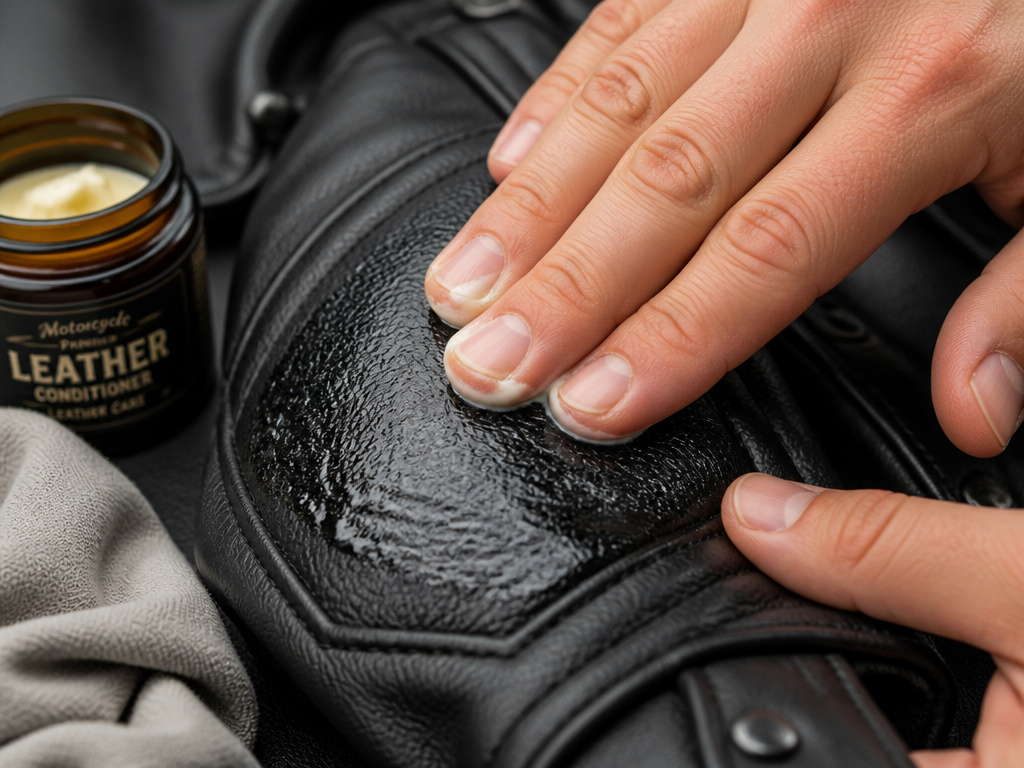
Conditioner isn’t just for looks. It replaces the natural oils that wearing and weather pull out of the leather. Skip it, and the fibers grind against each other, slowing break-in and making the leather dry and prone to cracking.
What to Use
Stick with products made for leather. The three conditioners cited most often for their proven results are Leather Honey, Bick 4, and Chamberlain’s Leather Milk. All are non-silicone penetrating formulas.
What to Avoid
- Silicone or waterproofing conditioners: They create a surface film that blocks future conditioning.
- Neatsfoot oil on goatskin or lambskin: It darkens the leather unevenly.
- Household oils (olive, coconut, etc.): They go rancid, darken leather, and clog pores.
- Alcohol or vinegar: They break down dyes and dry out the leather.
When to Condition
- During active break-in (first 3–4 weeks): Once before the first wear, then after every 3 to 4 wearing sessions.
- After break-in (regular maintenance): Every 2 to 3 months for a jacket in regular use, or whenever the leather feels dry to the touch.
- Dry climate adjustment: Low indoor humidity from heating (November–March) pulls moisture faster. Condition more frequently.
Easy to miss: Lambskin is susceptible to over-conditioning. If the surface looks greasy or stops absorbing product, you’re doing it too often. Extend the time between applications.
A proper leather conditioner routine is the single biggest factor in long-term jacket health. For a deep dive on product choices, see our roundup of the best leather conditioners for motorcycle gear.
Mistakes That Set You Back (or Ruin the Jacket)
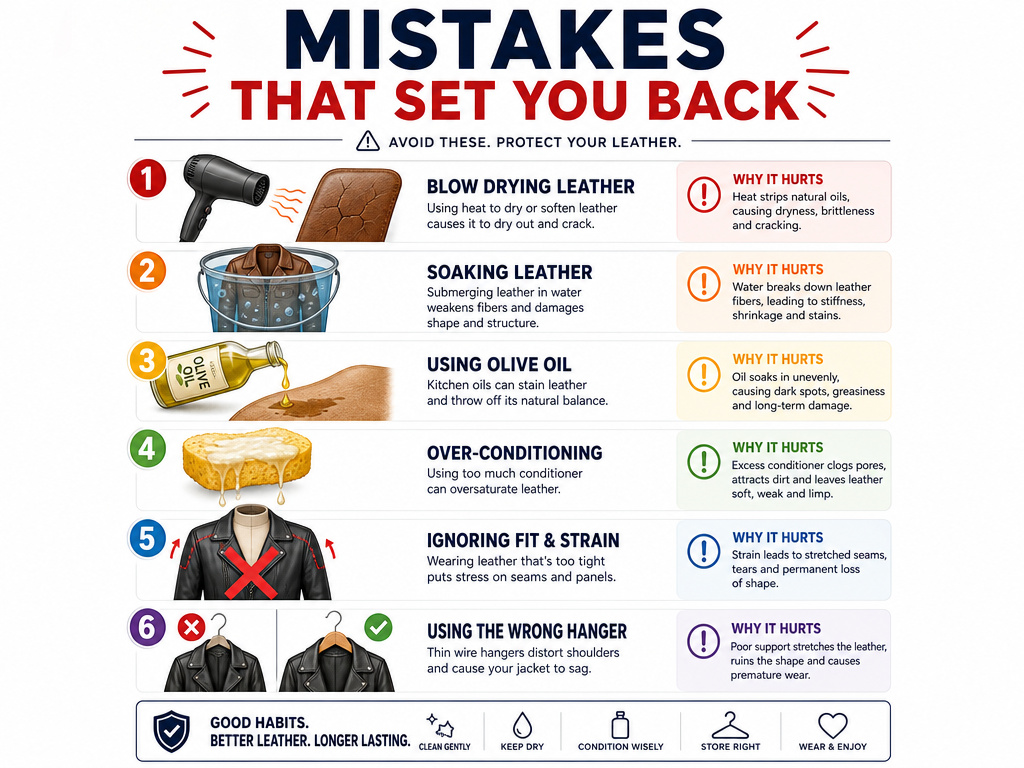
Breaking in a jacket is a gentle process. Force it, and you work against the material’s nature.
- Using Direct Heat. This is the fastest way to ruin leather. The fibers dry out and become brittle. The damage might not show up until the first time you stress the leather in a fall.
- Soaking the Jacket. Submerging or heavy saturation causes shrinking, warping, and can crack the finish as it dries. It also compromises thread and liner integrity.
- Applying Household Products. Olive oil, coconut oil, shoe polish, or Vaseline darken leather unevenly, clog pores, and can turn rancid. They also make future proper conditioning ineffective.
- Over-Conditioning. More is not better. Excess conditioner makes leather overly soft or mushy, distorting its shape and reducing its durability and abrasion resistance.
- Ignoring Shoulder Fit. You can’t break in a shoulder seam. If the jacket is tight across the shoulders when new, it always will be. This is the core of a correct motorcycle jacket fit.
- Storing Improperly. A flimsy wire hanger will deform the shoulders over time. Always use a wide, padded hanger to maintain the jacket’s silhouette.
If you need to clean your leather motorcycle jacket during break-in, use a dedicated leather cleaner, not soap or all-purpose cleaners.
How to Know It’s Working (and When to Stop)
You’ll feel progress before you see it. In the first week, the jacket will start to crease naturally at the elbows and lower back when you sit. The initial “suit of armor” stiffness will give way to a firm but flexible feel.
A good test: put the jacket on and hug yourself. At first, you might not be able to cross your arms fully. After two weeks of active sessions, you should be able to do it without strain.
The break-in is “done” when the jacket feels like a natural extension of your riding posture. There’s no drag on your arms when you reach for the bars, no pinch in the armpits, and the armor stays planted over your elbows and shoulders without shifting.
This process isn’t exclusive to jackets. The same principles of short, active sessions apply when you need to break in new motorcycle boots or break in a stiff pair of riding gloves.
Can you roll or ball up a leather jacket to break it in?
This is a form of manual manipulation that can help soften the fibers. The idea is to gently work the leather by rolling or folding it, focusing on stiff areas like the elbows and waist. This mimics the natural creasing and movement that happens during wear. Be careful not to force sharp, permanent creases, especially in thinner leathers like lambskin. Between sessions, hang the jacket on a wide, padded hanger to help the shoulders keep their shape. This method is best used in combination with regular, short wearing sessions to encourage the leather to conform to your body without causing stress to the seams.
Can you use a dryer to break in a leather jacket?
Some riders use a no-heat or air-fluff cycle in a dryer to help break in a heavy jacket. The method involves placing the jacket in the dryer with clean towels or dryer balls to create gentle tumbling and friction. This should only be considered for thick, sturdy leather like heavy cowhide. It is not suitable for thin leather, lambskin, or suede, as the tumbling can damage these materials. The process should be brief and monitored. Remember, direct heat from a dryer’s normal cycles, a hairdryer, or a furnace vent strips natural oils and weakens the leather, leading to brittleness and cracking.
Can sun or rain help break in a leather jacket?
Deliberate exposure to sun or rain is not recommended. Leaving a jacket in direct sun allows UV rays and heat to degrade the leather surface, stripping its natural oils. Getting it soaked in rain can lead to water saturation, which, combined with heat, makes leather dry and brittle and can damage internal armor carriers and stitching. For a controlled approach, some methods suggest very light misting for full-grain cowhide only, followed by conditioning once dry. A safer alternative is to hang the jacket in a bathroom filled with shower steam, not in the water itself, to allow the fibers to relax without direct wetting or heat damage.
Frequently Asked Questions
What is the fastest way to break in a leather motorcycle jacket?
The fastest safe way combines conditioning before the first wear with daily, active wearing sessions off the bike. Condition with Leather Honey or Bick 4, then wear the jacket for an hour or two at home while moving and flexing. This can get a cowhide jacket to a very comfortable state in 2–3 weeks instead of 2–3 months.
Can I sleep in my leather jacket to break it in?
You could, but it’s inefficient and uncomfortable. Your movement is limited, so you’re not working the leather through a full range of motion. Short, active sessions while awake are far more effective.
How many hours does it take to break in a leather jacket?
There’s no fixed hour count because it depends on leather type and activity. With active methods, cowhide can reach a very comfortable state in a few weeks. That’s easily achieved with an hour a day for three weeks.
Why does my new leather jacket smell so strong?
It’s normal. The smell comes from tanning agents and finishes. It will fade over time, especially if you hang the jacket in a well-ventilated area between wears. Conditioning also helps by replacing factory residues with neutral-smelling oils.
Should I buy a leather jacket a size bigger for break-in?
No. This is a common mistake. Leather does not shrink during break-in, and the shoulder seams will not stretch. Buy the size that fits your shoulders correctly when new. The body and sleeves will soften and conform to you; a size up will always be baggy.
Before You Go
The one rule that overrides everything else: if the jacket causes strong pain, numbness, or restricts your head movement in the first few short wears, that’s not a break-in issue. It’s a fit issue. No amount of conditioning or wearing will fix a poorly sized jacket. In that case, the best move is to exchange it for the correct size before you start the process.
A well-chosen leather motorcycle jacket is a decade-long investment. The break-in period is your partnership with it — a few weeks of deliberate care for years of perfect fit and protection. Put in the sessions, use leather conditioner when the leather feels dry, and let your body heat do the work. The jacket will remember.
