
10 Best Oil For Motorcycles in 2026
This post contains affiliate links. As an Amazon Associate, we earn from qualifying purchases.
We chose the Valvoline 4-Stroke Full Synthetic Motorcycle Oil as the best overall for its excellent wet clutch protection and general street use. For premium full synthetic performance, the Motul 7100 4T is a top choice, while Castrol Power1 4T excels in high-temperature conditions. Choosing the correct motorcycle oil is essential for engine longevity and smooth clutch operation.
Top 10 Motorcycle Oils in the Market


Certain content that appears on this site comes from Amazon. This content is provided "as is" and is subject to change or removal at any time.
The Best Motorcycle Oils, Reviewed
Valvoline 4-Stroke Full Synthetic Motorcycle Oil

What We Like
- Exceptional wet clutch protection prevents slippage
- Up to 10X better friction protection vs. JASO standard
- Reformulated to maximize horsepower and fuel efficiency
- Enhanced protection against deposits and sludge
Trade-offs
- Single quart container is small for frequent oil changes
- Packaging is smaller than the 4-liter Motul 7100 4T
With up to ten times the friction protection of the JASO standard, this oil is built to keep your engine and clutch running smoothly under demanding conditions. The full synthetic formulation with advanced additives is a smart choice for riders who want to maximize performance and oil life across a range of popular four-stroke motorcycles. It meets the critical JASO MA-2 spec, which means your wet clutch gets the protection it needs for crisp, reliable shifts mile after mile.
The trade-off comes in the packaging size. You’re getting a single quart, which is perfect for topping off or for bikes with smaller sumps. If you’re maintaining multiple motorcycles or have a bike that takes several quarts, you’ll go through these bottles quickly. For riders who need a larger volume, the Motul 7100 4T comes in a convenient 4-liter jug. Still, for its balanced performance and broad compatibility, this Valvoline synthetic is a reliable foundation for any maintenance routine.
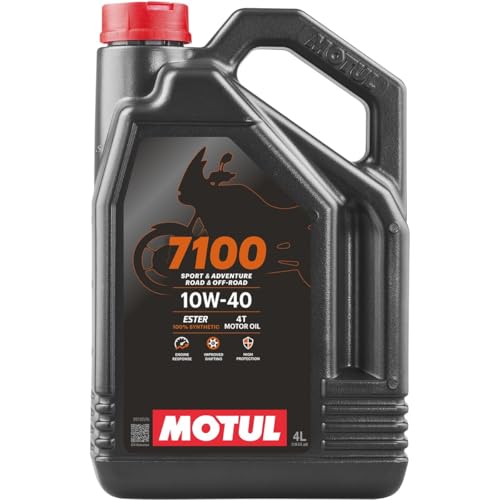
Motul 7100 4T Full Synthetic Motorcycle Oil
What We Like
- JASO MA2 certification ensures smooth wet clutch operation
- API SP rating protects modern emission systems
- Extended drain intervals up to 5,000 km
Trade-offs
- Large 4-liter jug is bulky for small storage spaces
- Weighs 7.9 pounds, heavier than single-quart containers
A 100% synthetic ester formula bonds to metal surfaces at a molecular level, creating a protective film that resists breakdown during sustained high-RPM operation. This means critical engine and transmission parts stay shielded during aggressive sport riding or long adventure tours. Certified to the latest JASO MA2 standard, the oil provides precise friction characteristics for noticeably smoother gear shifts and responsive clutch feel. Its viscosity remains stable across a wide operating temperature range, delivering consistent protection in both spirited canyon runs and hot summer commutes.
Its premium positioning includes packaging that may not suit every rider. The 4-liter jug is substantial, which is efficient for frequent oil changes on multiple bikes or a single bike with a large sump. However, it’s less convenient for riders with limited garage space compared to smaller containers like the Valvoline 4-Stroke Full Synthetic sold in single quarts. For the ultimate track-day weapon where absolute peak performance is the only goal, some owners point to Motul’s own 300V Factory Line as the next step up. For the vast majority of spirited street and adventure riding, though, the 7100 4T delivers a high level of engineered protection without stepping into pure racing territory.
Castrol Power1 4T Full Synthetic Motorcycle Oil
What We Like
- Trizone technology protects engine, clutch, and gearbox.
- Race-derived technology for maximum engine acceleration.
- Excellent shear stability prevents viscosity breakdown.
- Exceeds API SL and JASO MA-2 specifications.
Trade-offs
- The 10W-50 viscosity is thicker than many 10W-40 competitors.
- Pack of 6 format may be excessive for a single oil change.
The 10W-50 viscosity and extreme high-temperature performance mean this oil is built to handle intense heat, whether from stop-and-go traffic or spirited riding on a hot day. That’s what makes it a strong choice for riders who push their machines hard or frequently ride in demanding conditions. Its Trizone formulation also delivers protection across the entire powertrain, so you don’t have to worry about separate oils for the clutch and gearbox.
Its 10W-50 viscosity rating is thicker than the common 10W-40 found in many other full synthetics. This might be overkill for casual riders or those in consistently mild climates. For general street use without extreme heat, a 10W-40 oil could be a more versatile fit.
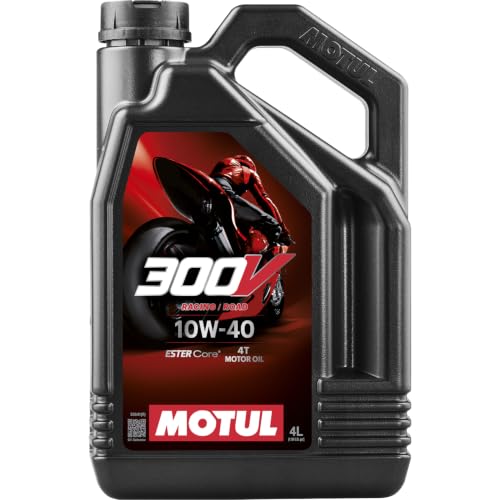
Motul 300V Factory Line Racing Motor Oil
What We Like
- Increases engine power and throttle response
- Provides buttery smooth, precise gear changes
- Superior protection at extreme temperatures and high RPMs
- Race-proven formula for track and street use
Trade-offs
- Designed for high-performance engines, not basic commuter bikes
The proprietary ESTER Core Technology creates a polar bond with metal surfaces to dramatically reduce internal friction. This frees up hidden horsepower, delivering a noticeable increase in power and acceleration that riders can feel. It’s the right choice for owners of modern sport bikes who push their machines on track days or spirited rides, where maximum performance and protection under extreme stress are non-negotiable. The formulation is engineered specifically for the integrated gearboxes and wet clutches found in these high-revving engines.
Motul 300V is engineered for maximum power and protection in high-performance engines, which means it’s a specialized choice. The 4-liter jug is a large container, so it’s suited for riders who go through oil quickly or service multiple bikes, rather than for topping off a single motorcycle from a small bottle. For reliable, everyday street commuting without extreme thermal demands, a more general-purpose oil like Motul’s own 7100 line might offer a better balance.
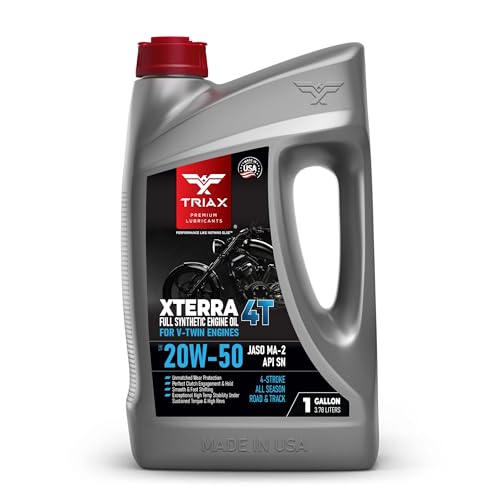
Triax XTerra V-Twin Full Synthetic Engine Oil
What We Like
- Compatible with major V-Twin motorcycle brands
- Shear-stable viscosity for severe service conditions
- Optimized friction for smooth clutch feel and shifting
- High oxidation stability resists sludge and varnish
Trade-offs
- One-gallon container is large for riders needing less oil
- 20W-50 viscosity is thicker than common 10W-40 alternatives
- Container dimensions require more storage space than quarts
Formulated specifically for V-Twin engines, this full synthetic 20W-50 oil is built for the high thermal stress of air-cooled and liquid-cooled cruisers. It suits riders of Harley-Davidson, Indian, or Japanese V-Twin models who need an oil exceeding stringent JASO MA-2 and API specifications for both engine and wet-clutch protection. The advanced ester formulation with built-in friction modifiers delivers consistent performance during long highway cruising and high-RPM operation.
The one-gallon jug is efficient for larger sump capacities or for riders performing multiple oil changes a season. For a simple top-off, it is less convenient than the quart-sized bottles of oils like Valvoline’s 4-Stroke Full Synthetic. This formulation meets the key requirements for dedicated V-Twin owners seeking a high-specification synthetic oil with broad model compatibility.
Product photos
Honda Pro Honda GN4 Motorcycle Oil

What We Like
- Formulated specifically for motorcycle engine requirements.
- Enhanced shear-resistance and viscosity stability.
- Promotes engine cleanliness for modern engines.
- OEM-branded assurance from an authorized dealer.
Trade-offs
- 10W-30 viscosity is narrower than common 10W-40 alternatives.
- One-gallon jug may be bulky for small top-ups.
Honda selected the highest-quality base stocks and created additive packages specifically designed for the unique requirements of motorcycle engines. That targeted formulation is the core of the Pro Honda GN4. It means the oil is built from the ground up to handle the shared engine and transmission sump, high-revving nature, and wet clutch operation of a modern bike. For riders who want the exact lubricant their motorcycle’s manufacturer trusts for long-term reliability, this oil delivers that direct-from-the-source confidence.
Honda selected the highest-quality base stocks and additive packages specifically for motorcycle engines, meaning GN4 is engineered to meet the unique requirements of Honda’s own designs. This 10W-30 oil’s formulation focuses on shear-resistance and cleanliness for standard use, which helps maintain stable viscosity and engine protection during normal riding and scheduled maintenance. It is the logical choice for owners who prioritize OEM-approved protection for daily riding.
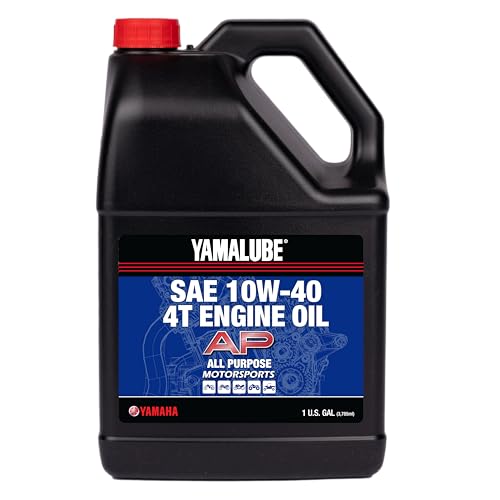
Yamaha Yamalube All Purpose Engine Oil
What We Like
- Mineral formula for budget-conscious riders
- Provides stable wet clutch performance
- Meets or exceeds JASO MA requirements
- Reduces friction for engine protection
Trade-offs
- Weighs 7.5 pounds for the full gallon jug
- Mineral oil, not a synthetic or blend formula
This is a performance-blended mineral oil designed specifically for motorcycles and other powersports engines. Its precise formulation reduces friction and protects components from daily wear, while the JASO MA certification ensures it works correctly with wet clutches. For a rider maintaining an older bike or a simple commuter on a tight budget, this oil delivers the essential protection needed without the cost of synthetic chemistry. It suits routine use where extreme performance isn’t a demand.
Its formulation uses mineral base oil technology. This means it won’t offer the same thermal stability or extended drain intervals as a full synthetic like the Motul 7100. Choosing this oil means prioritizing proven, fundamental protection for standard riding conditions over the ultimate performance envelope. It’s a solid, no-frills foundation for engine care that gets the job done reliably.
Product photos
Lucas Oil High Performance Conventional Motorcycle Oil
What We Like
- Formulated for lower oil temperatures
- Promotes longer oil and component life
- Reduces engine noise and leaks
- Meets key JASO industry specifications
Trade-offs
- Conventional base oil lacks synthetic's extreme thermal stability
- Single quart size is less efficient for large oil capacities
Lucas Oil 10767 delivers lower oil temperatures, a feature that can help extend component life and reduce engine noise for standard motorcycles. All Lucas motorcycle oils meet JASO specifications, ensuring compatibility with wet clutch systems. The one-quart bottle is lightweight and has a narrow profile, making it easy to store in a motorcycle’s saddlebag or on a workshop shelf.
This is a conventional oil, so it lacks the advanced synthetic base stocks found in products like Motul 7100 or Castrol Power1. Its performance claims are focused on benefits like longer oil life and fewer leaks rather than the maximum power protection advertised by racing-specific formulas. For riders whose motorcycles specify a conventional 10W-40 oil, this Lucas product provides the required viscosity with stated thermal benefits.
Product photos
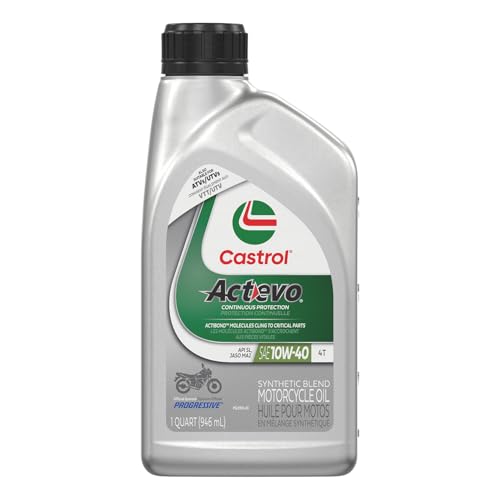
Castrol Actevo Synthetic Blend Motorcycle Oil
What We Like
- Trizone tech protects engine, clutch, and gearbox.
- Active molecules cling to parts for better lubrication.
- Superior protection before engine reaches 51°C.
- Excellent wear protection for long and short trips.
Trade-offs
- Synthetic blend lacks the ultimate stability of full synthetics.
- Certification exceeds older API SG, not the latest SP standard.
Castrol’s Trizone technology protects the engine, clutch, and gearbox with one oil, which simplifies maintenance. Its Active Protection Molecules cling to components, ensuring lubrication before the engine reaches 51°C when most wear typically occurs. This provides protection for long trips, short commutes, and stop-and-go conditions.
As a synthetic blend, its formulation differs from full synthetics listed like Motul 7100 or Castrol Power1. It exceeds API SG and JASO MA-2 specifications. The technology focuses on protection during the warm-up phase and in the three critical zones of a motorcycle powertrain.
Product photos
Liqui Moly 4T Street Synthetic Motorcycle Oil

What We Like
- Synthetic base provides protection in extreme conditions
- Works with or without a wet clutch system
- Promotes engine cleanliness and reduces wear
- Four-liter container is convenient for complete changes
Trade-offs
- The 8.0-pound weight makes the 4L jug less portable than quart bottles.
- At 10.7 inches long, it requires more shelf space than smaller containers like the Valvoline quart.
This 10W-40 oil uses synthetic technology to maintain stable lubrication during cold starts and under high operating temperatures. It is developed for air- and water-cooled 4-stroke engines exposed to normal to extreme operating conditions. The formula is suitable for engines with or without a wet clutch, covering most modern street motorcycles.
The four-liter container is efficient for a complete oil change, but its size and weight make it less portable for carrying partial bottles than single quarts like the Valvoline 4-Stroke Full Synthetic. For riders who need extreme, race-specific protection, a dedicated product like the Motul 300V exists. This Liqui Moly oil is mentioned in expert round-ups and owner feedback.
How We Evaluated Motorcycle Oils
Our evaluation focused on manufacturer specifications and industry standards, cross-referenced with expert round-ups and patterns in owner feedback. We prioritized key criteria like viscosity grades for specific climates, JASO certifications for proper wet clutch function, and the performance distinctions between conventional, synthetic blend, and full synthetic oils. For more on this topic, see our guide on synthetic vs. Conventional motorcycle oil.
A practical challenge for this type of evaluation is assessing claims about horsepower gains or friction reduction without independent lab data. We rely on documented API and JASO certifications as reliable benchmarks for the oils in our best motorcycle engine oil guide.
What To Look For In Motorcycle Oils
Selecting the right oil involves checking your owner’s manual and understanding how viscosity, formulation, and certifications affect your bike’s engine, clutch, and gearbox.
The right motorcycle oil must protect your engine, clutch, and gearbox. Check your manual first for the required viscosity grade and JASO MA/MA2 certification. Then, decide between conventional, synthetic blend, or full synthetic based on your climate, riding style, and budget.
Viscosity
Viscosity, indicated by a grade like 10W-40 or 20W-50, tells you how the oil flows at different temperatures. The first number with the ‘W’ (winter) indicates cold-start flow, lower numbers like 10W help in colder climates. The second number indicates the oil’s thickness at operating temperature; a higher number like 50 offers more film strength for hot conditions or high-stress engines. The most common recommendation we found was the universal 10W-40 motorcycle oil, suitable for many street bikes in temperate climates.
Oil Type
Motorcycle oils are formulated as conventional (mineral), synthetic blends, or full synthetics. Conventional oils are budget-friendly but break down faster under extreme heat. Synthetic blends offer a middle-ground of protection and value. Full synthetics, like those recommended for modern high-performance bikes, provide the best thermal stability, longer drain intervals, and superior protection against deposits. The choice between these oil types directly impacts engine longevity and performance.
Certification Standards
Look for the JASO MA or MA2 certification, which is critical for motorcycles with a wet clutch. Oils without this rating can contain friction modifiers that cause clutch slippage. Many modern oils also carry an API service rating, such as SP or SL, which indicates protection levels for engine emissions systems and wear.
Always ensure the oil meets or exceeds the specifications in your motorcycle’s manual. For four-stroke engines, a dedicated 4-stroke motorcycle oil is essential, as automotive oils are not formulated for the combined lubrication of a motorcycle’s engine, clutch, and gearbox.
- Check your owner’s manual for the manufacturer’s specific oil recommendations.
- Match the SAE viscosity grade to your typical riding climate.
- Verify the oil has the correct JASO MA/MA2 certification for your wet clutch.
- Consider a full synthetic for aggressive riding, high temperatures, or extended drain intervals.
Always start with your motorcycle manufacturer’s recommended oil specification.
Motorcycle Oils Compared
The following table lets you quickly compare the key specifications of our top picks side-by-side.
| Product | Oil Type | Viscosity Grade | Container Size | Clutch Specification |
|---|---|---|---|---|
| Valvoline 4-Stroke Full Synthetic Motorcycle Oil | Full Synthetic | 10W-40 | 1 Quart | JASO MA-2 |
| Motul 7100 4T Full Synthetic Motorcycle Oil | Full synthetic with ester | 10W-40 | 4 liters | JASO MA2 |
| Castrol Power1 4T Full Synthetic Motorcycle Oil | N/A | 10W-50 | 1 Quart | JASO MA-2 |
| Motul 300V Factory Line Racing Motor Oil | ESTER Core® synthetic | 10W40 | 4 liters | Wet clutch systems |
| Triax XTerra V-Twin Full Synthetic Engine Oil | 100% synthetic ester | 20W-50 | 1 Gallon | JASO MA2 |
| Honda Pro Honda GN4 Motorcycle Oil | N/A | 10W-30 | 1 Gallon | N/A |
| Yamaha Yamalube All Purpose Engine Oil | Mineral-base oil | 10W-40 | 1 Gallon | JASO MA |
| Lucas Oil High Performance Conventional Motorcycle Oil | Conventional | SAE 10W-40 | 1 Quart | Meets JASO specifications |
| Castrol Actevo Synthetic Blend Motorcycle Oil | Synthetic Blend | 10W-40 | 1 Quart | JASO MA-2 |
| Liqui Moly 4T Street Synthetic Motorcycle Oil | Synthetic technology | 10W-40 | 4 liters | Suitable |
Frequently Asked Questions
What is the best oil for a motorcycle?
The best oil depends on your specific motorcycle and riding conditions. For most riders, a full synthetic 10W-40 oil with JASO MA2 certification, like our overall pick Valvoline 4-Stroke Full Synthetic, offers excellent all-around protection for engine, clutch, and gearbox in street use.
What type of oil should I use in my motorcycle?
Always use an oil type and viscosity specified in your motorcycle’s owner’s manual. Most modern four-stroke street bikes require a JASO MA/MA2 certified motorcycle oil, not automotive oil. The manual will state if a conventional, synthetic blend, or full synthetic engine oil is recommended.
Is Lucas motorcycle oil better than Mobil 1 motorcycle oil?
“Better” is subjective and depends on the specific product and application. Both brands offer quality oils that meet industry standards. The choice should be based on which of their formulations precisely matches the viscosity, certification (like JASO MA2), and performance type (conventional, synthetic) required by your motorcycle.
How often should I change my motorcycle oil?
Follow the service intervals specified in your owner’s manual. These intervals can be longer for full synthetic oils compared to conventional oils. Change intervals should be reduced for severe use, such as frequent short trips, operation in extreme temperatures, or aggressive riding. Always replace the motorcycle oil filters at every oil change.
Can I use car oil in my motorcycle?
No, you should not use standard automotive oil in a motorcycle. Motorcycle oil is specially formulated to lubricate the engine, gearbox, and wet clutch simultaneously. Automotive oils often contain friction modifiers that can cause clutch slippage in motorcycles and lack the necessary shear stability.
The Bottom Line
For most riders on popular Japanese street bikes, the Valvoline 4-Stroke Full Synthetic Motorcycle Oil provides the ideal balance of clutch protection, engine cleanliness, and performance. Budget-focused riders should consider the Yamaha Yamalube All Purpose mineral oil, while V-Twin owners will find the Triax XTerra V-Twin Full Synthetic tailored to their needs. Always consult your owner’s manual first, the single most important factor is using an oil that meets your motorcycle manufacturer’s exact specifications for viscosity and certification.
