
4 Best Motorcycle Radar Detectors in 2026
This post contains affiliate links. As an Amazon Associate, we earn from qualifying purchases.
For riders prioritizing integrated rear blind-spot awareness, the Garmin zūmo R1 Motorcycle Rear Radar is our best overall pick, offering rugged, discreet alerts. The Adaptiv Technologies TPX 2.0 is best for a compact forward-facing detector, while the TPX Motorcycle Radar Laser Detection System provides top-tier 360-degree protection.
Motorcycle riders need specialized radar gear that survives the elements and delivers alerts in a noisy, hands-off environment. This guide uses research into specifications and owner feedback to highlight four top detectors, helping you choose between systems focused on blind spots, forward threats, or full-spectrum coverage.
Top 4 Motorcycle Radar Detectors in the Market
Certain content that appears on this site comes from Amazon. This content is provided "as is" and is subject to change or removal at any time.
The Best Motorcycle Radar Detectors, Reviewed
Garmin zūmo R1 Motorcycle Rear Radar

What We Like
- Rugged, discreet license plate mount withstands weather.
- Heads-up indicator lights increase awareness of blind spots.
- Side-facing amber lights increase motorcycle visibility to others.
- Audio alerts via smartphone app keep eyes on the road.
Trade-offs
- Adverse weather and wet roads may interfere with operation.
- Requires a compatible Garmin navigator or smartphone for full-screen radar view.
- No front-facing radar detection for threats ahead.
Mounted to your license plate, the Garmin zūmo R1 provides a high-performance rearview and blind spot radar. This design offers excellent coverage and range to promote situational awareness of traffic behind you. Paired with heads-up indicator lights, the system gives a constant, eyes-forward picture of vehicles approaching or in your blind spots, which can help foster a safer riding environment. It also allows you to view a full-screen radar display on your zūmo XT2 motorcycle navigator or a compatible smartphone.
The trade-off is that it’s a dedicated rear-facing system, so it won’t alert you to radar signals from police ahead like a traditional detector such as the Adaptiv Technologies TPX 2.0. You also need to be aware that heavy rain can affect its operation, so it’s a tool to augment, not replace, your own visual checks. For pure forward-facing threat detection, you’d need a different device, but for creating a safer bubble around your motorcycle’s rear quarter, the R1’s design is exceptionally focused.
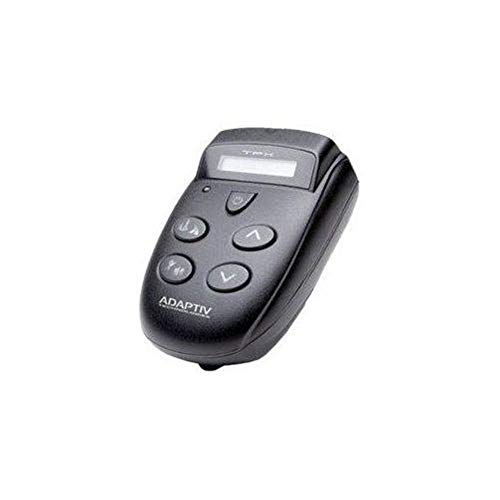
Adaptiv Technologies TPX 2.0 Radar Detector
What We Like
- Extremely compact one-inch cube form factor.
- Purpose-built for motorcycle use with helmet integration.
- Offers both radar and laser threat detection.
- Dedicated Bluetooth system for wireless helmet alerts.
Trade-offs
- Bluetooth transmitter only works with proprietary Adaptiv headset.
- System integration requires purchasing multiple compatible accessories.
Measuring just one inch on each side, the Adaptiv TPX 2.0 fits into extremely tight spaces on a motorcycle’s handlebars or fairings. This compact size stems from its design by motorcycle riders for motorcycle riders. Research indicates it uses a specialized alerting system meant to integrate warnings directly into a rider’s helmet.
Its Bluetooth transmitter works only with an Adaptiv wireless headset, a limitation that reviewers note restricts your choice of audio gear. The TPX 2.0 focuses on detecting forward threats. A system like the Garmin zūmo R1, which weighs just 0.2 pounds, combines rear radar and blind spot monitoring in a single compact unit. Research indicates that setting up the complete Adaptiv system with its accessories can be a confusing process.
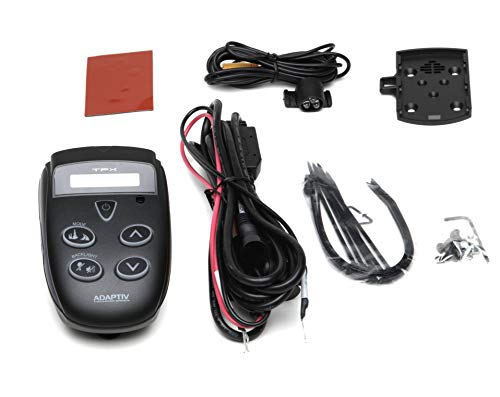
TPX Motorcycle Radar Laser Detection System
What We Like
- Detects all police radar and laser bands
- Full 360-degree protection for complete awareness
- Waterproof construction for all-weather riding
- Adjustable LED alert for clear signal visibility
Trade-offs
- At 1.3 pounds, it is heavier than the 0.2-pound Garmin zūmo R1
- Its 12-inch dimensions require more mounting space than compact units
With 360-degree radar and laser detection, the TPX system provides alerts from any direction, a critical feature for highway and multi-lane riding. Its waterproof build and an ultra-bright, adjustable LED deliver warnings that are hard to miss, even in direct sunlight. Research mentions that Adaptiv TPX radar detectors are uniquely designed for motorcycle riders and offer specialized alerting systems meant to integrate into a helmet.
This comprehensive protection requires a larger physical size and more weight than a minimalist unit such as the Garmin zūmo R1. According to research, installing an Adaptiv TPX radar detector and its various accessories can become a confusing task. You are trading some compactness for broad coverage, which is a sensible choice if your main goal is to eliminate enforcement blind spots.
Product photos
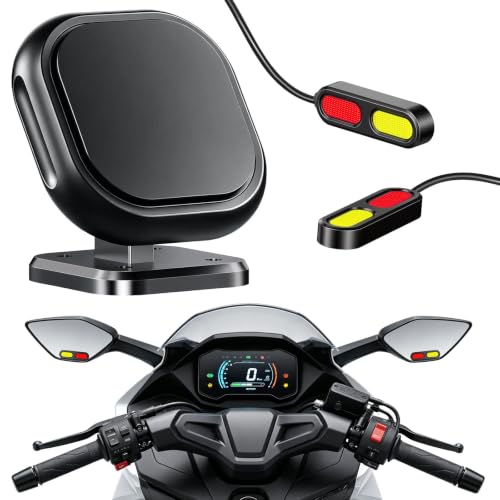
Tenbaba BSD01 Blind Spot Detection System
What We Like
- Intelligent logic reduces false alarms
- Wide 130° radar coverage for blind spots
- IP69K waterproof and extreme temperature rated
- Automatic power on/off with ignition
Trade-offs
- Alerts only trigger for vehicles moving >6 mph faster
- Installation requires wiring to ACC and battery
A 130° wide-angle radar scan up to 30 meters back directly tackles the high-risk moment of a lane change. This system is for the rider who wants a dedicated electronic sentinel for their blind spots, especially in poor weather or at night when mirrors fail. Its smart logic only warns you when a vehicle is closing in fast, cutting through the visual clutter to highlight genuine threats. That focus on critical alerts makes it a reliable co-pilot for highway commuters and tourers who prioritize situational awareness over raw data.
Installation requires connecting to the motorcycle’s ACC power line, a straightforward wiring setup that ensures the system powers on and off with the ignition. This direct connection prevents any battery drain when parked, but it is a more fixed installation than some other electronic accessories. Once set up, the system provides consistent rear-traffic monitoring without needing manual operation.
Product photos
How We Evaluated Motorcycle Radar Detectors
This guide is based on a review of manufacturer specifications, expert analyses, and patterns in verified owner feedback from riding communities. Key considerations include mounting and integration design for a motorcycle cockpit, alert clarity and delivery method in high-noise environments, and environmental durability for all-weather riding. Systems built for the unique demands of motorcycles were prioritized over repurposed car detectors. This synthesis of factors is provided for informational purposes, and individual experiences with specific motorcycle models or local conditions may vary.
What To Look For In Motorcycle Radar Detectors
Choosing the right detector involves more than just radar sensitivity; it needs to integrate into a motorcycle’s limited space and deliver clear warnings you can act on.
Look for durable, motorcycle-specific mounting, clear visual or helmet-integrated audio alerts, and features matching your primary need: forward threat detection, rear blind-spot monitoring, or full 360-degree awareness.
Mounting & Integration
A motorcycle radar detector must be securely mounted to withstand vibration and not clutter a busy handlebar area. Systems like the Adaptiv TPX 2.0 use an extremely compact, one-inch cube design, while others may require more space. Purpose-built motorcycle mounts are often more secure and lower-profile than generic car suction cups. Consider whether the system requires permanent wiring or if it offers a simpler, plug-and-play installation.
Alert Type & Delivery
On a loud motorcycle, audible beeps from a handlebar-mounted unit are often useless. Effective systems use high-visibility LED indicators, helmet-integrated audio via Bluetooth, or vibration alerts. For comprehensive awareness, pairing your detector with dedicated motorcycle cameras or a motorcycle dashcam system creates a fuller safety suite. The method should keep your eyes on the road while providing unambiguous warning signals.
Core Function & Coverage
Decide if you need forward-facing police radar detection, rear blind-spot monitoring, or both. A dedicated forward detector like the TPX system offers full 360-degree radar and laser band coverage. A system like the Garmin zūmo R1 specializes in rear awareness. Some blind spot radar systems use intelligent logic to filter out stationary objects, reducing false alarms. Your typical riding environment, crowded city streets versus open highways, determines which coverage is most valuable.
- Check the detector’s weatherproof rating. A high waterproof rating is ideal for riding.
- Verify compatibility with your helmet communication system or smartphone.
- Assess the power source: options may include being hardwired to the battery, a plug-and-play connection, or an internal rechargeable battery.
Match the detector’s primary function to your most frequent riding scenario for the best investment.
Motorcycle Radar Detectors Compared
The comparison table below provides a quick overview of how our four picks differ in their core features and ideal use cases.
| Product | Detection Type | Alert Type | Weight |
|---|---|---|---|
| Garmin zūmo R1 Motorcycle Rear Radar | Rearview and blind spot radar | Heads-up indicator lights | 0.2 pounds |
| Adaptiv Technologies TPX 2.0 Radar Detector | Radar and laser | N/A | 2.0 pounds |
| TPX Motorcycle Radar Laser Detection System | 360-degree radar and laser | Ultra-bright adjustable LED | 1.3 pounds |
| Tenbaba BSD01 Blind Spot Detection System | 24GHz millimeter blind spot radar | LED Indicators | N/A |
Frequently Asked Questions
What is the best radar detector for motorcycles?
The “best” detector depends on your primary need. For integrated rear blind-spot and traffic awareness, the Garmin zūmo R1 is an excellent choice. For comprehensive forward and rear radar/laser detection, the TPX Motorcycle Radar Laser Detection System offers full 360-degree protection in a durable, waterproof package.
Do radar detectors work on motorcycles?
Yes, they work effectively, but they must be motorcycle-specific or adapted with a secure, vibration-resistant mount. Standard car detectors may fail due to weather exposure or vibration. Systems designed for bikes also solve the alert problem with bright LEDs or helmet audio, overcoming road and wind noise.
Can cops tell if you have a radar detector?
In most states, it is legal for civilian use, but laws vary by jurisdiction. Visually, a properly mounted motorcycle detector can be very discreet. Some detectors are undetectable by police “radar detector detectors” (RDDs) due to their lack of local oscillator leakage, but this is a feature of higher-end models.
What are the top 3 best radar detectors?
Our top three picks in this category serve different rider needs. The Garmin zūmo R1 is the best overall for rear awareness. The Adaptiv Technologies TPX 2.0 has the best compact design, while the TPX Motorcycle Radar Laser Detection System offers the best 360-degree protection.
What’s the difference between a radar detector and a blind spot monitor?
A radar detector is primarily for identifying police speed enforcement radar (and sometimes laser) signals. A blind spot monitor, like the Tenbaba BSD01, uses short-range radar to detect vehicles in your adjacent lanes and alerts you to their presence, functioning as a collision avoidance aid rather than a countermeasure.
The Bottom Line
The Garmin zūmo R1 Motorcycle Rear Radar is our best overall pick for riders wanting a dedicated, integrated system to enhance rear and blind-spot awareness, especially when paired with Garmin navigation. If your budget is focused on forward-facing police radar, the compact Adaptiv TPX 2.0 is a top choice, while riders seeking complete, all-direction coverage should consider the premium TPX Motorcycle Radar Laser Detection System. Ultimately, choosing the right detector comes down to matching its core function, be it blind-spot monitoring or full-spectrum threat detection, to your most common riding environment and safety priorities.
