
10 Best Motorcycle Chest Protectors in 2026
This post contains affiliate links. As an Amazon Associate, we earn from qualifying purchases.
For serious riders seeking comprehensive protection, the Alpinestars A-10 V2 Full Chest Protector is our best overall for its advanced energy absorption and balanced design. We also selected the lightweight Leatt Chest Protector 5.5 Pro Evo for ventilation and the highly certified Alpinestars A-6 for maximum impact safety.
A chest protector guards your torso from direct impacts and flying debris, an essential layer of defense in off-road riding. Our research compared specifications, manufacturer safety data, expert reviews, and owner feedback patterns to select the best options across key needs. This guide highlights the trade-offs in coverage, weight, and certification to help you match a protector to your riding style.
Top 10 Motorcycle Chest Protectors in the Market
Certain content that appears on this site comes from Amazon. This content is provided "as is" and is subject to change or removal at any time.
The Best Motorcycle Chest Protectors, Reviewed
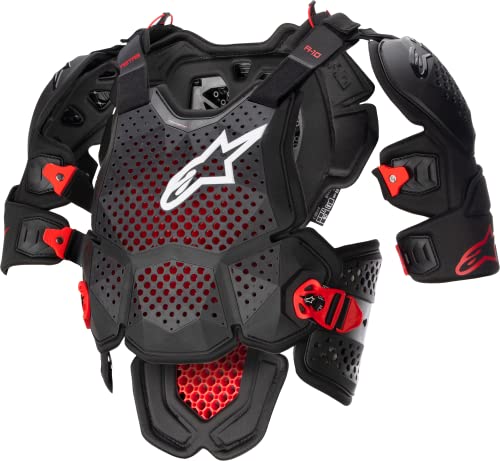
Alpinestars A-10 V2 Full Chest Protector
What We Like
- Embedded grid technology absorbs and dissipates impact forces.
- Excellent breathability from perforated shells and air channels.
- Modular design allows for adding a neck brace system.
- High-performance shells balance flexibility and weight savings.
Trade-offs
- At 20.3 inches tall, it may be long for some torso lengths.
- Modular neck support is a separate purchase, not included.
The Alpinestars A-10 V2 Full Chest Protector weighs 2.0 pounds, which is a result of its high-performance polymeric shells and internal grid cell system. This construction aims to provide impact absorption and flexibility without excessive bulk. The design includes perforation zones and air channels for ventilation, and it is CE-certified with a modular option for adding a neck brace.
Its dimensions include a 20.3-inch height and an 18.3-inch width, offering full coverage for the chest and torso. For riders prioritizing minimal weight over extensive coverage, options like the Fox Racing R3 guard are lighter. The A-10 V2’s embedded grid technology is intended to absorb and dissipate impact forces for off-road use.
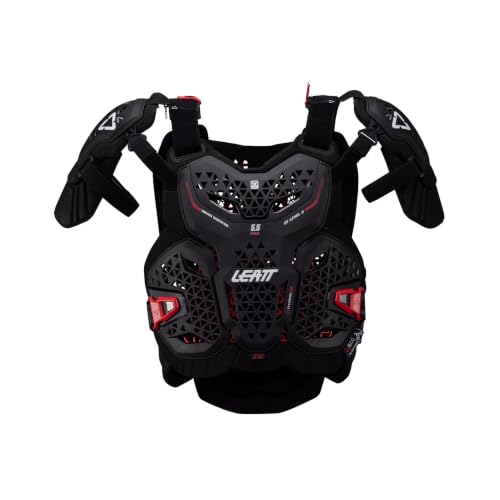
Leatt Chest Protector 5.5 Pro Evo
What We Like
- Extremely lightweight at just 0.4 pounds.
- Hard shell and ventilated FlexMesh Pro armor.
- Articulating plates for improved comfort and fit.
Trade-offs
- Less coverage than full protectors like the Alpinestars A-10 V2.
- Primarily a chest protector; shoulders and elbows are separate components.
Weighing only 0.4 pounds, the Leatt 5.5 Pro Evo practically disappears on your body, a huge benefit for riders in hot climates or on long, technical rides. It suits anyone who prioritizes airflow and minimal weight over maximum coverage. The updated design is 50% more ventilated than its predecessor, and the 3D, multi-plate construction moves with you instead of against you. This is a protector built for riders who want to stay cool and unrestricted without going completely unprotected.
This protector uses a hard shell and FlexMesh Pro ventilated armor for core torso coverage. It does not include the integrated shoulder and elbow guards found in full-body protector systems like the Leatt Body Protector ReaFlex. Research group tests note that every rider’s reason for torso protection is different, aiming to highlight the pros and cons of each option.
Alpinestars A-6 Chest Protector

What We Like
- Highest Level 2 CE certification for chest and back
- Modular design with removable shoulder protectors
- V-Strap System ensures a snug, comfortable arm fit
- Versatile wear configurations for different riding conditions
Trade-offs
- At 3.4 lb, it's heavier than the 2.0 lb Alpinestars A-10 V2
- Modularity adds complexity versus simpler, single-piece guards
The Alpinestars A-6 carries the highest CE Level 2 certifications for both chest and back impact protection. That rating is the concrete reason it’s a top pick for riders who prioritize maximum safety for their torso and spine, especially in high-speed or competitive off-road scenarios. The modular design lets you strip off the shoulder guards for a less restrictive feel on tight trails or add them back for full coverage on the track. This adaptability, combined with its serious certification, makes it a premium choice for the rider who won’t compromise on core protection.
That premium protection comes with a tangible trade-off in weight and bulk. Research indicates it’s notably heavier than some streamlined alternatives, which could be a factor on long, hot rides. The adjustable V-Strap system helps secure the fit, but the overall size is substantial. If your primary need is lightweight roost deflection for casual trail riding, a simpler guard might suffice. For the rider seeking certified, high-level impact absorption in a configurable package, the A-6 delivers exactly that.
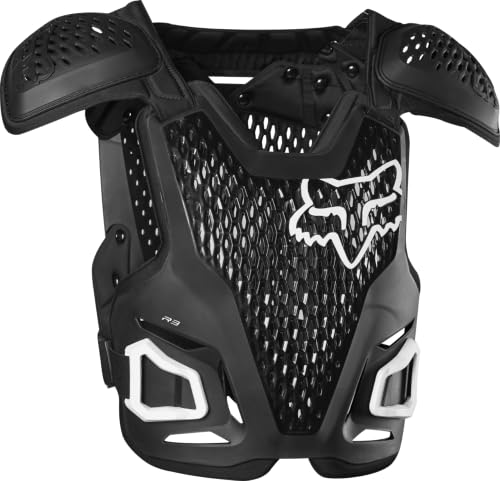
Fox Racing R3 Motocross Chest Guard
What We Like
- Ventilated shell provides airflow while blocking debris
- Adjustable shoulder and waist straps for a customized fit
- Low-profile shoulder cups and elastic waist keep it tight
- CE EN 14021 certified as a stone shield
Trade-offs
- The 1.8 lb weight is noticeable compared to minimalist guards like the 0.4 lb Leatt 5.5 Pro Evo.
The Fox Racing R3 holds CE EN 14021 stone shield certification. Its ventilated main body shell provides airflow while blocking debris, and adjustable shoulder and waist straps allow for a customized fit. Low-profile shoulder cups and an elastic slide-buckle waist closure work to keep the guard tight to the body during movement.
As a dedicated chest protector, its coverage differs from extended torso protectors like the Alpinestars A-6. The design is intended to fit a wide variety of neck braces. Its 1.8-pound weight is noticeable compared to minimalist guards like the 0.4-pound Leatt 5.5 Pro Evo.
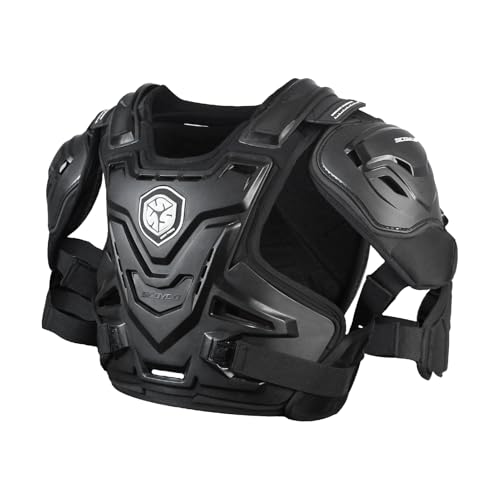
Scoyco Chest Protector Armor Vest
What We Like
- Multi-zone protection for chest, back, shoulders, and arms
- Perforated shell and liner for long-wear breathability
- Adjustable waistband fits a range of body types
- Detachable shoulders allow for full armor or chest-only use
Trade-offs
- No CE certification is mentioned.
The Scoyco vest delivers protection across multiple key zones, chest, back, shoulders, and arms, all in one integrated piece. That makes it a solid choice for riders who want comprehensive coverage without needing to layer separate components. Its ventilated shell helps manage heat, and the adjustable waistband ensures a snug fit for various torso sizes. This design is well-suited for motocross or trail riding where impacts from falls or roost are a constant concern.
This protector uses a single-shell construction with a detachable shoulder design, which simplifies the build and allows you to wear it as a full vest or just chest armor. That straightforward approach covers a lot of area for riders who need basic impact protection over their chest, back, and shoulders. It’s a durable piece of gear focused on shielding key areas rather than offering a highly segmented fit.
Fly Racing Revel Race Roost Guard

What We Like
- BioFoam chassis eliminates hard plastic rivets for comfort.
- Air channels in BioFoam promote ventilation and heat escape.
- Adjustable shoulder straps provide a custom, secure fit.
- Neck brace compatibility suits various protective setups.
Trade-offs
- The 1.8-pound weight is average, not the lightest in the category.
Fly Racing’s Revel Race Roost Guard uses a BioFoam chassis that eliminates traditional plastic rivets, a design which places soft plastics and TPR rubbers directly against your body to prevent pressure points during a crash. Air channels molded into that foam let hot air escape, while the low-profile build is intended to be worn under a jersey. This combination focuses on temperature management and all-day wearability rather than rigid, maximum coverage.
The trade-off for that comfort is in its scope of protection. The Revel guards your upper torso from roost and impacts, but its dimensions are more compact than a full-length protector like the Alpinestars A-6. That model extends lower for more abdominal coverage but weighs nearly twice as much and lacks the Revel’s integrated soft chassis. Choose the Revel if a comfortable, breathable fit for your core is the primary goal, but look to a larger, more modular design if you need extended protection for your ribs and lower back.
Product photos
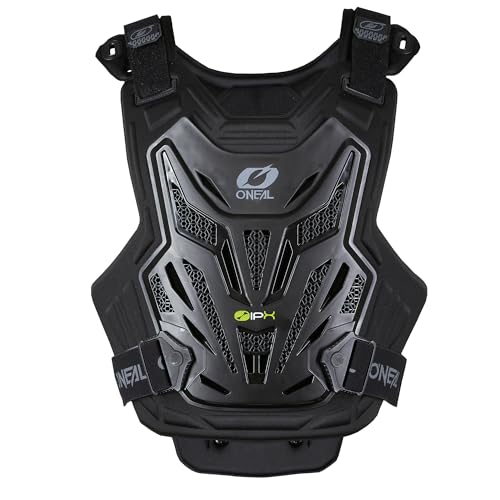
O'Neal Split Chest Protector
What We Like
- Multiple adjustments for a precise, personalized fit
- Detachable design offers versatile protection options
- Lightweight build reduces fatigue during long rides
- Full EN 14021 certification for front and back impact
Trade-offs
- At 19.5 inches long, it may be bulky for shorter torsos
The O’Neal Split Chest Protector’s standout feature is its multi-point adjustment system, which lets you fine-tune the shoulder and waist fit to lock the armor securely to your body. This focus on customization makes it a prime choice for riders who struggle with standard sizes or who want to wear it over or under a jersey without slippage. The bio-foam padding and certified front and back plates deliver solid protection in a package that feels light at just under two pounds.
Its 19.5-inch length provides extensive torso coverage, which can feel bulky on a smaller rider. The split design requires assembly, but this allows the front and back sections to be worn separately for better ventilation. While the Leatt 5.5 Pro Evo is more compact at 16 inches long, the O’Neal protector is certified for front and back impact protection according to EN 14021.
Product photos
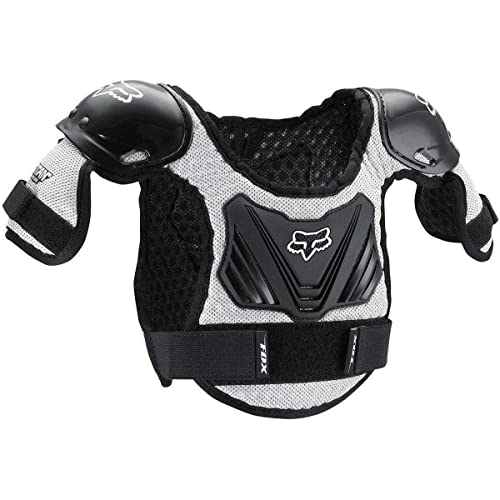
Fox Racing Youth Peewee Titan Chest Guard
What We Like
- Lightweight 0.8-pound construction reduces fatigue
- Perforated design promotes cooling airflow
- Adjustable straps help dial in a secure fit
- Breathable build manages moisture during active rides
Trade-offs
- 13.5-inch length offers less torso coverage than adult models like the Alpinestars A-6
- Limited dimensional profile focuses on core roost protection
At 0.8 pounds, this chest guard provides essential protection without burdening a smaller frame, which helps keep young riders comfortable on the bike. Its perforated design promotes airflow and cooling, while the moisture-wicking, breathable construction aims to manage heat. The easy-to-adjust strap system allows for a secure fit as a child grows.
The lightweight design reflects its role as a roost deflector, distinct from full-coverage armor. For a beginner, it offers a simple and unobtrusive first layer of safety. The product is described as providing ample coverage for young riders.
Product photos
O'Neal Holeshot Chest Protector

What We Like
- Exceeds the EN14021 safety standard for impact protection.
- Designed for compatibility with neck brace systems.
- Neoprene shoulder padding for comfort and fit.
- Integrated waist closure system for secure wear.
Trade-offs
- At 1.0 lb, it is heavier than the 0.4 lb Leatt 5.5 Pro Evo.
Exceeding the EN14021 safety standard is the core of the O’Neal Holeshot’s value, providing verified impact resistance that goes beyond the baseline requirement. This makes it a strong candidate for riders who prioritize certified protection in a traditional roost guard design. The integrated waist closure and neoprene shoulder padding work together to keep the protector securely in place during aggressive riding, while neck brace compatibility ensures it fits into a comprehensive safety setup.
The trade-off for this certified protection is added mass; at one pound, it carries more weight than some minimalist competitors. Its dimensions offer solid core coverage, but riders seeking extended torso or back protection may find a taller, fuller vest-style protector to be a better match for their needs. The Holeshot finds its sweet spot by delivering verified safety in a straightforward, no-fuss package.
Product photos
RIDBIKER Body Armor Vest

What We Like
- Lightweight 1.4-pound design for minimal burden.
- Breathable, ventilated construction with Lycra lining.
- Straightforward buckle closure for easy on and off.
- Adjustable elastic sliders at shoulders and waist.
Trade-offs
- Lacks a stated CE safety certification.
- Shell is PP, not a composite or higher-grade plastic.
At 1.4 pounds, the RIDBIKER vest is one of the lightest options available, which should translate to less fatigue and restriction during long rides. Its ventilated enclosure and breathable Lycra lining are designed for airflow to manage heat and moisture. Adjustable sliders at the shoulders and waist, combined with a buckle system, aim to provide a quick and secure fit for different body sizes.
The protective shell uses wear-resistant polypropylene with an internal EVA foam layer, a common construction for impact resistance. Among comparable vests, the Fox Racing R3 and Fly Racing Revel guards weigh 1.8 pounds, making the RIDBIKER slightly lighter. This design prioritizes a minimal, airy feel, so the choice depends on the balance of weight versus the coverage area offered by other models.
Product photos
How We Evaluated Motorcycle Chest Protectors
Our selection is based on research into product specifications, manufacturer documentation on safety technologies, expert round-ups from gear review sites, and consistent patterns in owner feedback. We prioritized key criteria for this category: the level and certification of impact protection, the coverage area (chest, back, shoulders), and the design’s balance of weight and ventilation.
Each list of pros and cons for chest protectors informed our selections. We also compared the basic roost guard vs body armor distinction to ensure our list includes both types of protective gear.
What To Look For In Motorcycle Chest Protectors
Your riding discipline largely dictates the type of upper body protection you need. Motocross racers facing high-speed roost need a deflector, while enduro riders navigating technical terrain may prioritize full torso coverage. Understanding the difference between roost guards and armor is the first step.
Key criteria are protection level and CE certification, coverage area (chest, back, shoulders), weight and breathability, and fit adjustments for security and comfort.
Protection Level and Certification
Look for stated CE certifications, which indicate tested impact performance. CE Level 2 back protection, as found on the Alpinestars A-6, offers higher impact absorption than Level 1. Some guards, like the Fox Racing R3, carry the EN 14021 standard specifically for roost and stone deflection. Certified protection integrates with other armor systems. Remember that uncertified protectors, while potentially offering basic coverage, have not been validated to a known safety standard.
Coverage Area
Consider how much of your torso needs shielding. Full chest protectors like the Alpinestars A-10 V2 cover the chest, back, and often integrate shoulder protection. Roost guards like the Fox R3 focus primarily on the front and upper back to deflect debris. For dedicated back safety, a separate back protector insert may be necessary. Your choice should align with the most likely impact points for your riding.
Weight, Ventilation, and Fit
Long ride comfort depends on a protector’s weight and airflow. Lightweight models under one pound, like the Leatt 5.5 Pro Evo, reduce fatigue and increase breathability. Look for perforated shells, mesh panels, and air channels. A secure fit prevents the guard from shifting during a crash; adjustable shoulder and waist straps, as on the O’Neal Split Chest Protector, are crucial. Also consider compatibility with other gear like hip protectors or neck braces.
- Check if the protector is designed to be worn over or under your riding jersey.
- Ensure the straps are long enough and the buckles are strong.
- Look for articulated or flexible plates that conform to your body’s movement.
- Verify the length matches your torso to avoid digging into your hips or leaving gaps.
The best protector is the one you will wear consistently because it fits well and doesn’t overheat.
Motorcycle Chest Protectors Compared
The following table compares key specifications for all ten picks to help you see the differences at a glance.
| Product | Weight | Certification | Ventilation |
|---|---|---|---|
| Alpinestars A-10 V2 Full Chest Protector | 2.0 pounds | CE-Certified | Perforated shells and air channels |
| Leatt Chest Protector 5.5 Pro Evo | 0.4 pounds | N/A | 50% more ventilated |
| Alpinestars A-6 Chest Protector | 3.4 pounds | CE EN 1621-3:2018 Level 2 | N/A |
| Fox Racing R3 Motocross Chest Guard | 1.8 pounds | CE EN 14021 certified | Ventilated main body shell |
| Scoyco Chest Protector Armor Vest | N/A | N/A | Multiple perforated ventilation holes |
| Fly Racing Revel Race Roost Guard | 1.8 pounds | N/A | Air channels |
| O'Neal Split Chest Protector | 1.9 pounds | EN 14021 (Front & Back) | N/A |
| Fox Racing Youth Peewee Titan Chest Guard | 0.8 pounds | N/A | Perforated |
| O'Neal Holeshot Chest Protector | 1.0 pounds | Exceeds EN14021 | N/A |
| RIDBIKER Body Armor Vest | 1.4 pounds | N/A | Ventilated enclosure |
Frequently Asked Questions
What is the best motorcycle chest protector?
For most riders seeking a balance of advanced protection, coverage, and manageable weight, the Alpinestars A-10 V2 Full Chest Protector is our top choice. It uses embedded grid technology to absorb and dissipate impacts while maintaining good airflow. For maximum certified safety, consider the CE Level 2 Alpinestars A-6, and for minimal weight, look at the Leatt 5.5 Pro Evo.
What is the best chest protector for motorcycle riding?
The best chest protector depends on your riding style. Motocross riders facing roost need a certified deflector like the Fox Racing R3. Trail and enduro riders prioritizing airflow often choose lightweight vests like the Leatt 5.5 Pro Evo. For adventure riding or aggressive off-road where full torso coverage is key, a protector like the Alpinestars A-10 V2 or a comprehensive air vest system may be appropriate.
Are chest protectors worth it for a motorcycle?
Yes, a chest protector is a worthwhile investment for off-road and motocross riding. It shields your sternum, ribs, and spine from direct impacts with the ground, handlebars, or rocks, and from debris kicked up by other riders. While not a substitute for a full analysis of roost guards, it adds a critical layer of safety that standard riding jackets often lack.
What is the best motorcycle back and chest protector?
The Alpinestars A-10 V2 offers excellent integrated chest and back coverage with its full design. For the highest certified back protection paired with chest coverage, the Alpinestars A-6 Chest Protector with its CE Level 2 certification is a top choice. Some riders may prefer to use a dedicated back protector insert underneath a separate roost guard for a modular setup.
What’s the lightest motorcycle chest protector?
Among our picks, the Leatt Chest Protector 5.5 Pro Evo is the lightest at just 0.4 pounds. Its minimalist design uses a hard shell and ventilated FlexMesh to provide front impact and roost protection with virtually no added bulk, making it ideal for hot-weather trail riding where maximum ventilation is a priority.
The Bottom Line
The Alpinestars A-10 V2 Full Chest Protector is our best overall pick for riders who want serious energy-absorbing protection across the chest and back without excessive weight. Its modular design and good breathability suit demanding off-road and adventure use.
Budget-conscious riders or those needing youth sizing should consider the Fox Racing Youth Peewee Titan, while motocross specialists focused on roost deflection will appreciate the certified coverage of the Fox Racing R3. The most important factor is matching the protector’s coverage and certification level to the specific impacts you’re most likely to encounter on your rides.
