
D3O Motorcycle Armor Pros and Cons: How to Choose
This post contains affiliate links. As an Amazon Associate, we earn from qualifying purchases.
D3O motorcycle armor is a non-Newtonian polymer that stays flexible until a high-speed impact forces it to lock rigid, offering Level 2 protection under the EN 1621-1 standard. The main pros are superior comfort, flexibility, and high-level certification; the main cons are a finite 3-5 year lifespan, higher cost, and potential bulk in older models compared to newer foams from competitors.
That’s the tech summary. The real question when you compare a d3o motorcycle armor pros and cons is whether that specific protection fits your riding.
A Level 2 rating under EN 1621-1 is a pass/fail test where a weight drops on the protector and a sensor measures how much force gets through to the limb underneath. Level 2 is the highest standard available, meaning the armor transmits less force than anything rated lower. D3O publishes its test results, so you can see the numbers. That’s a pro you can verify.
What follows: a breakdown of the d3o motorcycle armor pros and cons, how D3O works, where it excels, where it falls short compared to armor like Knox or Sas-Tec, and the specific maintenance that decides whether your investment lasts three years or five.
Key Takeaways
- D3O’s Level 2 certification is its strongest claim. The armor meets the highest EN 1621-1 standard, meaning it transmits less force to your body in a crash than Level 1 gear.
- The material has a finite functional lifespan. The polymer breaks down with heat, sweat, and UV exposure. It doesn’t fail suddenly, but it loses effectiveness gradually after that point.
- Comfort and flexibility are the primary advantages. D3O bends and moves with you in the riding position, which is why it’s popular in casual and touring gear.
- Never wash armor in a jacket. Remove the pads first. Detergent and agitation can break down the polymer’s structure and shift the pads out of position.
- Some riders and reviewers suggest that for high-impact sports riding, alternatives like Knox (hard-shell) and Sas-Tec (poron foam) often offer slimmer profiles and better heat dissipation for aggressive postures.
How D3O Armor Actually Works (and What That Means)
Ever wondered why it feels soft in your hand but is supposed to stop an impact? It’s not magic. It’s chemistry with a timer.
D3O is a non-Newtonian fluid suspended in a polymer matrix. At rest, the molecules slide past each other, giving the material its pliable, putty-like feel. Apply a sudden, high-shear force, like hitting the pavement at 30 mph, and those molecules lock together almost instantly, forming a temporary rigid shield. The key word is temporary. It stiffens for the duration of the impact, then returns to flexible.
According to a review, the EN 1621-1 test is considered the de facto global standard for motorcycle armor protectivity. A weight is dropped on the protector, and the force transmitted to a sensor below, standing in for your shoulder or knee, is measured. Level 2 is the highest standard available.
When analyzing the d3o motorcycle armor pros and cons, this mechanism has two direct consequences for you as a rider. First, the comfort is real. You can fold a D3O knee pad to slide it into a tight pocket, and it will conform to your joint once in place. Second, the protection is speed-dependent. A low-speed tip-over might not trigger the locking reaction sufficiently, while a high-energy crash should.
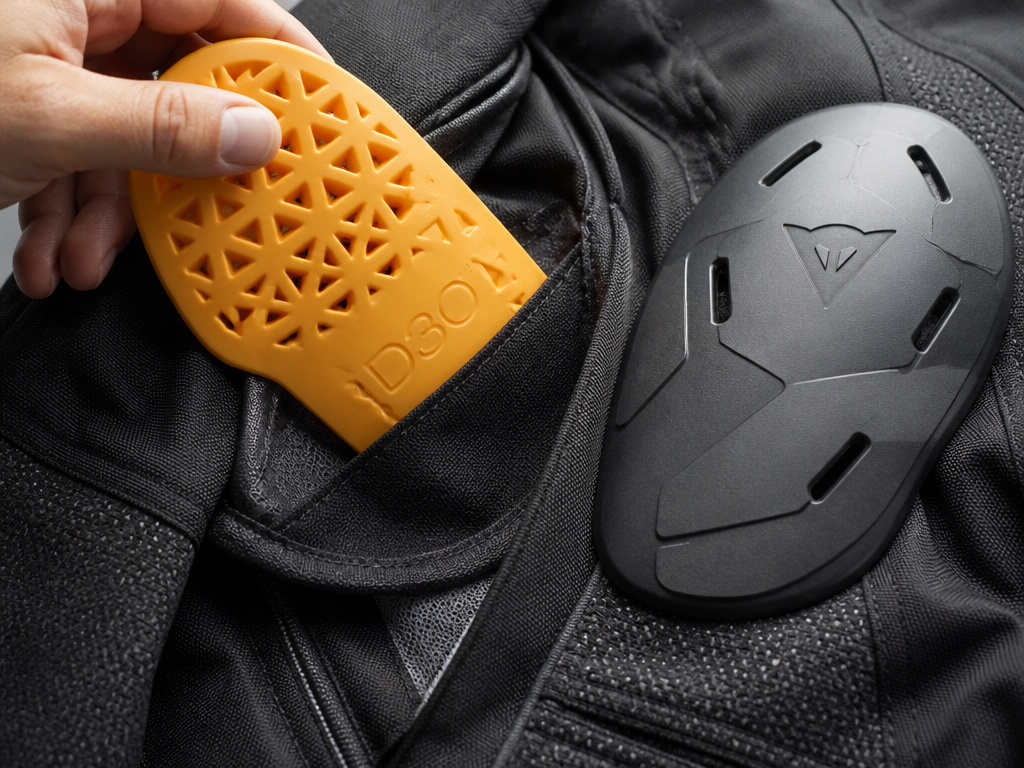
Those perforations are the reason it doesn’t trap heat like the older, solid Ghost armor did.
The Documented Pros: Where D3O Earns Its Price
We begin with what it does well. Most of the praise you read is grounded in these three areas.
Certified Protection You Can Actually Wear
The biggest pro is the EN 1621-1 Level 2 rating. For a material this flexible to pass the highest available impact test is an engineering win. It means that, under lab conditions, it will transmit less force to your body than standard foam or unrated “armor.” Many riders skip bulky protection because it’s uncomfortable. D3O’s flexibility makes it more likely you’ll actually keep the armor in your jacket or pants.
Unmatched Flexibility for Real Riding
Traditional hard-shell armor is rigid. It protects well but can restrict movement and create pressure points. D3O bends. When you’re tucked into a sport riding posture or stretched out on a cruiser, the pad moves with you instead of fighting you. This is the main reason it’s been adopted by brands making casual riding jeans and lighter jackets. The protection doesn’t force a compromise on mobility.
Improved Comfort and Heat Management (Specifically Diablo)
The older Ghost armor was criticized for being a heat sink. The new Diablo design addresses this directly with its perforated surface. That 38.5% open area allows air to pass through, which makes a measurable difference on a summer ride. It’s also thinner than previous models at 9.5mm, which helps it fit into more gear without adding bulk.
| Pro | What It Means for You | Best For |
|---|---|---|
| Level 2 Certification | Independently verified high-level impact protection. | Riders who prioritize verified safety over marketing claims. |
| Flexibility | Armor moves with your body, reducing discomfort and hot spots. | Touring, commuting, and anyone in the saddle for hours. |
| Diablo Ventilation | Perforations reduce heat buildup compared to solid polymer pads. | Riders in warm climates or those who run hot. |
| Wide Brand Adoption | Available in many brands, from Alpinestars to casual streetwear. | Simplifies finding gear that includes quality armor. |
The Documented Cons and Limitations
Now for the trade-offs. No armor is perfect for every situation, and D3O has specific drawbacks that matter depending on your riding style.
A Finite, Degrading Lifespan
This is the most important con. D3O is a polymer. Exposure to body heat, sweat, UV light, and the chemicals in some detergents slowly breaks down the material’s internal structure. It doesn’t fail catastrophically on day 1,801, but its impact-absorption capability diminishes. The general consensus from manufacturers and testers is a finite functional lifespan with regular use. After that, it’s still padding, but you’re not getting the Level 2 performance you paid for.
Higher Cost Per Piece
Quality costs. Level 2 Diablo shoulder pads retail for $49.95 on Fortnine.ca. You’re paying for the R&D behind that flexible Level 2 certification.
Potential Bulk in Older or Non-Diablo Models
Before the Diablo, D3O pads could be thick. In slim-fitting sport gear, that extra millimeter could mean the difference between the armor sitting perfectly on your elbow and it being pushed up your arm. Even the Diablo, while thinner, isn’t the slimmest option on the market. For riders in ultra-fitted race suits, competing foams from Sas-Tec or specialized hard-shell from Knox can offer a lower-profile solution.
Performance in Temperature Extremes
A common owner question: does it get stiff in the cold? The answer is nuanced. All polymers become less flexible as temperatures drop. D3O will be firmer on a 40°F (4°C) morning than on a 75°F (24°C) afternoon. It still works, the impact locking mechanism is shear-force dependent, not temperature dependent, but the initial comfort and flexibility are reduced until your body heat warms it up.
Where this goes sideways: Washing armor while it’s still sewn into a jacket pocket. The agitation and detergent accelerate the polymer’s breakdown, and a pad can shift position without you noticing. Always remove armor before washing the garment.
| Con / Limitation | Practical Consequence | Who Should Care Most |
|---|---|---|
| 3-5 Year Lifespan | Protection degrades gradually; requires planned replacement. | Daily riders and anyone buying for long-term use. |
| Higher Cost | Budget-conscious shoppers. | |
| Cold-Weather Stiffness | Material is less flexible until warmed by body heat. | Riders in four-season or cold climates. |
| Not the Slimmest Profile | May not fit perfectly in very tight, race-cut gear. | Sport bike and track-day riders. |
D3O vs. Other Armor Technologies: Which Wins Where?
The focus is on matching the material to the mission. Here’s how D3O stacks up against other common types of motorcycle armor.
D3O vs. Traditional Hard-Shell (e.g., Knox)
Hard-shell armor uses a rigid plastic outer layer over a foam core. It’s excellent at distributing impact force over a wider area and is generally very slim.
- D3O wins on: Flexibility and comfort for all-day wear.
- Hard-shell wins on: Abrasion resistance (the hard shell can slide), ultra-slim profiles, and often better heat dissipation as it doesn’t wrap your body.
- Verdict: Some riders find D3O best for street riding and touring where comfort is key, while others prefer Knox for aggressive sport riding where abrasion and a race-fit are priorities.
D3O vs. Advanced Foams (e.g., Sas-Tec, Forcefield)
These are closed-cell foams (often poron) engineered for impact absorption. They’re also flexible, but through compression, not a phase-change like D3O.
- D3O wins on: The sheer height of its certified protection (Level 2) is common across its line.
- Advanced foams win on: Often better long-term consistency (less degradation concern), and can be even more breathable.
- Verdict: Very close. It often comes down to the specific model’s certification and which brand your preferred gear manufacturer uses. Review the specific CE or EN rating for the exact pad.
D3O vs. Basic Soft Foam (Stock “Armor”)
This is the thin, unrated foam that comes in many low-cost jackets. It’s padding, not protective armor.
- Verdict: Any certified armor (D3O or otherwise) is a massive safety upgrade. Replacing stock foam with CE-rated armor is one of the best investments you can make.
Care, Lifespan, and When to Replace
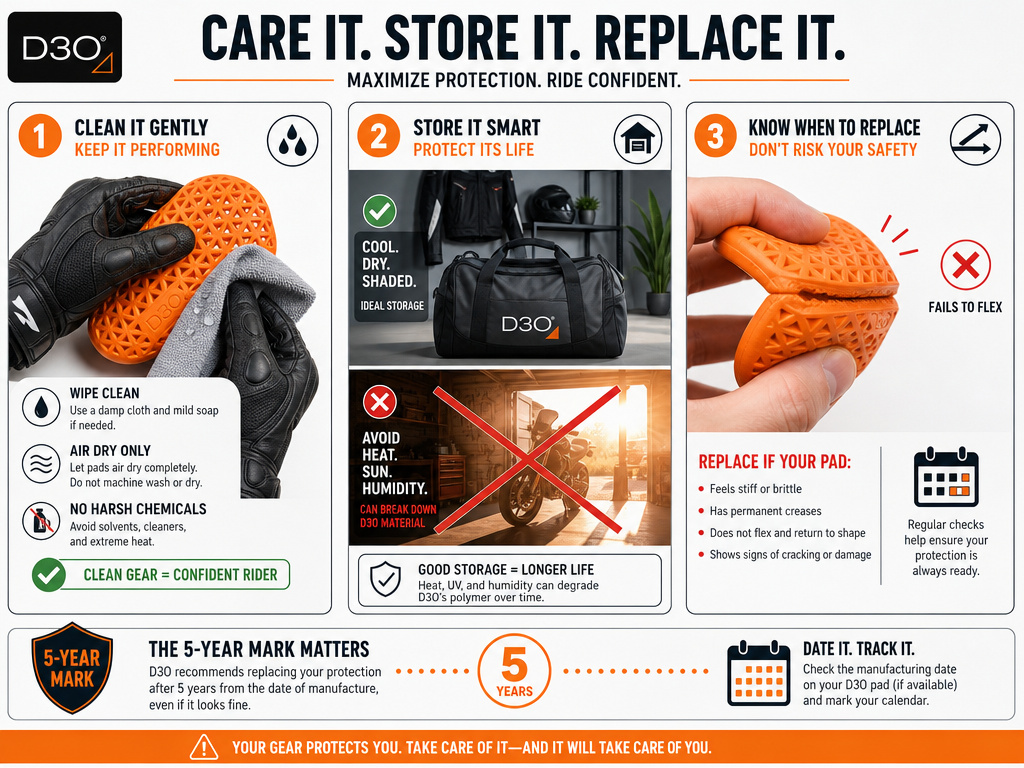
If you buy D3O, you’re buying a product with a clock. Managing that clock is how you get your money’s worth.
The Right Way to Clean It
Never machine wash armor. Never. Remove the pads from your jacket or pants. Wipe them down with a damp cloth and mild soap if necessary. Let them air dry completely away from direct heat or sunlight. The goal is to remove sweat and salt without subjecting the polymer to harsh chemicals or mechanical stress.
Storage Matters
Don’t leave your gear with D3O armor in a sealed plastic bag in a hot garage. Store it in a cool, dry place. Persistent heat is the enemy of polymer longevity.
Signs It’s Time for New Armor
The material won’t crack like old plastic. Look for these subtler signs:
- It stays stiff. If the pad remains rigid and doesn’t return to its flexible state after being folded in your hand for a minute, the polymer is breaking down.
- Visible permanent deformation. Deep creases or wrinkles that don’t smooth out.
- The 5-year mark. Regardless of visible signs, if you’ve ridden regularly with it for five years, plan a replacement. Its tested performance is no longer guaranteed.
This planned armor lifespan is a key cost of ownership. Factor it in when comparing prices to other materials.
Fitting D3O Armor Into Your Gear
Compatibility isn’t automatic. Here’s how to make it work.
Can You Trim D3O Armor?
Do not cut D3O pads. Trimming them can compromise the internal structure and void any certification. If a pad is too large for your jacket’s pocket, it’s the wrong pad. Look for a smaller model or a different brand designed for a slimmer fit.
Upgrading Your Existing Gear
This is where D3O shines. Upgrading your jacket’s armor is straightforward. Measure the pockets in your jacket (shoulder, elbow, back) and pants (hips, knees) and buy pads that match those dimensions. The flexibility of D3O makes it forgiving for slight size mismatches compared to rigid hard-shell.
Position Is Everything
The most common mistake is assuming the armor will stay put. After inserting a pad, put the garment on and sit in your riding position. Reach for the handlebars. Do the shoulder pads slide down your arm? Do the hip protectors rotate away from your hip bone? If yes, the pocket is too big or the pad is the wrong shape. Properly positioned armor is fixed over the joint it’s meant to protect.
Specific D3O Product Lines and Models
One of D3O’s advanced armor models is the Diablo. This specific armor is rated to Level 2 of the EN 1621-1 standard, which is the highest rating available under that global benchmark for protectivity. The Diablo armor is designed with a surface area that is partially open to promote airflow. Its thickness is defined to balance protection and wearability. As an example of market availability, Level 2 Diablo shoulder pads and knee protectors are sold at specific retail prices through certain gear outlets.
Real-World Performance and Crash Testimonials
While specific crash testimonials are not detailed in the provided facts, the performance of D3O armor like the Diablo can be assessed by its certification. Achieving a Level 2 EN 1621-1 rating indicates it has passed rigorous laboratory tests for impact protection. For riders evaluating real-world performance, this certification is a critical benchmark. When considering gear, look for this standard as an indicator of proven protectivity. Practical guidance suggests that properly certified armor, when correctly fitted and maintained, is designed to perform its protective function during an impact.
Brands That Use D3O in Their Gear
The fact sheet mentions Dainese, a major manufacturer of motorcycle apparel and helmets, which has been involved in a product recall for a specific model of AGV Carbon Modular helmet produced during a particular timeframe. The recall was related to a defect involving a chemical reaction from glue. This information illustrates that major gear brands integrate various technologies and components, including armor like D3O, into their products. Riders should be aware that while a brand may use a specific armor technology, it is always prudent to check for any safety notices or recalls associated with the complete garment or accessory.
Frequently Asked Questions
Does D3O armor actually work in a real crash?
Yes, when used as intended. Its EN 1621-1 Level 2 certification means it has passed a standardized high-impact test. Real-world crash reports and its adoption by major gear manufacturers indicate it performs. No armor guarantees no injury, but it significantly reduces the force transferred to your body.
Is D3O the best motorcycle armor?
“Best” depends on your priority. D3O is arguably the best balance of high-level certification and daily-wear comfort for street riders. If your priority is maximum abrasion resistance or the absolute slimmest profile for track use, other technologies like Knox hard-shell might be a better fit for you.
How long does D3O armor last?
With regular use, expect a functional lifespan of 3 to 5 years. Exposure to body heat, sweat, and UV light gradually degrades the polymer’s impact-absorbing properties. It doesn’t become useless overnight, but its performance diminishes after that period.
Can D3O armor get wet?
Yes. It is not harmed by water or sweat. The concern is with the chemicals in detergents and the physical agitation of a washing machine. Always remove the pads and clean them by hand with a damp cloth.
Is D3O better than other impact foams?
It’s different. Compared to basic foam, it’s far superior. Compared to advanced foams like Sas-Tec, it’s a trade-off. D3O’s non-Newtonian action provides its unique feel. Some advanced foams may offer better long-term consistency or heat dissipation. Compare the specific certification level (Level 1 vs. Level 2) of the exact models you’re considering.
The Bottom Line
D3O earns its reputation for a reason. It delivers verified, high-level protection in a form that doesn’t punish you for wearing it. For the rider who wants one set of armor for daily commuting, weekend tours, and everything in between, the D3O Diablo is a compelling default pick.
That choice comes with a manual. You are buying a wear item. Mark your calendar for replacement in five years, treat it to gentle hand-washing only, and always check its position in the pockets. Do that, and the pros, the comfort, the flexibility, the certified safety, will outweigh the cons for the life of the product.
If your riding leans toward the extreme, repeated track days or maximum abrasion concern, look harder at the foam vs hard shell decision. But for the vast middle of the riding spectrum, D3O solves the core problem: it’s protection you’ll actually keep on your body.
