
How to Clean a Motorcycle Helmet: Without Damage
This post contains affiliate links. As an Amazon Associate, we earn from qualifying purchases.
To clean a motorcycle helmet, use only mild soap and water on the shell and liner, avoid all petroleum-based solvents, and be aware that safe temperature limits vary by brand. The exact soap-to-water ratio and safe temperature vary by brand, so your manual is the final authority. A wrong cleaner weakens the shell and a hot car trunk can ruin the energy-absorbing foam.
That last point about heat is where most riders get it wrong. Bell’s manual explicitly warns that a car interior on a sunny day can exceed 150°F, the temperature where damage starts. OGK Kabuto sets its own limit at 122°F (50°C). You can follow every step on how to clean a motorcycle helmet perfectly and still trash your helmet’s protection by leaving it on your bike’s mirror or in a hot garage.
What follows is the process that actually works for the how to clean a motorcycle helmet question, pulled from six different OEM manuals. We’ll cover the tools you need, the step-by-step clean for every part of the helmet, and the specific products that will void your warranty or compromise the shell. By the end, you’ll know how to read your own helmet’s manual for the specs that matter.
Key Takeaways
- Use a solution of mild soap and lukewarm water. SHOEI specifies 5-6 drops per quart, and 130R says a few drops per half-liter.
- Never use petroleum-based solvents (gasoline, benzene) or spray cleaners on the interior; they degrade the EPS liner and anti-fog coating. Some manufacturers, like SHOEI and 130R, also prohibit glass cleaner.
- Air-dry everything away from direct heat; a hair dryer or hot car can warp the shell and permanently compress the protective foam.
- Check your manual for temperature limits. For example, OGK Kabuto warns against water above 122°F (50°C), while Schuberth sets a 86°F (30°C) max for washing pads.
- Replace the helmet after any impact, even if it looks fine, and follow the manufacturer’s replacement interval (e.g., 3-5 years for Bell, 5 years for SHOEI, or 5-7 years for Schuberth).
The Tools You Actually Need
You don’t need a specialty kit. A soft-bristled toothbrush, several clean microfiber cloths, and a bottle of plain, mild liquid soap (think baby shampoo or castile soap) will handle 95% of the job. The brush is for bug guts on the visor and caked grime in the vents. The cloths are for everything else, drying, wiping, and buffing.
Avoid anything abrasive. Scouring pads, stiff brushes, and paper towels will put fine scratches in your visor and can wear down the shell’s clear coat, especially on matte finishes. SHOEI’s manual notes that matte paint is more susceptible to staining and advises immediate, gentle cleaning with a water-moistened cloth.
The part nobody mentions: A worn-out toothbrush is better than a new one. The bristles are softer and more splayed, which applies less focused pressure on the visor’s anti-fog coating. A stiff new brush can scratch that coating off over time.
For the liner, if it’s removable, you’ll also need a sink or basin. If it’s not removable, you’ll need a bit more patience and a spray bottle filled with your soapy water to spot-clean. That’s it. Fancy “helmet cleaning sprays” for the how to clean a motorcycle helmet task are almost always a waste of money and often contain chemicals the manuals explicitly prohibit.
What to Avoid: The Solvent Shortlist
This isn’t about being fussy. Petroleum-based solvents and harsh chemicals physically break down the materials that are supposed to save your life. The expanded polystyrene (EPS) foam liner, the part that crushes to absorb impact, is particularly vulnerable.
Every manufacturer manual has a prohibited list. They don’t all agree on every item, but the overlap is clear and firm.
| Brand | Prohibited Cleaning Agents | Applies To |
|---|---|---|
| Bell, SHOEI, 130R | Gasoline, benzene, glass cleaner, “other solvents” | Shell, visor, liner |
| Schuberth | Motor fuel, thinners, solvents | Shell |
| OGK Kabuto | Petroleum-based solvents, abrasive detergents | Shield/Visor specifically |
The common thread is petroleum. Gasoline, some glass cleaners, and many all-purpose solvents contain petroleum distillates that can weaken the shell’s resin and make the EPS foam brittle. The damage is often invisible until the helmet fails in a crash.
Common mistake: Using Windex or an ammonia-based cleaner on the visor. As Bell’s manual states, “Petroleum products and other solvents may impair the optical properties and reduce the mechanical strength of shields.” Stick to lukewarm water and a microfiber cloth.
Also, never use spray-on interior cleaners or disinfectants directly on a non-removable liner. The 130R Katsura v2 manual explicitly forbids it. The chemicals can soak into the foam and never fully evaporate, leading to skin irritation and degrading the foam’s structure.
The 4-Step Deep Clean Process
A thorough clean takes some hands-on time, plus drying. Do this periodically or after a particularly grimy trip.
1. Strip It Down
Start by removing everything that comes off: the visor, the chin curtain, and any interior cheek pads and liners. Check your helmet’s manual if you’re unsure how, many modern helmets have clever but non-obvious release mechanisms. This gives you access to the grime in the crevices and allows you to wash the soft parts properly.
If your helmet has a built-in Bluetooth system, remove the speakers and microphone unit if possible. If not, be extremely careful not to get the electronics or their ports wet. A dab of isopropyl alcohol on a cotton swab can clean connections, but keep liquids away from the main unit.
2. Wash the Removable Liners & Pads
For removable liners, hand-wash them in a sink or basin. Here’s where the manufacturer specs matter.
SHOEI specifies “5 or 6 drops of mild soap in a quart of warm water.” 130R says “some drops of neutral detergent in half a liter of warm water.” This isn’t marketing, it’s the dilution that cleans effectively without leaving a soapy residue that can irritate your skin.
Gently agitate the liners in the solution, focusing on stained areas. Don’t wring or twist them. Rinse under lukewarm running water until the water runs clear. Press, don’t twist, the liners between towels to remove excess water.
Critical temperature check: Schuberth mandates hand-washing removable pads at a maximum temperature of 86°F (30°C). OGK Kabuto warns against cleaning water above 122°F (50°C). Hot water can shrink or distort the fabrics and adhesives.
3. Clean the Shell and Visor
With the liners out, tackle the shell. Dip a soft microfiber cloth in your mild soapy water, wring it out well, and wipe down the entire exterior. Use the soft toothbrush to gently dislodge bugs from the visor and dirt from the vent openings. Rinse the cloth frequently.
For the visor, rinse it first under lukewarm water to remove abrasive grit. Then, using the soapy water and a clean microfiber cloth, wipe it clean. Always dry the visor with a separate, dry microfiber cloth or let it air-dry to prevent streaking. Rubbing a “dry” visor with a cloth that has microscopic grit on it is the main cause of fine scratches.
4. Dry & Reassemble
This is the most important step after cleaning. Air-dry everything at room temperature, away from direct sunlight or heaters.
- Place the liners and pads on a towel, shaping them as they dry.
- Let the shell and visor sit on a separate towel.
- A fan can speed up the process, but do not use a hair dryer or place items near a vent.
Reassemble only when every component is completely, bone-dry. Moisture trapped inside the helmet against the EPS foam is a recipe for mildew and a foul smell. Once it’s together, give the chin strap a wipe-down with a damp cloth as well. It’s a part of the helmet liner that gets constant contact.
Dealing With Odors and Stubborn Stains
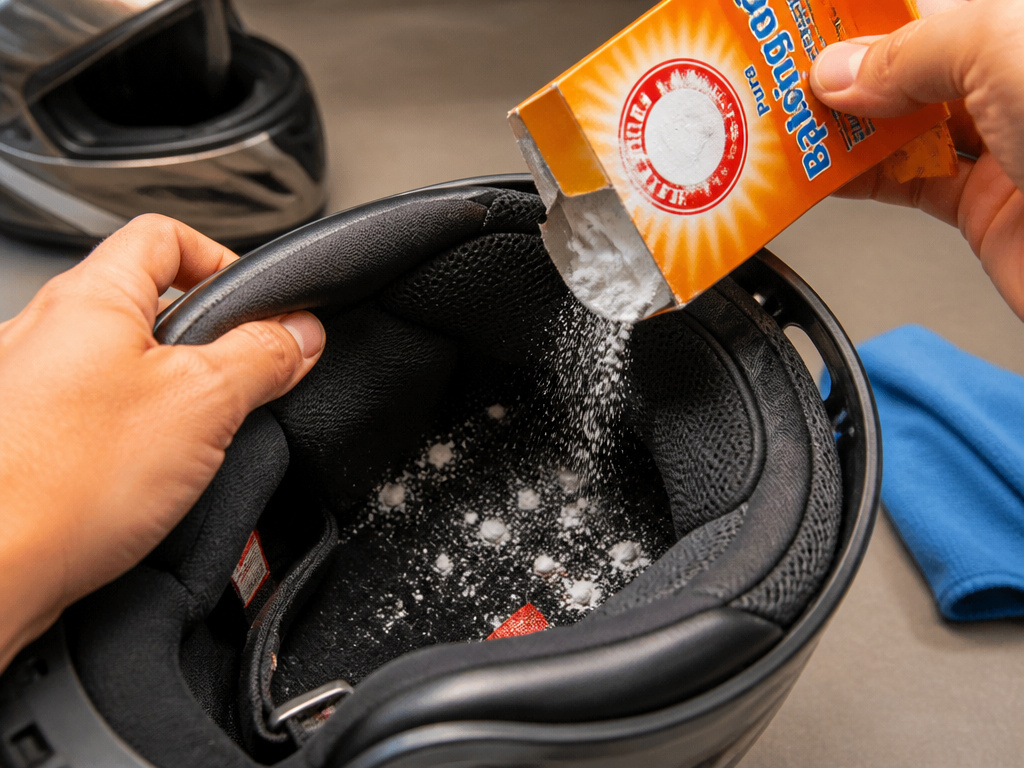
Sometimes a simple wash isn’t enough. For persistent odors in a non-removable liner, you need a different tactic. After a thorough surface clean with soapy water, lightly sprinkle baking soda over the interior, let it sit for an hour, then vacuum it out thoroughly. For a more aggressive approach, a detergent formulated for technical fabrics can be used in a very diluted spray-and-wipe application.
For stained matte finishes, act fast. As SHOEI notes, matte paint stains more easily. A quick wipe with a water-moistened cloth right after a ride often prevents a stain from setting. For set-in stains, a very mild soap solution and gentle circular motion with a microfiber cloth is your best bet. Never use aggressive rubbing compounds.
If odors persist after cleaning, it might be time for a dedicated helmet deodorizer. These sprays use enzymes to break down odor-causing bacteria rather than just masking the smell.
Storage and Lifespan: The Rules No One Follows
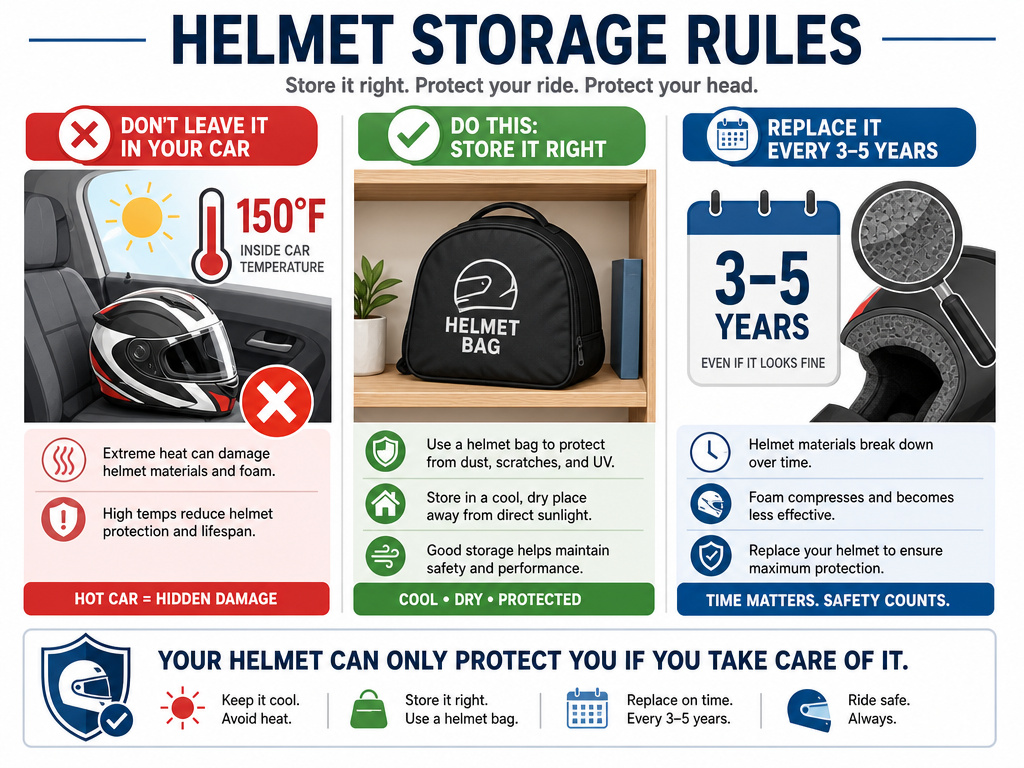
Cleaning keeps it fresh, but storage determines how long it stays safe. The manuals are unanimous on the basics: store your helmet in a cool, dark, dry place. The disagreement is in the details.
| Storage Factor | Bell Helmets | OGK Kabuto (F172206) | The Real-World Take |
|---|---|---|---|
| Max Temperature | 150°F (65.5°C) | 122°F (50°C) | A car interior can hit 150°F in minutes. Never leave it in there. |
| Where to Put It | Not on mirror/sissy bar; not on bike’s helmet lock while riding | Avoid direct heat above 50°C | Use a helmet bag on a shelf in the house. |
| Lifespan | Replace every 3–5 years | N/A (see other brands) | Lifespan varies by use and care. |
The lifespan numbers are the biggest point of conflict. Bell says 3-5 years. SHOEI says 5 years. Schuberth says 5-7 years depending on care. They can’t all be the universal truth.
Sweat, UV light, and temperature cycles degrade the materials. A helmet worn daily by a commuter in Phoenix will age faster than one used for weekend rides in Seattle and stored properly. The calendar is a guideline; inspect the helmet for changes in fit, fraying straps, or a hardened, crumbly feel to the interior foam.
Most importantly, replace the helmet immediately after any impact, even a minor drop onto a hard surface from waist height. The EPS foam is designed to crush once. That damage is almost always invisible.
Frequently Asked Questions
Can I use Dawn dish soap to clean my motorcycle helmet?
Yes, a small amount of Dawn or similar mild dish soap is generally safe. It’s a degreaser that works well on bug splatter and body oils. The key is dilution, use a few drops in a quart of water, as per SHOEI’s manual. Avoid antibacterial or heavy-duty “ultra” soaps with added moisturizers or abrasives.
Can I use Windex to clean my helmet visor?
No. Most glass cleaners like Windex contain ammonia or other solvents that can damage the visor’s plastic, degrade its anti-fog coating (if present), and make it more brittle. The Bell manual explicitly warns against solvents that “impair the optical properties.” Use lukewarm water and mild soap instead.
How often should I deep clean my helmet?
Aim for a full deep clean regularly if you ride often. Do a quick post-ride wipe-down of the visor and shell with a damp cloth after every ride, especially if you’ve encountered bugs or road grime. This prevents buildup and makes the deep clean much easier.
Can I machine wash my removable helmet liners?
No. Even on a gentle cycle, the agitation and spin of a washing machine can damage the pads, distort their shape, and break down the adhesives that hold the fabric to the foam. Always hand-wash according to the manufacturer’s instructions for water temperature and soap ratio.
How do I clean a helmet with a built-in Bluetooth system?
Extreme caution is required. Remove the electronic units if the manual says you can. If not, use a barely-damp cloth to wipe around them, avoiding any ports or openings. For a more thorough cleaning to disinfect a helmet with electronics, focus on the non-electronic areas and consider using dedicated disinfectant wipes that promise safe use on electronics, but test on a small area first.
Before You Go
The one rule that overrides all others: your helmet’s own manual is the final word. Before you mix any soap, find the PDF online or dig out the booklet. SHOEI’s ratio, Schuberth’s temperature limit, and Bell’s storage warning exist because their engineers tested those exact materials.
A clean helmet is a more pleasant piece of gear to wear, but the real goal is preserving its ability to protect you. A wrong chemical or a hot afternoon in the trunk compromises that protection silently. The process is simple, mild soap, cool water, air drying, and common sense. Stick to that, store it on a shelf, and your lid will be ready when you are.
