
8 Best Motorcycle Helmets For Glasses Wearers in 2026
This post contains affiliate links. As an Amazon Associate, we earn from qualifying purchases.
The VEVOR Modular Motorcycle Helmet is our best overall choice for glasses wearers, balancing a comfortable eyewear fit with versatile modular convenience. The LEM Full Face helmet is best for anti-fog performance, while the AGV K1 S is the top ultra-lightweight pick. The right helmet solves two persistent problems for riders who wear glasses: pressure points on the temples and doubled-up fogging between the visor and your lenses.
This guide highlights eight helmets designed with dedicated eyewear channels, better ventilation, and thoughtful interior shaping to help you ride in comfort and safety. Our evaluation is based on manufacturer specifications, expert gear reviews, and patterns in rider feedback.
Top 8 Motorcycle Helmets For Glasses Wearers in the Market
Certain content that appears on this site comes from Amazon. This content is provided "as is" and is subject to change or removal at any time.
The Best Motorcycle Helmets For Glasses Wearers, Reviewed
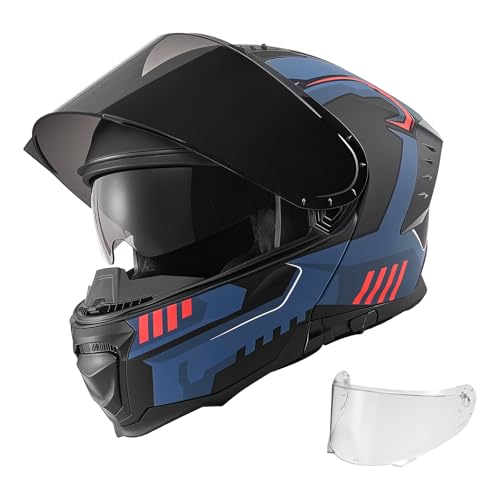
VEVOR Modular Motorcycle Helmet
What We Like
- Eyeglass-friendly fit for comfortable wear
- Flip-up chin bar provides versatile riding modes
- Tool-free quick-swap design for the outer visor
- Multi-vent design reduces heat and fogging
Trade-offs
- At 4.2 lb, it is heavier than the 3.5 lb AGV K1 S.
- The modular design inherently adds complexity over a full-face.
Dual DOT and ECE certification means this modular helmet meets stringent safety standards for both street and adventure riding. Its flip-up chin bar switches between full-face and 3/4 helmet modes, offering flexibility for putting on glasses or talking during a stop without removing the entire helmet. An inner drop-down sun visor and an included spare clear outer visor adapt to changing glare, while the design accommodates eyewear within the liner.
That adaptability does come with a weight penalty. At 4.2 pounds, it feels more substantial on your head compared to streamlined full-face options like the AGV K1 S. For riders who prioritize a lightweight feel above all else, that’s a tangible trade-off. However, if you value the flexibility to open your helmet on the fly and the built-in convenience for eyewear, this helmet delivers a well-rounded package that balances features with proven safety standards.
Product photos
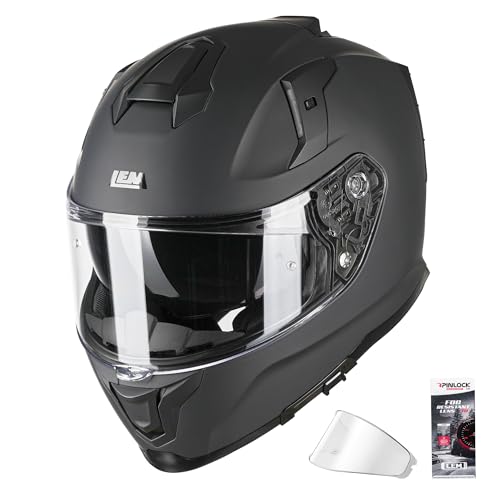
LEM Full Face Motorcycle Helmet
What We Like
- Authentic PINLOCK insert for fog-free vision
- DVS system for instant day-to-night visor changes
- Fixed interior lining with channels for glasses
- Quick-release system for emergency removal
Trade-offs
- At 4.9 pounds, it's the heaviest helmet in this guide
Clear vision in rain and variable temperatures is a primary safety concern, which the authentic Dutch PINLOCK anti-fog insert directly addresses. This LEM helmet pairs that fog defense with a DVS dual-visor system for instant switching between day and night modes. Dedicated channels in its 3D fixed lining accommodate eyeglasses alongside its integrated safety features.
That protection and feature set come with a trade-off in weight. At 4.9 pounds, it’s notably heavier than some other helmets, such as the 3.5-pound AGV K1 S, which could lead to neck fatigue on very long tours. The fixed, non-modular design also means less convenience for putting on glasses compared to a flip-up model. For riders who value a sealed, quiet environment with superior anti-fog performance, however, this helmet delivers a focused solution. It’s a purpose-built tool for maintaining a clear view, which is often the highest priority for those wearing prescription lenses.
Product photos
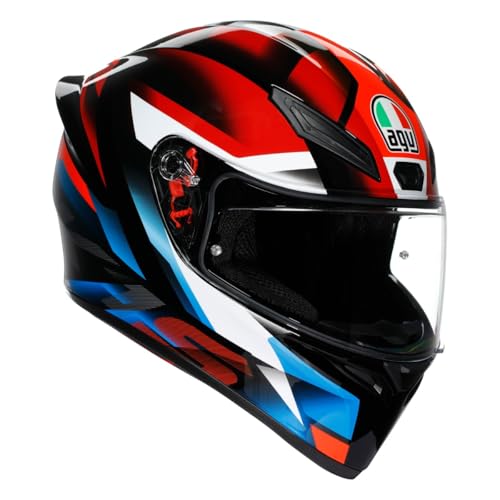
AGV K1 S Full Face Helmet
What We Like
- Exceptionally lightweight at just 3.5 pounds.
- Eyewear-friendly interior design for glasses wearers.
- Panoramic 190° visor for excellent peripheral vision.
- Race-inspired aerodynamics for high-speed stability.
Trade-offs
- Full-face design requires removing helmet for glasses adjustments.
- No built-in sun visor for changing light conditions.
The AGV K1 S weighs 3.5 pounds, which can reduce neck strain during long rides. Its Dry-Comfort liner is designed to be eyewear-friendly, and the Ultravision visor provides a 190° horizontal field of view for enhanced peripheral awareness. This helmet suits riders seeking a lightweight feel and a wide sight picture, all in a shell with MotoGP-derived aerodynamics for stability at speed.
A full-face design like this lacks the flip-up chin bar found on modular helmets such as the VEVOR. The ventilation system uses five adjustable front vents and two rear extractors to optimize airflow for comfort. For pure weight savings and a sport-oriented fit, the K1 S is a strong choice, though riders wanting easier on-the-go access might prefer a different style.
ILM Vintage Modular Helmet

What We Like
- Reversible chin guard for three helmet styles
- Dual visor system for sun and clear conditions
- Eyewear-friendly design with a dedicated glasses slot
- Removable and washable interior cheek liners
Trade-offs
- At 3.7 lb, it's heavier than the AGV K1 S (3.5 lb) and CYRIL (3.6 lb)
The 180-degree reversible chin guard is the defining feature here, letting you switch from a secure full-face to an open-face helmet in seconds without removing it. That flexibility, combined with its unmistakable vintage styling, makes it a compelling choice for riders who value classic aesthetics and on-the-fly adaptability. The eyewear-friendly channel is a thoughtful touch for glasses wearers, and the dual visor system handles changing light without needing to swap shields.
You do trade some compactness for that retro profile and modular function. The helmet stands 15 inches tall, which can feel a bit bulkier than sleeker, performance-focused designs. Its ventilation relies on three basic vents, so it may not move as much air as helmets with more advanced channeling. For a pure, lightweight full-face experience, models like the AGV K1 S are a strong alternative. For style and transformable utility, however, this ILM model stands out.
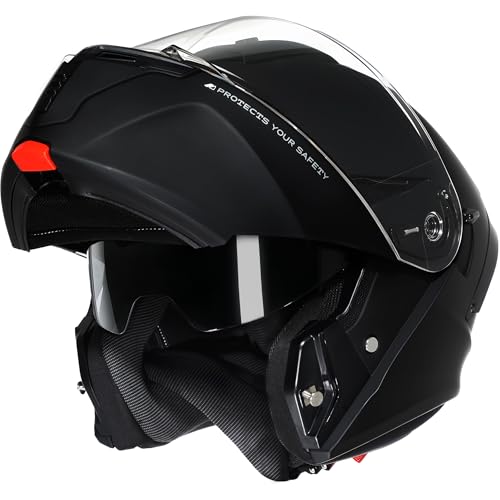
CYRIL Modular Motorcycle Helmet
What We Like
- Eyewear-friendly padding accommodates glasses comfortably
- Lightweight 3.6-pound design reduces neck fatigue
- Quick-release, tool-free visor system for easy changes
- Includes three visors for versatile light conditions
Trade-offs
- No ECE safety certification mentioned for international riders
- At 3.6 lbs, it is slightly heavier than some full-face models like the AGV K1 S
- Modular flip-up mechanism adds complexity compared to simple full-face designs
The CYRIL Modular Helmet is DOT-approved, featuring a high-strength ABS shell and an energy-absorbing EPS liner for safety. Its 3.6-pound weight is lighter than several modular and full-face alternatives, such as the VEVOR modular at 4.2 pounds and the LEM full-face at 4.9 pounds, which can reduce neck strain during wear. The interior padding is designed to accommodate glasses comfortably, and the helmet includes three visors, a clear shield, an inner drop-down sun visor, and a bonus smoke shield, providing different light conditions coverage.
A modular helmet like the CYRIL provides a flip-up chin bar for easy transitions, a feature not found on standard full-face designs. Compared to the AGV K1 S full-face helmet at 3.5 pounds, the CYRIL’s 3.6-pound weight shows a minimal difference. The quick-release, tool-free system and removable, moisture-wicking liner are built for straightforward maintenance and long-term freshness.
Product photos
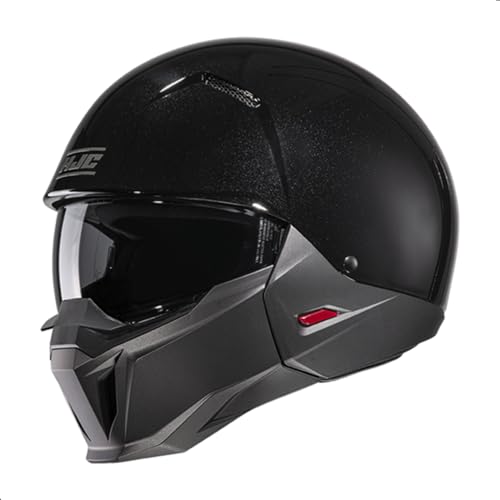
HJC i20 Open Face Helmet
What We Like
- Integrated, anti-fog coated internal sun shield
- Lightweight 3.5-pound polycarbonate shell
- Vented airflow system with top and mouth vents
- Glasses grooves minimize pressure for eyewear
Trade-offs
- Open-face design offers less chin and jaw protection than a full-face helmet
The standout feature is the HJ-V10 internal sun shield, which deploys quickly to cut glare without forcing you to swap a main visor or wear sunglasses under the helmet. For riders who wear glasses, the dedicated eyewear channels are a thoughtful touch, reducing pressure points on your temples. This open-face helmet suits the rider who prioritizes convenience and airflow on casual rides, where the ease of an internal shade and a breezier feel are key comforts.
The trade-off is inherent in the open-face style: you sacrifice the full facial coverage and wind noise reduction of a full-face helmet. That shell design means your chin and jaw are more exposed. While the ventilation system works well, the helmet’s weight is on par with some full-face options, so you’re not gaining a major advantage in lightness. It’s a solid choice for specific riding, but not an all-purpose solution.
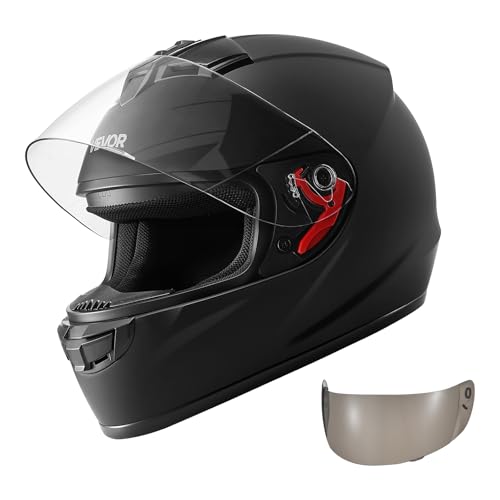
VEVOR Full Face Helmet
What We Like
- Eyeglass-friendly fit for comfortable wear with glasses
- Tool-free quick-swap system for two included visors
- Multi-vent design aids airflow and reduces fogging
Trade-offs
- Lacks the advanced ECE safety rating of VEVOR's own modular model
At 3.3 pounds, this helmet makes a strong case for riders who prioritize minimizing neck strain on long rides. Its explicit eyeglass-friendly design and tool-free dual visor system address two major pain points for spectacle-wearing riders directly from the box. The multi-vent layout and washable liner are practical touches for comfort, all wrapped in a DOT-certified ABS shell. It’s a straightforward, lightweight package for the value-conscious commuter or tourer who wants full-face protection without a heavy feel.
This DOT-approved helmet prioritizes a lightweight 3.3-pound build, which helps minimize neck strain during longer rides. Its design accommodates eyeglasses and includes a tool-free system for swapping between clear and tinted visors, adding practical convenience for changing light. The shell does not carry the dual DOT/ECE certification found on VEVOR’s own modular helmet, a consideration for riders seeking that specific safety standard.
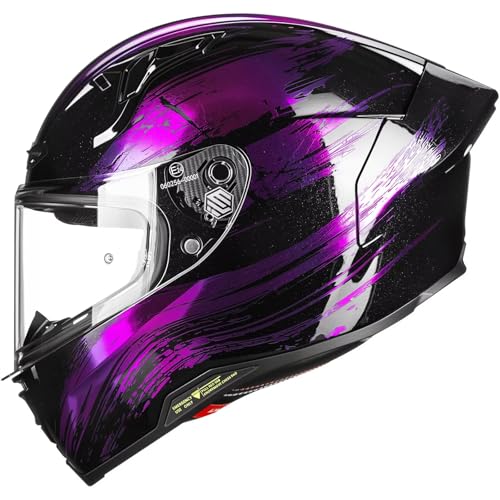
ILM Full Face Helmet
What We Like
- Dual DOT and ECE 22.06 safety certification
- Ready for optional Pinlock anti-fog insert
- Removable, washable comfort liner
- Specific eyeglasses-friendly channel design
Trade-offs
- Fixed full-face design lacks flip-up convenience of modular helmets
The ILM FF101’s dual DOT and ECE 22.06 certification provides a level of verified impact protection that meets both U.S. and stringent European standards, a key consideration for safety-focused riders. It directly caters to glasses wearers with a dedicated design channel, and the inclusion of Pinlock-ready pins tackles a common fogging issue right out of the box. This helmet is a strong fit for commuters and daily riders who prioritize certified safety and straightforward, practical features for wearing eyewear.
Meeting both DOT and the newer ECE 22.06 standards, the ILM FF101 offers upgraded protection for riders prioritizing certified safety. Its traditional full-face design lacks the flip-up chin bar found on modular helmets like the VEVOR, so quick conversations require removing the entire helmet. An eyeglasses-friendly design and visor with Pinlock readiness add everyday convenience for commuting and daily riding.
Product photos
How We Evaluated Motorcycle Helmets For Glasses Wearers
Our research focused on cross-referencing manufacturer data and expert round-ups for helmets marketed as eyewear-friendly. We prioritized models that specify features like dedicated temple channels, adjustable padding for glasses, and compatibility with anti-fog systems. The key criteria were eyewear comfort, anti-fog effectiveness, and overall helmet design tailored for glasses, as these factors directly impact a rider’s focus and safety on the road.
This guide is based on documented specifications and user feedback. For more information on what makes a helmet suitable for glasses wearers, see our guide on selecting a helmet for glasses wearers.
What To Look For In Motorcycle Helmets For Glasses Wearers
A good helmet for glasses solves the unique challenges of pressure, fog, and fit. It needs dedicated interior features and a design that works with, not against, your frames.
Look for a helmet with designated eyewear channels, an effective anti-fog system, and a shell design that accommodates glasses comfortably without compromising safety certification.
Eyewear Fit & Comfort
Pressure from the helmet shell pushing on your glasses’ temples can cause headaches and discomfort on long rides. The most important feature is a dedicated eyewear channel or groove in the interior cheek pads. This creates a routed path for the temple arms, preventing them from being squeezed against your head.
Some helmets offer adjustable or removable cheek pads, allowing you to create a custom fit around your frames. The helmet’s shell shape also matters; a more oval or intermediate oval interior often provides more space for the frames compared to a very round shape.
Anti-Fog Performance
Glasses add an extra lens surface prone to fogging inside the helmet. A high-performance ventilation system is crucial, as moving air helps prevent moisture build-up. Look for helmets with multiple top, brow, and chin vents you can control. The best anti-fog solution is a visor designed for a Pinlock insert, a removable second lens that creates a fog-free air pocket. Helmets like the LEM Full Face include a Pinlock-ready visor, while others may have anti-fog coatings on the visor itself.
Helmet Design Considerations
Your preferred helmet style, full-face, modular, or open-face, affects convenience and protection. A full-face helmet offers the most coverage but requires you to thread glasses through the eye port. A modular helmet’s flip-up chin bar lets you put the helmet on with glasses already on your face, a major convenience for many. An open-face helmet offers maximum airflow and easy access but less protection. Safety certification is non-negotiable; look for at least DOT certification, with ECE 22.06 being the more stringent modern standard for riders who need it.
- Check if the manufacturer explicitly lists “eyewear compatible” or “glasses friendly” in the product description.
- Verify if the visor is Pinlock-ready or comes with an anti-fog insert included.
- Look for removable and washable interior liners, which can help you manage fit and hygiene around your glasses.
- Consider the helmet’s weight, especially if you ride long distances, as heavier models can increase neck fatigue.
- Ensure the eye port opening is large enough to comfortably fit your specific frame size and style.
A helmet shouldn’t fight your glasses; its interior should have a dedicated place for them to sit.
Motorcycle Helmets For Glasses Wearers Compared
The comparison table below highlights key specifications and features to help you differentiate between our top picks.
| Product | Weight | Shell Material | Safety Standards | Visor System | Eyewear Feature |
|---|---|---|---|---|---|
| VEVOR Modular Motorcycle Helmet | 4.2 pounds | High-strength ABS | DOT and ECE approved | Inner sun visor + clear outer | eyeglass-friendly fit |
| LEM Full Face Motorcycle Helmet | 4.9 pounds | LG ABS+PC alloy | DOT Certified | DVS dual-visor | Dedicated eyeglass channels |
| AGV K1 S Full Face Helmet | 3.5 pounds | N/A | DOT FMVSS 218 & ECE 22.06 | N/A | eyewear-friendly |
| ILM Vintage Modular Helmet | 3.7 pounds | ABS | DOT Standard | Dual: retractable tinted + removable clear | Eyewear Friendly |
| CYRIL Modular Motorcycle Helmet | 3.6 pounds | High-strength ABS | DOT approved | Clear shield, inner drop-down, bonus smoke | accommodates glasses |
| HJC i20 Open Face Helmet | 3.5 pounds | Advanced polycarbonate composite | DOT Approved | HJ-V10 internal shield | Designed glasses grooves |
| VEVOR Full Face Helmet | 3.3 pounds | High-strength ABS | DOT Certified | Interchangeable clear & tinted | eyeglass-friendly fit |
| ILM Full Face Helmet | N/A | ABS | DOT and ECE 22.06 | Pins for Pinlock 30 | eyeglasses-friendly design |
Frequently Asked Questions
What is the best motorcycle helmet for people who wear glasses?
The best helmet depends on your priorities. Our top overall pick is the VEVOR Modular Motorcycle Helmet for its balance of safety, eyewear comfort, and modular versatility. For fog-free vision, the LEM Full Face Motorcycle Helmet with its included Pinlock insert is ideal.
Riders wanting the lightest option should look at the AGV K1 S Full Face Helmet. Ultimately, the best helmet is a DOT-certified one with dedicated eyewear channels that fits your head shape and glasses comfortably. For a broader look at options across all riding styles, check our guide to overall best motorcycle helmets.
Which motorcycle helmets are compatible with eyeglasses?
Many modern helmets are designed with glasses in mind. Key compatibility features include eyewear channels molded into the interior padding, removable or adjustable cheek pads, and a sufficiently large eye port opening. Modular helmets are particularly compatible, as their flip-up design allows you to put the helmet on without removing your glasses first. Reading manufacturer specs is the best way to confirm a model is marketed as glasses-friendly. For riders who prefer street-focused models, our list of the best street helmets includes several eyewear-compatible options.
What is the 222 rule for helmets?
A common guideline for helmet replacement suggests replacing a helmet a few years after purchase or first use. Most importantly, a helmet should always be replaced immediately after any impact, as the internal protective materials can be damaged without showing visible signs. Following this practice helps ensure the helmet continues to provide proper protection.
How do I ride a motorcycle if I wear glasses?
Riding with glasses requires a helmet designed to accommodate them comfortably. First, ensure your helmet has dedicated eyewear channels to prevent pressure points. Use an anti-fog system, like a Pinlock visor insert or a good anti-fog spray on your lenses, to maintain clear vision. Always put your helmet on carefully to avoid bending your frames; a modular helmet can make this easier. Keep a microfiber cloth handy to clean your glasses and the helmet visor. For riders who prefer sunglasses, see our tips on wearing sunglasses under a helmet.
What if my glasses don’t fit under any helmet?
If standard helmets are uncomfortable, consider exploring specialty eyewear options. Prescription inserts that mount inside the helmet eliminate the need for traditional frames altogether. Alternatively, over-the-glasses (OTG) goggles are designed to fit over your regular glasses and can be worn with an open-face helmet. You can also look into slimline prescription motorcycle glasses or flexible-frame eyeglasses for riding specifically designed for helmet compatibility. For a solution that goes over your existing frames, explore goggles for glasses wearers.
The Bottom Line
The VEVOR Modular Motorcycle Helmet is our best overall recommendation for most glasses-wearing riders. It offers a certified-safe modular design with a thoughtful, comfortable fit for frames. For budget-conscious riders or those with specific needs, the AGV K1 S is the clear choice for ultra-lightweight comfort, while the LEM Full Face is unmatched for combating visor and glasses fog. While features like a flip-up chin bar or internal sun visor add convenience, the single most important factor is confirming the helmet has dedicated, well-designed channels for your glasses’ temple arms. This eliminates pressure and distraction.
