
Single Sided vs Double Sided Swingarm: The Verdict
This post contains affiliate links. As an Amazon Associate, we earn from qualifying purchases.
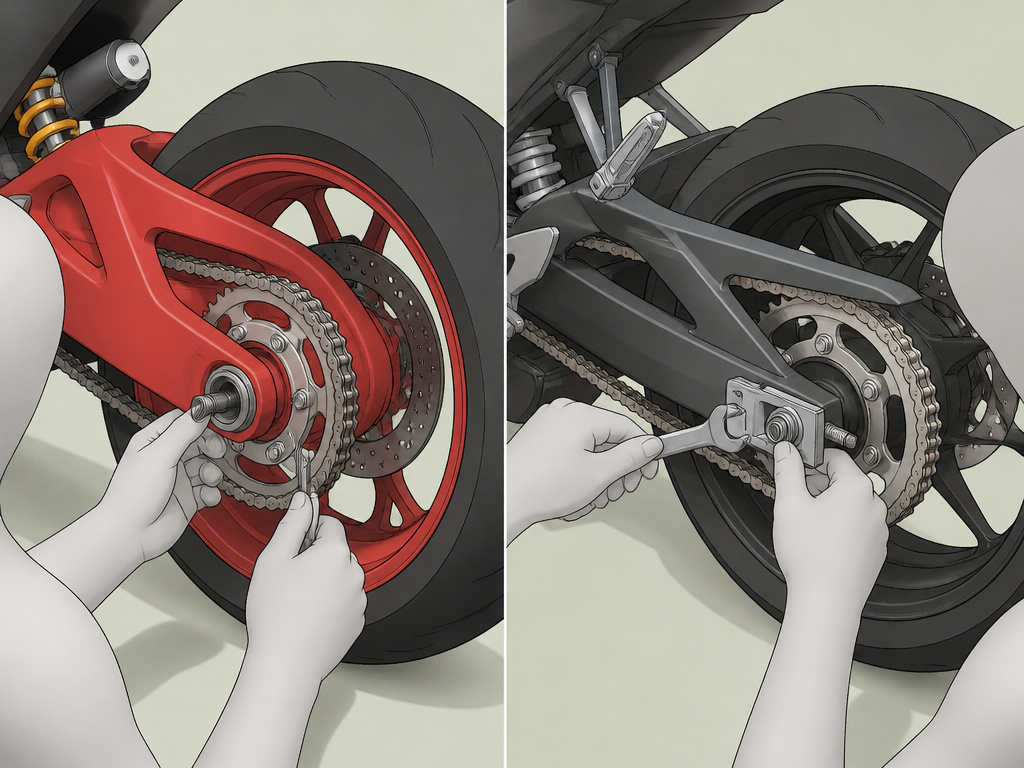
A single-sided swingarm attaches to the motorcycle chassis via a single pivot point and connects to the rear wheel with a single hub. A double-sided swingarm attaches via a pivot bolt and connects to the wheel via opposing hubs on each side. The single-sided design offers easier wheel removal and a distinct look. The double-sided design is simpler, cheaper to manufacture, and remains the standard for high-stress racing applications.
That distinction isn’t just about how the bike looks from the rear. It changes the tools in your kit, the way you set chain tension, and what happens when you pull over with a flat tire a hundred miles from home. This is the practical reality of a single sided vs double sided swingarm.
Here is what actually held up. This guide walks through the mechanics, the materials, and the real riding implications of each design. We’ll clear up the marketing noise about weight and handling, show you which major brands pick which design and why, and give you a straight answer on which type of swingarm actually matters for the kind of riding you do.
Key Takeaways
- The single-sided swingarm’s biggest advantage is fast wheel removal, a feature born from endurance racing.
- Swingarms are most commonly made from aluminum, chosen for its balance of strength and weight, with steel used for durability and carbon fiber for extreme performance.
- According to MC Garage, for handling advantages, there are none significant enough for most riders to notice, though some general enthusiast speculation suggests there are stiffness and handling character differences.
- The conventional double-sided design is simple, cheap to manufacture, and totally effective at handling cornering and drivetrain loads.
- On a long trip, a single-sided setup may require specific tools you don’t normally carry, while a double-sided arm usually needs a standard wrench and a stand.
Single-Sided vs Double-Sided Swingarm: The Core Difference
Look at the business end of your bike. On one side, you have the sprocket, the chain, and maybe a brake rotor. The swingarm is the bridge that holds all that hardware and connects it to the frame, letting the rear wheel move up and down with the road. How that bridge is built decides everything else.
The double-sided swingarm is the standard. It’s an H-shaped piece that straddles the bike’s frame at the front and cradles the wheel between two arms at the rear. Each arm has a hub, and the axle passes through both. It’s the design you see on most motorcycles. It’s simple. The forces from acceleration, braking, and cornering are spread across two symmetrical arms, and the whole assembly is straightforward to build and align.
Technical Snippet: A motorcycle’s swingarm is an H- or L-shaped suspension part that connects the chassis to the rear wheel via a pivot bolt, allowing the rear wheel to move vertically. This provides the motorcycle’s rear suspension travel.
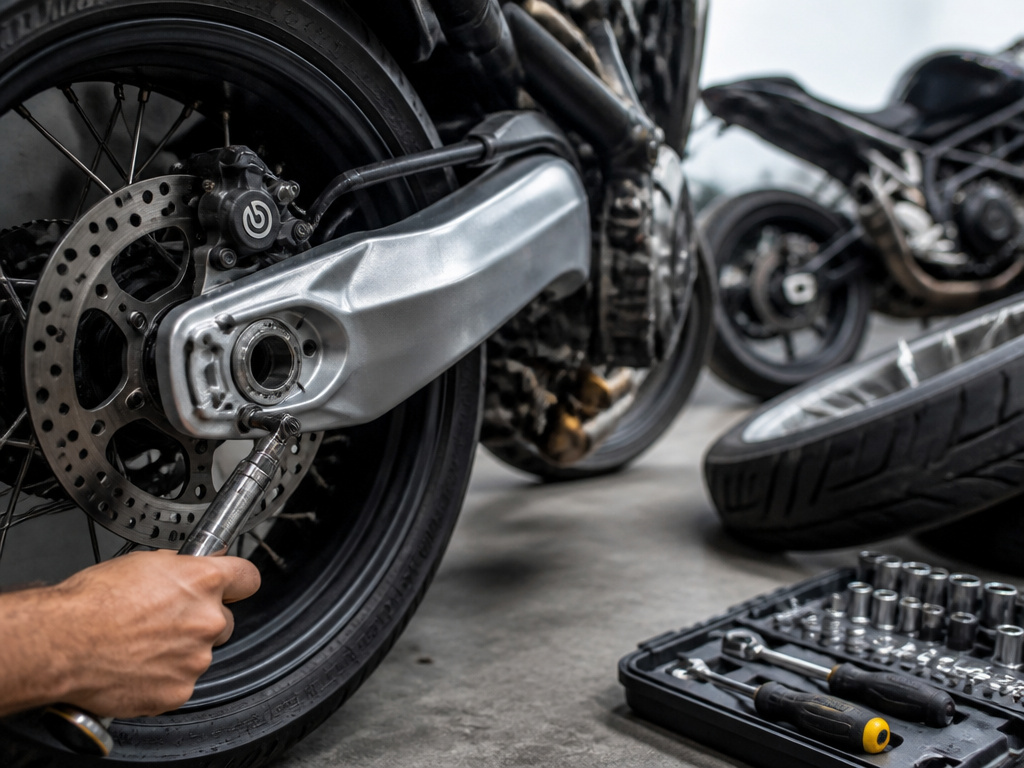
The single-sided swingarm, sometimes called an L-shaped or cantilever arm, takes a different path. It attaches to the frame at a single pivot point on one side only. The wheel mounts to a single, large hub on that same side, much like a car wheel. From the other side, the wheel looks like an unbroken circle. This design is used by manufacturers like Ducati and Aprilia with chains, and by BMW and Moto Guzzi with shaft drives.
The visual difference is obvious. The practical difference in the single sided vs double sided swingarm is in the loading. All the weight of the bike and rider, plus the twisting force from the chain or driveshaft and the lateral load from cornering, is borne by a single attachment point and a single hub. That demands a very stout, precisely engineered assembly. Which is why these arms often look like sculpted metal artwork—the form is literally following the function of handling massive, concentrated stress.
The Real-World Pros and Cons
Forget the spec sheet for a minute. What does each design mean for you in the garage or on the shoulder of a highway?
Single-Sided Swingarm: The Aesthetic Choice with a Practical Edge
The pros in the single sided vs double sided swingarm debate are compelling, especially if you work on your own bike. The major advantage is fast wheel removal. You don’t have to slide an axle out of two tight-fitting holes while holding the wheel in place. On many single-sided designs, you simply undo a single large nut on the hub, and the wheel comes straight off. This isn’t just a convenience for tire changes; it’s a legacy from endurance racing, where pit-stop speed directly decided races.
I knew better, yet I left my rain liner at home on a day with a small chance of showers. I got soaked on a backroad miles from shelter and was cold for hours. My rule now is to carry the liner every single time.
That same principle applies to your toolkit. The single-sided design also makes it easier to mount larger, closer-fitting side cases. There’s no swingarm arm in the way on the left side, so luggage designers can tuck cases in tightly for better aerodynamics and a narrower profile. Manufacturers like BMW often use single-sided swingarms because the design integrates well with a shaft drive assembly and makes it easier to mount larger, closer fitting side cases.
The cons are about complexity and cost. That single, massive hub is a more complicated part to machine than two simple axle mounts. The chain or belt adjustment mechanism is often proprietary and fussier than the simple twin-screw adjusters on a double-sided arm. And if that single hub bearing fails, you’re not riding home.
Double-Sided Swingarm: The Default for a Reason
This is the workhorse. Its advantages are all about robust simplicity. The double-sided design is totally effective at handling lateral loads encountered while cornering as well as twisting forces imparted by the drivetrain, as noted by MC Garage. It’s strong, predictable, and doesn’t introduce any unique failure points.
It’s also cheap to manufacture. The conventional double-sided swingarm is simple and cheap to manufacture. This simplicity translates to the owner, too. Adjusting the chain is typically straightforward, and replacing a wheel bearing is a job you can do with common tools.
The trade-off is in service time. Removing the rear wheel requires loosening the axle nut, backing out the axle, and carefully supporting the wheel as it comes free from both sides. It’s an extra step, and if the axle is corroded or tight, it’s a frustrating one. For the vast majority of riders who change tires once a season, this is a minor inconvenience. For a race team, it’s a deal-breaker.
| Consideration | Single-Sided Swingarm | Double-Sided Swingarm |
|---|---|---|
| Wheel Removal | Fast, often one-nut operation. | Slower, requires axle removal and careful wheel support. |
| Manufacturing Cost | Higher due to complex hub machining. | Lower, uses simpler cast or forged arms. |
| Luggage Compatibility | Excellent, clear space on non-drive side. | Good, but cases must clear the left-side arm. |
| Common Adjustment | Often proprietary, can be fussy. | Typically simple, exposed adjuster blocks. |
| Dominant Use Case | Touring (BMW), Sport (Ducati), Scooters. | Universal: Sport, Naked, Dirt, Cruiser, Adventure. |
Where this goes sideways: Assuming a single-sided swingarm is lighter. There’s no hard and fast rule that says one setup is lighter than the other; it depends entirely on the specific bike’s design and material. A heavy, steel single-sided arm can easily outweigh a lightweight aluminum double-sided unit.
Materials and Performance Claims
When you hear talk about swingarm performance, the conversation quickly turns to materials. What’s the arm made from, and what does that mean for how the bike feels?
Aluminum is the most common choice. Manufacturers pick it for its compromise of strength and low weight. Swingarms are most commonly made of aluminum. It’s strong enough for the job and keeps unsprung weight down, which helps the suspension react quickly to bumps.
Steel is chosen for durability. It’s tougher and more resistant to impact damage than aluminum, which is why you see it on hard-used dirt bikes, some cruisers, and heavy touring machines. The trade-off is weight—steel is denser, so a steel arm adds pounds.
Carbon fiber is the exotic option, used for the best performance and strength. It’s incredibly light and stiff, but as The Drive notes, it’s prohibitively expensive. Carbon fiber is prohibitively expensive.
These material choices cut across both swingarm types. A carbon fiber single-sided arm exists, and so does a steel double-sided arm. The performance gain or loss from the material often outweighs any inherent characteristic of the design itself. This is a key point: debating single- vs. Double-sided without stating the material is meaningless.
Does the design affect handling? The professional assessment from MC Garage is blunt: “For handling advantages, there are none, at least none that are significant enough that you’re going to notice between single- and double-sided swingarms.” The frame, suspension tuning, and tire choice are orders of magnitude more important. MC Garage states there are no significant handling advantages a rider will notice, though some general enthusiast speculation and marketing suggest there are stiffness and handling character differences.
Which Brands Use Which Design (And Why)
You can often guess a bike’s brand by its swingarm. The choices aren’t random; they’re tied to engineering heritage and intended use.
Single-Sided Swingarm Champions:
- Ducati & Aprilia: These Italian marques have used single-sided arms for decades, pairing them with chains and sprockets. It’s become a signature design element that shouts high-performance Italian sportbike.
- BMW & Moto Guzzi: Here, the single-sided design is a practical marriage with a shaft drive system. The arm can be designed as a structural housing for the shaft and final drive gears, creating a clean, integrated package. This logic also applies to many maxi-scooters.
Double-Sided Swingarm Standard-Bearers:
- The double-sided (H-shaped) swingarm is the most common design used on most modern motorcycles.
- MotoGP & WorldSBK Race Bikes: This is the most telling data point. It offers the most direct, predictable, and tunable connection between the chassis and the rear tire.
What most people get wrong: Believing that extended swingarms are only for looks. While a stretched stance is a style, The Drive notes that an extended swingarm is primarily a performance part for sportbike drag racing. It lengthens the wheelbase to improve off-the-line traction and stability and reduce the chance of a wheelie under high horsepower.
The Verdict: Which One Should You Choose?
You don’t usually get to choose. The bike you love comes with the swingarm its engineers selected. But understanding why they chose it helps you understand the bike’s priorities.
Choose a bike with a single-sided swingarm if:
Your priorities are ease of rear-wheel maintenance for tire changes or cleaning, you love the distinctive look, and you’re riding a bike where the design is integrated with a shaft drive or designed for hard luggage. You’re also willing to accept the potential complexity of the design.
Choose a bike with a double-sided swingarm if:
You value simplicity, proven durability, and lower manufacturing cost. You’re fine with a slightly more involved wheel change procedure once or twice a year, and you want the design that every race team on the planet trusts when championships are on the line.
For the overwhelming majority of riders, the type of swingarm should be a minor footnote in your buying decision, well behind engine character, ergonomics, electronics, and suspension quality. The double-sided design is the default for excellent reasons. The single-sided design is a premium feature that offers real benefits in specific scenarios, wrapped in a beautiful package.
Bottom line: Don’t buy a bike for its swingarm. Buy the bike that fits you and your riding best. If it happens to have a gorgeous single-sided arm, that’s a fantastic bonus. If it has the standard double-sided arm, you’re getting the same fundamental performance that wins world championships.
Is Swingarm Flex Tuned for Better Handling?
When discussing handling, some riders speculate about a swingarm’s ‘tuned flex’ or stiffness characteristics. MC Garage states the practical handling difference is negligible, though some general enthusiast speculation suggests there are differences. The double-sided swingarm is noted to be totally effective at handling both the lateral loads from cornering and the twisting forces from the drivetrain. Any minor differences in flex or stiffness from the design are typically engineered to meet specific performance targets, but these are not significant enough for most riders to notice on the road or track. The choice of material, like aluminum for a strength-to-weight compromise, plays a far more direct role in the assembly’s behavior than the basic choice between a single-sided or H-shaped layout.
Frequently Asked Questions
What is the main advantage of a single-sided swingarm?
The main advantage is fast wheel removal. It simplifies tire changes and maintenance because the wheel is mounted on a single hub, often requiring just one large nut to be removed instead of sliding an axle out of two arms. This is why the design first became popular in endurance racing.
Why does MotoGP use double-sided swingarms?
MotoGP teams use double-sided swingarms because they offer the most direct, predictable, and tunable connection to the rear tire. The design provides exceptional control over chassis geometry under extreme loads and allows for precise adjustment of factors like ride height and anti-squat, which are critical for lap times. The single-sided design offers no proven performance advantage at that level.
Are single-sided swingarms weaker or less safe?
No, they are not inherently weaker or less safe. A well-engineered single-sided swingarm from a manufacturer like Ducati or BMW is designed to handle all the forces of riding. The concern is not strength but complexity; if the single large hub or its bearing fails, the consequence is more immediate than a failure on one side of a double-sided arm.
What is a hardtail motorcycle?
Hardtail motorcycle is a bike without a swingarm. Instead, the rear wheel is attached directly to the frame, which wraps around the engine. This rigid frame design offers no rear suspension travel and is traditionally seen in the cruiser community and on old-school choppers from brands like Harley-Davidson and Indian.
How does swingarm length affect performance?
Swingarm length is a crucial performance variable. A short swingarm keeps the wheelbase compact, which improves quick, flickable handling. A longer swingarm improves off-the-line acceleration by better distributing weight to the rear tire for traction and helps prevent wheelies under hard acceleration. Length also affects ride comfort over long distances.
