
6 Best Adv Motorcycle Gps in 2026
This post contains affiliate links. As an Amazon Associate, we earn from qualifying purchases.
Our best overall adventure motorcycle GPS is the Garmin Zumo XT2 Motorcycle Navigator for its large, weatherproof screen and advanced route planning. The Garmin Zumo XT3 earns the Best Compact Display award, while the Magellan TRX7 CS is the Best Pre-Loaded Trail Database. We chose these six devices to cover the main needs of ADV riders.
Not every rider needs the same features to stay on track, whether that’s a curated backroad or a remote trail. This guide uses research into specifications, expert recommendations, and owner feedback to help you pick the right tool for your handlebars. You’ll find a navigator for serious trail exploration, streamlined street touring, or a balanced all-terrain solution.
Top 6 Adventure Motorcycle GPS Devices in the Market
Certain content that appears on this site comes from Amazon. This content is provided "as is" and is subject to change or removal at any time.
The Best Adventure Motorcycle GPS Devices, Reviewed
Garmin Zumo XT2 Motorcycle Navigator

What We Like
- Larger 6-inch display is bright and easy to read
- IPX7 build withstands weather and handlebar vibration
- Visual route planner customizes for efficiency or adventure
- Shows popular moto paths and satellite imagery
Trade-offs
- Group ride tracking requires pairing with a smartphone app
- Sharing ride data depends on the Tread app connection
A 6-inch sunlight-readable display gives you a clear, detailed view of the map even in harsh glare, which is critical for making split-second decisions on unfamiliar roads. This navigator is built for riders who demand a dedicated, rugged tool that can plan anything from a fast commute to a backcountry exploration. Its IPX7 rating means you don’t sweat the rain, and features like the visual route planner and moto path overlays put adventure directly at your fingertips.
Garmin’s Zumo XT2 is considered the best off-road GPS for motorcycle riders available. Its most social features, however, like viewing other riders’ positions on the display, require pairing with the Tread smartphone app. This means for pure navigation it works independently, but to share ride details or start a group ride, you’ll need your phone.
Garmin Zumo XT3 Motorcycle GPS Navigator
What We Like
- Compact, rugged IP67-rated design for harsh conditions
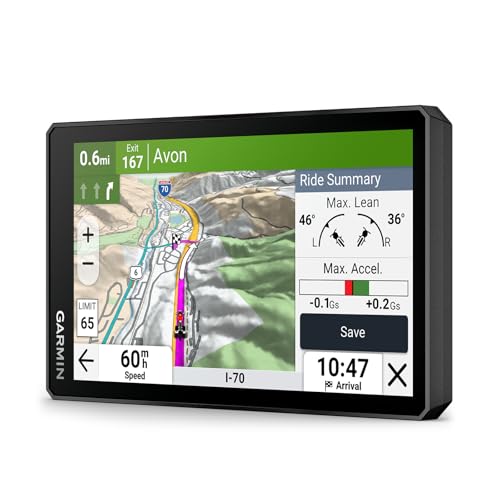
- Live lean angle gauge and ride summary data
- Adventurous Routing finds curvy, scenic roads
- Group ride tracking and route planning via Tread app
Trade-offs
- Premium map layers require an Outdoor Maps+ subscription
- Track performance data needs a Garmin Performance Package plan
Garmin’s Zumo XT3 has a 4.7-inch high-definition display built for handlebar vibration and harsh weather, which keeps the navigation clear and legible in all riding conditions. Its IP67 rating means the unit can withstand rough road conditions, and features like a live lean angle gauge and Adventurous Routing setting are designed for engaging rides. The device comes preloaded with detailed street and topographic maps, and high-resolution satellite imagery can be downloaded directly to it.
Access to premium map layers like Adventure Roads and Trails requires an active Outdoor Maps+ plan, and detailed track analytics are part of a separate Garmin Performance Package. Research mentions indicate the previous Zumo XT2 model is considered a motorcycle-specific GPS with all the features riders could want, functionally identical to the broader Tread 2 but with a laser focus on motorcycle use. The XT3’s group ride feature, which shows other riders’ locations on the display, requires pairing with the Tread smartphone app and an active cellular connection.
Magellan TRX7 CS Trail and Street GPS Navigator
What We Like
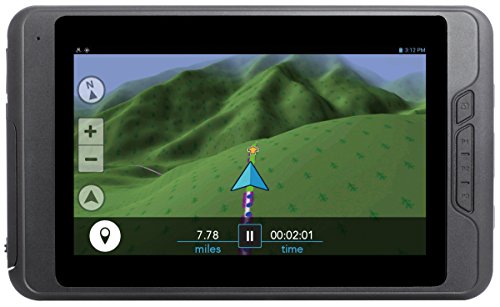
- Massive pre-loaded trail database for off-road navigation
- Includes versatile Ram mount for both trail and street use
- Built-in camera to geo-tag trail finds and obstacles
- Lifetime map updates keep routes current at no extra cost
Trade-offs
- At 3.5 pounds, it is significantly heavier than the 0.8-pound Garmin Zumo XT2.
- Weighs 3.5 pounds, heavier than many motorcycle-specific GPS units
This makes it a serious tool for riders who prioritize exploring uncharted backcountry and forest roads. The included Ram mount and free lifetime map updates support that spontaneous adventure lifestyle, keeping you on track whether you’re linking remote trails or navigating back to pavement.
That extensive capability comes with a physical footprint. The unit is substantially larger and heavier than streamlined motorcycle navigators like the Garmin Zumo XT2. You are trading some dashboard sleekness for a dedicated, trail-focused system. For a rider whose journeys are defined more by the path less traveled than by the highway mile, this trade-off is the point.
Magellan TR7 Trail and Street GPS Navigator
What We Like
- Massive library of over 100,000 preloaded off-road trails.
- Lightweight 0.8-pound design minimizes bar clutter.
- Touchscreen interface for intuitive trail and street navigation.
- Community track database for discovering new routes.
Trade-offs
- Larger than a 6.2-inch Garmin Zumo XT2
- Heavier than a 0.4-pound Garmin Zumo XT3
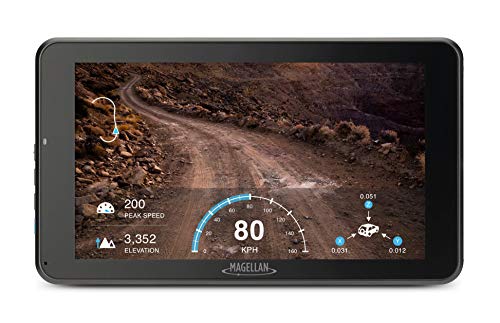
The Magellan TR7 comes preloaded with over 100,000 trails for ATVs, motorcycles, and snowmobiles, which means riders can directly navigate a vast network of off-road paths. Its touchscreen control and turn-by-turn street navigation provide a method for handling both trail and road routing. The device also includes a community track database for publishing and accessing user-recorded routes, expanding the available trail options.
Measuring 7.5 inches in length, the unit is larger than some dedicated motorcycle navigators like the Garmin Zumo XT3. It weighs 0.8 pounds, a figure that matches the Garmin Zumo XT2. The feature set includes advanced trail searching and millions of points of interest alongside its core navigation functions.
Product photos
TomTom Rider 550 Motorcycle Navigation Device

What We Like
- Full-screen text-to-speech reads messages aloud
- Comes with maps pre-loaded and ready to use
- Lightweight design at just 0.7 pounds
Trade-offs
- No battery life or ruggedness specifications provided
Maps are included, so you can start navigating immediately without extra purchases. Its full-screen text-to-speech message reader lets you hear alerts, which helps keep your focus on the road. This setup suits riders who want integrated communication features without relying on a separate phone.
The device weighs 0.7 pounds, which is a bit heavier than the TomTom Rider 400 but lighter than the Magellan TRX7 CS. Compared to the Garmin Zumo XT3, the TomTom Rider 550 is heavier, trading some weight for its feature set. Your choice depends on whether the included maps and message reader are worth the extra ounces on your handlebars.
Product photos
TomTom Rider 400 GPS Navigator

What We Like
- Extremely lightweight at 0.6 pounds
- Compact, portable motorcycle-specific design
- Dedicated motorcycle navigation features
Trade-offs
- Compact 3.5-inch tall screen
- Weighs 0.6 pounds with minimal bulk
Weighing just 0.6 pounds, the TomTom Rider 400 is a GPS you can mount and forget, adding almost no noticeable bulk to your handlebars. This makes it a perfect fit for riders who prioritize a clean, minimalist setup and want dedicated motorcycle routing without a heavy, complex device. It delivers core navigation in a package that stays out of the way.
Weighing only 0.6 pounds, the TomTom Rider 400 is a highly portable device for motorcycle navigation. Its compact form factor, measuring 5.4 inches long and 3.5 inches tall, makes for a low-profile installation on handlebars. Some users note this smaller physical size presents a trade-off in overall map visibility when compared to bulkier units.
Product photos
How We Evaluated Adventure Motorcycle GPS Devices
Our evaluation is based on researching product specifications, manufacturer documentation, and expert round-up articles. We also looked for patterns in owner feedback. We focused on criteria that matter most when a map is your lifeline far from cell service. These include ruggedness for vibration and weather, the clarity and utility of the display, and the quality of the mapping and routing software.
We also considered weight and mounting options, as a bulky unit can clutter a handlebar. An evaluation based on product specifications and design intent identifies the devices built and programmed for the task, though it cannot replicate thousands of miles of real-world vibration and mud. For insights into long-term performance, the community of riders who depend on motorcycle GPS daily is a key resource.
What To Look For In Adventure Motorcycle GPS Devices
Choosing the right GPS means matching its strengths to your most common terrain. A device perfect for plotting backcountry single-track may be overkill for paved touring, and vice versa.
Key factors include ruggedness (IP rating), screen size and visibility, map sources and updates, and specialized routing features like trail databases or curvy-road finders. Weight and mounting hardware are also practical concerns for a clean handlebar setup.
Ruggedness and Weatherproofing
Adventure riding subjects electronics to constant vibration, dust, and rain. Look for a high Ingress Protection (IP) rating; an IPX7 or IP67 rating means the unit can withstand immersion in water, which translates to confidence in a downpour. The housing should also be designed to handle handlebar vibrations over rough terrain. This durability is a core reason riders choose a dedicated adventure GPS over a smartphone in a mount.
Display and Interface
Screen size and brightness are critical for quick, safe glances. A 6-inch display is easier to read at speed than a 3.5-inch one, but a larger screen adds bulk. Sunlight readability is paramount; look for high-nit ratings or transflective screens that use ambient light. The interface should be glove-friendly, whether through a responsive touchscreen or physical buttons. Your choice here depends on whether you prioritize maximum information or a minimalist, compact GPS display.
Mapping, Routing, and Data
Pre-loaded maps are essential for areas without cell service. Check if the device includes topographic maps, satellite imagery, or a database of motorcycle-friendly roads and trails. Some units offer “adventurous routing” to find curvy or scenic paths. For off-road focus, a massive pre-loaded trail library is invaluable. Consider the cost and frequency of map updates. Also, explore if the device integrates ride data like lean angles or connects to a community for shared routes, adding another layer to your navigation planning.
- Verify the IP rating for water and dust resistance.
- Check the screen’s nit rating or look for “sunlight readable” claims.
- Understand the map update policy: free lifetime updates or a subscription.
- Consider the mounting system included and its compatibility with your bike.
The best device balances the mapping detail you need with a physical build that can survive your rides.
Adventure Motorcycle GPS Devices Compared
For a quick side-by-side view of key specs, the comparison table below outlines display size, weight, ruggedness rating, and notable features for all six picks.
| Product | Display Size | Weight | Preloaded Maps/Trails |
|---|---|---|---|
| Garmin Zumo XT2 Motorcycle Navigator | 6-inch | 0.8 pounds | N/A |
| Garmin Zumo XT3 Motorcycle GPS Navigator | 4.7 inches | 0.4 Pounds | Street and topographic |
| Magellan TRX7 CS Trail and Street GPS Navigator | N/A | 3.5 Pounds | N/A |
| Magellan TR7 Trail and Street GPS Navigator | N/A | 0.8 pounds | Over 100,000 |
| TomTom Rider 550 Motorcycle Navigation Device | N/A | 0.7 Pounds | Maps included |
| TomTom Rider 400 GPS Navigator | N/A | 0.6 pounds | N/A |
Frequently Asked Questions
What is the best GPS for ADV bikes?
For most adventure riders, a dedicated motorcycle GPS like the Garmin Zumo XT2 offers the best blend of large, readable display, rugged construction, and advanced routing features for both street and trail. It uses standalone satellite GPS, so it works far beyond cell service, which is a core advantage for remote off-road GPS devices.
What are some good navigation systems for adventure bikes?
Good systems include dedicated handlebar-mounted GPS units from Garmin, Magellan, and TomTom, which are built for vibration and weather. Smartphone apps with offline maps are a budget alternative but lack the same ruggedness and sunlight-readable screens. For recovery and tracking, separate GPS trackers can be added for security.
What is the best GPS navigation system for motorcycles?
The “best” system depends on use. For all-terrain adventure riding, the Garmin Zumo XT2 is a top contender. For riders who want a completely phone-independent experience with a massive trail database, the Magellan TRX7 CS is a strong choice. It’s important to compare GPS vs phone navigation to understand the trade-offs in durability and reliability.
What is the best GPS tracking device for motorcycles?
GPS tracking devices for motorcycles are typically small, hidden units used for theft recovery, not navigation. They use cellular networks to report the bike’s location. For actual ride navigation and route planning, you need a dedicated motorcycle GPS unit, though some models may offer basic tracking features through a paired app.
Should I use my phone or a dedicated GPS for motorcycle navigation?
A dedicated GPS is generally better for serious adventure riding due to its superior ruggedness, weatherproofing, sunlight-readable screen, and standalone satellite functionality that works without a cell signal. A phone is more fragile, drains battery quickly with navigation apps, and relies on cell service or pre-downloaded maps, making a reliable motorcycle phone mount a necessity if you go that route.
The Bottom Line
The Garmin Zumo XT2 Motorcycle Navigator is the best overall choice for riders who want a premium, do-it-all navigator with a large, bright screen and sophisticated planning tools for any terrain. If your budget is tighter or your needs are specific, look to the award winners: the Magellan TR7 for a lightweight trail specialist or the TomTom Rider 400 for minimalist street touring.
No matter which model you consider, prioritize ruggedness and reliable offline mapping. These two features are what truly separate a purpose-built adventure bike GPS from a consumer gadget when you’re miles from the nearest paved road.
