
How to Stay Hydrated on a Motorcycle Ride: Step-by-Step
This post contains affiliate links. As an Amazon Associate, we earn from qualifying purchases.
To stay hydrated on a motorcycle ride, you must drink before you feel thirsty and replenish electrolytes. Dr. Carl Price notes that you don’t start feeling thirsty until you’ve lost 2% of your body’s water volume, a point where serious athletic performance deterioration occurs. For a day ride, plan on at least one quart of water per hour in heat; for extreme conditions like the Australian Outback, carry a gallon per rider per day and split it across multiple containers.
The 2% threshold is the line between riding sharp and riding impaired. Your brain and muscles get less oxygen as blood volume drops, and exhaustion sets in faster than you can pull over. This is why knowing how to stay hydrated on a motorcycle ride is critical.
What follows: the gear that works (and what doesn’t), the exact drink schedules sources fight over, how to read your body’s one reliable gauge, and why a pediatric diarrhea solution is a touring rider’s secret weapon.
Key Takeaways
- Thirst means you’re already 2% dehydrated and your riding performance is declining.
- Check urine color at every stop. Pale yellow is the target; dark means drink more, clear means you might be overdoing it.
- For electrolyte drinks, skip high-glucose sports drinks. Dr. Carl Price’s pick is Pedialyte for its balanced sodium and potassium.
- A hydration bladder backpack beats bottles for access, letting you sip without stopping.
- Dehydration risk is year-round. Cold, dry air and heavy gear cause fluid loss even when you don’t feel sweaty.
How Much Water Do You Actually Need?
Sources disagree on the perfect formula, because your needs swing with temperature, riding intensity, and gear. But they agree on the floor: you need more than you think, and you must drink it before you want it.
For a typical summer day ride, Adventure Motorcycle Magazine cites a common guideline of at least one quart per hour of riding. On a remote expedition in northern Australia, where temperatures pass 100°F and the nearest city can be 200 miles away, official signs recommended each person drink at least one gallon per day. The riders on that trip carried a staggering 6.4 gallons between two people, split across three 1.6-gallon bladders and two 0.8-gallon hydration backpacks. That’s not overkill; it’s the buffer for breakdowns, falls, and the sheer weight of sweat in full gear.
Where sources disagree: Daily intake. Adventure Motorcycle Magazine recommends a gallon in extreme heat. Dairyland Insurance aims for the classic “eight 8-ounce glasses” (64 oz, or half a gallon). The gallon rule is for survival in remote heat; the half-gallon is a baseline for paved-road touring. Match your target to your route’s remoteness.
Your body’s own signals are delayed, which is a core part of the how to stay hydrated on a motorcycle ride challenge. Dr. Carl Price, the MotoAmerica chief medical officer, states you don’t start feeling thirsty until you’ve lost 2% of your body’s water volume. At that 2% loss, he notes “serious deterioration of athletic performance” begins. In riding terms, that’s the difference between nailing a corner and running wide.
The practical takeaway isn’t to carry a gallon on every commute. It’s to plan your water around the worst-case scenario your ride could hand you. A broken-down bike on a 90-degree afternoon turns a two-hour jaunt into a four-hour ordeal. Your water supply should cover the ordeal.
The Gear That Actually Works
You have three options: buy water as you go, carry bottles on the bike, or wear a hydration bladder. Only one lets you drink while moving, and that’s the one that prevents dehydration instead of reacting to it.
Bottles on the bike are the middle ground. A motorcycle drink holder mounted on your bars or crash bars gives you a visual reminder and easy access at stops. The problem is access. To drink, you must stop, remove a glove, open the bottle, remove or lift your helmet. This process takes minutes. If you’re pushing to make miles or riding in a group, you’ll skip it. I’ve finished rides with full bottles still strapped to the bike because stopping felt like a chore. That’s a failed system.
A hydration bladder backpack is a highly effective option. A pack like the Kriega Hydro-3 or a Camelbak holds the water on your body, with a tube routed over your shoulder. You bite the valve, sip, and release without taking a hand off the bar or breaking your tuck. It’s boring, and it works. The hands-free access is why it’s the best tool for staying cool on a motorcycle in relentless heat. You can sip constantly, replacing what you sweat in near-real time.
The part nobody mentions: The tube. In summer, fill the bladder 50% with ice before adding water. The melt keeps your water cool for hours, and a cool sip is far more tempting than a warm one when you’re already hot. In winter, blow air back into the tube after drinking to clear it, or the water in the tube will freeze solid by the next stop.
For storage, a dedicated hydration pack is sleek, but a larger backpack with a bladder sleeve, like the Lone Rider Overlander Bag, offers more versatility for carrying accessories like tools and layers needed for long rides. The weight on your back is a trade-off. Some riders hate it; most get used to it within an hour. The alternative is a dehydrated, sloppy ride home.
| Gear Type | Best For | The Catch |
|---|---|---|
| Hydration Bladder Pack | All-day rides, off-road, extreme heat | Weight on your back; tube can freeze in cold weather |
| Mounted Bottle Holder | Shorter rides, riders who hate backpacks | Requires full stops to drink; easy to forget |
| Buy-as-You-Go | Urban rides with guaranteed stores | No water if you break down; unreliable on backroads |
Electrolytes: What to Drink Besides Water
Water alone isn’t enough on a long, sweaty ride. Sweat drains sodium and potassium, the electrolytes that keep your nerves and muscles firing. Replenish them, or your water will pass straight through you without hydrating your cells.
The common reach is a sports drink, but this choice is a key mistake in how to stay hydrated on a motorcycle ride. Dr. Carl Price advises against most of them. The problem is glucose. “Some electrolyte beverages have too much glucose in them,” he says. Others have high osmolality, which “will actually draw water into your stomach rather than send it to the rest of your body.” You feel bloated, but your muscles stay thirsty.
His pick is Pedialyte, an oral rehydration solution made for kids with diarrhea. It has “plenty of sodium and potassium, so it will be absorbed readily, with a little glucose.” You can find it in powder packets to dump into a water bottle. Before using Pedialyte, he drank diluted Gatorade.
This is a medical-grade solution for an athletic problem. It’s not marketing. For a touring rider, a single packet in a bladder at lunch can reset your system for the afternoon grind. I keep a few in my tank bag for any ride over four hours. The difference in late-day alertness is tangible.
For a simpler approach, Adventure Motorcycle Magazine recommends generic electrolyte tablets or powder. The key is to check the label: aim for more sodium and potassium than sugar. If the first ingredient is glucose or sucrose, it’s a candy drink, not a hydration aid.
Easy to miss: Electrolytes aren’t just for heat. Cold-weather riding dehydates you through respiratory fluid loss and the diuretic effect of shivering. A hit of electrolytes at a coffee stop can ward off the sluggishness you blame on the cold.
Your Body’s Dashboard: How to Monitor Hydration
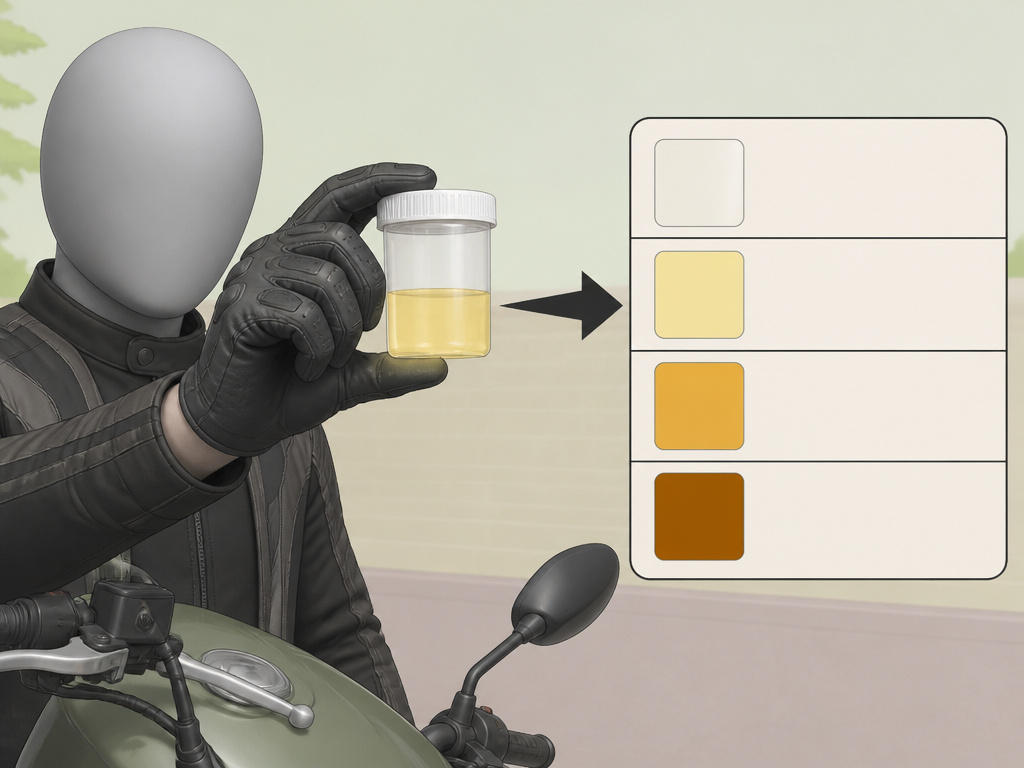
You can’t trust your thirst. You can’t trust your energy level. You can trust your urine. It’s the only real-time gauge you have, and it doesn’t lie.
Dr. Carl Price’s rule is straightforward: “If your urine is dark, you’re not taking in enough water. If it’s clear, you’re probably taking in too much water.” Pale yellow is the target. This check takes three seconds at a rest stop. Do it every time you pee.
Adventure Motorcycle Magazine adds a frequency metric: “If you do not pee at least four times per day you are dehydrated.” This contrasts with Dr. Carl Price’s primary focus on urine color as the best monitor. On a motorcycle, that means planning stops. If you’ve ridden for five hours and haven’t needed a break, you haven’t drunk enough. Your body is conserving fluid, not cycling it.
Here’s what to look for:
| Urine Color | What It Means | Action |
|---|---|---|
| Clear / Pale Yellow | Well-hydrated | Maintain current intake |
| Yellow | Mild dehydration | Drink a full glass of water |
| Amber / Brown | Significant dehydration | Stop, drink electrolytes, rest |
| Dark Brown | Severe dehydration / possible medical issue | Seek shade, drink slowly, consider medical help |
The other signs are subtler and build slowly: fatigue, irritation, headache, dizziness. By the time you feel these, you’re already well past the 2% threshold and your reaction time and fine muscle control are dropping. This is how you miss a braking point or fumble a clutch pull. Dairyland Insurance lists the specific riding impairments: reduced visual scanning, impaired judgment, diminished balance, and numbness in hands and feet.
Make the urine check a ritual, like checking your tire pressure. It’s faster, and it tells you more about your readiness to ride the next leg.
The Disagreement on Drinking Schedules
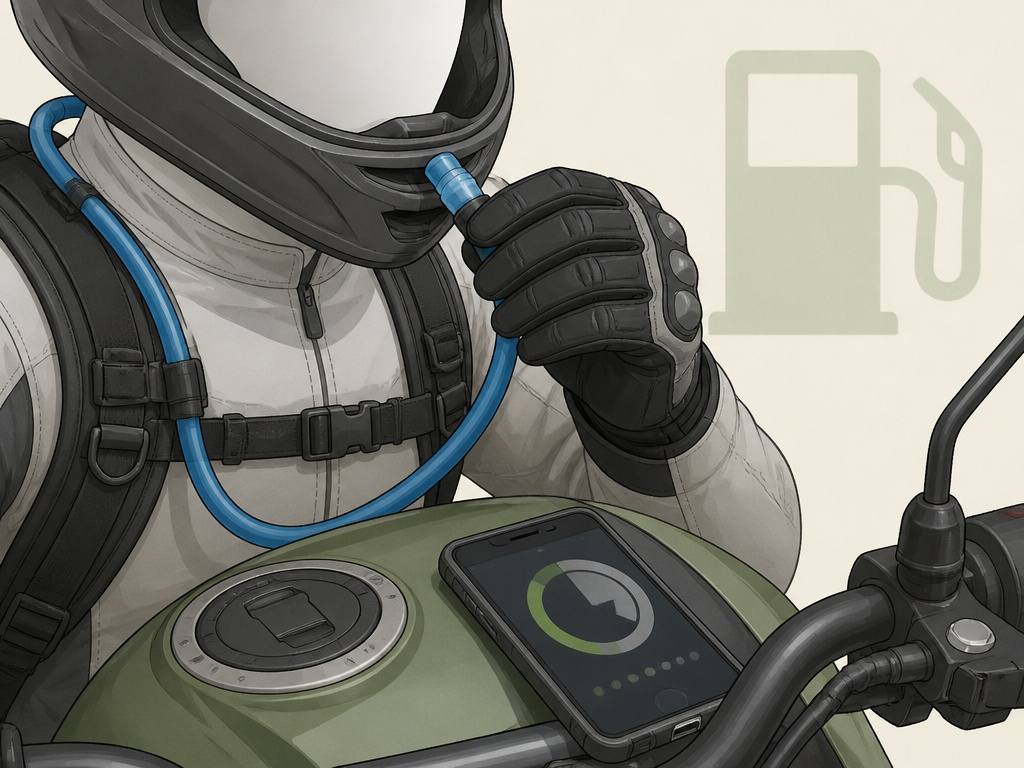
Every guide says “drink regularly.” The fight is over what “regularly” means. You have three competing schools of thought, each with a different rider in mind.
The Timer Method (Viking Bags): “Drink two to three gulps of water or any electrolyte drink every 15 to 20 minutes.” This is rigid, almost robotic. It works if you set a vibration alarm on your phone or comms unit. The upside is consistency. The downside is it turns riding into a chore, and on rough roads, you might not want a mouthful of water at the exact moment your alarm dings.
The Fuel-Stop Method (Dairyland Insurance): Tie drinking to your gas stops. “Drink half of a 16-ounce water bottle before donning your helmet… At the next fuel stop, finish the bottle… End each road stop with another half bottle.” This is simple and structured. It fails if your bike has a 300-mile range and you go four hours between stops, or if you’re off-road with no fuel stops at all.
The Constant Sip Method (Adventure Motorcycle Magazine): “Drink often in little sips.” This is the most natural, and it’s the reason hydration bladders exist. You sip when you think of it, which ends up being every few minutes. It requires the least discipline but the right gear.
My take: Use the fuel-stop method as your baseline for paved touring. Use the constant sip method if you have a bladder. Ignore the 15-minute timer unless you’re in a clinical dehydration scenario like racing. The goal is to drink without making riding a spreadsheet exercise.
Can You “Pre-Hydrate” Before a Ride?
This is the sharpest conflict in the sources. One side says tank up in the morning; the other says it’s physiologically impossible.
Dr. Carl Price is blunt: “Drinking four liters of water days before a ride isn’t going to help you. We’re not camels. We can’t store water inside us… you can’t drink excess water beforehand and expect to remain hydrated.” This argues against the myth of ‘water loading’ well in advance. Your kidneys will simply process the excess and you’ll excrete it, often at an inconvenient time mid-ride.
Both are right. Price is arguing against the myth of “water loading” days in advance. ADV Moto Skills is correcting the common rider habit of skipping morning water to avoid an early pee break. You wake up in a fluid deficit. A glass or two of water with breakfast brings you back to baseline. It’s not storage; it’s replenishment. Chugging a gallon is pointless; starting your ride at zero is dangerous.
The compromise: Drink a normal amount with breakfast. Then, DrinkHydrant.com notes that water takes about 30 minutes to reach your muscles. So that morning glass helps, but it won’t carry you through a hot afternoon. Hydration is a continuous process, not a one-time fill-up.
Hydration in Cold Weather
Dehydration isn’t a summer-only threat. Cold air is dry air. Every breath you take pulls moisture from your respiratory tract. Heavy riding gear and layered clothing cause significant sweating, even if you don’t feel wet. The combination is a stealth fluid drain.
You won’t feel as thirsty, so you must force the habit. Use your fuel-stop method religiously. Insulate your hydration tube or use an insulated bottle to prevent freezing. Electrolytes are perhaps more valuable here, as they help your body hold onto the fluid you do consume.
This is also where your mindset about summer riding gear needs to shift. Ventilated mesh that keeps you cool in July accelerates moisture loss in October. Proper layering with a wicking base layer manages sweat without dumping heat. The goal is to stay dry, not necessarily cool.
Frequently Asked Questions
What is the 10 gulp rule?
This isn’t a standard medical rule, but it’s a common rider shorthand for the “two to three gulps every 15-20 minutes” guideline from sources like Viking Bags. The idea is to take ten deliberate swallows of water at regular intervals to ensure volume. It’s a mnemonic, not science.
What hydrates a body faster than water?
Oral rehydration solutions like Pedialyte hydrate faster than plain water because their balance of sodium and glucose actively pulls water into your bloodstream via the small intestine. Water alone relies on passive absorption. In a dehydration emergency, a balanced electrolyte drink is the faster fix.
How does caffeine affect hydration while riding?
Caffeine is a mild diuretic, meaning it can increase urine output. For a regular coffee drinker, the effect is minimal and largely offset by the fluid in the coffee itself. The bigger risk is using caffeine to mask fatigue, leading you to ride beyond your limits. If you’re already dehydrated, a caffeine hit will worsen the situation.
What is the best hydration pack for motorcycles?
The best pack is the one you’ll wear. For dedicated hydration, a compact hydration pack is a popular choice. For more storage, a backpack with a bladder sleeve is more versatile. The critical feature is a tube routing system that doesn’t interfere with your helmet or jacket.
Before You Go
Hydration isn’t about drinking when you’re thirsty. It’s about drinking so you never get there. The 2% margin is too thin for the margins we ride on.
Pack for the ride you hope to have and the one you might get stuck with. That means a hydration bladder for anything over an hour in the heat, and a backup bottle if you’re going remote. Put a packet of Pedialyte in your kit. It’s the difference between finishing strong and limping home.
And check your urine at every stop. It’s the one piece of data that doesn’t care about your schedule, your bike, or your pride. Pale yellow means you’re good to go. Anything darker means you’re already behind. Drink up, then ride on.
