
What Are Motorcycle Knee Sliders: A Guide to Positioning
This post contains affiliate links. As an Amazon Associate, we earn from qualifying purchases.
Motorcycle knee sliders are protective pads, usually made of plastic or polyurethane, that attach to the outside of a rider’s leather racing suit. They serve a dual purpose: they shield the suit and the rider’s knee from abrasion during cornering, and they provide critical sensory feedback to help the rider gauge lean angle and maintain balance at high speeds. They are consumable, replaceable parts typically secured with Velcro.
That description covers the consensus. The situation is more interesting, and it divides into two distinct worlds. On one side, you have the racing community where these are essential, replaceable tools. On the other, you have manufacturers selling permanent, adhesive pads for street bikes that look the part but serve a completely different function. A common question from new riders is: what are motorcycle knee sliders?
What follows: a breakdown of the two core functions, protection versus sensory tool, the materials that make them work (or fail), and the step-by-step rules for fitting them correctly, whether you’re prepping for a track day or just adding style to your cruiser.
Key Takeaways
. Knee sliders have two primary jobs: protecting the leather suit from abrasion and, according to MotoGP.com and former racer Simon Crafar, acting as a lean-angle sensor for the rider. Other sources, such as Motoress.com and Triumph instructions, describe them primarily as protective components. . The ideal material is a balance. Too hard, and they screech and offer no grip; too soft, and they wear down instantly and can pull your knee around on the asphalt. . There are two completely different attachment methods. Universal racing sliders use Velcro for easy replacement. Some OEM street bike “knee pads” use permanent adhesive and cannot be removed once applied. . For wet track conditions, specific double-thickness sliders like the Dainese Pista Rain exist because standard sliders can hydroplane and lose their feedback. . Correct positioning on your leg isn’t about looks. Slower or wet riding calls for a more forward placement; faster, deeper leans require the slider positioned more to the side, closer to the bike.
The Core Functions: Protection and Sensory Feedback
Knee sliders perform an important role in MotoGP, preventing abrasion of the riders’ leathers on the track, protecting the knee from damage and friction against the asphalt and assisting the riders with their balance as they gauge the optimum lean angle on cornering.. MotoGP.com
Every article starts with protection. That’s the obvious part. A formed piece of hard plastic or compressed leather velcroed to your suit keeps the expensive leather off the pavement. It’s a sacrificial wear item. Skip it, and you’re sanding down a thousand-dollar suit every time you touch a knee down, which is a core part of the answer to what are motorcycle knee sliders.
The part most guides underplay is the second job: the slider as a control and feedback tool. This isn’t a rider just dragging a knee for show. According to MotoGP.com and former racer Simon Crafar, the slider acts as a lean-angle sensor. It tells the rider, through feel and sound, exactly how far over they are. That feedback loop allows a rider to balance at the limit, and it can even help save a front-end slide.
Think of it this way. The protection is passive. The sensory feedback is active. It turns your knee into a probe that’s constantly measuring the bike’s attitude. A good slider glides seamlessly over the track surface; a bad one chatters, grabs, or wears unevenly, and that bad data flow directly into your steering inputs.
Materials and Construction: The Hardness vs. Wear Trade-Off
So what are these things made of? The short list is plastic, polyurethane, and nylon composites. Some aftermarket brands use materials like Delrin plastic for its smooth glide and durability. Brands like Dainese use thermoplastic polyurethane in models like their Pista Rain slider.
The choice isn’t about color or sparking titanium rods (which are often banned on track days). It’s about finding the Goldilocks zone of hardness, a key consideration when defining what are motorcycle knee sliders.
Simon Crafar broke it down simply: if the sliders are too hard, they make a lot of noise on contact and offer no friction. That screech is distracting, and the lack of feel means you lose that sensory feedback. If they are too soft, they wear down too quickly and they grip the road, actually pulling your knee around, which is a great way to upset the bike’s balance mid-corner.
The goal is a compound that wears predictably, glides consistently, and gives you that slight drag sensation without being grabby. For most track-day riders, a standard Delrin or polyurethane slider from a brand like MOTO-D hits that mark. They’re smooth, durable, and Velcro-backed for easy swaps.
How Knee Sliders Are Attached: Velcro vs. Permanent Adhesive
This is where the road and track worlds diverge completely. You need to know which universe you’re shopping in.
For Racing & Track Use: The Velcro System
This is the universal standard. The slider has a suede or leather backing with heavy-duty Velcro loops. Your leather suit has a corresponding Velcro hook panel sewn onto the knee. You press the slider on, and it stays put through g-forces and slides. When it’s worn down, and they are consumables, you peel it off and press on a new one. Systems like the Dainese RSS 4.0 are built around this replaceable slider concept.
For Street Bike Aesthetics: Permanent Adhesive Pads
Some manufacturers, like Triumph, sell “Knee Pad Kits” as accessories for specific models. These are a different beast. According to Triumph’s official fitting instructions, these pads are attached with a powerful adhesive to the motorcycle’s fuel tank. The instructions are clear: “Once the knee pads have been fitted, they will become an integral part of the fuel tank and cannot be removed.”
| Attachment Type | Primary Use | Removable? | What It Protects |
|---|---|---|---|
| Velcro-backed Slider | Track racing, knee-dragging | Yes, replaceable | Rider’s leathers and knee |
| Adhesive Knee Pad | Street bike styling, tank protection | No, permanent | Motorcycle fuel tank finish |
These adhesive pads are for protecting the bike’s paint from your boots, not for protecting you in a slide. They are a cosmetic accessory with a protective benefit for the machine, not the rider. Confusing the two can lead to a false sense of security.
Positioning and Adjustment: Where to Put Them on Your Leg
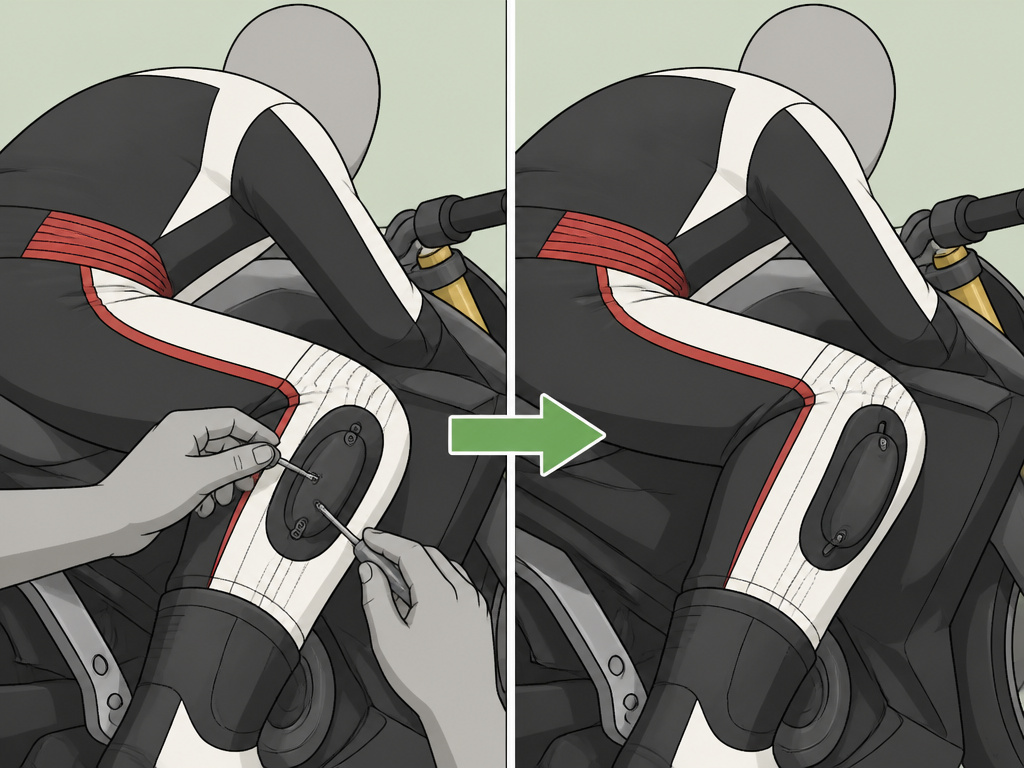
You don’t just stick them anywhere on the knee panel. Their position changes with speed and conditions, and your suit should give you a big range to adjust.
Crafar’s advice here is practical. If you’re riding slower, or in the rain, you’re going to poke your knee out a long way, for a long time. In that case, position the slider a bit more toward the front of your knee. As you go faster and lean over more, the goal is to get your knee out of the way, tucked closer to the bike. The slider then needs to be positioned more around the side of your knee, so it wraps around the curve of your leg as you lean.
Getting this wrong means the slider won’t contact the ground when you need it to, or it will contact too early and upset your line. It’s not a set-and-forget item. Adjust them at the start of a track day based on the conditions, and don’t be afraid to move them after a session if your knee isn’t touching where you expect.
Where this goes sideways: Placing sliders based on a standing posture. Your suit’s knee panel moves when you’re in the riding tuck. Fit them while sitting on the bike in your riding position, or the first time you need them, they’ll miss the ground entirely.
A Step-by-Step Guide to Fitting and Replacing Sliders

Here is the process for the standard Velcro type. If you’re dealing with permanent adhesive pads, the process is about meticulous measurement and commitment, there’s no going back.
Tools You’ll Need: Your new sliders, a clean cloth, and your suited-up bike or a similar seating position.
- Clean the Velcro Area. Wipe down the hook panel on your suit with a dry cloth. Any dirt or old Velcro debris weakens the bond.
- Find Your Riding Position. Sit on your bike, or assume your full riding tuck. Have a friend help or use a mirror. This shows you where your knee actually faces the road.
- Peel and Position. Remove the backing from the slider’s Velcro. Align it on the suit’s panel based on the speed/conditions rule above. For general track use, position the slider according to your riding style and conditions.
- Press and Set. Apply firm, even pressure across the entire slider to ensure a full Velcro bond. Give it a gentle tug test.
- Test and Adjust. Before your first session, do some slow, deep leans in the paddock. Listen and feel for contact. If it’s not touching, move the slider lower. If it’s catching too early, move it higher or more toward the side.
Replacement is the reverse: peel the worn slider off, clean the hook panel again, and start from step 3. Sliders are consumable items that wear down with use and need to be replaced when worn.
Special Cases and Considerations
Not all riding is done in perfect, dry conditions. The gear evolves for the edges.
Wet Track Sliders
Dainese makes a specific “Pista Rain Knee Slider.” It’s double-thickness. Why? A standard slider on a wet track can hydroplane on the water surface, losing that crucial tactile feedback. The thicker, rain-specific design maintains contact and feel through the water film. If you’re doing a track day and rain is possible, these are worth the swap.
Street Riding: Are They Useful or a Hazard?
This is a community debate. On the street, you are (hopefully) not dragging a knee. The primary protective function is moot. Some argue a slider could catch on pavement during a low-side, potentially twisting your leg. Others see them as a harmless style addition. The blunt answer: if you’re not using them as a lean-angle tool on a closed course, they are at best cosmetic and at worst a slight added risk. Your motorcycle knee guards are a far more relevant piece of protective gear for street riding.
OEM Parts and Model Specificity
If you’re looking for a factory-style part, know your part numbers. The genuine Ducati knee slider is part number 981033276. Triumph has multiple Knee Pad Kit numbers (A2402026, A9798057, etc.) that apply to very specific model runs and VIN ranges. This isn’t a universal fit game.
How did knee sliders develop?
Knee sliders evolved from a basic need for protection in motorcycle road racing. Riders dragging their knees through corners needed to prevent their leather suits from being worn through by the abrasive track surface. This practical need led to the attachment of simple protective pads. Over time, their role expanded beyond just protecting the suit. Riders discovered these pads provided crucial tactile feedback, helping them gauge lean angle and even offering a point of stability to help control the bike at extreme angles. The materials progressed to meet these dual demands, moving towards tough, smooth plastics and composites that could glide smoothly while offering durability and a consistent feel.
What are some common knee slider products?
Different manufacturers offer knee sliders designed for specific uses. For high-performance racing, companies produce replaceable slider systems. These are typically Velcro-backed for easy swapping and are made from materials like thermoplastic polyurethane or specialized plastics to ensure a smooth glide and durability. Some are even designed as double-thick versions for wet track conditions. In contrast, certain motorcycle manufacturers offer OEM knee pads or kits designed for specific motorcycle models. These are often intended for street use and style, and they use a strong adhesive for permanent attachment to the fuel tank, following precise positioning instructions unique to each bike model.
Frequently Asked Questions
Are motorcycle knee sliders worth it?
For track riding, absolutely. They are a necessary consumable that protects your expensive suit and provides critical riding feedback. For street riding, they are a style accessory with no real protective benefit for the rider. Invest in proper armor for your motorcycle pants instead.
Why do motorcyclists drag their knee?
It’s not for show. Dragging a knee, with the slider as the contact point, helps a rider gauge lean angle, improve balance at high cornering speeds, and can provide stability to save a minor loss of grip. It’s a control and measurement technique.
What is the difference between knee sliders and frame sliders?
Knee sliders attach to the rider’s gear and are worn down intentionally. Motorcycle frame sliders attach to the bike’s frame and are designed to protect the motorcycle’s engine and bodywork in a tip-over or slide. They are different products for different purposes.
How often should you replace knee sliders?
Replace them when they are worn down to about half their original thickness, or if they develop deep grooves or uneven wear patterns. Worn sliders lose their smooth glide and can become grabby. Always carry a spare set at a track day.
Can you use knee sliders on textile suits?
Typically, no. The Velcro hook panel required for secure attachment is almost always sewn into leather racing suits. Textile suits lack this reinforced anchor point, and the slider would likely tear free in a slide, which is dangerous.
Before You Go
The line is clear. Are you buying a tool or a decoration?
If you’re heading to the track, get a pair of standard Delrin sliders. Fit them in your riding crouch, understand they are a wear item, and use the feedback. Start with a known brand like Dainese or a maker of plastic or polyurethane sliders.
If you’re looking at a permanent adhesive pad for your street bike’s tank, that’s a different purchase altogether. It’s about protecting the paint, not you. Follow the OEM instructions to the millimeter, especially the warning that placement is permanent. Measure three times, because you only press once.
And if you’re a street rider looking for actual knee protection, skip the sliders entirely. Look at CE-rated armor and proper motorcycle pants designed to keep that armor in place when you need it. That’s where your safety budget should go.
