
Motorcycle Brake Light Flashers Explained: How to Choose
This post contains affiliate links. As an Amazon Associate, we earn from qualifying purchases.
A motorcycle brake light flasher is an aftermarket electronic module that interrupts the brake light circuit, causing the light to flash a specific pattern when you apply the brakes before holding steady. It’s a plug-and-play device aimed at increasing rider visibility, but its legality under US federal law and state laws varies.
The core conflict is between a safety idea and a federal regulation. Manufacturers like HealTech promote flashing for conspicuity, while the National Highway Traffic Safety Administration (NHTSA) has issued recalls stating that a flashing brake light during braking does not comply with US FMVSS 108. Your decision hinges on understanding this split, your bike’s wiring, and the specific patterns available, which is essentially what motorcycle brake light flashers explained means.
What follows: a breakdown of how these units work, the straight facts on legality drawn from recall documents, a comparison of popular models, and the installation realities that decide whether a module fits your bike or fries a circuit, which is the core of motorcycle brake light flashers explained.
Key Takeaways
- Under US federal law, a flashing brake light during braking does not comply with FMVSS 108, as stated in NHTSA recalls for BMW and Harley-Davidson.
- Compatibility depends on the specific unit: modules like the CustomLED Magic Strobes require a dedicated brake wire and are not compatible with 2-wire systems, while the HealTech Brake Light Pro is designed for BMW’s 2-wire LED systems.
- The HealTech Brake Light Pro’s Mode 1 flashes three times over two seconds to comply with California’s rule of four flashes within four seconds.
- Always disconnect the negative battery cable before installation to prevent short circuits, as instructed in manuals like the one for the Custom Dynamics module.
- For maximum visibility, a high-visibility jacket or helmet is a more universally legal and consistently effective supplement than an added flasher module.
How Do Motorcycle Brake Light Flashers Work?
You press the brake lever. Instead of the light glowing steady immediately, it blinks a set pattern, maybe three quick flashes, then stays on. That’s the flasher module doing its job. It sits inline between your brake switch and the brake light itself.
The module is a small sealed electronic controller. It monitors the brake wire for voltage. When it sees the +12V signal from the brake switch, it interrupts the power flow to the light in a timed sequence before passing it through cleanly.
A brake light flasher module is a solid-state electronic controller that inserts a programmed on/off cycle into the brake light circuit for a set duration before allowing continuous current flow for the remainder of the brake application.
The wiring is the make-or-break detail. Most modules, like the CustomLED Magic Strobes, need a dedicated brake wire. This is a standard three-wire system: ground, running light, and a separate wire that only gets power when you hit the brakes. Some newer bikes, particularly certain BMW models, use a two-wire system where a single wire carries both running and brake signals by changing voltage. The HealTech Brake Light Pro is specifically designed for these BMW 2-wire LED systems and claims it won’t interfere with the bike’s bulb-failure monitor. For everyone else, a two-wire system means the module won’t work.
The Legality Question: FMVSS 108 vs. The Real World
This is where the smooth sales pitch hits a regulatory wall. According to the United States Federal Motor Vehicle Safety Standard (FMVSS) No. 108, a brake light must be steady-burning. A flashing light is reserved for turn signals and hazard warnings.
The NHTSA has enforced this. In 2020, they issued recall 20V-146 for certain BMW motorcycles because an “emergency stop signal function” made the brake light flash during hard braking. The official stance: “This functionality does not comply with US regulations.” The fix was for dealers to reprogram the vehicle to turn the flash off. A similar Harley-Davidson touring brake light recall (NHTSA 22V-781) was issued for 2019-2022 Touring and Trike models for potential FMVSS 108 non-compliance.
Yet, the aftermarket sells these modules openly. HealTech’s manual advises checking local statutes, noting that California Vehicle Code 25250, for example, allows a maximum of four flashes within four seconds. They recommend their Mode 1 to comply. So you have a federal standard saying “no flash,” state codes like California’s defining how you can flash, and manufacturers selling a solution in the middle.
| Authority | Position on Flashing Brake Lights | Key Detail / Citation |
|---|---|---|
| NHTSA (Federal) | Not Compliant with FMVSS 108 | Recall documents state flashing during braking does not comply. |
| State Law (e.g., CA) | Conditionally Allowed | CA Vehicle Code 25250 allows max 4 flashes within 4 seconds. |
| Aftermarket (e.g., HealTech) | Promoted for Safety | Manuals reference state codes and global adoption in cars. |
It’s a classic gap between rule and practice. You are responsible for knowing your local laws.
Comparing Aftermarket Brake Light Flasher Units
Not all flasher modules are the same. They differ in power handling, patterns, and, most critically, which motorcycles they work with. Choosing the wrong one means it sits in a drawer.
We’ll be specific. Here’s how four major players stack up on paper, based on available specifications.
| Model | Key Spec | Compatibility Note | Pattern Example |
|---|---|---|---|
| HealTech Brake Light Pro (BLP-U02) | 120W max load, 11 modes + bypass | For BMW 2-wire LED lights; won’t interfere with failure monitor. | Mode 1: Flashes at 1.5 Hz for 2 seconds (3 flashes). |
| CustomLED Magic Strobes | 84W at 12V, 10 patterns | Needs dedicated brake wire. Not for 2-wire shared systems. | Patterns range from 4-flash to aggressive strobe. |
| TST Industries Brake Light Modulator | Handles up to 4 amperes | For specific Kawasaki OEM tail lights (e.g., KLX230 2020-2026). | Offers Strobe Alert, Intermittent Pulsar, and Pulsar modes. |
| Custom Dynamics Alternating Strobe | Dial controls speed (1-9) | Fits 2010-2013 Harley Street Glide/Road Glide. Does not fit CVO models. | Alternating 2, 4, or 5 flash patterns between left/right lights. |
The HealTech unit is the specialist. Its claim to work with BMW’s 2-wire system and monitoring circuit is unique. The TST module is for specific Kawasaki models, and the CustomLED module requires a standard three-wire setup. The Custom Dynamics warning about CVO models is a perfect example of an edge case, high-end trim levels often have different wiring harnesses.
Power ratings matter if your brake light load is high. The HealTech’s 120W maximum load gives more headroom than the CustomLED’s 84W. Exceeding the module’s power rating can lead to permanent failure.
Where this goes sideways: Assuming any universal module fits any bike. Wiring a unit designed for a dedicated brake circuit into a 2-wire shared system can cause the running lights to flash with the brakes or trigger false bulb-out warnings.
For most riders looking to add a simple flash, a unit like the CustomLED Magic Strobes is the default. It’s generic, well-protected, and the patterns are obvious. But you must verify your bike’s wiring first. The best tail lights often have these features built-in, which is a cleaner solution.
Installation and Compatibility: More Than Just Plugging In
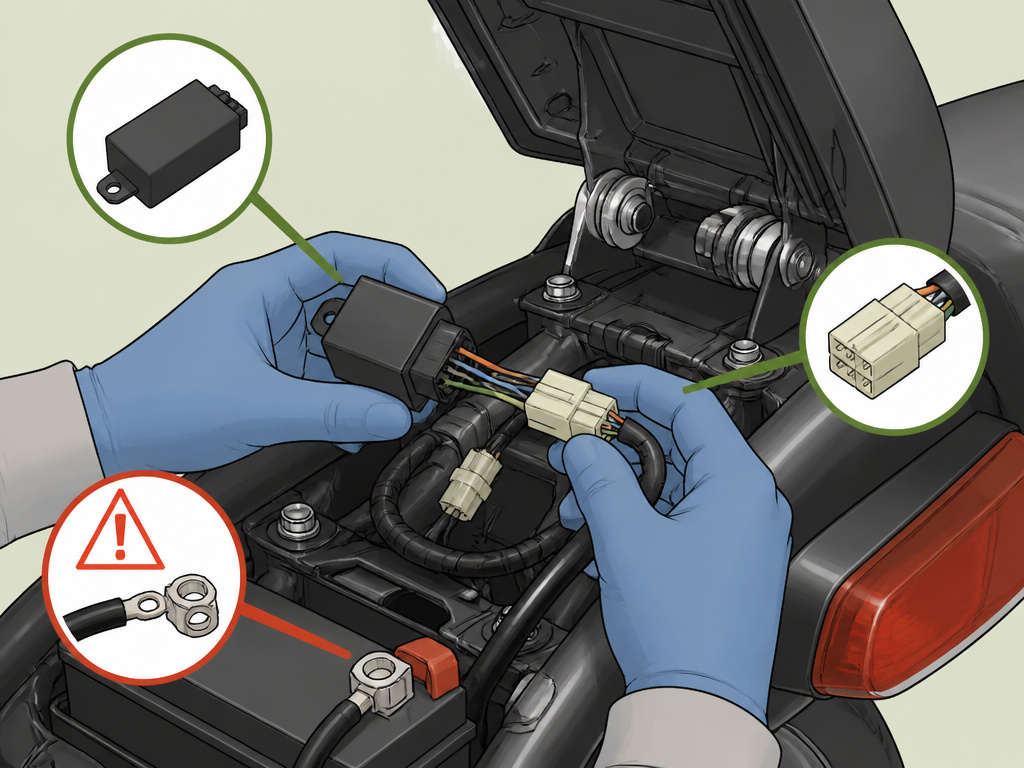
The ads say “plug and play.” The reality involves wire colors, connector types, and finding a space for the module that won’t get crushed when you reinstall the seat. Installation time can vary significantly depending on the bike and installer experience.
Before you start: Disconnect the negative battery cable. Every single manual, like the one for the Custom Dynamics module, states this first. It prevents a short circuit that can blow a fuse or fry the module the moment you touch a wire. Wear safety glasses during installation, as recommended by Custom Dynamics.
The process is straightforward for a standard bike:
- Locate the connector for your rear brake light.
- Unplug it.
- Install the module’s harness inline between the bike’s harness and the light.
- Find a secure, dry place to mount the module itself.
- Reconnect the battery and test.
The complexity comes from your bike’s specific layout. This is where experience from a detailed guide on how to install turn signals pays off, the principles of routing, securing, and sealing wires are identical.
For a truly integrated look, consider LED turn signals or a complete tail light replacement with built-in effects. It’s more work upfront but eliminates a separate module and its wiring.
Do Brake Light Flashers Actually Improve Safety?
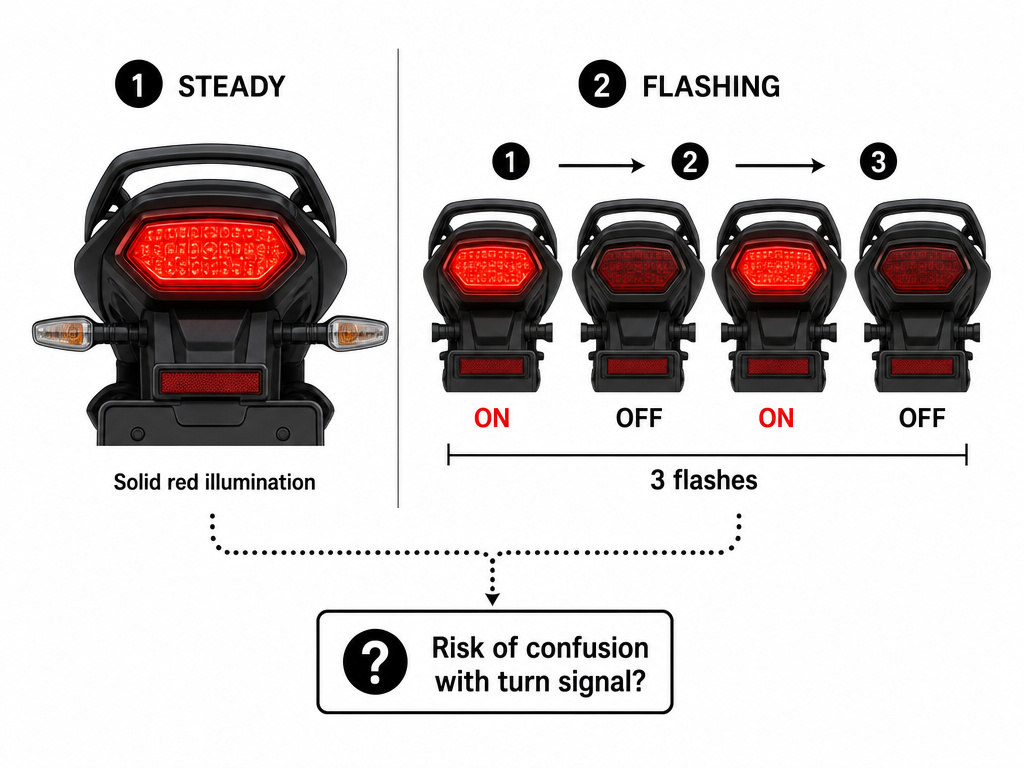
The theory is solid: a changing light (flash) grabs attention faster than a static one (steady glow). In a world of distracted drivers, more conspicuity seems logical. But “seems logical” isn’t data, and the real-world effect is murkier.
Proponents suggest manually flashing your brakes at the start of deceleration. A module automates that. The argument is that it cuts the following driver’s perception-reaction time. However, a study often cited by the NHTSA GSX250R brake light recall documents for other defects highlights a different risk: confusion. A flashing brake light can be mistaken for a turn signal or hazard light, leading a following driver to misinterpret your intention.
Common mistake: Relying on a flashing brake light as your primary conspicuity tool. It’s a single, rear-facing signal of uncertain legality. It does nothing for your visibility from the side or front, where many collisions originate.
Contrast this with a high-visibility jacket or a bright helmet. These work from all angles, in all lighting conditions, and are unequivocally legal. They don’t require wiring, won’t fail electronically, and their benefit is supported by a broader body of collision analysis. This is the core of any strategy to be more visible: multiple, always-on layers of contrast.
A flasher module might add a marginal benefit in specific, rear-end scenarios. But it’s not a substitute for fundamental gear choices. Think of it as a potential supplement, not a foundation.
Flashers vs. Modulators vs. Integrated Systems
The terms get tossed around interchangeably, but they point to different parts of the lighting ecosystem. Knowing the difference saves money and hassle.
A brake light flasher (or strobe module) is what we’ve discussed: an add-on box that makes your existing brake light flash. A headlight modulator is a different device that makes your headlight pulse during daytime riding. A headlight modulator makes the headlight pulse during daytime riding.
An integrated tail light system is a complete replacement unit. It combines the tail, brake, and turn signal functions into one sleek LED assembly. Many, like those from CustomLED, have built-in brake light flash patterns (like their “Brake Alert”). This is the cleanest solution: one part, no extra modules, and often a brighter, more modern look.
| Solution | What It Is | Pros | Cons |
|---|---|---|---|
| Add-on Flasher Module | Electronic box wired into brake circuit. | Inexpensive, reversible, works with existing light. | Adds wiring, compatibility issues, legality questions. |
| Headlight Modulator | Device that pulses the headlight. | Increases frontal daytime visibility. | Can be illegal, may confuse other drivers, install complexity. |
| Integrated Tail Light | Complete replacement tail/brake/turn assembly. | Clean install, built-in effects, often brighter. | Higher cost, vehicle-specific fitment. |
When you compare a motorcycle brake light flashers explained, the choice often comes down to your bike and budget. If your stock tail light is dated or dim, upgrading to a bright integrated unit with a built-in pattern is a smarter investment than adding a module to a weak light. If you’re happy with your stock light and just want the flash effect, a module is the cheaper path. Just know that headlight modulators are a separate, more contentious category with their own legal gray areas.
For the ultimate in being seen, some riders even add helmet brake lights, placing a high-level signal where drivers are naturally looking. It adds another layer to a full visibility strategy.
How to flash your brake light manually
Some riders tap their brake lever to flash the light at traffic behind them. This manual method mimics what a flasher module does automatically. It requires rider attention. An electronic flasher automates a flashing pattern when you brake. Before installing any device, check your local vehicle statutes to see if such modifications are allowed, as regulations vary widely. Some areas have specific rules, like allowing a maximum of four flashes within four seconds.
Troubleshooting brake light flasher problems
Unwanted flashing or erratic behavior can often be traced to electrical issues or incompatibility. Ensure all connections are clean, tight, and properly insulated. Always disconnect the negative battery cable before working on the wiring to prevent shorts. If the unit is on a shared run-and-brake light circuit, verify its compatibility, as some flashers require a dedicated brake wire and will not function correctly with a two-wire system. Check that your bike’s total brake light load does not exceed the module’s handling capacity.
Frequently Asked Questions
Are flashing brake lights legal in the United States?
Under federal law (FMVSS 108), a flashing brake light during braking is not compliant, as confirmed by NHTSA safety recalls. However, state laws vary. California, for example, allows up to four flashes within four seconds. Aftermarket modules exist in this gap. You are responsible for knowing your local vehicle statutes.
What is the most common brake light flasher pattern?
Common and intentionally legal-friendly pattern is three flashes over two seconds. The HealTech Brake Light Pro’s Mode 1 uses this exact pattern (1.5 Hz for 2 seconds) to comply with California’s four-flash rule. Many other modules offer a similar “quick pulse” pattern before going steady.
Will a brake light flasher work on my motorcycle?
It depends on your wiring. Most modules require a dedicated brake wire, a third wire that carries power only when the brake is applied. Many older and standard bikes have this. Some newer models, especially certain BMWs, use a 2-wire system where the brake and running light share a wire; only specific modules like the HealTech Brake Light Pro are designed for those.
Can a brake light flasher damage my motorcycle’s electrical system?
If installed correctly on a compatible system and within its power rating, it should not. Quality units have short-circuit and over-current protection. The main risks are from improper installation: not disconnecting the battery (causing a short) or overloading the module by connecting lights that exceed its maximum wattage rating (like the Custom Dynamics 3A per output limit).
What’s the difference between a brake light flasher and my bike’s emergency stop signal (ESS)?
An aftermarket flasher activates every time you touch the brake. An Emergency Stop Signal (ESS), like the one recalled on BMWs, is an OEM feature that activates only during hard or emergency braking. The ESS was deemed non-compliant with US FMVSS 108, leading to a recall to disable it via software.
Before You Go
The math on brake light flashers is simple, but the answer isn’t. The potential safety benefit is marginal and contested. The legal ground is a patchwork of federal bans and state allowances. The technical requirement, a dedicated brake wire, rules out many modern bikes from the start.
If you ride an older, standard-wiring bike and your state law is clear, a module like the CustomLED Magic Strobes is a straightforward weekend install. For a newer BMW with a 2-wire system, the HealTech Brake Light Pro is your only plug-and-play option. For everyone else, the smarter play is investing in visibility that works from every angle and never requires a legal cross-check: a high-vis jacket, a reflective helmet, and the brightest, cleanest tail lights you can fit.
Flash if you want. But don’t flash and think you’ve solved the visibility problem. That takes layers.
