
Indoor vs Outdoor Motorcycle Covers: How to Choose
This post contains affiliate links. As an Amazon Associate, we earn from qualifying purchases.
Indoor motorcycle covers are soft, breathable, and stop dust and scratches, while outdoor motorcycle covers are waterproof, UV-resistant, and block weather. The biggest mistake is using the wrong one for your storage environment—an indoor cover left outside soaks through, and an outdoor cover used indoors can trap moisture and cause rust.
That gap between breathable and waterproof is the whole game. While some technical guides recommend separate covers, brands like Harley-Davidson do market a single ‘Indoor/Outdoor’ cover for both uses. The choice of indoor vs outdoor motorcycle covers is about matching the fabric’s job to the actual threat.
What follows is a breakdown of the materials, the engineering disagreements between major brands, and a simple way to pick a cover based on whether you need indoor or outdoor protection so your bike stays dry, clean, and rust-free.
Key Takeaways
- The most important feature for an indoor cover is breathability to let moisture vapor escape and prevent condensation-induced rust.
- While sources like Custom Fit Protection state outdoor covers must be 300D+, other products like a Can-Am Spyder cover use a 100-denier polyester construction.
- Using an outdoor cover indoors for long-term storage traps condensation against your bike’s metal surfaces, which can promote corrosion.
- Always wait 10-15 minutes after riding before covering your bike to avoid melting the fabric on a hot exhaust.
The Core Conflict: Breathable vs. Waterproof
This is not a minor difference. It is a fundamental engineering choice that dictates what the cover can and cannot do. Get it wrong, and you are actively creating a problem you paid to avoid.
Indoor covers are deliberately non-waterproof. Their job is to breathe. Think of a soft, stretchy sock. The fabric allows air and moisture vapor to pass through. This is critical because when you park a warm bike in a cool garage, humidity from the air condenses on cold metal. A breathable cover allows that moisture to escape. A waterproof cover traps it against your frame, engine cases, and exhaust.
The most important feature of an indoor cover is breathability — the ability to let moisture vapor escape. Indoor covers are deliberately non-waterproof so condensation can’t happen. Your garage is the waterproof layer; the cover handles everything else.
Outdoor covers work in reverse. They are a shield. Their fabric is a tight weave, and the seams are taped for water resistance. The goal is to create a monolithic barrier against rain, snow, bird droppings, and tree sap.
The industry disagreement is real. Brands like Harley-Davidson sell an “Indoor/Outdoor” cover made of 300 Denier polyester with taped seams. It features taped seams for water resistance. Meanwhile, technical guides from manufacturers like Custom Fit Protection argue that the indoor vs outdoor motorcycle covers question means using one cover for both roles is a compromise that can damage your bike. They recommend separate covers because an outdoor cover’s lack of breathability makes it a poor choice for long-term indoor storage.
Material Breakdown: What You Are Actually Buying
You cannot judge a cover by its color or a generic “polyester” label. The specs on the tag tell the real story. Here is what those numbers mean.
For Indoor Covers:
- GSM (Grams per Square Meter): This measures fabric density. A higher GSM means a thicker, more durable material that blocks dust better. The Cover Shop promotes its 210GSM blend, noting most competitors use 150-180GSM. Richbrook warns against flimsy 130gsm covers that rip easily.
- Blend: A mix like 84% polyester, 16% elastane is ideal. The polyester provides structure, the elastane (spandex) gives the 4-way stretch for a snug, form-fitting look that does not billow.
- Lining: A soft fleece or flannel inner lining is essential. This protects paint, chrome, and windshields from micro-scratches and swirl marks. It should feel plush to the touch.
For Outdoor Covers:
- Denier: The weight of the yarn. A higher denier means a thicker, more abrasion-resistant fabric. 300 Denier polyester is the widely cited minimum for a durable outdoor cover. Some, like a Can-Am Spyder cover, use a lighter 100-denier fabric.
- Construction: Taped or heat-sealed seams are what make a cover truly waterproof. A stitched seam alone will leak.
- Coatings:
| Cover Type | Primary Material | Key Feature | Designed For | Not For |
|---|---|---|---|---|
| Indoor | Stretch Polyester/Elastane (e.g., 210GSM) | Soft fleece lining, breathable | Dust, scratches, minor bumps in a garage | Any exposure to rain or sun |
| Outdoor | 300+ Denier Polyester | Taped seams, UV-resistant coating | Rain, snow, sun, wind, debris | Long-term sealed indoor storage (traps moisture) |
| Dual-Use (Compromise) | 300 Denier Polyester | Water-resistant, may have vents | Occasional outdoor use, covered parking | Harsh weather or long-term indoor storage |
How to Choose: A Simple Storage Location Guide
Stop thinking about “indoor vs outdoor” as a product category. Start with where your bike sleeps. Your storage location dictates the threat in the indoor vs outdoor motorcycle covers debate, which dictates the cover.
1. Garage or Storage Unit (Fully Enclosed)
- Threats: Dust, pollen, accidental bumps, tools falling, condensation from temperature swings.
- The Cover: A breathable indoor cover. This is where a stretchy, soft-lined cover like The Cover Shop’s Sleeping Bag or a HELD Cover Indoor II shines. The HELD cover is made of 100% polypropylene (Vilene®), a fabric specifically engineered to stop condensation from forming.
- What to Avoid: A heavy, non-breathable outdoor cover. It will trap any ambient moisture.
2. Driveway, Street, or Open Carport
- Threats: Rain, sun, UV degradation, bird droppings, tree sap, wind, potential theft.
- The Cover: A rugged outdoor cover. It must have a high denier count (300D+), fully taped seams, UV resistance, and a way to secure it (lock holes, buckle straps). The Harley-Davidson Indoor/Outdoor cover with its taped seams is a candidate here for milder climates, but for full exposure, a dedicated waterproof cover is better.
- What to Avoid: Any indoor cover or “water-resistant” cover. They will soak through and offer no UV protection.
3. Balcony or Covered but Open Patio
- Threats: Driven rain, sun, wind-blown dust, high humidity.
- The Cover: This is the toughest environment. You need a full outdoor cover with excellent waterproof and wind ratings. A half-cover will not cut it if rain is blowing sideways.
- Pro Tip: Even under a roof, if the area is open to the elements, use an outdoor cover. “Covered” does not mean “protected.”
4. Long-Term Winter Storage (Months)
- Threats: Condensation, dust, rust, flat-spotting tires.
- The Cover: A breathable indoor cover is essential. Pair it with a battery tender and fuel stabilizer. The goal is to let the bike “breathe” in a stable environment. An outdoor cover in a cold garage is a recipe for trapped moisture and springtime corrosion.
- The Mistake: Sealing the bike in a plastic bag or using a waterproof cover. It will sweat.
Where this goes sideways: Using a waterproof outdoor cover in a garage for the winter. The bike’s residual heat and the cool garage air create condensation under the cover that cannot escape. By spring, you may find surface rust on exhaust headers, brake rotors, and fasteners.
Specific Covers and What They Do
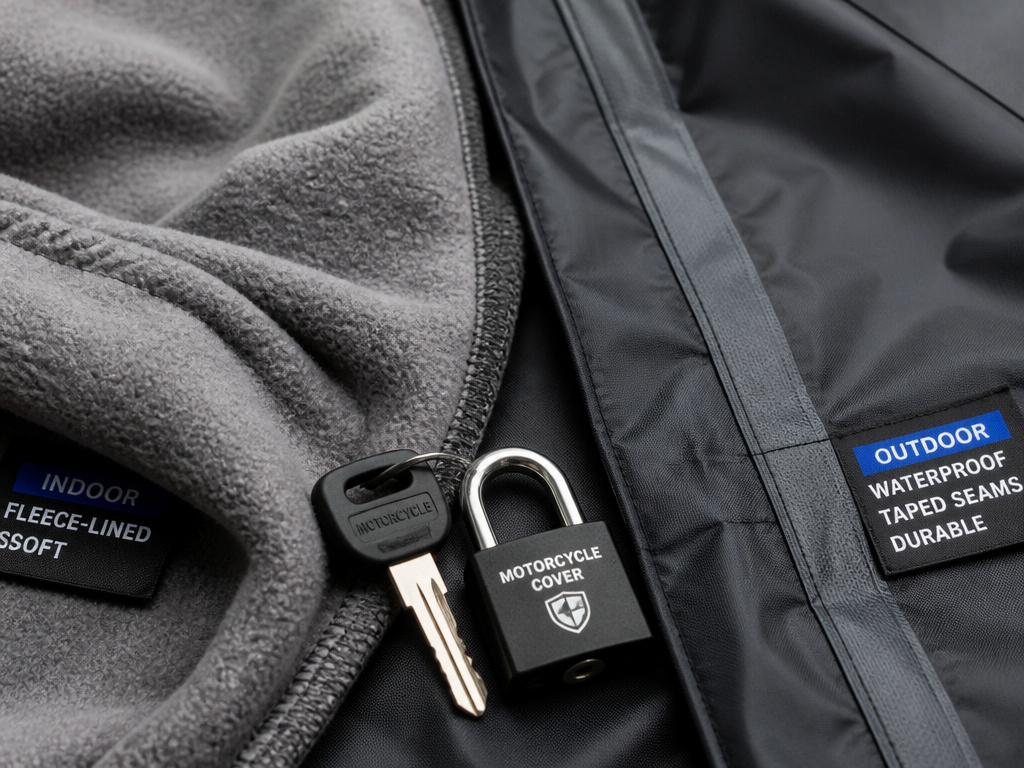
Talking about categories is useful, but you need names. Here is how specific products map to the jobs above.
The Form-Fitting Indoor Specialist: The Cover Shop Sleeping Bag
This cover exemplifies the indoor philosophy. Its 210GSM blend of 84% polyester, 16% elastane is thicker than many. The soft fleece inner lining protects paint, and the 4-way stretch gives a custom look. Crucially, the company states it is for “enclosed indoor use” only and is not weatherproof. It comes with a 5 year warranty. If you want a sleek, protective garage cover, this is the blueprint.
The Condensation-Focused Indoor Cover: HELD Cover Indoor II
The HELD cover takes a different technical approach. It uses 100% polypropylene (Vilene®), a material chosen specifically because it “stops condensation from forming on the inside of the cover to prevent rust.” It is ventilated, not waterproof, and not UV resistant. This is a tool for a specific job: long-term indoor storage where moisture control is the top priority.
The Brand-Name Dual-Use Option: Harley-Davidson Indoor/Outdoor Cover
Harley’s cover (P/N 93100023) is made of 300 Denier fade-resistant polyester with taped seams. It is water-resistant, has vents, and includes a lock hole. The brand markets it for both uses. However, note its limitations: Harley explicitly warns it is “not designed to be used while trailering,” and it does not fit certain large tour models. This is a “covered parking” or “mild weather outside” cover, not a “blizzard” or “long-term indoor storage” cover.
The Adjustable Indoor Solution: Wunderlich Indoor Tarpaulin
For riders with top cases or saddlebags, fit is tricky. The Wunderlich cover addresses this with three adjustable latches in the rear and an undercarriage strap. It is a breathable, stretch fabric with a soft lining, designed for a custom fit in a garage or underground parking spot. This solves the problem of a one-size-fits-all stretch cover not fitting over bulky luggage.
Care and Feeding of Your Cover
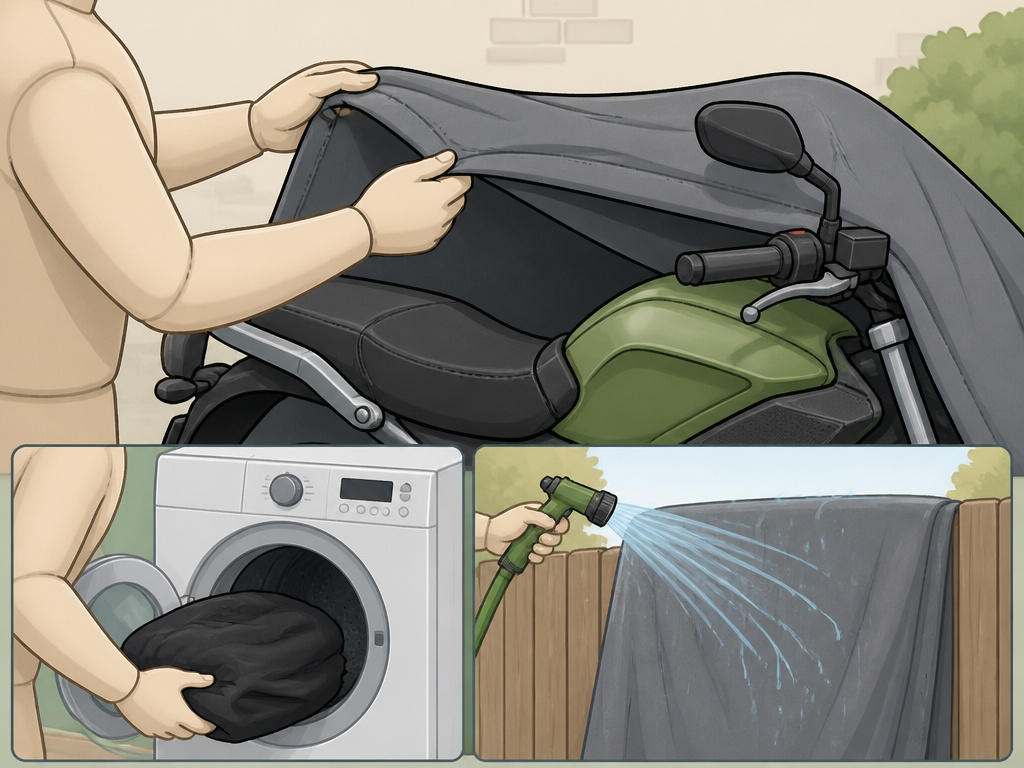
A cover is a piece of gear, and it needs maintenance. Doing it wrong shortens its life and can hurt your bike.
- Always Start Clean: Only put a cover on a clean, dry motorcycle. Dirt trapped between the cover and paint acts as sandpaper.
- Cool Down: Wait 10-15 minutes after riding before covering. Exhaust pipes and engine cases can be hot enough to melt or scorch fabric.
- Washing Instructions:
- Indoor Stretch Covers (The Cover Shop, etc.): Machine wash cold on a gentle cycle. Use mild detergent. Always hang dry—never put it in a dryer. The heat will destroy the elastic fibers (elastane).
- Outdoor Oxford Covers: Hose off loose dirt. Spot clean with a soft brush and diluted mild soap. Rinse thoroughly and air dry.
- Storage: When not on the bike, fold the cover loosely or roll it. Store it in a cool, dry place. Do not cram it into its stuff sack wet.
Never machine-dry any cover. The heat damages waterproof coatings and destroys the elasticity in stretch fabrics.
What are the best motorcycle cover brands for indoor and outdoor use?
Brands design covers for specific jobs. For indoor storage, look for covers described as breathable, soft-lined, and form-fitting, often using a stretchy polyester blend or polypropylene fabric. These are deliberately not waterproof to allow moisture vapor to escape and prevent rust. For outdoor protection, you need a cover that is waterproof, UV-resistant, and windproof. These are made from heavier materials like 300 Denier polyester with sealed seams. Some brands market a single “indoor/outdoor” cover, but technical guides often recommend separate covers, as using one for both roles can be a compromise that risks damage from trapped condensation or inadequate weather protection.
Do motorcycle covers have security features like lock loops?
Security is a key feature for outdoor covers. An outdoor cover should include grommets or reinforced loops designed to accept a cable or lock, allowing you to secure the cover to the bike’s frame or a fixed object. This helps prevent the cover from being blown away by wind or easily removed by someone. Indoor covers typically do not include these heavy-duty security features, as their primary role is protection from dust and scratches in a secure environment. When selecting an outdoor cover, check the product description for mentions of lock holes or reinforced anchor points to ensure you can properly secure your investment against the elements and theft.
Frequently Asked Questions
Is it bad to leave a motorcycle outside with a cover?
It is better than leaving it outside without a cover, but only if you use the correct outdoor cover. An outdoor cover protects against UV rays, rain, and debris. However, long-term outdoor exposure, even under a cover, will accelerate wear on all components due to temperature swings and humidity.
What is the best motorcycle cover for outdoor use?
Look for covers that specify 300 Denier or heavier polyester, taped seams, UV resistance, and lock holes. Avoid lightweight or “water-resistant” covers for full-time outdoor duty.
Can I use one cover for both indoor and outdoor?
You can, but it is a compromise. A single “indoor/outdoor” cover like the Harley-Davidson model is essentially a lighter-duty outdoor cover. It will not breathe as well as a dedicated indoor cover for long garage storage, and it may not be as rugged as a premium outdoor cover for harsh weather. The technical advice from cover manufacturers is to use separate covers for best results.
How do I prevent my cover from scratching my bike?
Two rules. First, ensure the cover has a soft inner lining like fleece or flannel. Second, keep both the bike and the inside of the cover clean. Grit caught between the cover and paint is the main cause of scratches. Regularly washing your indoor cover per the instructions is part of maintenance.
What size motorcycle cover do I need?
Measure the longest, widest, and tallest points of your bike (including windshield and bags). Compare to the manufacturer’s size chart. If you have a tall windshield or saddlebags, size up. A cover that is slightly too large can be cinched down with straps; one that is too small is useless.
The Bottom Line
Stop looking for one cover to rule them all. That product does not exist without a serious compromise.
If your bike lives in a garage, buy a breathable, soft-lined indoor cover like The Cover Shop’s Sleeping Bag. Your paint will thank you, and you will not fight rust from trapped condensation.
If your bike lives outside, invest in a proper 300 Denier+ outdoor cover with taped seams. Do not cheap out here—the sun and rain are relentless.
And if you must choose just one? Get a waterproof, UV-resistant, and windproof outdoor cover and be diligent about removing it during extended periods of indoor storage to let the bike breathe. But honestly, the right two covers cost less than fixing a rust-spotted exhaust or repainting a scratched tank. Fit the gear to the job, not the other way around.
