
How to Style Motorcycle Gear Off the Bike: Step-by-Step
This post contains affiliate links. As an Amazon Associate, we earn from qualifying purchases.
To style motorcycle gear off the bike, treat it as a functional outer layer over your normal clothes. The goal is to look casual while keeping your protection accessible. Choose gear with minimal branding and streetwear cuts, layer it over a t-shirt or hoodie, and plan your stops so you can shed bulky items like jackets and helmets first.
That approach turns a safety requirement into a style choice. It works because modern motorcycle apparel borrows from casual fashion, riding jeans look like denim, armored hoodies mimic streetwear, and technical jackets often cut a slimmer silhouette. This leads many to ask how to style motorcycle gear off the bike.
What follows is the real-world method, built from manufacturer specs and rider-tested habits. This section explains the layering system for looking presentable off the bike, the gear made for this dual purpose, and the maintenance that keeps your kit looking good when styling it for everyday wear.
Key Takeaways
- Build your outfit around layering normal clothes under your protective gear; a t-shirt under a riding jacket looks casual the moment you unzip.
- For true dual-purpose use, seek out gear like the Aerostich Utility Pants, which the manufacturer explicitly markets for everyday wear off the bike.
- Wash gear inside out on a gentle, warm cycle, but always check the manufacturer’s label for the correct temperature, as recommendations vary (e.g., Aerostich recommends 105°F/40°C, while Dainese recommends a maximum of 86°F).
- Your helmet and gloves come off first at any stop; they’re the most conspicuous items and storing them securely is your top priority.
- Bright or light-colored gear isn’t just a Polaris safety recommendation, it’s easier to style in daylight and makes you more visible when you’re back on the road.
The Core Styling Strategy: Layering
Start with your normal clothes. This is the single most effective trick. Put on the jeans, t-shirt, or lightweight hoodie you’d wear anyway. Then, add your motorcycle gear as the outer shell.
When you reach your destination, you remove the shell. Underneath, you’re already dressed for the coffee shop, office, or store. The transition takes seconds and doesn’t require a bathroom change. A riding jacket over a plain tee looks intentional. That same jacket over a base layer looks like you’re in full kit.
The layering principle is simple: your protective gear is a removable exterior. Your street clothes are the permanent interior. This reverses the old mindset where you dressed for the ride and then had to change at your destination.
My fit rule is to always check gear in a riding posture, not while standing. A jacket that feels great upright can pull across the shoulders when you reach for the bars. I learned that after a test jacket choked me on the first highway stretch. That same snug, riding-appropriate fit should still allow a thin hoodie or sweater underneath when considering how to style motorcycle gear off the bike. If it doesn’t, the jacket is too tight for dual-purpose use.
Where this goes sideways: Wearing your riding gear directly against your skin. You’ll sweat into the liner, which means more frequent washing. According to Dainese, frequent washing, especially with the wrong detergent, can degrade the durable water repellent (DWR) treatment on technical fabrics. The garment’s performance suffers for the sake of a streamlined look.
| Layer | Purpose | Off-Bike Result |
|---|---|---|
| Base (Normal Clothes) | Comfort, personal style | You are already dressed. |
| Protective Shell (Riding Gear) | Abrasion/impact protection | Remove to instantly look casual. |
| Accessories (Helmet, Gloves) | Critical safety | Store immediately; they define the “rider” look. |
Gear Designed for Double Duty
Some manufacturers build this duality into their products. The most explicit example comes from Aerostich. Their Utility Pants are made from rugged Cordura, but the design brief includes off-bike life. The product literature states: “Remove the TF3 kneepads and these super-tough pants are practical as everyday off-bike wear, too.”
They achieve this by omitting full-length side zips, using a cut that resembles casual trousers, and specifying they can be worn over regular jeans. It’s a rare admission from a gear maker that their product has a life beyond the saddle. For other brands, you have to read between the lines.
Look for these features in any gear you want to pull double duty:
- Minimal or No Branding: Large logos scream “motorcycle gear.” Subtle tags or embossed branding blend in.
- Streetwear Cuts: Motorcycle jeans that pass for premium denim, riding hoodies that look like athletic wear, and jackets with a tailored silhouette rather than a boxy, armor-filled drape.
- Neutral Colors: Black, grey, navy, and olive drab integrate into a wardrobe easier than high-vis yellow or racing red. That said, Polaris’s general safety advice for all riders is to wear bright or light-colored clothing for visibility, a light grey or tan jacket can satisfy both style and safety.
- Discreet Armor: Low-profile CE-rated protectors in the shoulders, elbows, and knees that don’t create obvious lumps.
This is where the line between casual gear and technical riding gear truly blurs. The best pieces don’t force you to choose.
Managing the Bulky Stuff: Helmets, Boots, and Jackets
Your helmet is your biggest tell. The moment you tuck it under your arm, you’re “a motorcyclist.” The strategy is to deal with it immediately.
For a short stop? Carry it. Use it as a reason to keep your visit brief. A location with outdoor seating where you can keep it on an empty chair is ideal. Longer stop? Lock it to your bike. A simple cable lock through the chin bar and around a frame member is the minimum. Better yet, carry it with you in a bag that disguises its shape.
Boots and jackets are next. Modern motorcycle jackets are slimmer than ever, but they’re still bulkier than a denim jacket.
Common mistake: Leaving your jacket draped over a chair. It’s an invitation for someone to spill a drink on it or, worse, walk off with it. If you’re not wearing it, it should be on a proper coat hook or in your sight.
Riding boots are the final hurdle. Many modern styles, like adventure touring or casual riding boots, are designed to pass for workwear or hiking boots. The over-the-ankle height and slight bulk are the only giveaways. If your stop involves a lot of walking, consider changing footwear for comfort.
The Care Conundrum: Keeping Gear Presentable
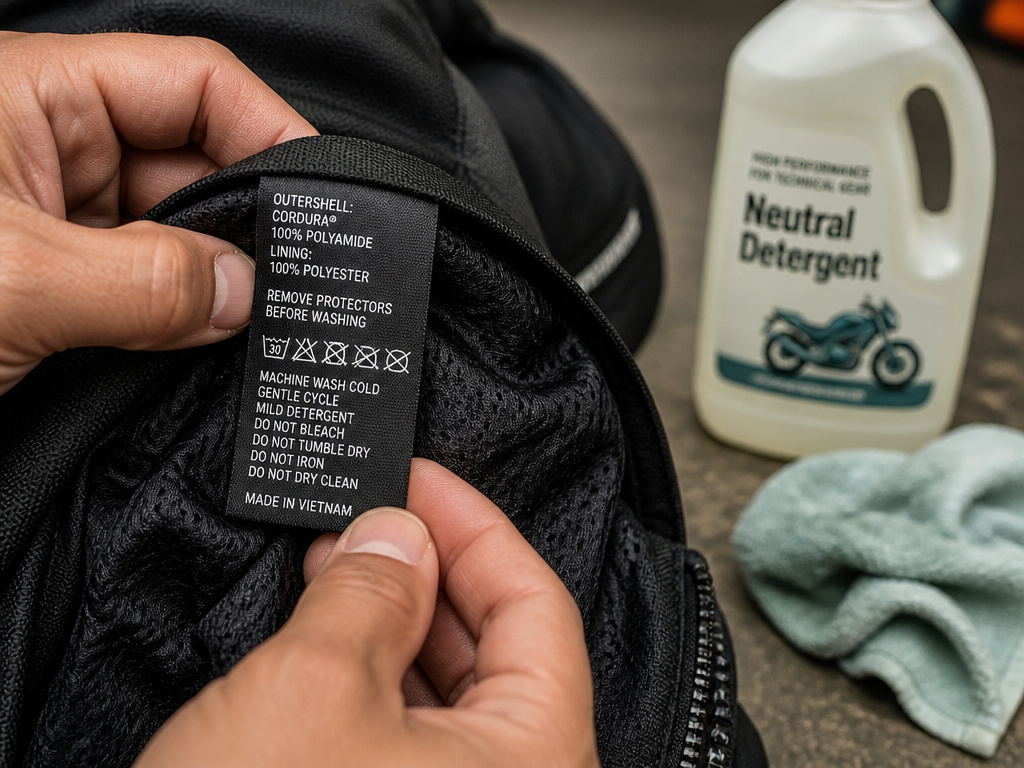
Using your riding gear as everyday apparel means it will get dirty faster. A jacket worn off the bike will collect everyday dirt and odors. This forces you into a maintenance cycle that most riding gear isn’t designed for.
The care labels inside your gear provide cleaning instructions. Frequent gentle washing may be needed for odors and dust. Here’s the conflict, laid out by the manufacturers themselves:
| Care Step | Aerostich (Utility Pants) | Dainese (GORE-TEX Jacket) |
|---|---|---|
| Wash Temperature | 105°F (40°C) | Lukewarm, max 86°F (30°C) |
| Drying for DWR | Tumble dry for 20 minutes after dry to reactivate DWR. | Air dry in well-ventilated area. Avoid direct heat/light. |
| Detergent | Liquid detergent, no softeners or bleach. | Neutral soap, free of fabric softeners and solvents. |
The takeaway? There is no universal rule. You must consult the wash and care label inside each garment. Following the wrong advice can strip waterproofing or damage membranes.
For general upkeep between rides, use a damp cloth to wipe down leather or textile surfaces. For motorcycle jeans, always turn them inside out before washing to preserve color. The goal is to maintain the garment’s appearance for casual wear without sacrificing the safety features you paid for.
Security and Storage On the Go
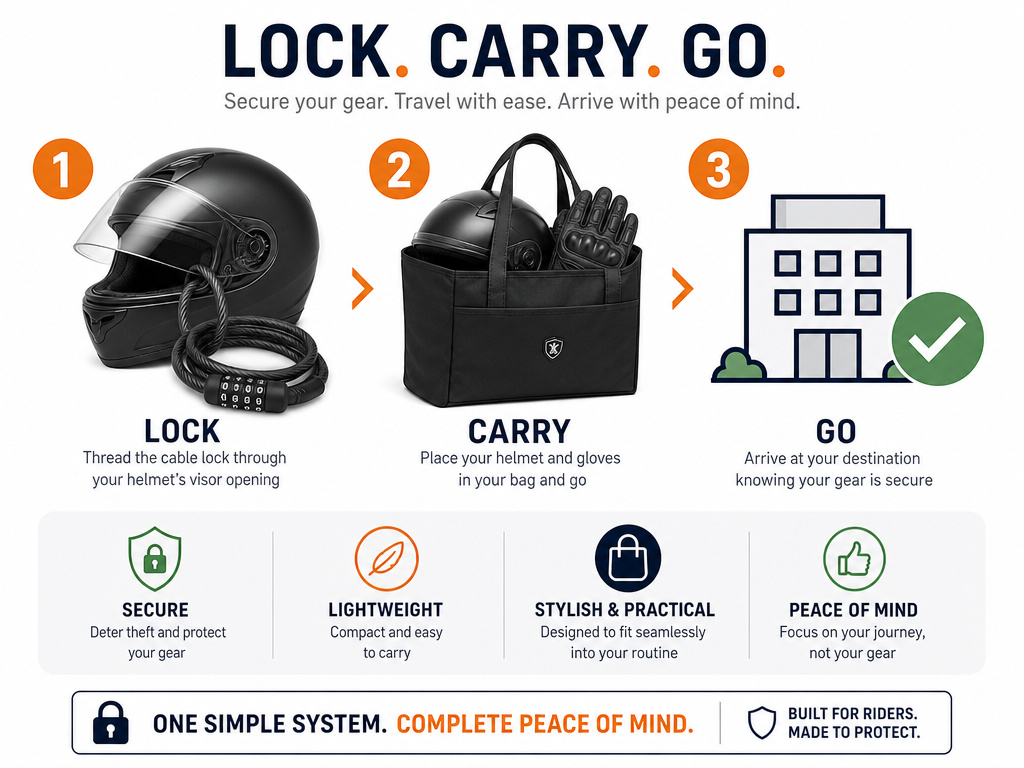
Your gear is expensive. Leaving an expensive helmet on a bike unattended is a risk. Planning your stops around security turns a potential headache into a non-issue.
Your toolkit should include:
- A cable or dedicated helmet lock.
- A compact, foldable bag for carrying your helmet and gloves.
- A plan. Choose destinations with secure storage where you can bring gear inside.
If you must leave gear on the bike, lock everything to it. Thread a cable through the helmet, jacket sleeve, and a secure part of the frame. It may not stop all theft, but it can deter an opportunistic grab. This isn’t just about theft; it also prevents the gear from being lost or damaged.
Before You Go
Styling motorcycle gear off the bike isn’t about hiding that you ride. It’s about integrating the gear into your life so it’s not a burden. The entire system hinges on one principle: gear is a layer, not a costume.
The Aerostich pants prove some manufacturers get it. For everyone else, you become the stylist by choosing low-key pieces and mastering the layer-and-shed routine. Just remember that every time you wear your jacket to a restaurant instead of just on the highway, you’re committing to cleaning it more often. That’s the real trade-off.
Fit first, features second. That applies to style, too. If it doesn’t look and feel good when you’re standing still, you won’t wear it when you’re not riding. And gear that stays in the closet can’t protect you on the road.
How to Carry Motorcycle Gear When You’re Not Riding
When you’re off the bike, your gear needs a plan. For carrying, a bag can hold your gear. If you’re storing gear for longer periods, like in an office, the environment matters. Gear should be stored in a dry, well-ventilated place, kept out of direct sunlight and away from any direct heat sources. Make sure everything is completely dry before you put it away to prevent mildew. For security, a lock can be used to secure gear to a fixed object.
Frequently Asked Questions
What are some casual-looking motorcycle gear options?
Look for specific categories designed to bridge the gap. Motorcycle riding hoodies with integrated armor are a top pick, as are riding jeans made with abrasion-resistant fibers like Kevlar or Dyneema. Many brands now offer leather and textile motorcycle jackets with minimalist designs and streetwear cuts.
How do I transition my gear for a work/office environment?
This is the hardest test. It requires the most disciplined layering. Wear your office attire (dress shirt, trousers) as your base layer. Choose a protective jacket or vest that works over your dress clothes. Your helmet and gloves must have a secure, out-of-sight storage plan in your office. It’s a hassle, which is why many commuting riders opt for leaving a blazer at the office.
Does wearing gear off the bike wear it out faster?
Yes, in two ways. First, more frequent use leads to more general wear and tear on zippers, seams, and fabric. Second, and more critically, to keep it presentable for casual use, you’ll need to clean it more often. Improper or too-frequent washing is the fastest way to degrade the technical coatings and membranes that provide weather protection. You’re trading some long-term performance for short-term convenience and style.
Is it safe to wear normal clothes instead of gear for short trips?
This is the eternal compromise. The safety advice from manufacturers like Polaris is unambiguous: wear gloves, a jacket, heavy boots, and long pants to prevent injury. A short trip at low speed still involves asphalt. Your skin’s abrasion resistance doesn’t change with trip length. The risk assessment is personal, but the physical reality isn’t.
