
How Much Does Motorcycle Weigh? Chart by Bike Type
This post contains affiliate links. As an Amazon Associate, we earn from qualifying purchases.
A full-size motorcycle weighs between 420 lb and 866 lb ready to ride. Cycle World scaled a 2013 Triumph Daytona 675R at 420 lb with a full tank. Harley-Davidson’s 2025 CVO Road Glide sits at 866 lb in running order. Sportbikes live at the light end, touring bikes at the heavy end.
Running order means fuel and fluids are in, and on that CVO they add 39 lb over its as-shipped figure of 827 lb. Fuel is the slippery part, and it matters whenever you ask how much does motorcycle weigh, because the answer depends on what the maker counted. Honda counts a full tank, BMW counts a tank at least 90% full, and type-approval papers for the Ducati Panigale V4 R count minimum fuel.
Below: a chart of six real published weights, what each weight label hides, plain answers for 450, 500, 600 and 700 lb, and the sticker on your frame that says how much you’re allowed to load.
Key Takeaways
- Check the fuel basis before you compare two spec sheets. A full-tank curb figure and a minimum-fuel kerb figure for the same bike won’t match.
- On Cycle World’s tested sportbikes, fuel alone made up 27 to 29 lb of the gap between wet and dry weight.
- Your bike’s GVWR sticker sits near the steering head, and US rules budget only 150 lb per seat for the rider and passenger.
- Electric bikes like the Zero SR/F never get lighter as you ride, because a battery doesn’t burn off the way fuel does.
- Harley’s as-shipped figure for the 2025 Road Glide runs 36 lb under its running-order weight. Same bike, different label.
Motorcycle Weight Chart: 6 Published Weights From 420 to 866 lb
At 420 lb, the Daytona 675R weighs less than half of a CVO Road Glide. Every other bike in this chart lands between those two.
Ready-to-ride weight for road motorcycles in published data spans 420 lb to 866 lb. Cycle World’s scale tests of flagship sportbikes recorded 441 to 468 lb with a full tank. The BMW R 1300 GS adventure bike is rated at 237 kg (523 lb) road ready. Full-dress tourers from Harley-Davidson and Honda run 838 to 866 lb.
I left each figure in the unit its source printed. Converting kilograms myself would add one more layer of rounding to numbers that already disagree, so the Zero stays in kg.
| Bike | Type | Published weight | Fuel basis |
|---|---|---|---|
| 2013 Triumph Daytona 675R | Sport | 420 lb wet | Full tank, Cycle World scale |
| 2026 Harley-Davidson Nightster | Standard | 481 lb wet | Wet, per dealer listing |
| BMW R 1300 GS | Adventure | 237 kg (523 lb) | Tank at least 90% full |
| Zero SR/F (2025-26) | Electric | 227 kg with ABS | No fuel at all |
| 2025 Harley-Davidson Road Glide | Touring | 838 lb (CVO: 866 lb) | Running order |
| 2025 Honda Gold Wing Tour Airbag DCT | Touring | 856 lb curb | Full tank |
You’ll see an “average motorcycle weight” quoted all over the internet. I won’t give you one.
No source in front of me publishes a fair average, and blending a dirt bike with a Gold Wing tells you nothing about the bike you’re shopping for. The honest answer to how much does motorcycle weigh is a range by type, and the chart above is the backbone of it.
What Do Dry Weight and Wet Weight Actually Include?
Dry weight is the number I trust least on any spec sheet. Nobody rides with an empty tank, and the sources can’t even agree on what else gets drained.
The Wikipedia entry on motorcycle testing and measurement says makers usually include the battery in dry weight. It also notes that some media leave the battery out, and some remove only the fuel.
Cycle World and Sport Rider push back harder. They call the old maker method, which skipped fluids, battery, tires and brake pads, unreasonable and unrealistic. Their own dry figure is simply an empty tank with every other fluid still in.
One Ducati shows the mess. Motorcycle.com lists the Panigale V4 R at 172 kg dry and 193.5 kg wet. Type-approval documents, as reported by Bikes Republic, put it at 184 kg kerb with oil, fluids and minimum fuel.
Three numbers. One motorcycle.
The V4 Superleggera has the same split: a claimed 159 kg dry against a 173 kg type-approval kerb weight, per Bikes Republic. That 14 kg gap is the difference between a brochure and a bike you can start.
| Label | Who uses it | Fuel counted |
|---|---|---|
| Curb weight | Honda (Gold Wing Tour) | Full tank |
| Wet weight | Cycle World scale tests | Full tank |
| Unladen, road ready | BMW (R 1300 GS) | At least 90% of tank |
| Type-approval kerb | Ducati papers, via Bikes Republic | Minimum fuel |
| Dry (Cycle World) | Cycle World scale tests | Empty tank, other fluids in |
| Dry (old maker method) | Criticized by Cycle World | No fluids, battery, tires or pads |
Rock a bike with a half tank off its sidestand and you’ll hear the fuel slap against the tank walls. That sloshing mass is most of the difference between wet and dry weight on a gas bike.
I only compare like with like: curb against curb, full tank against full tank. Lining up a full-tank Honda figure against a 90% BMW figure flatters whichever bike counted less fuel. It’s like judging two boards by the size stamped on the end instead of putting a tape on them.
How Much Does a Motorcycle Weigh by Type and Engine Size?
Engine size is the first number riders check when asking how much does motorcycle weigh, and it’s one of the weakest clues to weight. What a bike is built to do predicts its weight far better.
Look at Cycle World’s sportbike scale. The Daytona 675R, a smaller middleweight, came in 21 lb under the Yamaha R1. Meanwhile the Harley-Davidson Nightster weighs 40 lb more than the R1 wet. Bodywork, tank size and hardware move the scale more than displacement does.
I don’t have a sourced cc-by-cc chart I’d put my name on. So I’m not printing one.
The same goes for dirt bikes, scooters and trikes. They belong at opposite ends of this story, but the data in front of me doesn’t include scale figures for them. Treat any single number you see for those classes with suspicion until you know its fuel basis.
Sport and Naked Bikes
Cycle World weighed the flagship sportbikes wet and with an empty tank:
- 2016 Yamaha R1: 441 / 414 lb
- 2016 Kawasaki ZX-10R: 449 / 422 lb
- 2015 BMW S 1000 RR: 451 / 423 lb
- 2016 Aprilia RSV4 RR: 468 / 439 lb. The heaviest of the group, and still only 27 lb over the R1 with a full tank.
Four brands, a tight cluster. Same job, same weight.
Cruisers and Standards
The Nightster is listed at 481 lb wet with a 27 in seat height. That low seat matters as much as the weight for a shorter rider. In my experience, a bike you can flat-foot feels lighter than its spec sheet says.
Adventure Bikes
BMW rates the R 1300 GS at 237 kg (523 lb) road ready, with the tank at least 90% full of its 19 L usable capacity. Owners of a base bike with the Enduro package report theirs is several kilograms lighter than that figure. I can’t verify that claim, so file it as owner talk.
Tall seats and loose ground make a heavy adventure bike a different animal off pavement. The weight sits higher, and a rut can tip you before you’ve stopped rolling.
Touring Bikes and Electrics
Full-dress tourers are the heavyweights. The 2025 Road Glide is 802 lb as shipped and 838 lb in running order. The Gold Wing Tour Airbag DCT is 856 lb with a full tank, and the non-airbag Automatic DCT is 847 lb.
The Zero SR/F flips the fuel rule. It weighed 220 kg from 2019 to 2024, and 1000PS lists 227 kg for 2025-26 with ABS and a 17.3 kWh battery.
Here’s why that matters. A gas bike burns fuel as you ride, so it ends the day lighter than it started. An electric bike’s battery stores energy chemically and loses no mass as it drains, so its wet and dry weights are the same number all day.
What changes weight inside one model line:
- An airbag package. On the Gold Wing Tour DCT, it adds about 9 lb.
- A generation update: the Zero SR/F gained 7 kg between model ranges.
- Trim level. The CVO Road Glide runs 28 lb over the base Road Glide in running order.
- Fuel level.
Is 450, 500, 600 or 700 lb Heavy for a Motorcycle?
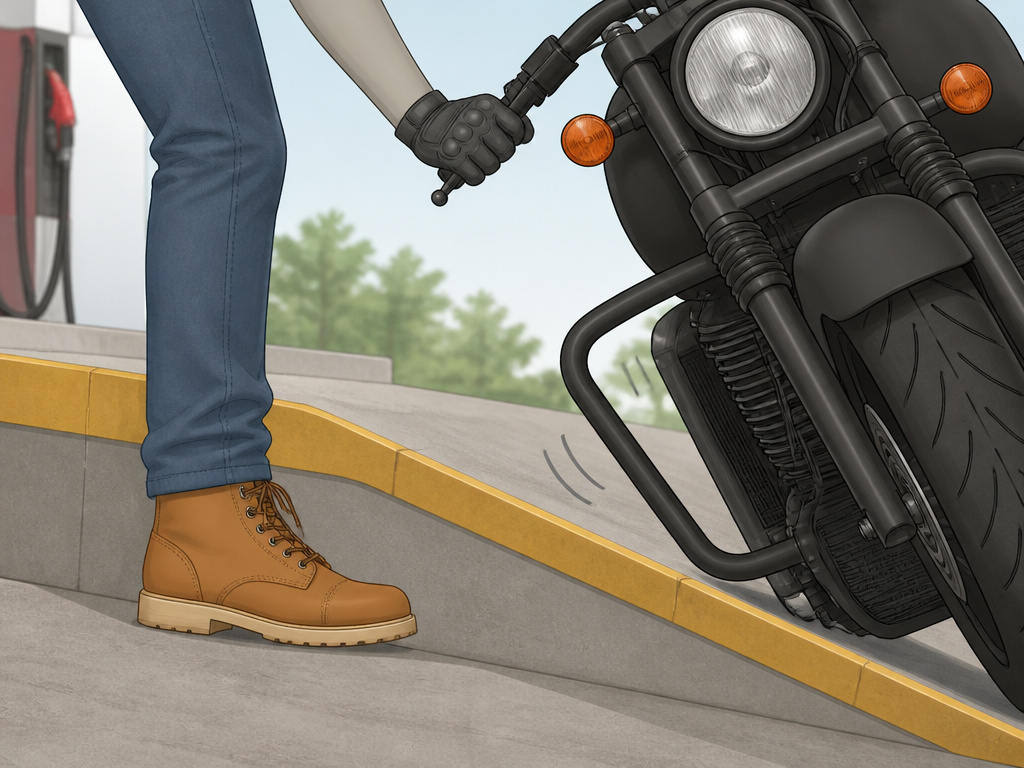
Can you hold the bike upright with one foot down on a sloped gas station apron? That’s the real test, and no spec sheet answers it for you.
I learned this with helmets first. A size that matched the chart pressed hard on my forehead. My head shape was the problem. The chart number was fine. Bikes work the same way: seat height, bar reach and where the weight sits change how heavy 500 lb feels.
Here’s how the common thresholds line up against real bikes:
- 450 lb is flagship sportbike weight. Cycle World’s R1, ZX-10R and S 1000 RR all sit between 441 and 451 lb wet. That’s light for a full-size road bike, and a tall sport seat will bother a new rider more than the mass.
- 500 lb: the Nightster at 481 lb and the R 1300 GS at 523 lb bracket it.
- 600 lb is heavy for a first bike. No bike in my data sits right there, so I’ll stay honest and leave it as a threshold, not a model match.
- 700 lb is heavy, period. A Road Glide still outweighs it by 138 lb in running order.
If you can’t walk the bike backward out of a parking space on flat ground, it’s too heavy for you today. Go lower, go lighter, or come back when you’re stronger.
Rider size shifts every answer on that list. A tall, strong rider will call a 600 lb bike manageable on day one. A shorter rider who weighs less than half the bike will feel every pound in a parking lot.
Nightster vs R 1300 GS for a short new rider: the Nightster wins. It’s 42 lb lighter and its 27 in seat puts your feet closer to the ground. The GS wins once you’re experienced and loading up two-up, because BMW rates it for 228 kg of payload.
If you want one answer and you’re short or new to riding, look at the Harley-Davidson Nightster. Sit on it at a dealer before you buy anything, though. I tell riders not to trust photos and reviews when they buy gear, and the same rule holds for a bike’s weight. Ride it before you trust it.
The Steering-Head Sticker: GVWR, GAWR and 150 lb Per Seat
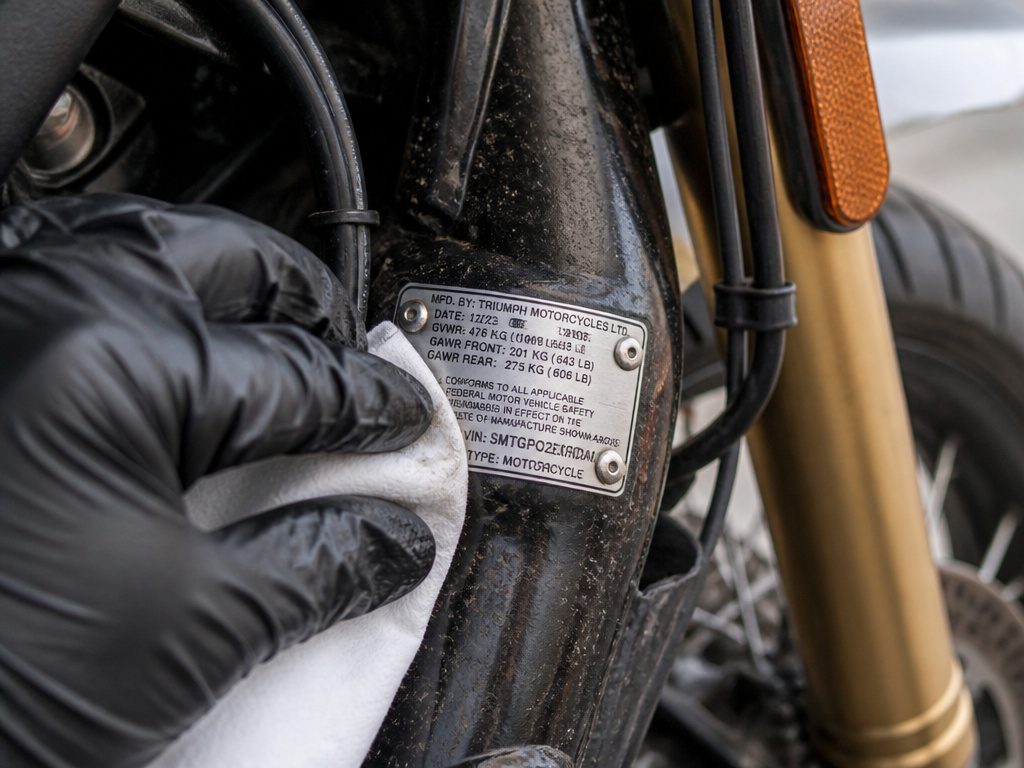
Under the 49 CFR 567.4 manufacturer requirements, a US motorcycle’s certification label goes on a permanent part of the frame. It sits as close as practical to where the steering post meets the handlebars. You should be able to read it by turning the bars and nothing else.
On a used bike, expect a small label on the frame neck, filmed with road grime and chain-lube mist. Wipe it with a dry rag before you trust what you read.
Two numbers on that label matter. GVWR, or gross vehicle weight rating, is the most the loaded bike is rated to weigh. GAWR, or gross axle weight rating, is the most each axle is rated to carry, listed front then rear in pounds.
The rule sets a floor for GVWR. It can’t be less than the unloaded bike, plus rated cargo, plus 150 lb per seat. On a two-up bike that means at least 300 lb set aside for people.
That’s where my gear brain kicks in. That 150 lb is the occupant budget, and helmets, jackets, boots and armor all count against it. A rider who weighs 150 lb in street clothes has already gone over once the gear goes on, and every extra pound comes out of the luggage allowance.
BMW makes the math easy on the R 1300 GS. Permitted total weight is 465 kg. Road-ready weight is 237 kg. That leaves 228 kg of payload capacity for you, a passenger, your gear and every bag.
Work out your own real allowance this way:
- Find the label near the steering head with the bars turned to full lock. Skip it and you’re trusting a brochure figure that may use a different fuel basis than you assume.
- Write down GVWR and both GAWR values. Ignore the rear GAWR and you can stay under GVWR while still overloading the back axle with a passenger and a top case.
- Subtract the bike’s running-order or full-tank weight from GVWR. Use the as-shipped or dry figure instead and you overstate your allowance; on a 2025 Road Glide that error is 36 lb.
- Subtract every rider in full gear, weighed on a bathroom scale while dressed to ride.
- What’s left is luggage. Done.
The label itself can be wrong. Triumph recalled 1,186 Explorer and Explorer XC bikes from 2012-2013 under NHTSA recall 13V-180 because the GVWR on the label was incorrect. NHTSA warned an owner could overload the bike, leading to handling issues or tire failure.
Honda had the same kind of slip with GAWR on 2010 VT1300CR, VT1300CRA and VT1300CT models. Transport Canada flagged the same risk: owners could believe the bike carried more than it was certified to. Both makers fixed it with a free replacement or correction label.
Easy to miss: A wrong label looks exactly like a right one. Honda VT1300s built from Dec 17, 2009 carried the bad GAWR figure until a recall that began Aug 20, 2010, so check any used bike’s VIN against NHTSA’s recall lookup before you load it.
Why the Extra Pounds Bite at Walking Pace
Sidestand down, bike leaning on a cambered driveway. You swing a leg over, push it upright, and it keeps going past center toward your other leg.
That’s where weight hurts most. At speed, the wheels act like gyroscopes and hold the bike up. At a standstill, only your leg does. Once the bike’s center of mass passes outside your foot, gravity pulls harder with every degree of lean, and your leg loses the fight fast.
You’ll feel it in your hands first. The bars go from light in your palms to a dead weight that twists your wrists, and the whole thing happens in about a heartbeat.
Braking follows the same physics. A heavier bike carries more energy at any speed, and the brakes have to turn all of it into heat to stop you. That’s why big tourers wear pads faster and run hotter rotors on long descents.
Honda clearly knows the weight problem on the Gold Wing Tour.
Where this goes sideways: Topping off a heavy tourer on a sloped pump island, then rolling it off the stand downhill. The extra fuel adds weight right when your footing is worst, and slick pavement near pumps takes your boot out from under you in an instant.
Even careful riders tip one over eventually. Knowing how to lift a dropped motorcycle with your legs and back straight saves your spine. Wear real gloves even for parking-lot work. Hands go out first in any fall, including the slow ones.
Cutting Weight: Three Fixes Worth Doing and One to Skip
Three things come off a bike fast: luggage, accessories and fuel. The fourth fix gets sold hardest and earns the least.
- Pull empty bags and top cases for local rides. Honda’s own numbers show one feature, the airbag, adds about 9 lb to a Gold Wing Tour DCT. Bolt-ons stack up the same way.
- Swap the battery for a lithium unit. I don’t test electrics deeply, so check charging compatibility with your bike’s system before you buy.
- Run less fuel for parking-lot practice. A full tank was worth 27 to 29 lb on Cycle World’s sportbikes.
- Skip the aftermarket exhaust as a weight fix.
That last one is my stance, and I’ll stand on it. An exhaust swap gets pitched as weight loss, but I’ve never seen a sourced number for any specific system I’d trust. You’ll get noise and a tune headache before you notice the difference at a standstill.
Honestly, the fastest weight cut on most bikes is the stuff you forgot was bolted on. Look at your bike with fresh eyes before buying anything.
Frequently Asked Questions
Is 600 lbs a heavy motorcycle?
Yes, for a new or shorter rider. It sits between the BMW R 1300 GS at 523 lb road ready and the 2025 Road Glide at 802 lb as shipped. An experienced, tall rider will handle it fine, but it’s a lot to catch at a standstill.
Is 700 pounds heavy for a motorcycle?
Yes. That’s touring-bike territory, though a Road Glide still runs 838 lb in running order. At 700 lb, low-speed control and lifting a dropped bike become the real challenges.
Is 450 lbs heavy for a motorcycle?
No, that’s flagship sportbike weight. Cycle World measured the Yamaha R1 at 441 lb and the BMW S 1000 RR at 451 lb with full tanks. Seat height matters more than mass at this weight.
Do electric motorcycles weigh more than gas bikes?
The Zero SR/F is listed at 227 kg for 2025-26, which is heavier than the flagship sportbikes Cycle World weighed. The bigger difference is that an electric bike’s weight never drops during a ride, since the battery doesn’t burn off like fuel.
Where can I find my motorcycle’s weight limit?
Check the certification label on the frame near where the steering post meets the handlebars. It lists GVWR and a GAWR for each axle in pounds. Subtract the bike’s full-tank weight and every rider in gear to find what’s left for luggage.
How much does fuel add to a motorcycle’s weight?
On Cycle World’s tested sportbikes, a full tank accounted for 27 to 29 lb. On the 2025 Road Glide, fuel and fluids together make up the 36 lb gap between as-shipped and running-order weight.
Before You Go
So how much does a motorcycle weigh? Published motorcycle weights range from 420 lb to 866 lb, and the label on the number matters as much as the number.
One test beats every spec sheet. Before you buy, have the seller steady the bike while you sit on it, push it off the sidestand, and hold it upright on flat ground. If you can’t stop it at the balance point without a wobble, the bike is too heavy for you right now.
Everything here assumes a US-market bike with a federal certification label. A European spec sheet built on road-ready weight with a 90% tank won’t line up neatly with a US full-tank curb figure. Compare those with care.
Bottom line: newer and shorter riders should shop near the Nightster’s 481 lb with a low seat, and anyone eyeing an 800 lb tourer should prove they can hold one upright before they sign anything.
