
10 Best Motorcycle Brake Fluid in 2026
This post contains affiliate links. As an Amazon Associate, we earn from qualifying purchases.
Our best overall pick is Motul RBF 600 Racing Brake Fluid, chosen for its extreme thermal resistance and suitability for both aggressive street riding and track days. Castrol SRF Racing Brake Fluid is our ultra-performance choice, while Motul DOT 5.1 offers the best solution for modern ABS systems.
Picking the wrong fluid can lead to brake fade and a dangerously spongy lever, especially when you need stopping power most. This guide was built from a review of manufacturer specifications, expert round-ups, and owner feedback to help you quickly find the right fluid for your ride.
Top 10 Motorcycle Brake Fluids in the Market
Certain content that appears on this site comes from Amazon. This content is provided "as is" and is subject to change or removal at any time.
The Best Motorcycle Brake Fluids, Reviewed
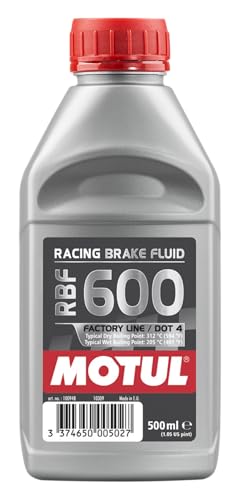
Motul RBF 600 Racing Brake Fluid
What We Like
- Extreme thermal resistance and stability
- High wet boiling point reduces vapor lock
- Increases braking performance and avoids fade
- Suitable for both street and track use
Trade-offs
- 500ml bottle is smaller than some 1-liter competitors
- Specific racing formula is overkill for casual street-only riders
A wet boiling point of 399°F is the key number here, offering a massive safety margin against brake fade when your system gets hot and the fluid absorbs moisture over time. This makes the Motul RBF 600 a top pick for riders who push their bikes hard, whether on a track day or a spirited mountain run. It delivers consistent pedal feel and reliable stopping power when ordinary fluids might start to falter, giving you the confidence to brake later and harder.
This brake fluid is designed for hydraulic systems in racing and high-performance applications, which means its extreme thermal resistance is focused on track days and aggressive driving. Its wet boiling point of 399°F helps reduce vapor lock during repeated hard stops, a key advantage over standard fluids. The 500ml synthetic formulation comes in a compact bottle that is easy to store and handle for a single vehicle’s service.
Castrol SRF Racing Brake Fluid

What We Like
- Exceptionally high wet boiling point for fade resistance
- Superior anti-vapor lock characteristics under hard use
- Formulated for arduous conditions like racing and rallying
Trade-offs
- At 2.0 pounds, it is heavier than smaller 500ml bottles
- Ultra-performance formula exceeds needs of casual street riding
Castrol SRF Racing Brake Fluid’s 270° C wet boiling point means your brakes resist fade during repeated, punishing stops, the kind experienced on a track or demanding mountain descent. This fluid is for riders who push their bikes to the limit, where consistent lever feel and maximum performance are non-negotiable. Its exclusive European formula is built to handle the heat and stress of competition, giving you one less thing to worry about when fully committed.
The trade-off is that this is a specialist product. For routine street riding, its extreme capabilities are overkill. Expert round-ups highlight it for serious performance applications, but also stress that for top-offs, you should stick with whatever fluid is already in your system to avoid compatibility issues.
Product photos
Motul DOT 5.1 Synthetic Brake Fluid

What We Like
- Excellent high-temperature boiling performance reduces fade
- Low viscosity optimizes ABS and electronic system response
- Advanced additives protect against corrosion and moisture
- Compatible with a wide range of conventional systems
Trade-offs
- Requires regular fluid changes
- Pack size is two 500ml bottles
Motul DOT 5.1’s high boiling point and low-viscosity synthetic formula are engineered for the precise hydraulic demands of modern motorcycles. This combination is crucial for riders with ABS, traction control, or linked braking systems, as it ensures fast fluid circulation and consistent pressure to keep those electronics responding predictably, especially during repeated hard stops or in cold weather. It’s the right choice for sport riders, tourers, and anyone with a modern bike who wants to maintain the factory-designed feel and safety of their advanced brake system.
Motul DOT 5.1 is a non-silicone synthetic fluid engineered for modern hydraulic systems with ABS and stability control, which means it maintains rapid response in both cold weather and high-speed braking. Its high boiling point helps reduce the risk of vapor lock during repeated braking or towing, supporting stable performance under demanding street conditions. This fluid is fully compatible with systems requiring DOT 3, DOT 4, or DOT 5.1, making it suitable for passenger vehicles, motorcycles, and light trucks.
KTM Motorex DOT 5.1 Brake Fluid

What We Like
- Extremely high wet boiling point over 180°C
- Low-temperature viscosity for better brake response
- Prevents vapor formation under extreme braking loads
Trade-offs
- Small 250ml bottle size limits fluid flushes
With a wet boiling point above 180°C, this fluid resists fade during repeated hard braking, a key advantage for aggressive riding. Its low viscosity at cold temperatures also promotes better lever response. As a Genuine KTM Factory PowerParts accessory, this Motorex formula is engineered to match the brand’s technical specifications.
The 250ml bottle size means a full system flush may require more than one container. Riders who perform frequent brake service might find larger-volume options, like the 500ml Motul DOT 5.1, more suitable for their needs. This KTM fluid serves as a dedicated, race-bred option for maintaining a KTM’s braking system.
Product photos
Brembo HTC64T Racing Brake Fluid

What We Like
- Extremely high 335°C dry boiling point
- Designed for extreme racing conditions
Trade-offs
- Exclusively for racing, not for street use
- No specifications provided for wet boiling point
A dry boiling point of 335°C provides a critical safety margin when brake components are pushed to their thermal limits on the track. This fluid is engineered for riders using high-performance racing components where fade resistance under repeated, severe braking is non-negotiable.
The trade-off is explicit: this fluid is exclusively for racing. Its formulation prioritizes ultimate high-temperature performance over longevity or cold-weather characteristics suitable for street use. For a dedicated track machine, this specialization is the entire point.
Maxima DOT 5.1 Brake Fluid

What We Like
- Advanced chemistry resists corrosion and oxidation.
- Fights water contamination and vaporization for reliability.
- Lubricates and protects critical brake system components.
- Compatible with common rubber seals.
Trade-offs
- Non-silicone DOT 5.1 is not compatible with DOT 5 silicone fluid.
Its advanced anti-corrosion and oxidation chemistry is the key feature for riders. This fluid is designed to protect the internals of your brake system over the long haul, which is crucial for motorcycles that see varied weather or periods of storage. The anti-vapor lock formulation also maintains a firm lever feel by resisting water absorption and boiling. It’s a strong choice for any rider prioritizing system longevity and consistent performance, especially where moisture is a concern.
The main trade-off is the vehicle-specific fit type, so you’ll want to verify compatibility before purchase. For a more universally targeted high-performance option in the same DOT 5.1 category, the Motul DOT 5.1 Synthetic Brake Fluid is a direct competitor often mentioned in expert round-ups. Both focus on high boiling points and modern ABS compatibility, but the Maxima formulation places a particular emphasis on the corrosion protection that earned it recognition in this guide.
Product photos
Red Line RL-600 High Performance Brake Fluid

What We Like
- Engineered to resist brake fade and vapor lock
- Maintains lubricity and compressibility in extreme heat
- Blends with and meets DOT 4 specifications
- Backed by brand expertise established in 1979
Trade-offs
- Blending with other fluids may compromise its performance
- Packaged in a single 500ml bottle, not a bulk size
- Performance focus may be overkill for casual street-only riders
Engineered to maintain its key properties at extreme temperatures, the Red Line RL-600 is built to safeguard against brake fade and vapor lock when the heat builds up. This makes it a serious choice for aggressive track or canyon riding. It blends with standard DOT 4 fluid and far exceeds the minimum specifications, offering a margin of safety that performance-oriented riders will appreciate.
Red Line RL-600 is engineered to maintain its properties at extreme temperatures, which helps safeguard against brake fade and vapor lock during aggressive street or track use. The fluid blends with and meets DOT 4 specifications, though mixing it with other fluids may compromise that exceptional performance, so a complete system flush is recommended. This formulation makes it a popular choice for applications where a single fluid is needed for both environments.
Quicksilver DOT 4 Brake Fluid

What We Like
- Exceeds common DOT 4 dry and wet boil points
- Provides corrosion protection for brake components
- Matches all DOT 4 manufacturer recommendations
- Broad compatibility across marine, auto, and powersports
Trade-offs
- Lower dry boil point than dedicated racing fluids like Motul RBF 600
- Smaller 12 oz container limits fluid flushes for multiple vehicles
A 336°F wet boiling point provides a strong safety margin for mixed street and occasional aggressive riding, resisting fade when moisture enters the system. Its corrosion inhibitors and compliance with all DOT 4 manufacturer recommendations support reliable maintenance. Compatibility with DOT 3 and DOT 4 applications means it fits a wide range of marine, automotive, and powersports vehicles.
The 521°F dry boil point exceeds common characteristics for DOT 4 fluids but is lower than specialized racing formulas. For repeated hard laps, that difference matters. This fluid matches DOT 4 recommendations, providing corrosion protection as a general-use product rather than a track specialist.
Honda DOT 4 Brake Fluid

What We Like
- Factory-specified fluid for Honda vehicles
- DOT 4 formulation for standard performance
Trade-offs
- Standard DOT 4 spec, not a high-temp racing fluid like Motul RBF 600
Honda’s own DOT 4 fluid is the straightforward choice for routine maintenance on a Honda, giving owners the exact formulation intended by the factory. It’s a no-guesswork option where matching OEM specifications is the priority. The product is identified as a Pro Honda DOT 4 Brake Fluid in research mentions.
This is a standard fluid, not a specialized high-performance product. For aggressive track use or bikes with extremely high brake temperatures, a racing fluid like the Motul RBF 600 is an alternative. The bottle weighs 0.9 pounds, which is lighter than the two-pound Castrol SRF Racing Brake Fluid container.
Product photos
VP Racing 622 Brake Fluid

What We Like
- Extremely high wet boiling point of 399°F
- Resists vapor lock for consistent pedal pressure
- Combats brake fade from excessive heat
- Exceeds standard DOT 4 wet boiling specs
Trade-offs
- 500ml size is smaller than some 1-liter racing options
A wet boiling point of 399°F gives this fluid a massive safety margin against brake fade during aggressive riding or repeated hard stops. It’s engineered for demanding use on track days or in challenging mountain passes, where standard DOT 4 fluid’s 311°F wet point can be a liability. The synthetic formulation actively combats vapor lock and pedal sponginess, translating to firm, predictable lever feel when the system gets hot.
With a dry boiling point of 622°F, the VP Racing 622 fluid is built to handle extreme heat from repeated hard stops, directly combating brake fade and vapor lock. Its wet boiling point of 399°F also significantly exceeds the standard for DOT 4 fluids, maintaining a firmer pedal feel even after absorbing moisture over time. This focus on thermal protection makes it a strong choice for high-speed track use or performance driving where brake system temperatures soar.
How We Evaluated Motorcycle Brake Fluids
Our research focused on comparing key technical specifications from manufacturers, including dry and wet boiling points, fluid base chemistry, and recommended applications. We analyzed expert round-ups and owner feedback across powersports retailers to identify consistent performance patterns and common use cases. The most critical criteria were thermal stability for preventing brake fade, compatibility with modern ABS systems, and corrosion protection for system longevity. This research-based approach cannot replicate long-term, real-world performance testing, but it surfaces the products riders consistently trust for specific needs.
What To Look For In Motorcycle Brake Fluids
Choosing the correct brake fluid is critical for safe, fade-free braking performance under your specific riding conditions. Research boils down to three key specifications: boiling point, DOT rating compatibility, and corrosion resistance.
Key buying factors include the fluid’s dry and wet boiling points, which help avoid vapor lock under heavy braking. You should also look for strict adherence to the DOT rating your motorcycle manufacturer specifies, as this ensures safe compatibility. Finally, advanced additive packages fight internal corrosion over time to protect your brake system.
Boiling Point
A brake fluid’s boiling point, measured both “dry” and “wet,” determines its resistance to brake fade. As fluid absorbs moisture over time, its “wet” boiling point decreases significantly; this is when vapor lock and a spongy lever are most likely. Higher numbers indicate greater resistance, with racing fluids like Motul RBF 600 offering extreme margins for aggressive use. For most street riders, a high wet boiling point is more critical than the peak dry number, as it accounts for real-world, aged fluid performance.
DOT Rating Compatibility
Brake fluid must meet the Department of Transportation (DOT) specification listed in your motorcycle’s owner’s manual, such as DOT 4 or DOT 5.1. These ratings govern chemical composition, boiling points, and compatibility with system seals. Mixing different types, like silicone-based DOT 5 with glycol-based DOT 4 or 5.1, can damage seals and degrade performance. For modern motorcycles, understanding the differences between DOT 4 and 5.1 is important, as the latter is often specified for ABS due to its lower viscosity.
Corrosion Protection & Additives
Brake fluid circulates through expensive metal components and rubber seals, so its additive package is vital. Quality fluids include corrosion inhibitors to protect master cylinders, calipers, and lines from internal rust and pitting. They also maintain lubricity for smooth piston movement and combat oxidative breakdown from heat. Look for formulations that explicitly mention anti-corrosion and antioxidant properties for maximum system life, especially in high-humidity environments.
- Always check your owner’s manual for the required DOT rating first.
- Match the fluid’s performance envelope to your riding style; a race fluid is often overkill for commuting.
- For any system upgrade, consider matching your best brake pads with a fluid that can handle their higher operating temperatures.
The single most important rule: never use a fluid with a lower DOT rating than what your motorcycle’s manufacturer requires.
Motorcycle Brake Fluids Compared
Our comparison table below details the key specifications and strengths of all ten ranked brake fluids.
| Product | Fluid Type | Wet Boiling Point | Volume |
|---|---|---|---|
| Motul RBF 600 Racing Brake Fluid | DOT 4 | 399°F (204°C) | 500ml |
| Castrol SRF Racing Brake Fluid | Exclusive European formula | 270° C | 1 Liter |
| Motul DOT 5.1 Synthetic Brake Fluid | DOT 5.1 Synthetic | N/A | 500ml (2 Pack) |
| KTM Motorex DOT 5.1 Brake Fluid | DOT 5.1 | >180°C (356°F) | 250ml |
| Brembo HTC64T Racing Brake Fluid | N/A | N/A | 1/2 Liter Bottle |
| Maxima DOT 5.1 Brake Fluid | DOT 5.1 | N/A | N/A |
| Red Line RL-600 High Performance Brake Fluid | Exceeds DOT 4 spec | N/A | 500 Milliliter |
| Quicksilver DOT 4 Brake Fluid | DOT 4 | 336⁰F | 12 oz |
| Honda DOT 4 Brake Fluid | DOT 4 | N/A | N/A |
| VP Racing 622 Brake Fluid | DOT 4 | 399°F/204°C | 500ml |
Frequently Asked Questions
What is the best brand of brake fluid for motorcycles?
The best brand depends on your needs. For maximum performance and a balance of street and track use, Motul is highly regarded. For the ultimate fade resistance in racing, Castrol SRF stands out. For factory-specific maintenance, OEM brands like Honda or KTM are ideal.
What brake fluid is recommended for motorcycles?
Always follow your motorcycle manufacturer’s recommendation, found in the owner’s manual. It will specify a required DOT rating (e.g., DOT 4) and often a recommended fluid type. Using the wrong fluid can damage seals and cause brake failure.
What is the highest quality brake fluid?
“Highest quality” refers to performance for a specific task. For track use, fluids with exceptionally high wet boiling points, like Castrol SRF or Brembo HTC64T, are top-tier. For modern street bikes with ABS, low-viscosity DOT 5.1 fluids like Motul’s offer high-quality performance optimized for electronic systems.
Do motorcycles use DOT 3 or DOT 4?
Most modern motorcycles use DOT 4 or DOT 5.1 brake fluid. DOT 3 is an older standard with lower boiling points and is rarely specified for contemporary bikes. Always verify the required DOT rating for your specific motorcycle model.
How often should I change my motorcycle brake fluid?
Brake fluid is hygroscopic, meaning it absorbs moisture from the air over time, lowering its boiling point and promoting internal corrosion. Most manufacturers recommend a complete fluid flush every one to two years, regardless of mileage, for optimal safety and performance.
The Bottom Line
For riders seeking maximum brake performance for aggressive street use and track days, Motul RBF 600 Racing Brake Fluid is our best overall choice due to its extreme thermal stability and balanced application. If you own a Honda or KTM and prioritize factory-spec fluid for routine maintenance, our picks for those brands are the right starting point. Ultimately, your motorcycle’s required DOT rating is non-negotiable; the best fluid is the one that safely meets your bike’s specifications and your riding demands.
