
10 Best Mini Bike Engines in 2026
This post contains affiliate links. As an Amazon Associate, we earn from qualifying purchases.
The best overall mini bike engine is the Swisher 68120 for its durable cast iron cylinder and user-friendly controls. The Honda GX200 takes top honors for a brand-name OHV engine, and the GoPowerSports 98cc is the best choice for small displacement projects. Choosing the right engine defines your mini bike’s power, speed, and reliability. This guide helps you match specifications to your frame, riding needs, and skill level for a confident build.
Top 10 Mini Bike Engines in the Market
Certain content that appears on this site comes from Amazon. This content is provided "as is" and is subject to change or removal at any time.
The Best Mini Bike Engines, Reviewed
Swisher 68120 Mini Bike Engine

What We Like
- Durable cast iron cylinder construction
- Fuel shutoff valve for safe transport
- User-friendly controls for easy operation
- Ball bearing support shaft for longevity
Trade-offs
- At 37.9 lb, it is heavier than the 33 lb Honda GX200
- Not certified for California emissions compliance
- Recoil start only, no electric start option
A 212cc displacement and 6.5 horsepower provide the core power most mini bike builds need without overcomplicating the project. The cast iron cylinder is built to handle the vibration and heat of regular use, and the fuel shutoff is a simple but critical safety feature for storing or moving your bike. This engine hits a reliable sweet spot for riders wanting predictable, easy-to-manage power from a straightforward platform.
The trade-off for that durability is weight, coming in nearly five pounds heavier than a comparable Honda. That extra mass is noticeable when lifting the engine into a frame, but it contributes to the unit’s solid feel in operation. For builders who prioritize a simple, stout powerplant over the absolute lightest option, and who don’t need California certification, this Swisher engine delivers a proven, user-friendly foundation.
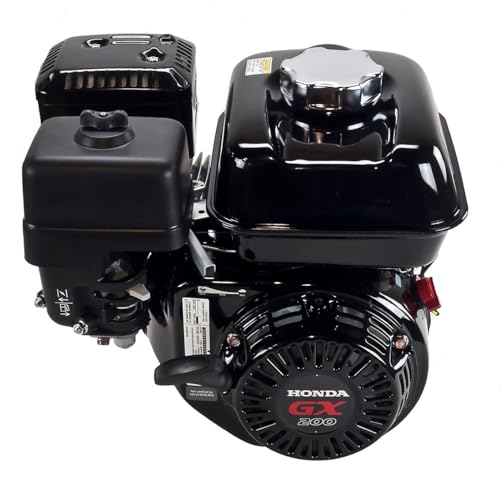
Honda GX200 196cc OHV Engine
What We Like
- Proven Honda OHV engine reliability.
- Strong 9.1 lb-ft of low-end torque.
- Air-cooled design simplifies maintenance.
Trade-offs
- Large 18" L x 15.5" W footprint demands frame space.
- Produces 5.5 HP, less peak power than some 7HP rivals.
This Honda GX200 produces 9.1 lb-ft of torque at 2,500 rpm, giving it a strong and tractable pull off the line. That predictable power delivery is perfect for riders who value control over peak horsepower. With 5.5 HP and legendary Honda build quality, it is a premium choice for builders seeking an engine that will last for years with basic maintenance.
With a net power output of 5.5 horsepower, this Honda engine provides sufficient grunt for most mini bike and go-kart applications. It generates its peak torque of 9.1 lb-ft at a relatively low 2,500 rpm, which means good pulling power is available without needing to rev the engine excessively. This air-cooled, four-stroke design is a common choice for replacement and hobbyist projects where proven reliability is a priority.
Westinghouse 212cc Horizontal Shaft Engine
What We Like
- Standard 3/4-inch shaft fits most GX200-style applications.
- 0.9-gallon fuel tank supports extended runtime.
- EPA certified construction for compliant operation.
- Low oil shutdown protects the engine from damage.
Trade-offs
- Counterclockwise shaft rotation may not suit all legacy equipment setups.
- Requires specific 10W30 oil, which is an extra maintenance consideration.
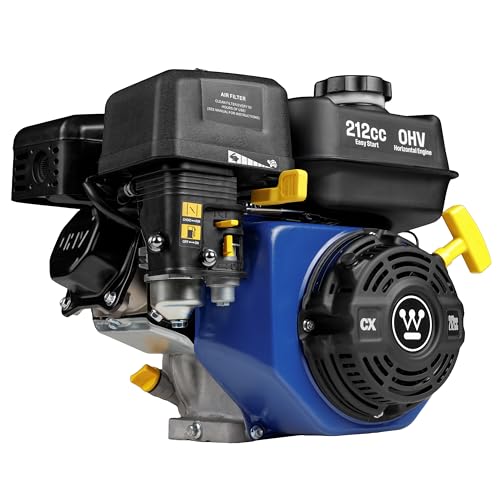
A 212cc displacement with a standard 3/4-inch horizontal shaft delivers the core power and compatibility needed for a huge range of small equipment. This engine suits someone who needs a reliable, brand-name drop-in replacement for a worn-out power unit on a go-kart, log splitter, or pressure washer without paying a premium. The forced air cooling and large fuel tank mean it can handle longer jobs without overheating or frequent stops for gas.
This engine’s dimensions and weight give it a substantial footprint, which provides a stable base for equipment like log splitters or pressure washers. Its 32.6-pound weight is less than some comparable 212cc models, making it a moderately heavy component to position. The physical size contributes to a durable feel and can help minimize movement during operation.
GoPowerSports 98cc Gasoline Engine

What We Like
- Compact 98cc displacement for small projects
- Recoil start provides reliable ignition
- Horizontal shaft fits standard mini bike mounts
- Single-cylinder 4-stroke design simplifies maintenance
Trade-offs
- 3HP output limits heavier rider or cargo capacity
- Recoil start requires manual effort every time
With a displacement of 98cc, this engine is well-suited for lightweight projects where compact dimensions are a priority. Its 3 horsepower output and 3600 RPM maximum provide adequate power for casual riding on level ground. The recoil start and simple four-stroke design make operation straightforward, which is ideal for a first-time installation or a youth-oriented build.
The trade-off for that compact simplicity is raw power. When you need to tackle hills or carry extra weight, the 98cc’s 3HP will feel strained compared to engines like the Swisher 68120 with its 6.5HP 212cc motor. Owner feedback suggests this GoPowerSports unit excels in applications where its modest size and weight are assets, not liabilities.
Zarko TT11 Mini Bike Engine
What We Like
- 140cc oil-cooled design prevents overheating at high RPM.
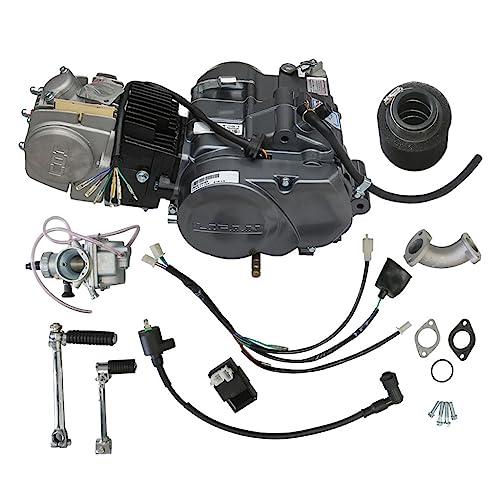
- Complete kit includes carburetor, CDI, and harness for easy install.
- Manual 4-speed transmission offers precise gear control for competition.
- Wide compatibility with CRF50/XR70 and Monkey bike frames.
Trade-offs
- Manual clutch and 4-speed gearbox require rider skill to operate.
- Kick start only, no electric start option for convenience.
- Specific 154mm bolt spacing limits fitment to compatible frames.
A 140cc oil-cooled four-stroke engine delivers more than four times the horsepower of a stock CRF50 motor. That translates to explosive acceleration for pit bike racing and aggressive trail riding. This kit suits a rider who wants a serious performance upgrade for competition or stunt training. The inclusion of a manual four-speed transmission and clutch provides the direct drivetrain control needed for precise shifts on a track. Everything needed for a swap is in the box, from the carburetor to the wiring harness, making it a straightforward project for a mechanically inclined enthusiast.
A manual four-speed transmission with a clutch requires more rider skill than a simple automatic centrifugal clutch, making this engine less suitable for beginners. This design prioritizes precise gear control for track or trail riding over simplicity. Unlike horizontal-shaft utility engines designed for stationary equipment, the Zarko TT11 is a complete motorcycle engine kit meant for shifting gears on a compatible pit bike.
Product photos
Honda GX160 5.5HP Engine
What We Like
- Honda brand reliability and parts support.
- 5.5 horsepower provides solid mini bike performance.
- Compact 33.3-pound weight aids in handling.
Trade-offs
- At 33.3 pounds, it is heavier than the 32.6-pound Westinghouse 212cc.
- Requires a compatible mini bike frame due to its specific dimensions.
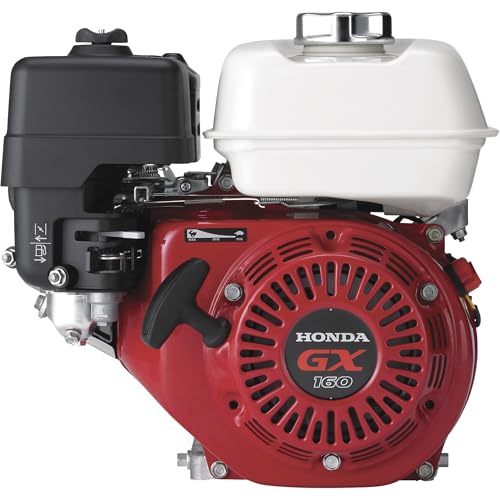
This 5.5 horsepower Honda engine delivers the proven reliability the brand is known for, making it a dependable heart for a mini bike project. It suits riders who prioritize long-term durability and easy parts availability over chasing the highest possible power output. The GX160 is a straightforward, no-surprises powerplant that gets the job done season after season.
This Honda engine weighs 33.3 pounds and measures 18.0 inches in length. These physical attributes mean it will occupy more space and add more mass to a project than some alternatives, such as the Swisher 68120 engine which is both shorter and lighter. Builders should account for its footprint during planning.
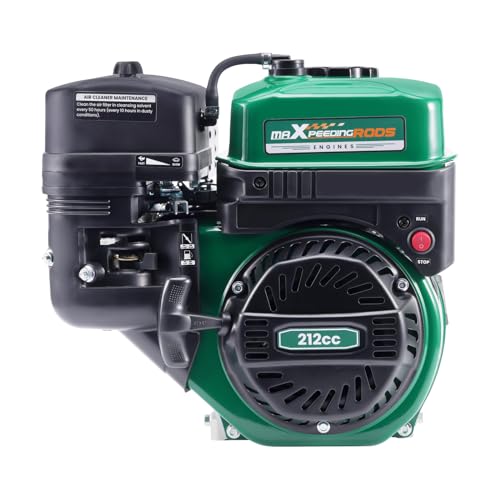
maXpeedingrods 212cc Gas Engine
What We Like
- Large 3.6-liter fuel tank for extended run time
- Low oil sensor for automatic engine shut-off
- OHV design for improved fuel efficiency
- Ball bearing crankshaft for lower vibration
Trade-offs
- At 36.6 pounds, it is heavier than the Westinghouse 212cc
- Dimensions of 17.3 x 16.5 x 16.5 inches require more frame space
With a 3.6-liter fuel tank, this engine can run for extended periods between refueling, which is useful for long work sessions or applications where stopping is inconvenient. Its 212cc displacement and 7 horsepower output are suitable for powering equipment like go-karts and mini bikes, as noted in its applications list. The overhead valve design is cited for improving fuel efficiency, potentially lowering operating costs.
That large fuel tank and the engine’s construction do add physical mass and size, however. For a more compact and lightweight build, the Westinghouse 212cc engine offers similar displacement in a significantly smaller package, though with a smaller fuel capacity. The maXpeedingrods unit trades some agility for the convenience of a long-running fuel supply.
Knwigoe 212cc 7.5HP Go Kart Engine

What We Like
- Large 0.95-gallon fuel tank for long runtime
- 3000W output handles heavy loads for power tools
- Low oil level warning and auto-shutdown for safety
- Forced air cooling system prolongs engine life
Trade-offs
- Its 14.2-inch length requires ample frame space.
A 3000W power rating and 7.5HP output make this 212cc engine a serious contender for demanding applications. It’s built for users who need to drive high-current power tools, generators, or heavily loaded go-karts without bogging down. The large fuel tank supports extended work sessions, while the forced air cooling system is designed to manage the heat from that sustained output. This engine suits a builder prioritizing raw, continuous power over compact size.
Delivering 3000 watts of power at 3600 rpm, this engine can handle demanding loads from pumps and power tools. Its 14.2-inch length requires ample frame space, which is something to consider for tight installations. The reliable manual start system works well, though the lack of an electric start option means more physical effort for each use. For applications where maximum wattage is the primary goal, this unit delivers strong performance.
Product photos
NEBEUUO 49cc 2-Stroke Racing Engine

What We Like
- Aluminum alloy housing for durability and longevity
- Air-cooled design prevents overheating during continuous use
- Suitable for pocket bikes, mini dirt bikes, ATVs, and scooters
- High-performance iron internal components
Trade-offs
- 2-stroke design requires oil-gas mixture fuel
- Small 49cc displacement limits torque for larger riders
- No specified dimensions for fitment planning
A top speed of 48mph makes this 49cc engine a serious option for youth-oriented mini bikes where speed is the primary goal. The air-cooled design is a smart choice for a racing-style engine, allowing it to run hard without the immediate worry of overheating during a spirited ride. It’s built for the enthusiast who wants to upgrade a pocket bike or mini dirt bike with a lightweight, high-revving powerplant that delivers a genuine thrill.
A 49cc displacement makes this engine a compact power source for small vehicles like pocket bikes and mini dirt bikes, fitting into tight spaces where larger engines wouldn’t. Its two-stroke design is a key characteristic, requiring a fuel-oil mixture rather than separate lubrication systems found in many four-stroke designs. While the air-cooled design prevents overheating during continuous use, the engine’s focus is on achieving speeds up to 48 mph in lightweight applications, not on delivering high torque for heavy loads.
Product photos
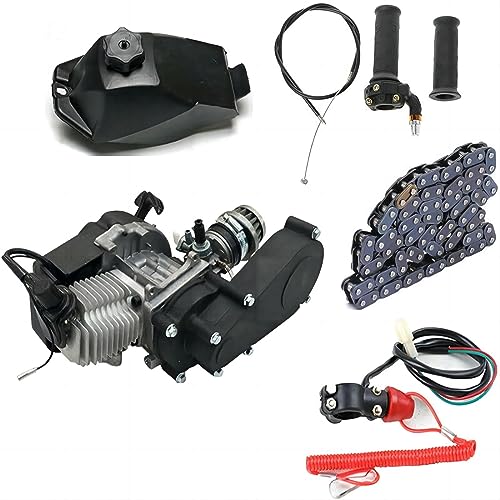
BounceyCart 49cc 2-Stroke Engine Kit
What We Like
- Compact 49cc displacement for small frames
- Pull-start system requires no battery
- Complete kit includes fuel tank and chain
- Designed for multiple mini vehicle platforms
Trade-offs
- Requires precise 25:1 fuel-oil premix
- Two-stroke design lacks four-stroke torque
- Performance highly dependent on rider weight
A 49cc two-stroke engine is the defining choice for riders wanting to keep a mini bike build as simple and lightweight as possible. This kit suits the builder who prioritizes a straightforward installation with all core components included right out of the box. The pull-start mechanism eliminates any electrical system complexity, and the single-cylinder design is fundamentally easy to understand and work on. For getting a small-frame pocket bike or mini dirt bike running without a major investment, this approach gets the job done.
This engine requires a specific 25:1 fuel-oil mix, so you’ll need to blend oil into your gasoline rather than using pump fuel directly. Its performance is rated for up to 40 miles per hour, a speed the product description notes is dependent on rider weight and terrain. That makes it a focused solution for lighter riders and flat-ground applications where its simpler two-stroke design can be an advantage.
Product photos
How We Evaluated Mini Bike Engines
This comparison is based on manufacturer specifications, product documentation, and common themes in enthusiast discussions. Key factors considered include power output, physical dimensions for frame compatibility, and construction features such as cylinder material and bearing type that influence durability. The goal is to provide a clear overview of available options to inform your decision.
What To Look For In Mini Bike Engines
The right engine balances power with your bike’s physical limits and your intended use. Key factors include displacement for speed, shaft size for compatibility, and weight for handling.
Select an engine based on your frame’s space, the required shaft rotation and size, and whether you need simple recoil start or a full transmission for performance riding.
Displacement and Power
Engine displacement, measured in cubic centimeters (cc), directly influences power and speed. A 98cc engine like the GoPowerSports model is suitable for lightweight bikes and youth riders, producing around 3 horsepower for casual cruising. For general adult riding, a 212cc engine provides a solid balance of torque and speed, while specialized high-performance builds may look to larger displacements or manual transmission kits like the Zarko TT11. Understanding your own guide to motorcycle engine types can help clarify these choices.
Physical Dimensions and Compatibility
An engine must physically fit your mini bike frame. Check the length, width, and mounting bolt pattern. The Honda GX200, for example, has an 18″ x 15.5″ footprint which demands significant space. The shaft size, most commonly a 3/4-inch horizontal shaft, must match your drive components, and note the rotation direction; the Westinghouse 212cc uses a counterclockwise rotation that may not suit all legacy setups. Always consult your frame’s specifications before purchasing any motor.
Construction and Features
Durable construction materials like a cast iron cylinder, as on the Swisher 68120, contribute to longevity. Features such as a low oil shutdown sensor, found on the Westinghouse and maXpeedingrods engines, protect against damage from oil starvation. Consider your start preference: simple recoil pull-starts are common, but electric start options add convenience at a higher cost. For those considering alternative powerplants, our review of electric mini bikes explores battery-powered options.
- Confirm the engine’s mounting bolt pattern matches your frame’s mounting plate.
- Verify the output shaft size (e.g., 3/4″) and rotation direction for your clutch or torque converter.
- Check if the engine requires a special oil type, like the Westinghouse’s specified 10W30.
- Ensure the weight (e.g., 37.9 lbs for the Swisher) is acceptable for your bike’s handling and frame strength.
- Decide between a simple four-stroke for pump gas or a two-stroke like the BounceyCart 49cc that requires fuel-oil premix.
Your frame’s limitations are the first checkpoint; an engine that doesn’t fit cannot power a successful build.
Mini Bike Engines Compared
For a quick side-by-side view of these engines, the table below compares their key specifications.
| Product | Displacement | Shaft Type/Diameter | Start System |
|---|---|---|---|
| Swisher 68120 Mini Bike Engine | 212cc | Horizontal | Recoil start |
| Honda GX200 196cc OHV Engine | 196 cm³ | 2.43" x 3/4" crankshaft | N/A |
| Westinghouse 212cc Horizontal Shaft Engine | 212cc | 3/4 inch diameter | N/A |
| GoPowerSports 98cc Gasoline Engine | 98cc | 5/8 inch | Recoil |
| Zarko TT11 Mini Bike Engine | 140cc | N/A | Kick start |
| Honda GX160 5.5HP Engine | N/A | N/A | N/A |
| maXpeedingrods 212cc Gas Engine | 212cc | 3/4 inch | N/A |
| Knwigoe 212cc 7.5HP Go Kart Engine | 212cc | 0.787in | Manual recoil |
| NEBEUUO 49cc 2-Stroke Racing Engine | 49cc | N/A | Pull rope start |
| BounceyCart 49cc 2-Stroke Engine Kit | 49cc | N/A | Pull start |
Frequently Asked Questions
What is the best engine for a mini bike?
The best engine depends on your bike frame and riding goals. For a reliable, general-purpose 212cc engine, the Swisher 68120 is an excellent overall choice. For brand-name reliability, consider the Honda GX200. Always verify the engine’s physical dimensions and shaft specifications match your mini bike’s design.
How fast does a 212cc engine go on a mini bike?
The top speed of a 212cc engine on a mini bike depends on the bike’s gearing, tire size, and rider weight. In general, a stock 212cc engine with common gearing can propel a mini bike to speeds between 25 and 35 mph. Performance modifications can increase this speed significantly.
Which mini bike is the most reliable?
Reliability stems from a combination of a sturdy frame and a well-built engine. Engines with proven track records for durability, like Honda’s GX series, contribute greatly to a bike’s overall dependability. For a look at reliable complete bikes, our resource on the best mini bikes is a great starting point.
How fast does a 420cc engine go on a mini bike?
A 420cc engine provides substantial power, potentially enabling speeds of 40 mph or more on a mini bike, depending heavily on the final drive ratio and rider weight. This larger displacement is often used for heavier-duty applications and demands a strong, compatible frame.
What’s the difference between a 2-stroke and a 4-stroke engine for a mini bike?
Two-stroke engines, like the NEBEUUO 49cc, are typically lighter and can produce high power for their size but require a fuel-oil mixture. Four-stroke engines, like the Swisher 68120, run on straight gasoline, are generally more fuel-efficient, and offer broader torque curves. Understanding the differences between 2-stroke and 4-stroke engines is key to choosing the right powerplant for your needs and maintenance preferences.
The Bottom Line
The Swisher 68120 is the best overall mini bike engine for riders seeking a durable, straightforward 212cc powerplant with user-friendly features like a fuel shutoff valve. For those on a budget seeking a brand-name engine, the Westinghouse 212cc offers excellent value, while performance-focused builders should look at the complete kit from Zarko TT11.
Your frame’s physical constraints are the most critical factor, always measure your available space and confirm shaft compatibility before choosing any engine.
