
10 Best Dirt Bike Tires For Trail Riding in 2026
This post contains affiliate links. As an Amazon Associate, we earn from qualifying purchases.
For trail riders seeking aggressive grip on hard-packed terrain, the Tusk EMEX T-45 Rear Dirt Bike Tire is our best overall pick for its cornering traction and mud-shedding capability. We also highlight the IRC Gekkota VE33S for extreme enduro grip and the Pirelli MT 21 Rallycross as the best DOT dual-sport tire.
Choosing the wrong tire can leave you slipping on roots or bogged down in mud, wasting a day’s ride. This research-based guide compares ten key options, helping you match a tire’s compound, tread, and construction to your local trails.
Top 10 Dirt Bike Tires For Trail Riding in the Market
Certain content that appears on this site comes from Amazon. This content is provided "as is" and is subject to change or removal at any time.
The Best Dirt Bike Tires For Trail Riding, Reviewed
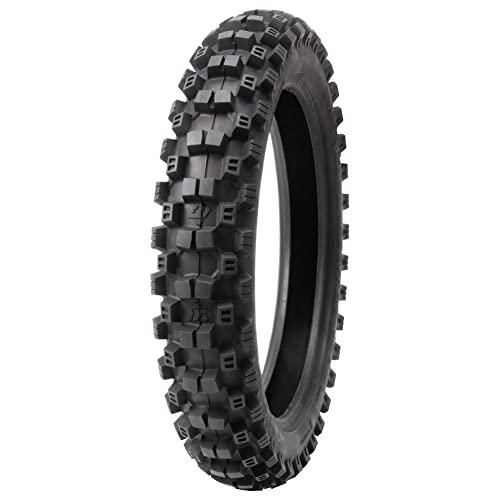
Tusk EMEX T-45 Rear Dirt Bike Tire
What We Like
- Aggressive traction on hard-packed trails.
- Reinforced side knobs improve cornering grip.
- Deep lug spacing sheds mud effectively.
- Delivers premium performance at a competitive value.
Trade-offs
- The 110/100×18 size is specific, not universal.
- Designed for intermediate/hard terrain, not soft loam.
A 110/100×18 rear tire with a tread pattern designed for intermediate to hard terrain means it bites into hard-packed trails and rocky paths where other tires might skate. It suits riders who need predictable, aggressive traction for trail and enduro riding. The reinforced, bridged side knobs reduce flex, which translates directly to more confidence when you’re leaning the bike over in a turn. This combination of a focused terrain design and a construction that resists chunking is why it stands out for serious off-road use.
Designed for intermediate to hard terrain, the Tusk EMEX T-45’s tread pattern delivers aggressive traction on hard-packed trails and rugged terrain, making it a focused tool for those conditions. It offers race-inspired features like reinforced, self-cleaning knobs at a competitive price, which means serious riders get performance-oriented construction without a premium cost. This tire is a solid choice for riders who frequent a mix of hardpack and intermediate conditions and want a component that can handle aggressive riding.
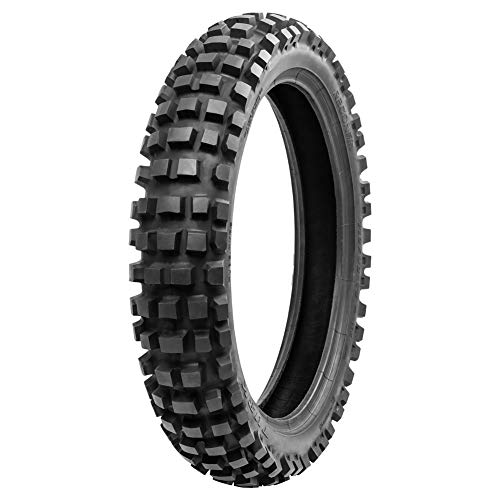
Tusk Recon Hybrid Off-Road Tire
What We Like
- Soft compound grips rocks and roots effectively.
- Hybrid carcass absorbs impacts on technical terrain.
- Tread design performs well in mud and sand.
- Rubber formulated for maximum wear resistance.
Trade-offs
- At 18.1 lb, it is heavier than the IRC Gekkota VE33S.
- Softer carcass may not suit high-speed motocross use.
- Hybrid design is a compromise, not a pure trials tire.
A soft, sticky rubber compound is the key here, giving the tire a tenacious grip on loose rocks and slippery roots that define tough trails. This design suits riders who prioritize maximum traction and impact absorption over outright speed, making it a solid choice for navigating slow, challenging sections where control is everything. The motocross-inspired tread pattern also helps it handle mud and sand better than a pure trials tire would.
The trade-off is in the carcass rigidity, which is softer than a standard knobby. This gives great compliance but means it won’t feel as planted or responsive during aggressive cornering on hardpack compared to a dedicated motocross tire like the Tusk EMEX T-45. It’s a specialized tool for a specific job, excelling where traction is scarce but giving up some performance elsewhere.
IRC Gekkota VE33S Rear Tire

What We Like
- Gummy compound enhances cornering and durability
- Tall blocks maximize traction in varied conditions
- Rigid sidewalls improve bump absorption
- Developed for extreme enduro-style conditions
Trade-offs
- At 13.6 lb, it's heavier than the 12.4 lb Pirelli Scorpion XC
- Tube type design requires more setup than a tubeless system
The IRC Gekkota VE33S uses a specialized gummy compound and tall, flexible tread blocks to create a massive contact patch, which translates directly to tenacious grip on roots, rocks, and slick surfaces. This design, honed in extreme enduro conditions, makes it a prime choice for riders who prioritize maximum traction and control in technical, low-traction terrain over everything else. The rigid sidewall further supports this by helping to absorb impacts and maintain stability when the trail gets rough.
Weighing 13.6 pounds, the IRC Gekkota VE33S is heavier than some competition tires like the 12.4-pound Pirelli Scorpion XC, a difference that translates to more rotating mass on the wheel. As a tube-type tire, it requires an inner tube for mounting, which involves more steps than a tubeless system. Its design, developed for extreme enduro conditions, uses a gummy compound and tall blocks to enhance cornering and traction.
IRC Volcanduro VE-35 Front Tire

What We Like
- Provides grip performance for all surfaces
- Delivers dynamic driving and excellent braking power
- Offers extra durability and stability on all terrain
Trade-offs
- Specific enduro racing design may be overbuilt for casual trail riding
- Wider 4.0-inch profile requires a compatible front rim
The VE-35’s optimum rubber compound is engineered for cross-country enduro racing, which translates to a front tire that hooks up predictably across loose dirt, embedded rocks, and slick mud. This makes it a top choice for riders who demand consistent traction and braking control when trail conditions change without warning. Its construction prioritizes durability and stability, so you can trust it through rough sections without worrying about sidewall pinch or unpredictable flex.
Developed specifically for cross-country enduro racing, the IRC Volcanduro VE-35 uses an optimum rubber compound to provide grip on all surfaces. This all-terrain capability, covering dry, rocky, and muddy conditions, gives riders a single tire that can handle unpredictable trails without swapping. The trade-off for this versatility is a weight of 8.6 pounds, which can influence steering feel compared to lighter, more specialized options.
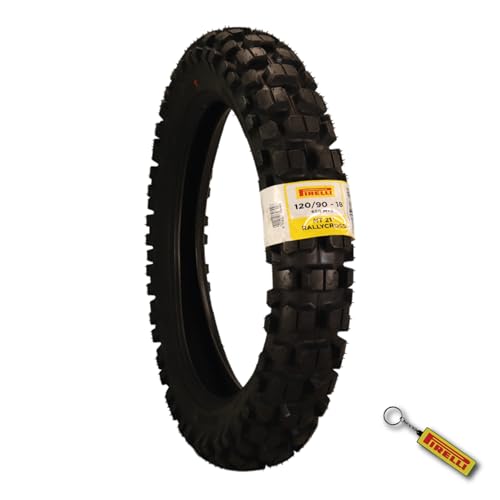
Pirelli MT 21 Rallycross Rear Tire
What We Like
- Tear-resistant compound for longevity off-road
- Puncture-resistant structure handles rough terrain
- Flexible carcass provides high-speed stability
Trade-offs
- No specific weight listed for weight-conscious riders
- 120/90-18 sizing may limit fitment on some bikes
- Tread design optimized for dirt, not pure motocross
The Pirelli MT 21 Rallycross is engineered for riders who tackle both paved roads and off-road terrain, offering a balance of surfaces. Its tread design is optimized for dirt roads, gravel, cross-country racing, and desert riding, providing reliable on- and off-road performance. A tear-resistant compound and puncture-resistant structure are built to withstand harsh conditions like rocks and roots, which helps maintain grip and longevity when you’re far from pavement. This focus on mixed-terrain durability makes it a practical choice for adventure and trail riders covering varied ground.
Its construction represents a compromise, aiming for reliable performance across surfaces rather than maximum grip in specific conditions like deep mud. For riders whose primary focus is technical, single-track trails, a tire like the Tusk EMEX T-45 is categorized for intermediate/hard terrain motocross and enduro. The Pirelli MT 21 serves as a versatile option that bridges on-road handling with legitimate off-road capability, suited for those who ride to the trail.
Product photos
Michelin Enduro Medium Rear Tire

What We Like
- Excellent traction on wet and slippery surfaces
- Improved durability for aggressive off-road riding
- Stable performance on unpredictable terrain
- Street legal for connecting trail sections
Trade-offs
- At 15.2 pounds, it is heavier than some dedicated trail tires
- The 120/90-18 size may not fit all enduro or trail bike models
The Michelin Enduro Medium Rear Tire uses a specialized rubber compound and tread pattern to deliver exceptional traction on wet and slippery surfaces. This makes it a reliable choice for riders who frequently encounter muddy trails, creek crossings, or dewy morning rides where control is paramount. The design provides a stable platform that helps maintain confidence as the terrain becomes more demanding, and its 15% durability improvement means it can withstand aggressive use. For the rider connecting trails via pavement, its R-speed rating and homologation for road use add valuable versatility.
With a weight of 15.2 pounds, the Michelin Enduro Medium Rear Tire adds more unsprung mass than some other options, which can influence how a motorcycle handles. Its specialized rubber compound and tread pattern are designed to provide exceptional traction on wet and slippery surfaces, offering maximum control during technical off-road excursions. The tire is optimized for outstanding performance across a broad spectrum of terrain, adapting to changing trail conditions from slick roots to hardpack.
Kenda K760 Trakmaster Front Tire

What We Like
- DOT approval for limited road use
- Aggressive knobs for varying terrain
- Durable compound for extended tread life
- Classic design at an affordable price
Trade-offs
- Weighs 9.0 pounds
- Dimensions: 28.5 x 28.0 x 3.0 inches
DOT approval for a primarily off-road application means this tire can legally connect trails on pavement. Its tall, aggressive knobs are designed for varying terrain, and a durable compound aims for extended tread life. This combination provides a classic design at an affordable price for riders needing a dependable front tire.
Compared to a dedicated enduro front tire like the IRC Volcanduro VE-35, the Trakmaster offers a more budget-conscious path to capable off-road performance, accepting some compromise in specialized terrain performance for greater value.
Product photos
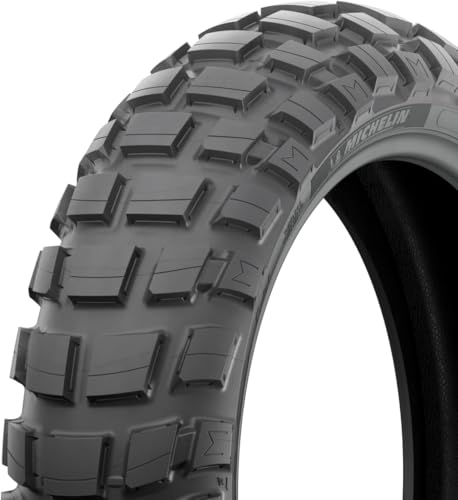
Michelin Anakee Wild Rear Tire
What We Like
- Innovative tread pattern for extended longevity.
- Casing design ensures on-road stability and comfort.
- All-new compounds for long-lasting performance.
- Proven off-road grip for adventure riding.
Trade-offs
- At 14.8 pounds, it is heavier than the 13.6-pound IRC Gekkota.
- Weighs 14.8 pounds, heavier than the 13.6-pound IRC Gekkota.
A 140/80-17 size and a front/rear casing design provide impeccable on-road stability, a critical feature for riders who connect trails with pavement. This tire suits the adventure rider who values a confident, comfortable highway feel between off-road sections. The tread pattern, inspired by Michelin’s Dakar-winning design, and new compounds promise extended longevity for those longer journeys where changing a tire isn’t an option.
Michelin designed this tire with casing construction for on-road stability and comfort, so it feels planted on pavement. That focus means it isn’t a purely aggressive off-road knobby. At 14.8 pounds, it carries more weight than some dedicated dirt tires.
Product photos
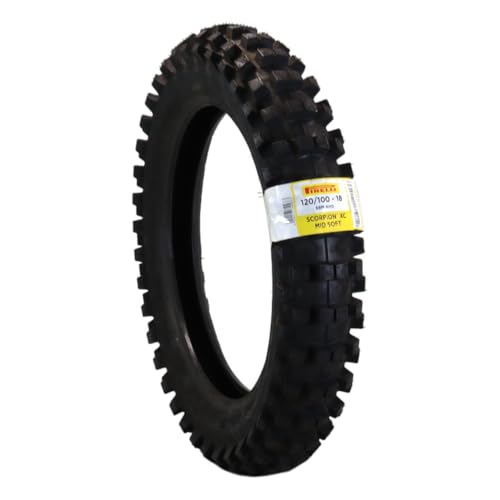
Pirelli Scorpion XC Mid-Soft Tire
What We Like
- V-shaped tread provides stability during acceleration and braking.
- Lightweight polyester carcass expands footprint for better traction.
- Racing compound offers long-lasting grip derived from competition.
- Optimized design for mud, sand, and mixed conditions.
Trade-offs
- NHS certification prohibits any highway or street use.
- Designed specifically for soft terrain, limiting versatility on hardpack.
The Pirelli Scorpion XC Mid-Soft Tire is built around a specialized racing compound and V-shaped tread pattern, delivering exceptional grip and braking power in loose soils. This makes it a standout choice for riders who primarily tackle muddy trails, sandy washes, or soft, loamy terrain where predictable traction is critical. Its lightweight polyester carcass enhances the contact patch, giving you more control when the ground gives way. If your local trails are consistently soft, this tire’s performance-oriented design will feel right at home.
Engineered specifically for motocross, enduro, and off-road racing conditions, the Pirelli Scorpion XC Mid-Soft carries an NHS certification that means it is not for highway service. This focused design makes it a strict off-road competition tire, so riders cannot legally or safely use it on pavement to connect trail sections. While the Pirelli MT 21 Rallycross is DOT-rated for dual-sport use, the Scorpion XC’s single-purpose nature limits it to closed courses or transport by truck. At 12.4 pounds, its weight is comparable to other rear tires in its size class, such as the 13.6-pound IRC Gekkota.
Product photos
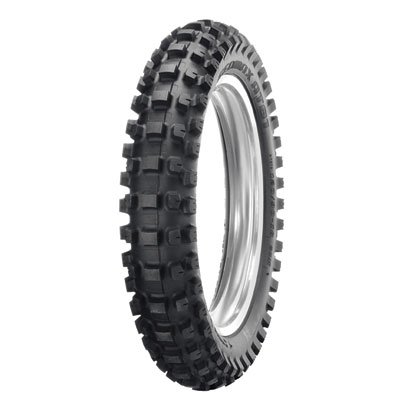
Dunlop Tires DNLP9799 Dirt Bike Tire
What We Like
- Bi-directional rear tread works on soft and hard terrain.
- Front PCBT design reduces knob deformation for better handling.
- Rear pattern provides increased drive grip while cornering.
- Updated front tread pattern increases grip and predictability.
Trade-offs
- Specific fitment for KTM 350 EXC 1989-1991 limits bike compatibility.
Flipping the rear tire changes its performance for different terrain, which is the most decisive feature for riders facing variable conditions. Mounted in the soft direction, the tread provides a semi-scoop effect in sand. Reversed for hard terrain, it creates a broad surface area to disperse driving forces and increase durability. Combined with Progressive Cornering Block Technology in both tires to reduce knob deformation, this design delivers predictable grip and consistent drive when cornering or under acceleration.
Its compatibility is listed specifically for the KTM 350 EXC from 1989 to 1991. Riders with other bikes will need to find a different tire.
How We Evaluated Dirt Bike Tires
Our evaluation began with manufacturer specifications and expert round-up articles to establish performance baselines for different terrains and riding disciplines. We prioritized three criteria: traction pattern for the intended terrain, tire compound and construction for durability, and sizing compatibility with common trail bikes. We also consulted patterns in owner feedback for real-world notes on wear and grip consistency. A research-led evaluation cannot replicate the feel of a tire on your specific bike, so we emphasize checking your bike’s manual for rim and clearance limits.
What To Look For In Dirt Bike Tires
Trail riding demands a tire that can handle unpredictable terrain changes, from rocky climbs to muddy ruts. The right choice balances grip, durability, and often street-legal compliance for connecting trail sections.
Focus on the tread pattern and compound first. Intermediate-to-hard terrain tires have closely spaced knobs for hardpack, while intermediate-to-soft tires use taller, more open lugs for loose soil and mud. A gummy compound enhances grip on rocks but may wear faster on pavement.
Tread Pattern & Intended Terrain
Tire labels like “intermediate-to-hard” signal a design skewed toward packed dirt, gravel, and roots. These tires feature tighter knob spacing for stability. For soft, muddy, or sandy conditions, look for an “intermediate-to-soft” or dedicated soft-terrain pattern with taller, more widely spaced lugs that dig in and shed debris. A hybrid or reversible tread offers a compromise for riders who frequently encounter both hardpack and soft sections.
Compound & Casing Construction
The rubber compound determines grip and wear. Softer, gummier compounds provide maximum traction on technical, rocky trails but may sacrifice longevity. Harder compounds last longer, especially with occasional road use, but can feel less planted in loose dirt. The casing or carcass construction affects impact absorption; a more flexible hybrid carcass can smooth out rocky trails, while a rigid sidewall improves stability at higher speeds and on hardpack.
Sizing, Fitment & DOT Approval
Always verify the tire’s size designation (e.g., 120/90-18) matches your bike’s rim. A mismatched tire won’t seat properly and can affect handling. For riders who need to connect trails via public roads, a DOT-approved tire is legally required. These tires use a harder, more durable compound and often have a less aggressive tread pattern to meet road-wear standards.
- Consult your bike’s manual for the manufacturer’s recommended tire size range.
- Check that the tire’s width and profile won’t interfere with your swingarm or fork.
- Confirm the bead type (tube-type or tubeless) matches your wheel setup.
- For DOT tires, look for the marking on the sidewall.
The most versatile choice for most trail riders is an intermediate-terrain tire, as it provides a reliable baseline for mixed conditions.
Dirt Bike Tires For Trail Riding Compared
The following table summarizes the key specifications and best-use cases for our top picks to help you compare them side-by-side.
| Product | Size | Weight | Tread Design |
|---|---|---|---|
| Tusk EMEX T-45 Rear Dirt Bike Tire | 110/100×18 | N/A | Self-cleaning deep lugs |
| Tusk Recon Hybrid Off-Road Tire | 110/90-19 | 18.1 pounds | Motocross inspired |
| IRC Gekkota VE33S Rear Tire | 110/100-18 | 13.6 pounds | Tall, flexible blocks |
| IRC Volcanduro VE-35 Front Tire | 80/100-21 | 8.6 Pounds | N/A |
| Pirelli MT 21 Rallycross Rear Tire | 120/90-18 | N/A | Optimized Tread Design |
| Michelin Enduro Medium Rear Tire | 120/90-18 | 15.2 pounds | N/A |
| Kenda K760 Trakmaster Front Tire | 80/100-21 | 9.0 pounds | Tall aggressive knobs |
| Michelin Anakee Wild Rear Tire | 140/80-17 | 14.8 pounds | Inspired by Dakar-winning Desert Race |
| Pirelli Scorpion XC Mid-Soft Tire | 120/100-18 | 12.4 Pounds | V-shaped tread blocks |
| Dunlop Tires DNLP9799 Dirt Bike Tire | 110/100×18 | N/A | Bi-directional |
Frequently Asked Questions
What is the best dirt bike tire for trail riding?
The best tire depends on your most common terrain. For hard-packed and intermediate trails, the Tusk EMEX T-45 Rear offers a great balance of aggressive traction and value. For technical, rocky trails, the Tusk Recon Hybrid‘s soft compound excels. Always match the tire’s designed terrain to your local conditions.
What psi should dirt bike tires be at for trail riding?
Optimal tire pressure varies with terrain and rider weight. General guidance for trail riding starts at a higher pressure for hard-packed terrain and can be lowered for sandy or muddy conditions to increase the tire’s footprint and traction. Always consult your tire’s sidewall for maximum pressure ratings and experiment safely.
What is the best bike tire for both road and trail use?
A DOT-approved dual-sport tire is mandatory for legal road use. The Pirelli MT 21 Rallycross Rear is a top choice, blending a tear-resistant compound for off-road durability with a flexible carcass for highway stability. These tires are a compromise, offering longer wear on pavement but less extreme grip than a pure knobby.
What size tires are best for trail riding?
The best size is the one specified for your motorcycle. Common rear sizes for trail and enduro bikes include 110/100-18 and 120/90-18. Using the manufacturer’s recommended size ensures proper fitment, handling, and chain or swingarm clearance. A wider tire can offer more traction but may not fit your bike.
How do I improve grip on wet, slippery trails?
Choose a tire with a softer compound and an open, aggressive tread pattern designed to shed mud and bite into slippery surfaces. The Michelin Enduro Medium Rear Tire is formulated specifically for excellent wet condition traction. Lowering tire pressure within a safe range can also increase the contact patch for better grip.
The Bottom Line
For most riders on hard-packed and intermediate trails, the Tusk EMEX T-45 Rear Dirt Bike Tire delivers confident cornering and reliable performance. If your budget is tight, consider the Kenda K760 Trakmaster Front for an affordable, aggressive option, while extreme enduro riders should look directly at the gummy compound of the IRC Gekkota VE33S. Ultimately, matching the tire’s designed terrain to your local dirt is the single most important factor for a rewarding day on the trails.
