
10 Best Coolant For Bikes in 2026
This post contains affiliate links. As an Amazon Associate, we earn from qualifying purchases.
Our best overall motorcycle coolant is the Red Line Supercool Powersports Coolant for its convenient pre-mixed formula and enhanced cooling with WaterWetter. For maximum temperature reduction, choose the Engine Ice High Performance Coolant, while KTM riders seeking top corrosion protection should look to the KTM Motorex Coolant M3.0.
Selecting the right coolant protects your engine from overheating, corrosion, and freeze damage. A mismatched formula can lead to poor heat transfer or damage aluminum and magnesium components common in modern bikes. We researched specifications, manufacturer data, and owner feedback patterns to evaluate ten top options.
This guide helps you match a coolant to your bike’s needs and your local climate.
Top 10 Motorcycle Coolants in the Market
Certain content that appears on this site comes from Amazon. This content is provided "as is" and is subject to change or removal at any time.
The Best Motorcycle Coolants, Reviewed
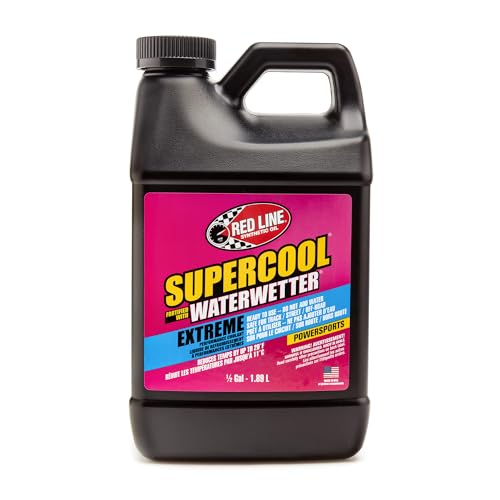
Red Line Supercool Powersports Coolant
What We Like
- Pre-mixed formula for convenient pour-and-go use
- Blended with WaterWetter to enhance cooling performance
- Protects against rust, corrosion, and electrolysis
- Compatible with all common antifreeze and cooling system materials
Trade-offs
- At 1/2 gallon, capacity is limited for large systems
- Pre-mixed nature provides no concentration adjustment for extreme climates
The pre-mixed formula with WaterWetter additive means you can fill your bike’s cooling system directly from the bottle, saving time and eliminating mixing errors. This makes it a superb choice for riders who want a hassle-free, high-performance coolant that’s ready for immediate use. It’s formulated to work with every common cooling system material, from aluminum to brass, so you don’t have to worry about compatibility issues. The blend actively reduces rust and lubricates the water pump, which promotes long-term system health and reliable operation on every ride.
The 1/2 gallon size is perfect for topping off or filling a single motorcycle. Riders with multiple vehicles or larger ATVs might find themselves needing more than one bottle, however. Compared to a product like the Engine Ice High Performance Coolant, which comes in the same sized container but weighs over four times as much, the Red Line coolant is a lighter, more concentrated performance fluid rather than a high-volume filler. It’s engineered for peak thermal efficiency and protection, not for maximizing the amount of coolant per purchase.
Engine Ice High Performance Coolant

What We Like
- Phosphate-free formula reduces corrosion risk
- Significantly lowers operating engine temperatures
- Premixed for immediate out-of-bottle use
- Safe for all terrains and vehicle types
Trade-offs
- Freeze protection only down to -7°F
- Half-gallon bottle size may require multiple for large systems
An average operating temperature drop of 10 to 20 degrees Fahrenheit is the core promise of Engine Ice, directly targeting the heat buildup that saps power from high-performance engines. This propylene glycol-based coolant flows through your bike’s cooling system to carry off excess heat. That’s a critical function for tightly packaged motors like inline or V-twins that don’t get optimal airflow. It’s pre-mixed with deionized water, so you can pour it straight from the convenient half-gallon bottle during your change, saving time and eliminating mixing errors. Riders pushing their machines hard, whether on track days or demanding off-road trails, will find this formulation engineered to maintain optimum performance by preventing power loss through excess heat.
The trade-off comes with its freeze protection, which is rated to -7°F. For riders in the most extreme winter climates, that limit might be a consideration compared to some other options.
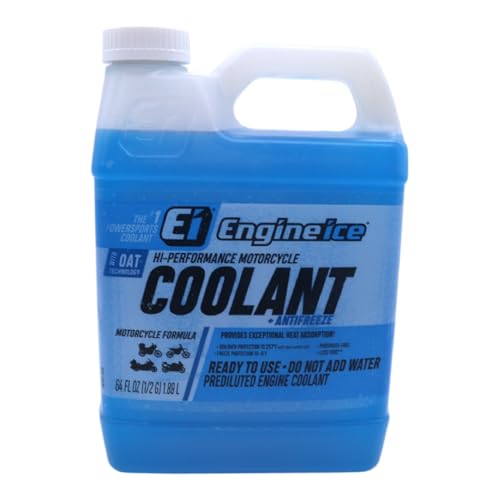
Engine Ice Off-Road Motorcycle Coolant
What We Like
- Pre-mixed formula saves time during changes
- Designed for high-performance powersports engines
- Propylene glycol base avoids silicate additives
- Convenient half-gallon bottle for easy handling
Trade-offs
- Requires a full system flush every two years or 24,000 miles
- The coolant will eventually degrade into sludge if not replaced
Engine Ice Off-Road Motorcycle Coolant comes pre-mixed in a half-gallon bottle, so you can skip the measuring and pour it directly into the radiator. Its propylene glycol formula serves the basic purpose of any motorcycle coolant, circulating to carry heat away from the engine, which is particularly important for layouts like inline or V-Twin engines where airflow can be restricted. The product line includes variants labeled for SXS/ATVs and snowmobiles, and general advice from experts suggests checking manufacturer recommendations and avoiding silicates where possible.
Like any coolant, this fluid breaks down over time and must be flushed every two years or 24,000 miles to prevent sludge from forming and compromising cooling performance. This is a standard interval, but it’s a necessary task to keep your engine protected. If you’re looking for a waterless option that eliminates boil-over concerns entirely for extreme conditions, the Evans Powersports Waterless Coolant takes a different approach, though it comes with its own application procedure.
KTM Motorex Coolant M3.0

What We Like
- Ready-to-use formula requires no mixing
- Excellent thermal conductivity for heat management
- Extremely effective corrosion protection for entire system
- Extended usage duration reduces change frequency
Trade-offs
- Single 1.0L bottle may not fill large systems
- Ethylene glycol base requires proper disposal handling
- Specific KTM/Motorex branding may limit appeal for other brands
Extremely effective corrosion protection for the entire cooling system is the headline feature of this Motorex coolant, which means long-term component integrity and less worry about internal damage from chemical breakdown. Its ethylene glycol-based, ready-to-use formula also fights limescale deposits and overheating while providing excellent thermal conductivity, a combination well-suited to the demands of modern engines. The extended usage duration translates to fewer coolant changes for riders who prioritize minimal maintenance.
As a genuine KTM Factory PowerParts accessory engineered with Motorex, this coolant carries a specific brand pedigree that signals factory-level engineering for compatible bikes. The product comes in a single 1.0L bottle, a format shared with offerings like the Kawasaki Aluma Cool, while some competitors like Engine Ice or Red Line Supercool are packaged in larger half-gallon containers.
Product photos
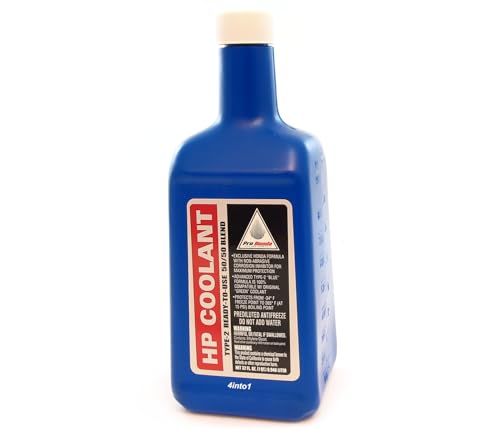
4into1 HPCoolant Coolant
What We Like
- Exclusive formula with non-abrasive corrosion inhibitor.
- Directly replaces original Honda 'Green' coolant.
- Pre-mixed 50/50 blend for immediate use.
- Includes a bittering agent for safety.
Trade-offs
- A 32-ounce bottle may require multiple units for large systems.
- Specific Type-2 formula is not designed for all coolant systems.
This coolant is 100% compatible with and replaces Honda’s original ‘Green’ formula, so owners can maintain factory specifications directly. Its ready-to-use 50/50 blend comes pre-mixed, eliminating the step of combining concentrate with water. The formula protects from a -34°F freeze point up to a 265°F boiling point, which covers typical operating ranges for stock motorcycles.
The product is a Type-2 ‘Blue’ formula designed as a direct replacement, not a universal fluid for all brands. It contains a non-abrasive corrosion inhibitor and a safety bittering agent. With a volume of 32 fluid ounces, the single quart is sized for a complete refill or a top-off on many systems.
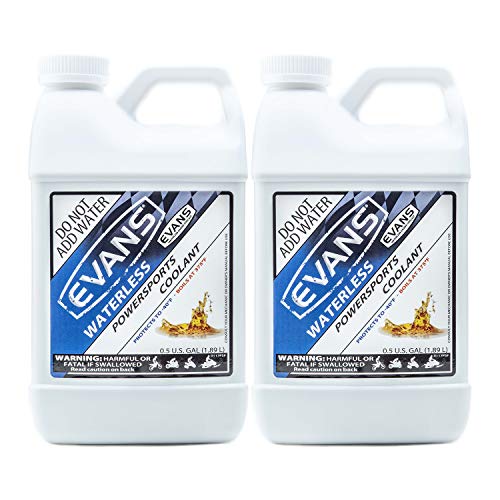
Evans Powersports Waterless Coolant
What We Like
- Eliminates boilover with a 375°F boiling point
- Waterless formula prevents corrosion and cavitation
- Reduces strain on cooling system components
- Trusted by professional race teams
Trade-offs
- Installation demands complete removal of old coolant and water
- No water content means it cannot be diluted or topped off with water
The 375°F boiling point is the core feature of this coolant. It simply won’t vaporize under extreme heat, which means you can push your engine hard without worrying about boilover or losing coolant pressure. This makes it a prime choice for riders who operate in punishing conditions or for machines that run hot. The waterless chemistry also tackles corrosion and electrolysis head-on, aiming to cut down on long-term maintenance costs and protect sensitive components like water pumps.
The main consideration is the preparation. You must be meticulous during installation, ensuring every drop of the old water-based coolant is purged from the system. It’s a more involved process than a simple drain-and-fill. For riders who don’t face extreme temperatures and want a simpler, ready-to-use option, something like Engine Ice High Performance Coolant might be a more straightforward choice.
Product photos
Yamaha Yamalube Pre-Diluted Antifreeze

What We Like
- Pre-diluted 60/40 mix for immediate use.
- Includes a safety-focused bittering agent.
- Genuine Yamaha OEM formulation for compatibility.
Trade-offs
- Two-quart total volume is less than some half-gallon competitors.
- The 60/40 pre-mix offers less mixing flexibility than a concentrate.
A pre-diluted 60/40 coolant and water mixture means you can pour it straight from the bottle with zero mixing or measuring. That makes it a straightforward, no-fuss choice for routine maintenance or a top-up. Its inclusion of a bittering agent adds a layer of safety, deterring accidental ingestion during handling. This combination of ready-to-use convenience and OEM pedigree suits riders looking for factory-specified fluid for their Yamaha.
A key point to note is the total volume and specialization. You get two quarts, which is sufficient for many bikes but less than the half-gallon containers offered by products like Engine Ice High Performance Coolant. This Yamalube fluid is engineered as a dependable OEM coolant, not an extreme-duty racing formula.
Product photos
Ski-Doo 9779730 Coolant

What We Like
- Pre-mixed formula eliminates dilution errors
- Five-year formula for extended service intervals
- Specifically engineered for BRP cooling systems
- Contains additives to prevent corrosion and cavitation
Trade-offs
- One-quart volume is smaller than typical half-gallon competitors
- Brand-specific formulation limits use to BRP vehicles
A pre-mixed, five-year formula engineered specifically for BRP cooling systems is the core strength of this coolant. It contains the precise additives required to prevent corrosion and inhibit cavitation in Can-Am and Ski-Doo machines, which means you get factory-approved protection and superior heat transfer without needing to mix it yourself. This makes it the straightforward, no-guesswork choice for riders who own these vehicles and prioritize maintaining exact OEM specifications for long-term reliability.
Designed exclusively for BRP cooling systems, this coolant’s formulation prevents corrosion and inhibits cavitation, which is essential for maintaining the longevity of those specific engines. While other products like the Engine Ice High Performance Coolant are sold in larger half-gallon containers, this one-quart bottle is a smaller volume. That means for a full system flush on some vehicles, purchasing multiple bottles could be necessary.
Product photos
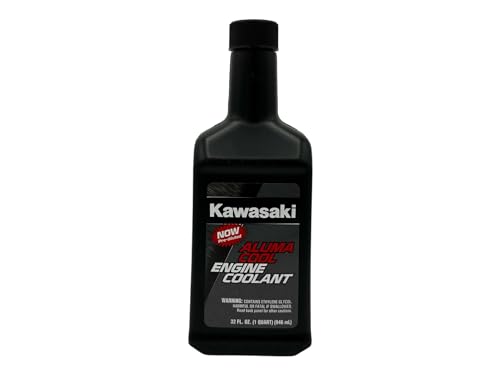
Kawasaki Aluma Cool Coolant
What We Like
- Genuine Kawasaki OEM part for perfect fit
- Pre-dilute formula for ease of use
- Genuine Kawasaki OEM part
Trade-offs
- The 1.0-liter capacity may require multiple bottles for a full system flush on some bikes
- Do not add water' instruction limits mixing flexibility compared to concentrates
- Smaller volume per bottle than the half-gallon Red Line Supercool
Pouring straight from the bottle without mixing water makes topping off a Kawasaki’s cooling system quick and simple. This pre-dilute, one-liter coolant is a genuine Kawasaki OEM part, so it ensures compatibility for riders who prefer factory-approved fluids. The convenience eliminates the measuring and blending required with concentrates, streamlining routine maintenance.
A one-liter bottle may require purchasing multiple units for a complete system flush on some vehicles, which is a consideration for larger jobs. Other products, like the Red Line Supercool or Engine Ice High Performance Coolant, are listed in half-gallon sizes. The Kawasaki coolant’s packaging is smaller than several alternatives in the provided list.
Product photos
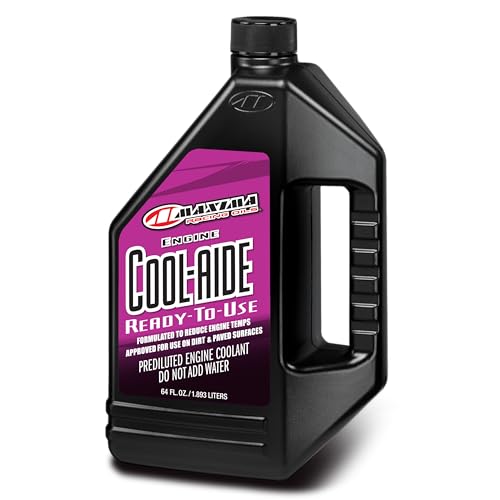
Maxima Cool-Aide Coolant
What We Like
- 100% biodegradable formula in unused form
- Free of glycol, nitrates, amines, and borax
- Meets racing specifications for all surfaces
- Protects against rust and corrosion
Trade-offs
- At 4.4 lb, it's heavier than the 1.0 lb Red Line Supercool
- Weighs 4.4 pounds, more than some alternatives
A 100% biodegradable formula in its unused form makes Maxima Cool-Aide a standout for riders who prioritize environmental responsibility without sacrificing performance. It suits anyone from weekend trail riders to competitive racers looking for a coolant that meets strict racing specs across dirt and pavement. The glycol, nitrate, amine, and borax-free composition delivers reliable rust and corrosion protection while controlling engine temperatures to help maintain maximum horsepower.
At 4.4 pounds, this coolant is heavier than some competitors, which adds to the load in a tool bag. For example, the Red Line Supercool coolant weighs just 1.0 pound. The Maxima Cool-Aide Coolant is a ready-to-use, 100% biodegradable fluid that meets racing specifications for dirt and paved surfaces.
How We Evaluated Motorcycle Coolants
Our evaluation is based on researching manufacturer specifications, expert round-ups, and patterns in owner feedback. We prioritized formulas that offer effective heat transfer, broad material compatibility, and long-term corrosion protection. Specific criteria included whether a coolant was pre-mixed or concentrate, its freeze and boil-over protection levels, and its intended use case, such as for street, track, or specific OEM systems.
This research-led approach identifies reliable options but cannot replicate long-term durability testing or verify every chemical compatibility claim. For a deeper dive into the subject, our guide on the best motorcycle coolant explains the core principles.
What To Look For In Motorcycle Coolants
Choosing a coolant involves more than grabbing any bottle labeled “antifreeze.” Modern motorcycle engines, especially those with aluminum components, require specific formulas to prevent corrosion and ensure efficient heat transfer. Your climate, bike type, and maintenance habits all dictate the best choice.
Focus on the base formula (propylene or ethylene glycol), its freeze/boil protection, and whether it’s pre-mixed. Ensure it’s silicate-free and compatible with your bike’s cooling system materials.
Formula and Compatibility
Most modern motorcycle coolants use propylene or ethylene glycol bases. It’s critical to choose a formula labeled as low-silicate or silicate-free to avoid damaging aluminum radiators and water pumps. Many riders prefer propylene glycol for its lower toxicity and effective heat transfer. Always check your owner’s manual for manufacturer recommendations, as using an incompatible automotive coolant can cause expensive damage. For clarity on the differences, our resource on types of antifreeze and coolant is helpful.
Freeze and Boil-Over Protection
A coolant’s primary job is to manage extreme temperatures. Freeze protection, measured in degrees Fahrenheit, prevents the liquid from expanding and cracking engine blocks. Boil-over protection raises the liquid’s boiling point, which is crucial in stop-and-go traffic or high-performance riding. A standard 50/50 pre-mix typically offers boil-over protection around 265°F and freeze protection down to -34°F. Riders in very cold climates need a lower freeze point, while those in hot climates or on the track should prioritize a higher boiling point.
Pre-Mixed vs. Concentrate and Service Life
Pre-mixed coolants offer convenience and eliminate mixing errors, making them ideal for most riders. Concentrates allow you to customize the water-to-coolant ratio for extreme climates but require careful measurement with distilled water. All coolants degrade over time, turning into sludge that impedes flow and cooling. Manufacturers recommend a complete system flush every two years or 24,000 miles. Using a quality product and following this schedule is the best way to protect your radiator and engine long-term.
- Check if the bottle volume matches your bike’s cooling system capacity.
- Verify the formula is safe for aluminum, magnesium, and rubber seals.
- Look for additives like bittering agents for safety or anti-corrosion packages.
Always use distilled water for mixing concentrates to prevent mineral scale buildup.
Motorcycle Coolants Compared
The table below compares key specifications like formula type, volume, and protection levels to help you see the differences at a glance.
| Product | Volume | Formulation / Base | Ready-to-Use / Pre-mixed |
|---|---|---|---|
| Red Line Supercool Powersports Coolant | 1/2 Gallon | Pre-mixed with WaterWetter | Pre-mixed |
| Engine Ice High Performance Coolant | 1/2 Gallon | Propylene glycol, OAT technology | Premixed |
| Engine Ice Off-Road Motorcycle Coolant | 1/2 gallon | Propylene glycol-based | Pre-mixed |
| KTM Motorex Coolant M3.0 | 1.0L | Ethylene glycol | Ready to Use |
| 4into1 HPCoolant Coolant | 32 Fl. Oz. | Advanced Type-2 'Blue' formula | Ready-to-use 50/50 blend |
| Evans Powersports Waterless Coolant | 1/2 Gallon, 2 Pack | Waterless | N/A |
| Yamaha Yamalube Pre-Diluted Antifreeze | 2 Quarts | Ethylene glycol with bittering agent | 60/40 pre-diluted |
| Ski-Doo 9779730 Coolant | 1 U.S. Quart | 5-year long life | Pre-mixed, ready to use |
| Kawasaki Aluma Cool Coolant | 1.0 liters | Pre-dilute | Pre-dilute |
| Maxima Cool-Aide Coolant | N/A | Glycol, nitrate, amine, borax free | Ready-to-use |
Frequently Asked Questions
Which coolant is best for a bike?
The best coolant for your bike depends on its make, your climate, and your riding style. For most riders, a silicate-free, pre-mixed formula like our best overall, Red Line Supercool, offers a great balance of protection and convenience. Always consult your owner’s manual first.
What coolant should I put in my bike?
You should put in a coolant that matches your manufacturer’s specifications, typically a silicate-free formula compatible with aluminum. Using the wrong type, like a high-silicate automotive coolant, can cause corrosion and clog small passages in your motorcycle’s cooling system.
Can you use car coolant in a motorcycle?
You can use car coolant in a motorcycle only if it is specifically low-silicate or silicate-free. Many automotive coolants contain silicates that can damage aluminum components common in motorcycle engines. It’s safer to use a product designed for powersports.
What is the difference between propylene and ethylene glycol coolant?
Propylene glycol is less toxic and is common in modern “eco-friendly” or “racing” coolants. Ethylene glycol offers slightly better heat transfer and is often used in OEM formulas. Both provide freeze and boil-over protection when mixed correctly, but always handle and dispose of ethylene glycol with care.
How often should motorcycle coolant be changed?
Motorcycle coolant should be changed every two years or 24,000 miles, whichever comes first. Over time, the corrosion inhibitors deplete and the fluid can become acidic or sludgy, reducing its ability to protect and cool your engine. A full coolant flush is required for a proper change.
The Bottom Line
The Red Line Supercool Powersports Coolant is our best overall pick for its ready-to-use convenience, enhanced cooling performance, and broad compatibility with common cooling system materials. It’s an excellent choice for most street and sport riders. If you’re on a budget or ride a specific brand, consider our value OEM picks like Yamaha Yamalube or the precise Honda replacement from 4into1.
For extreme heat or racing, the Evans Powersports Waterless Coolant offers ultimate boil-over protection. Ultimately, the single most important factor is choosing a silicate-free formula that matches your bike’s requirements to prevent corrosion and ensure reliable engine cooling for years to come.
