
10 Best 360 Cameras For Motorcycle in 2026
This post contains affiliate links. As an Amazon Associate, we earn from qualifying purchases.
The Insta360 X3 Motorcycle Bundle is the best overall 360 camera for riders, thanks to its superb FlowState stabilization that smooths out intense vibrations and its versatile 5.7K capture. For premium low-light performance, consider the Insta360 X5 8K, and for glove-friendly control, the DJI Osmo 360 Motorcycle Handlebar Combo stands out. These ten picks help you find the right tool to document every corner of your ride.
Motorcycle riding demands a camera that can handle vibration, weather, and the need to capture a complete, immersive scene without constant aiming. You need stabilization, durability, and intuitive controls you can operate on the go.
This guide is based on thorough research of specifications, manufacturer data, expert round-ups, and patterns in owner feedback. We break down the key features to help you choose a 360 camera that fits your riding style and creative needs.
Top 10 360 Cameras For Motorcycles in the Market
Certain content that appears on this site comes from Amazon. This content is provided "as is" and is subject to change or removal at any time.
The Best 360 Cameras For Motorcycles, Reviewed
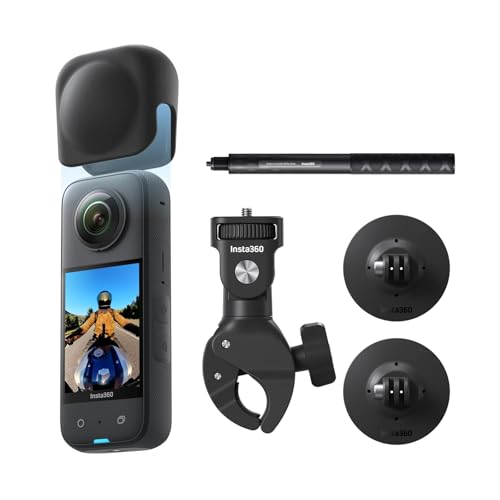
Insta360 X3 Motorcycle Bundle 360 Camera
What We Like
- FlowState stabilization smooths intense motorcycle vibrations
- 5.7K 360 capture allows easy reframing to any angle later
- 4K single-lens mode shoots traditional wide-angle footage
- Rugged, waterproof design withstands the elements on a bike
Trade-offs
- No built-in GPS mentioned for tracking ride data
The Insta360 X3 captures 5.7K 360 Active HDR video, which means you get incredibly detailed footage where you can choose your perfect angle after the ride is over. Its FlowState stabilization is a standout, actively countering handlebar vibrations to deliver buttery-smooth video even on rough roads. This combination of high-resolution flexibility and proven smoothing software makes it a fantastic all-around choice for riders who want to document every perspective of their journey without worrying about camera shake.
The trade-off is its form factor; at 4.5 inches tall, it’s a more substantial unit compared to sleeker, flatter designs like the DJI Osmo 360. For riders who prioritize a compact, low-profile mount, that’s a consideration. However, the X3’s large touchscreen and dedicated ‘Me Mode’ for single-lens shooting add significant ease of use that balances its size, offering both 360 creativity and straightforward action-cam functionality in one rugged package.
Insta360 X5 8K 360 Action Camera

What We Like
- Triple AI chip design excels in low-light conditions
- FlowState stabilization eliminates bumps and vibrations
- Invisible selfie stick creates unique third-person angles
- Replaceable, scratch-resistant lenses for durability
Trade-offs
- At 1.1 pounds, it's the heaviest 360 camera in this guide
- Battery life of 3 hours may require spares for long trips
- 8K video files demand substantial storage and processing power
With dual 1/1.28-inch sensors and a triple AI chip design, the Insta360 X5 captures crisp, vibrant footage in dim or night conditions, which is a critical advantage for riders filming after sunset. This makes it a strong choice for those who need good video quality in all lighting and want high detail from 360 captures. Its waterproof build and FlowState stabilization handle the motorcycle environment, turning rough pavement into stable video.
This performance comes with more bulk, as it weighs 1.1 pounds and is heftier than many other cameras. That weight comes from its durable construction and larger sensors. If your primary goal is capturing stable footage in challenging light, the X5 delivers. For riders who prioritize a lighter setup for daytime use, the more compact GoPro MAX2 could be an alternative.
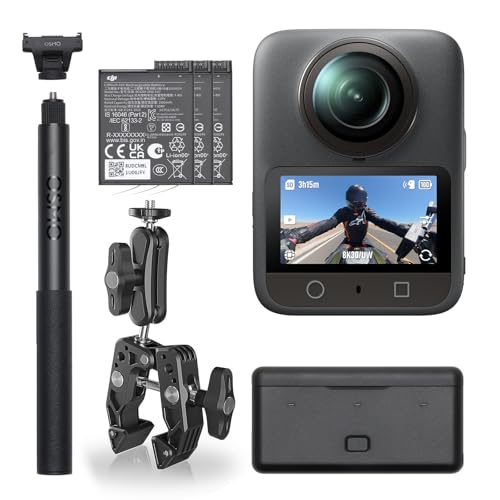
DJI Osmo 360 Motorcycle Handlebar Combo
What We Like
- Glove-compatible gesture and voice control.
- Excellent low-light performance with f/1.9 aperture.
- Powerful 360° HorizonSteady stabilization.
- Extended ecosystem with magnetic quick-release.
Trade-offs
- Heavier combo than a standalone camera body.
- Battery grip required for full 3+ hour runtime.
Native 8K panoramic video from dual 1-inch sensors provides cinematic detail, making it a strong choice for riders who want professional-grade footage from their handlebars. Glove-friendly gesture control and voice commands let you start and stop recording without fumbling, a useful feature while moving. This setup suits the rider who approaches their journey as a film project, valuing rich color grading potential and performance in challenging light from dawn to urban nights.
Its design is built around accessories like the battery grip for longer tours, so it’s not the simplest grab-and-go option. Compared to the more compact Insta360 X3 Motorcycle Bundle, the DJI combo is a premium, feature-focused rig. It excels when your priority is ultimate image quality and intuitive control while wearing riding gloves, but it demands more planning and investment in its full ecosystem to unlock those ‘drone-like’ third-person shots.
Product photos
DJI Osmo 360 Essential Combo

What We Like
- Large 105GB internal storage for card-free recording
- 8K 360° video and 120MP photos capture high detail
- Magnetic quick-release system for fast mounting changes
- Four microphones capture immersive stereo audio
Trade-offs
- At 8K/30fps, maximum frame rate is lower than some single-lens modes
- Invisible Selfie Stick requires the 1.2m accessory for third-person angles
With built-in 105GB storage, you can record up to 190 minutes without needing a memory card. This means you can start shooting an adventure or event immediately, without first having to find and install storage. The camera’s weight is 0.4 pounds, so it won’t feel heavy when mounted on gear.
Its maximum video frame rate is the main limitation. While it shoots super-smooth 4K at 120 frames per second in its single-lens mode, its full 360-degree video tops out at 30fps. For riders who want buttery-smooth slow-motion replays of their entire spherical surroundings, the Insta360 X3 Motorcycle Bundle offers a higher 60fps rate in its 5.7K 360 mode. The DJI’s strength is its set-it-and-forget-it recording capability, making it a reliable choice for documenting long tours over chasing the highest frame rates.
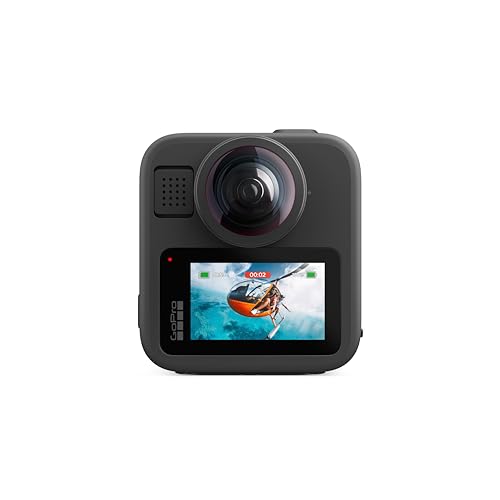
GoPro MAX2 360 Action Camera
What We Like
- True 8K 360 video captures everything without aiming
- Replaceable lenses protect against permanent damage
- Invisible mounting for pole and selfie shots
- Reframe 360 footage into traditional 4K videos easily
Trade-offs
- Requires post-processing app to create standard videos
True 8K 360 video means you never have to point the camera or worry about missing the action, which is perfect for capturing unpredictable rides. The waterproof build and replaceable lenses let you ride in any weather without fretting over a scratched lens ruining the camera. This is for the rider who wants the freedom to film first and find the perfect angle later, all from a single recording.
You’re getting a durable, feature-packed unit that requires a bit more space on your mount. For riders who prioritize ultimate resolution and the security of swappable lenses over a minimalist profile, the MAX2 delivers a versatile, worry-free shooting experience.
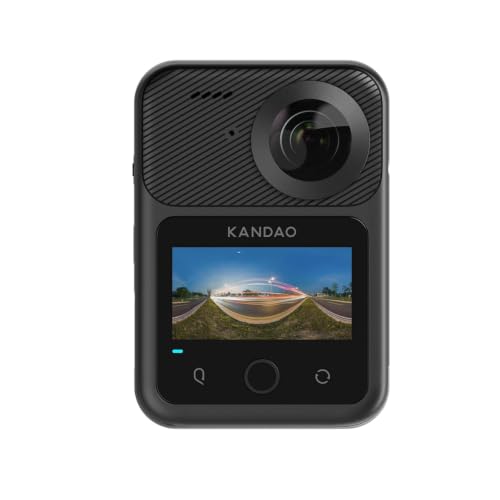
KanDao QooCam 3 Ultra 360 Camera
What We Like
- Dual 1/1.7-inch sensors for sharp low-light shots
- 10-bit HDR captures a billion colors for realism
- F1.6 aperture brightens night and indoor scenes
- Built-in GPS and stabilization for smooth riding footage
Trade-offs
- No replaceable lens protection mentioned for road debris
- Requires in-camera or desktop software for reframing edits
Dual 1/1.7-inch sensors and a bright F1.6 aperture capture cleaner low-light footage during evening rides or indoor scenes where smaller sensors might fail. It records with true 10-bit HDR for a billion colors, delivering deeper contrast and more realistic footage straight from the camera. This approach suits creators who want cinematic color in their travel videos or adventure logs without heavy post-processing.
The trade-off is a design that doesn’t mention rugged, replaceable lenses like the Insta360 X5, so a direct hit from road grit could be a costly worry. While its AI editing tools streamline workflow, creating traditional flat videos from 360 footage always requires an extra processing step. For riders who just want simple, durable 360 capture with a vast accessory ecosystem, the competition might be a more straightforward fit.
Product photos
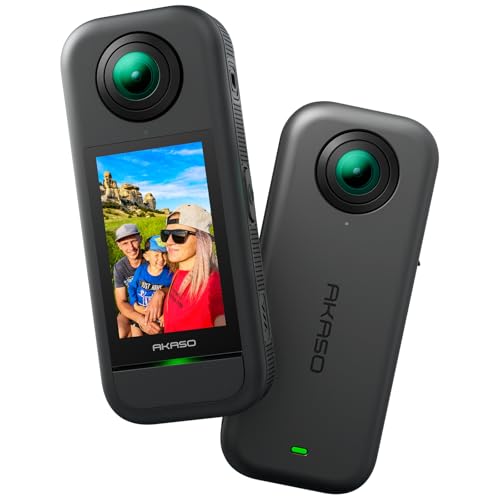
AKASO 360 Action Camera Standard Combo
What We Like
- Captures fully immersive 5.7K 360 video.
- Invisible selfie stick effect for unique angles.
- AI subject tracking keeps moving targets centered.
- Shoot first, frame later for flexible editing.
Trade-offs
- Video quality is limited in low-light conditions.
- Does not support HDR functionality.
- The invisible selfie stick is not included.
A 5.7K resolution captures the full sphere of your ride in sharp detail, letting you relive every corner and vista. This camera is a strong choice for riders wanting to experiment with 360 footage without a major investment. Its AI tracking and horizon lock keep your bike the star of the show, while the ‘shoot now, frame later’ workflow means you can focus on riding, not fiddling with angles mid-corner.
The AKASO 360’s video quality may be limited in low-light conditions, and it does not support HDR functionality. This means footage can struggle at dusk or when moving from a dark tunnel into bright sunlight. For riders who frequently encounter these scenarios, the Insta360 X3 Motorcycle Bundle offers Active HDR video, though at a higher price. The AKASO model provides its core 360 recording features effectively in good lighting.
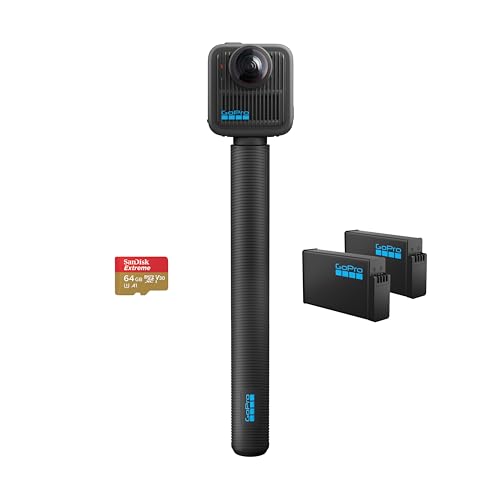
GoPro MAX2 Accessory Bundle
What We Like
- Includes essential accessories like a pole and extra batteries
- Replaceable lenses prevent costly camera replacement
- Invisible pole mount creates unique, immersive footage
- 8K 360 capture means you never miss the action
Trade-offs
- Bundle dimensions of 9 x 7.4 x 4.2 inches require significant storage space
- At 1.8 pounds, it's heavier than the standalone GoPro MAX2
- The pole is fixed at 4 feet, limiting mounting flexibility
An 8K 360 sensor means you can record your entire ride without aiming the camera, which is perfect for capturing unpredictable road scenes and later reframing them into traditional 4K videos. This bundle suits a rider who wants a complete, out-of-the-box filming kit, as it includes the extension pole for invisible selfies and two high-capacity Enduro batteries to extend recording time significantly. The replaceable glass lenses are a smart design for motorcycle use, where debris is a constant risk, letting you swap a scratched lens instead of the whole camera.
This kit is substantially larger and heavier than the camera alone, so it demands more thought for storage on the bike. Compared to a streamlined option such as the DJI Osmo 360 Essential Combo, which is notably more compact, this GoPro bundle is a premium, feature-complete system. You’re trading portability for convenience and creative potential straight from the box, with the pole and extra media ready to go for your next adventure.
Product photos
KanDao QooCam 3 Travel Combo

What We Like
- Dual 1/1.55-inch sensors for excellent low-light performance.
- Integrated stabilization eliminates need for a gimbal.
- Wide temperature range suits varied riding conditions.
- Travel combo includes essential mounts and memory.
Trade-offs
- 5.7K resolution is lower than some 8K competitors.
- Operating range tops out at 104°F, limiting extreme heat use.
A dual-lens 5.7K camera with a six-axis gyroscope means your footage stays smooth without strapping on extra gear. This is the right pick for riders who want a complete, out-of-the-box kit. The included 50-piece accessory bundle and 64GB card cover nearly every mounting scenario right away, saving you from hunting for parts separately. Its dual 1/1.55-inch sensors pull in more light, so dawn patrols or shaded canyon runs still look vibrant.
When comparing video resolution, the Insta360 X5 records in 8K, which provides more detail for cropping in editing. The KanDao QooCam 3 Travel Combo’s bundle includes a memory card and many mounting accessories, offering a convenient, ready-to-ride package. Its stabilization is designed to maintain steady visuals, prioritizing reliable performance and convenience for the user.
Product photos
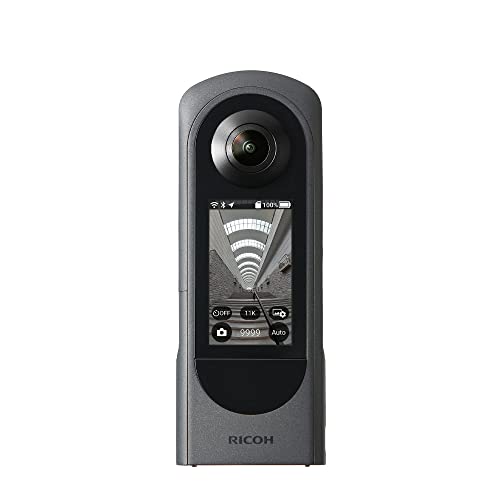
Ricoh Theta X 360 Camera
What We Like
- Captures ultra-high-resolution 60MP 360 photos
- Shoots in RAW format for professional editing
- Built-in GPS embeds location data in media
- Large touchscreen allows standalone operation
Trade-offs
- 9.1-inch cube design is not compact
- Video limited to 30 fps
The Ricoh Theta X delivers the highest still-image resolution in this guide with its 60-megapixel 11K capture, making it the clear choice for riders who prioritize photographic detail over video performance. The ability to save files in a professional RAW format gives you immense flexibility for editing shadows and highlights after your ride. It suits the photographer who wants to document journeys with gallery-quality 360 panoramas, thanks to features like the built-in GPS for creating location-tagged tours.
That photographic prowess comes with physical compromises. Its large, cube-like design is less aerodynamic and more challenging to integrate cleanly on a motorcycle compared to the sleek, cylindrical form of something like the Insta360 X3. While the interchangeable battery and memory card support all-day shooting, the 5.7K video runs at 30 fps, which is functional but doesn’t match the high-frame-rate options available on more video-centric 360 cameras. This is a specialist tool for stunning stills, not an all-around action camera.
Product photos
How We Evaluated 360 Cameras For Motorcycles
Our evaluation started with a deep dive into manufacturer specifications and product documentation to understand the core capabilities of each camera. We analyzed expert round-ups from motorcycle-focused publications and general tech reviewers to cross-reference performance claims in real-world riding scenarios. Finally, we looked for consistent patterns in owner feedback on durability, ease of use, and video quality.
The most important criteria were electronic stabilization quality to combat bike vibration, video resolution and sensor performance for detail, and physical design for weather resistance and mounting. We also heavily weighed control schemes, battery life for long trips, and the included accessory ecosystem, as these directly impact the riding experience.
This is a research-led evaluation, not a hands-on test. We rely on aggregated data and reported experiences, which means we cannot verify individual performance claims or the longevity of a camera under specific, extreme conditions.
What To Look For In 360 Cameras For Motorcycles
Choosing the right 360 camera transforms how you capture rides. Beyond basic specs, focus on how the camera handles the unique challenges of motorcycling: constant vibration, changing light, and the need for simple operation.
Prioritize cameras with powerful electronic stabilization (like FlowState or HorizonSteady), a rugged and often waterproof build, and intuitive controls. High resolution (5.7K or 8K) allows for detailed reframing, while good low-light performance ensures quality footage from dawn to dusk.
Stabilization Is Everything
The single most important feature for motorcycle footage is electronic image stabilization. Engine and road vibrations will ruin footage from an unstabilized camera. Look for branded stabilization technologies like Insta360’s FlowState or DJI‘s HorizonSteady, which are specifically tuned to smooth out bumps and shakes, creating cinematic, watchable video. This technology effectively replaces the need for a bulky external gimbal on your bike.
Resolution & Sensor Performance
Resolution determines how much detail you can capture and how much flexibility you have in post-production. 5.7K is the current standard, providing ample detail for reframing shots, while 8K models offer even higher fidelity. For riding in varied conditions, pay close attention to sensor size and aperture. Larger sensors and wider apertures perform significantly better in low-light situations, such as riding at dusk or through tunnels, preserving detail and color.
Durability & Control Design
Your camera must withstand the elements. A waterproof or highly water-resistant design is essential for rain and road spray. Some models, like the GoPro MAX2, offer replaceable lenses, which is a major advantage for protecting against permanent damage from road debris.
Equally critical is the control scheme. Touchscreens can be difficult with riding gloves, so look for models with physical buttons, voice control, or glove-compatible gesture controls, like those on the DJI Osmo 360 combo. For more mounting flexibility beyond your bike, explore our guide on how to mount a camera on a motorcycle helmet.
- Check the IP rating for water and dust resistance.
- Verify the operating temperature range if you ride in extreme climates.
- Look for models with physical recording buttons for easy glove operation.
- Consider the weight and aerodynamics if mounting on a helmet.
- Ensure the mounting system is secure and vibration-resistant.
A great motorcycle 360 camera combines rock-solid stabilization with a build tough enough for the road and controls simple enough for gloved hands.
360 Cameras For Motorcycles Compared
The comparison table below highlights the key specifications and features of our top picks at a glance.
| Product | Video Resolution | Photo Resolution | Sensor Size |
|---|---|---|---|
| Insta360 X3 Motorcycle Bundle 360 Camera | 5.7K 360 Active HDR | 72MP 360 | 1/2-inch 48MP sensors |
| Insta360 X5 8K 360 Action Camera | 8K30fps 360° | N/A | Dual 1/1.28-inch |
| DJI Osmo 360 Motorcycle Handlebar Combo | Native 8K/50fps | N/A | dual 1-inch sensors |
| DJI Osmo 360 Essential Combo | 8K/30fps 360° | 120MP 360° photos | 1-inch 360° imaging |
| GoPro MAX2 360 Action Camera | True 8K 360 | 29MP 360 Photos | N/A |
| KanDao QooCam 3 Ultra 360 Camera | 8K 360° | 96MP panoramic | Dual 1/1.7-inch |
| AKASO 360 Action Camera Standard Combo | 5.7K 360° | 72MP 360° | Dual 1/2" 48MP |
| GoPro MAX2 Accessory Bundle | 8K 360 | N/A | N/A |
| KanDao QooCam 3 Travel Combo | 5.7K 360° | 62MP | 1/1.55" Sensors |
| Ricoh Theta X 360 Camera | 5.7K at 30 fps | 11K (60 megapixels) | N/A |
Frequently Asked Questions
What is the best 360 camera for motorcycle riding?
The best overall 360 camera for motorcycle riding is the Insta360 X3 Motorcycle Bundle. Its primary strength is exceptional FlowState stabilization that effectively smooths out handlebar and chassis vibrations, creating buttery-smooth footage. The 5.7K 360 capture allows you to reframe your shots to any angle after the ride, offering tremendous creative flexibility in a rugged package.
What is the best 360-degree camera for bikes?
For most riders, the best 360-degree camera for bikes is one with top-tier stabilization and a durable, waterproof design. The Insta360 X3 excels here, but if your priority is ultimate low-light performance for night rides, the Insta360 X5 8K is the better choice. Budget-conscious riders should look at the AKASO 360 Action Camera for capable daytime capture.
Which 360 camera has the best quality?
The “best quality” depends on your metric. For the highest resolution 360 video, the Insta360 X5 8K and DJI Osmo 360 cameras shoot in 8K. For the best color fidelity and dynamic range, the KanDao QooCam 3 Ultra offers 10-bit HDR video. For the highest resolution still photos, the Ricoh Theta X captures 60MP images.
Is Insta360 good for motorcycles?
Yes, Insta360 cameras are excellent for motorcycles. They are widely praised for their industry-leading FlowState stabilization, which is critical for managing motorcycle vibrations. Models like the X3 and X5 are bundled with motorcycle-specific kits, and their “shoot now, point later” editing philosophy is perfectly suited to capturing the unpredictable action of a ride. You can explore different Insta360 models to find your fit.
Should I get a 360 camera or a traditional action camera for my motorcycle?
A 360 camera is superior for capturing immersive, multi-angle footage without needing to aim precisely during your ride. It allows for creative reframing in post-production. A traditional action camera or helmet camera is better if you only need a fixed, forward-facing view and prioritize simplicity and potentially higher frame rates for slow-motion analysis.
The Bottom Line
For most riders seeking the best combination of stabilization, versatility, and durability, the Insta360 X3 Motorcycle Bundle is the clear choice. It handles the harsh vibrations of motorcycle mounting brilliantly and provides all the creative tools needed for dynamic storytelling.
If your budget is tight, the AKASO 360 Action Camera Standard Combo offers a genuine entry point to 360 capture for daytime rides. For riders who prioritize capturing every detail in challenging light, the premium Insta360 X5 8K 360 Action Camera is worth the investment.
No matter which model you choose, prioritize electronic image stabilization above all else. It is the non-negotiable feature that separates watchable motorcycle footage from a shaky, unusable mess.
