
10 Best 3 Season Motorcycle Jackets in 2026
This post contains affiliate links. As an Amazon Associate, we earn from qualifying purchases.
The HWK Motorsports Apparel ADV 1 Jacket is our best overall three-season pick for its rugged 600D Cordura shell, adaptable ventilation, and ample storage. For integrated airbag readiness, see the Alpinestars Andes V3 Drystar, and for a modular layering system, consider the REV’IT! Tornado 4 H2O.
Choosing a three-season jacket means finding a single piece of gear that adapts to shifting temperatures and weather across spring, summer, and fall. It’s a balance between enough airflow for heat and enough insulation for chill. We researched specifications, manufacturer data, expert insights, and owner feedback to identify the ten jackets that best manage this balance for different riders and budgets.
Top 10 Three Season Motorcycle Jackets in the Market

Certain content that appears on this site comes from Amazon. This content is provided "as is" and is subject to change or removal at any time.
The Best Three Season Motorcycle Jackets, Reviewed
HWK Motorsports Apparel ADVENTURE MOTORCYCLE JACKET ADV 1 3 Season Motorcycle Jacket
What We Like
- Heavy-duty 600D Cordura shell for abrasion resistance
- Five-vent system with mesh for warm-weather airflow
- Detachable thermal liner and wind/water-resistant membrane
- Seven-pocket layout with pants compatibility for touring
Trade-offs
- Snug, aerodynamic fit requires sizing up for layers
- Wind and water resistant, not fully waterproof
A 600D Cordura shell backed by CE armor at the shoulders, elbows, and back forms a protective foundation that can handle varied riding demands. This jacket excels as a three-season companion. Its Reissa membrane and detachable thermal liner let you adapt to rain or chill, while a five-vent system and integrated mesh push air through when the sun is out. The long cut, seven pockets, and direct connection to HWK pants make it a natural choice for adventure and touring riders who need a single, versatile layer for miles of changing conditions.
This jacket fits close to true size for a snug, aerodynamic riding fit, which means it won’t feel baggy on the bike. The sizing guidance advises using your chest measurement and suggests sizing up if you plan to wear a hoodie or base layer underneath. Compared to a focused mesh option like the Tourmaster Ridgecrest Mesh Jacket, the HWK ADV 1 is a heavier, more comprehensive piece, sacrificing some maximum summer breathability for greater all-weather capability and abrasion protection.
Product photos
Alpinestars Andes V3 Drystar Jacket

What We Like
- Fully waterproof and breathable Drystar membrane
- Zippered chest intakes and back exhausts for airflow
- Removable thermal liner for temperature adaptation
- Designed to integrate with a Tech-Air 5 airbag
Trade-offs
- Airbag system is a separate, premium purchase
- No armor rating is specified in the provided features
The Alpinestars Andes V3 Drystar stands out with its built-in compatibility for the Tech-Air 5 airbag system, offering a clear upgrade path for riders prioritizing crash protection. This jacket suits someone who wants a versatile, all-weather shell ready for advanced safety tech. Its Drystar membrane promises dry rides, while the Direct Ventilation System and removable thermal liner let you dial in comfort from a cool morning to a hot afternoon. It’s a practical choice for the rider viewing their jacket as part of a larger protective ecosystem.
Compatibility with the Tech-Air 5 airbag system is a key feature, allowing riders to add advanced impact protection later, though the system is a separate purchase. The jacket’s own Direct Ventilation System uses zippered chest intakes and back exhaust ports for airflow. This design, combined with a removable thermal liner and a waterproof Drystar membrane, creates adaptable all-weather protection suited for changing conditions on long tours.
REV'IT! Tornado 4 H2O Jacket

What We Like
- Modular liner system for versatile climate control
- Strategic 3D mesh panels for strong airflow
- High-level CE 2 armor at key impact zones
- Liner can be worn inside or outside the shell
Trade-offs
- The modular system adds complexity over single-layer designs.
- Back protector is prepared for but not included.
The REV’IT! Tornado 4 H2O’s defining feature is its modular climate control system, letting you shift from a ventilated mesh jacket to a waterproof or insulated shell by adding or removing liners. This adaptability is the core of a true three-season piece, perfect for riders who face unpredictable weather on long tours and want one jacket to handle it all. The high-level CE 2 armor provides serious protection, and the ability to place the waterproof layer outside the main shell is a clever trick for managing condensation.
Weighing 4.0 pounds, the REV’IT! Tornado 4 H2O Jacket carries more heft than lighter mesh jackets like the 1.0-pound ScorpionEXO Vortex Air II. This weight reflects its multi-liner construction, a necessary trade-off for its modular versatility across seasons. While a dedicated hot-weather commuter might prefer a simpler, lighter jacket, the Tornado’s design delivers a comprehensive, all-conditions solution for touring.
Tourmaster Ridgecrest Mesh Jacket

What We Like
- CE Level 2 shoulder and elbow armor for high-level protection.
- 1000D honeycomb ripstop on high-impact zones for abrasion resistance.
- Two zip-out liners adapt to a wide range of temperatures.
- Four-way stretch panels and take-up straps enable a customized fit.
Trade-offs
- The EVA foam back pad is not CE-certified, unlike the shoulder and elbow armor.
- Rear expansion panels add airflow but can create a billowy fit for some torso types.
Reinforcement with 1000 denier honeycomb nylon ripstop on the shoulders, elbows, and forearms targets abrasion resistance precisely where riders need it most. This durable construction uses a hi-flow mesh shell with 600 denier polyester, creating a ventilated jacket built for adventure riding. A zip-out waterproof liner and a separate zip-out thermal vest liner provide all-weather versatility for changing conditions.
Weighing just one pound, the jacket’s design prioritizes airflow and mobility, a common trait in mesh-focused gear. That light weight comes from its primary mesh shell, while the strategic reinforcements maintain CE Level 2 armor protection at the shoulders and elbows. For riders seeking critical impact coverage without bulk, this approach balances ventilation and safety.
ILM JAM1 Mesh Motorcycle Jacket

What We Like
- Mesh construction maximizes airflow for hot weather.
- Removable CE armor allows for casual off-bike wear.
- Includes a waterproof thermal liner for colder rides.
- Adjustable cuffs and hem for a customizable fit.
Trade-offs
- 600D Oxford reinforcement is lighter than full 600D textile jackets.
- Mesh primary fabric offers less abrasion resistance than solid textile.
Extensive mesh fabric makes the ILM JAM1 a standout for ventilation, pulling heat away effectively during summer rides. This focus on airflow, combined with its removable CE armor and waterproof thermal liner, creates a versatile package that genuinely adapts to three seasons. It’s a solid choice for riders who prioritize cool comfort in warm weather but still want the option to extend their riding into cooler mornings or damp conditions without buying a separate jacket.
Its extensive mesh construction prioritizes airflow, making the jacket suitable for hot weather. Reinforcing panels of 600D Oxford fabric at the shoulders and elbows improve abrasion resistance in key impact zones. This design delivers a breathable jacket with targeted protection, rather than the full coverage of a heavier touring shell.
Product photos
Vance Leather Viper Mesh Jacket

What We Like
- Extensive mesh panels for high airflow
- CE armor at shoulders and elbows
- Removable thermal liner for temperature range
- Reflective accents for low-light visibility
Trade-offs
- 600D textile offers moderate abrasion resistance
- Back protector is a basic pad, not CE-rated
Built for airflow, the Vance Viper’s mesh panels allow substantial ventilation, a design supported by a removable thermal liner to add warmth. This setup is described as ideal for all-season use. Essential protection comes from CE-certified armor at the shoulders and elbows, plus reflective accents for low-light visibility, all within a 600-denier textile shell. For a rider wanting straightforward coverage from spring to fall, it delivers on core needs.
The straightforward design means some details differ from more premium jackets. The included back protector is a removable pad, with a pocket for an optional CE-rated unit. Compared to jackets like the REV’IT! Tornado 4 H2O, which has a listed weight of 4.0 pounds, the Vance’s specific waterproofing isn’t detailed. It remains a solid choice for fair weather commuters and casual riders who prioritize core ventilation and value.
Product photos
Dainese Sterrato Tex Jacket

What We Like
- Removable sleeves for maximum airflow
- Adjustable fit at wrists, hips, and waist
- Removable Level 2 shoulder and elbow armor
- Pockets for optional chest and back protectors
Trade-offs
- Weighs 2.2 pounds in size 50
- No thermal liner mentioned for layering
The Dainese Sterrato Tex’s modular design, featuring removable sleeves and wide chest and back vents, makes it a standout for managing heat on demanding off-road rides. At just 2.2 pounds, this highly breathable mesh jacket is built for riders who prioritize airflow and adaptability in spring, summer, and fall conditions. Its adjustable fit and pants connection loop help it stay secure during active riding, while the removable Level 2 armor provides a solid safety foundation you can expand with optional chest and back protectors.
That focus on ventilation does mean you’re looking at a jacket built for warm weather. Tornado 4 H2O. For aggressive trail riding where overheating is the main concern, the Sterrato Tex’s design is purpose-built, but you’ll need to plan your layers for variable three-season weather.
Product photos
Joe Rocket Atomic 5.0 Jacket
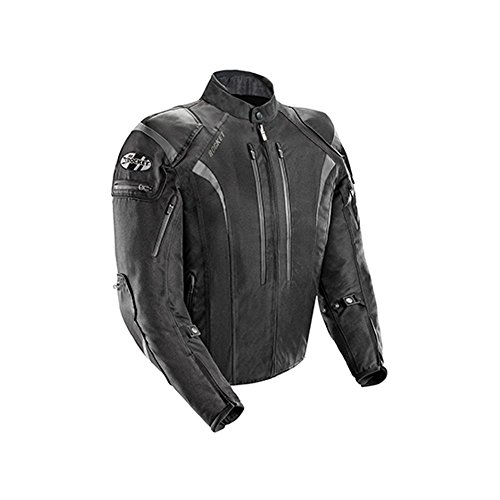
What We Like
- Waterproof treated shell for impact resistance
- Externally accessible shoulder and elbow armor
- Removable spine armor for upgrade potential
- Patent pending wind tunnel cooling system
Trade-offs
- At 5.0 lb, it's heavier than the 2.2 lb Dainese Sterrato
- Fit is optimized for sport bike riding postures
- Spine protector is optional, not included standard
The Joe Rocket Atomic 5.0’s Variable Flow ventilation system with its patent-pending wind tunnel design means you get serious airflow on hot rides without sacrificing the waterproof shell’s protection. This jacket suits riders who spend most of their time in a sport-oriented riding position, as the fit and arm length are dialed for that posture. The externally accessible CE armor at the shoulders and elbows makes checking or upgrading your protection a quick task.
Weighing 5.0 pounds, the Joe Rocket Atomic 5.0 Jacket has more heft than the 2.2-pound Dainese Sterrato Tex. Its sport-oriented fit is noted by the brand to work for both sport bike and upright touring positions. Externally accessible CE armor in the shoulders and elbows, plus a removable spine armor pocket, allow for easy adjustments without removing the jacket.
ScorpionEXO Vortex Air II Jacket
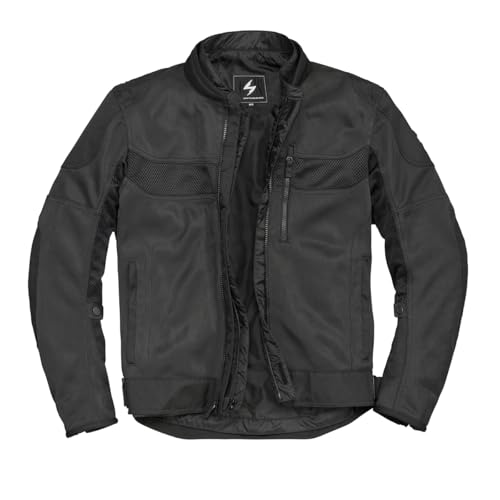
What We Like
- Large and small-hole mesh panels for maximum airflow
- Reinforced 600D polyester at key impact zones
- Includes a removable, full-sleeve waterproof liner
- Integrated action-back panels for increased mobility
Trade-offs
- Waterproofing requires inserting a separate liner, not a built-in membrane
Weighing just 1.0 pound, the ScorpionEXO Vortex Air II is built for riders who prioritize staying cool. Its two-ply ballistic mesh shell uses a mix of large and small-hole panels to channel air directly where you need it, making it a standout for hot summer commuting. The inclusion of a removable, full-sleeve waterproof liner adds a crucial layer of versatility for unexpected weather, while the integrated action-back panels and multiple fit adjustments ensure it moves with you in the saddle. This jacket suits the rider who wants minimal weight and maximum ventilation without completely sacrificing weather readiness.
Maximum airflow comes from a two-ply ballistic polyester mesh shell with large and small-hole panels, which channels air directly over the rider for cooling on hot rides. This design requires using a separate, removable waterproof liner for rain protection, meaning you must stop to install it. For riders who prioritize heat management over all-weather convenience, the mesh-first approach is effective, but integrated waterproof designs exist for those who frequently encounter sudden rain.
GPI MOTO Adventure Touring Jacket
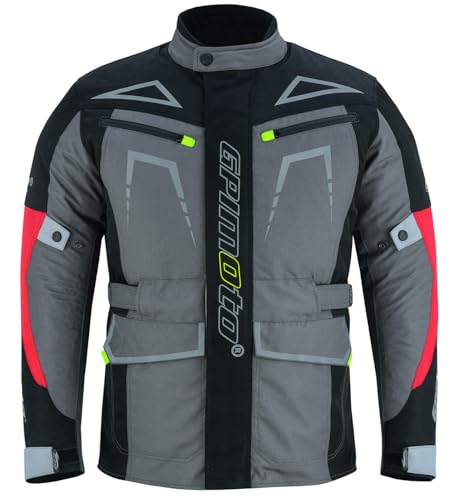
What We Like
- Five ventilation zips for airflow management on warmer days
- Seven pockets offer substantial storage for touring essentials
- Adjustable waist, arms, and cuffs for a customized fit
Trade-offs
- Construction uses 600D textile, not the heavier denier found in premium jackets
- Extended cut may feel bulky for riders seeking a purely street-focused fit
A REISSA waterproof liner and a removable thermal liner give this jacket a clear advantage for handling spring showers and autumn chills without needing separate gear. The five-ventilation-zip system and adjustable fit elements make it a practical, single-jacket solution for riders who encounter varied conditions on longer tours. It’s a strong match for the adventurer who prioritizes functional layers and storage, packing legitimate weather protection and impact armor into a straightforward package.
Built with 600D Cordura textile and a waterproof REISSA liner, the GPI MOTO jacket provides fundamental weather and abrasion protection for adventure touring. This combination shields riders from rain and wind, making it suitable for long-distance and dual-sport rides. The removable thermal liner adapts to changing conditions, so a rider can use it across a wider range of temperatures without needing multiple jackets.
Product photos
How We Evaluated Three Season Jackets
Our evaluation was based on product specifications, manufacturer documentation, expert round-ups, and patterns in owner feedback. We focused on criteria most critical for transitional weather. These include abrasion resistance, indicated by denier ratings and materials like 600D Cordura, along with ventilation systems that range from simple mesh panels to complex multi-vent designs. Adaptable insulation, provided by removable thermal or waterproof liners, was also a key consideration.
We also considered fit and feature sets like pocket layouts for practical touring use. A research-led evaluation cannot simulate long-term durability across thousands of miles, but it effectively identifies which designs prioritize the core features riders consistently praise for three-season versatility.
What To Look For In Three Season Jackets
A three-season jacket is your primary layer for rides from cool spring mornings to hot summer afternoons and crisp fall evenings. Its job is to adapt through liner systems and venting, not to excel in a single extreme.
Look for a balance of abrasion resistance (600D+ textile), a multi-vent or mesh airflow system, and a removable thermal liner. These three elements let you adjust comfort across a wide temperature range.
Shell Material & Protection
The outer shell’s abrasion resistance is your first line of defense. Materials like 600D and 1000D Cordura or polyester are common in this category, offering a good balance of durability, weight, and weather resistance. Higher denier numbers generally indicate a heavier, more durable fabric.
Look for reinforcement in key impact zones like shoulders and elbows. Armor is equally important; CE Level 2 shoulder and elbow protectors provide higher impact absorption than Level 1, and a pocket for an optional back protector adds safety flexibility. While a full guide to motorcycle jacket types covers the full spectrum, for three-season use, textile often provides the best balance of protection, breathability, and weather adaptability compared to leather.
Ventilation & Climate Control
Ventilation is what keeps a multi-layer jacket comfortable in summer heat. Systems range from simple chest zippers to full mesh panels across the torso, arms, and back. The most effective designs create a through-flow of air, drawing it in the front and exhausting it out the back. Some jackets, like our Best Off-Road Ventilation pick, achieve this with removable sleeves. For the hottest days, a dedicated summer jacket will always offer more airflow, but a good three-season design should come close when all vents are open and liners are removed.
Adaptable Insulation & Waterproofing
A removable thermal liner is the key component for extending a jacket’s comfortable range into cooler weather. It adds a warm, often fleece-like layer without adding bulk to the shell itself. Waterproofing approaches vary: some jackets use a separate, removable waterproof liner, while others integrate a permanent waterproof and breathable membrane into the shell.
A removable liner gives you flexibility, allowing you to wear it alone or leave it behind, but a built-in membrane offers immediate, always-present rain protection without needing to stop and install a liner. This decision often comes down to your typical riding conditions and whether you prioritize ultimate versatility or convenience.
- Check the liner’s attachment method; secure zippers are more reliable than snap-in systems.
- For waterproofing, determine if you prefer a built-in membrane or a packable liner you can add only when needed.
- Look for adjustable cuffs, waistbands, and arm lengths to seal out drafts when the liner is in use.
- Consider how you’ll carry a removed liner; some jackets have internal pockets to stash them.
- Verify that the jacket’s airflow isn’t overly compromised when all liners are installed.
A great three-season jacket feels like a lightweight summer shell when stripped down and a capable early-winter layer when fully assembled.
Three Season Motorcycle Jackets Compared
The following table compares the core features of our top picks at a glance to help you see the key differences.
| Product | Outer Shell Material | CE Armor Locations | Removable Liners |
|---|---|---|---|
| HWK Motorsports Apparel ADVENTURE MOTORCYCLE JACKET ADV 1 3 Season Motorcycle Jacket | 600D Cordura textile | Shoulders, elbows, back | Thermal liner |
| Alpinestars Andes V3 Drystar Jacket | N/A | N/A | Removable long-sleeve |
| REV'IT! Tornado 4 H2O Jacket | N/A | SEEFLEX CE-level 2 shoulders/elbows | Removable waterproof liner |
| Tourmaster Ridgecrest Mesh Jacket | 600D polyester with hi-flow mesh | CE Level 2 shoulders & elbows | Waterproof & thermal vest liners |
| ILM JAM1 Mesh Motorcycle Jacket | Mesh fabric | CE at shoulders, elbows, back | Removable waterproof thermal liner |
| Vance Leather Viper Mesh Jacket | 600-denier textile fabric | CE-certified shoulder, elbow | Removable thermal liner |
| Dainese Sterrato Tex Jacket | N/A | EN 1621.1 Level 2 | N/A |
| Joe Rocket Atomic 5.0 Jacket | Rock Tex and Hitena | Shoulders, elbows, spine | N/A |
| ScorpionEXO Vortex Air II Jacket | 2-ply ballistic polyester mesh | Rheon CE Level 1 | Removable full-sleeve |
| GPI MOTO Adventure Touring Jacket | 600D Cordura textile | Removable CE shoulders, elbows, back | REISSA waterproof liner |
Frequently Asked Questions
What is the best motorcycle jacket for all seasons?
A true all-season or 4-season jacket is designed for year-round use, including deep winter, and typically features a permanent waterproof membrane and heavier insulation. The jackets in this guide are optimized for three seasons (spring, summer, fall) and do not include the extreme cold-weather features of a dedicated winter jacket.
What is the best motorcycle jacket for cold weather riding?
For dedicated cold-weather riding, you will want a purpose-built jackets for winter riding with more substantial insulation, draft-sealing features, and often fewer vents. Within the three-season category, look for jackets with effective removable thermal liners and wind-blocking shells, like our Best Modular System or Best Overall picks.
What is the best motorcycle jacket for the summer?
For the hottest, most humid days, a dedicated hot weather jackets constructed primarily of mesh will provide maximum airflow. Our picks for Best Budget Mesh, Best Lightweight Mesh, and Best Airflow Mesh offer excellent three-season ventilation but may not match a pure summer jacket’s breathability.
What is the warmest winter motorcycle jacket?
The warmest jackets are built exclusively for cold weather, featuring thick, often non-removable insulation, windproof membranes, and high collars. You should consult a dedicated resource for best winter jackets rather than relying on a three-season model for severe winter conditions.
How important is CE-certified armor in a motorcycle jacket?
CE-certified armor is crucial as it verifies the protectors meet impact-absorption standards. Level 2 armor offers higher protection than Level 1. Many of our picks include Level 2 shoulder and elbow armor, which is a significant safety advantage over basic, non-certified foam pads.
The Bottom Line
For riders seeking a single, do-it-all jacket for spring through fall adventures, the HWK Motorsports Apparel ADV 1 Jacket delivers with its durable shell, versatile venting, and comprehensive pocket layout. If your priority is maximum airflow on a budget, the ILM JAM1 Mesh Jacket is an outstanding value, while those needing a jacket ready for an airbag system should choose the Alpinestars Andes V3 Drystar. Ultimately, the most important factor is finding a jacket whose ventilation and insulation systems match the specific temperature swings you ride in, ensuring comfort and safety mile after mile.
