
Motorcycle Riding Socks Guide: How to Choose
This post contains affiliate links. As an Amazon Associate, we earn from qualifying purchases.
Motorcycle riding socks are technical gear designed for specific pressures, temperatures, and moisture levels a rider’s feet face. They are not regular socks. The right pair manages sweat, cushions high-pressure points like the shifter and heel, and fits your boot without bunching. A mismatched sock can turn a two-hour ride into a chore of hot spots and blisters.
That pressure management is the whole game. Your foot pushes against the peg, works the shifter, and bears your weight for hours. A regular sock just sits there. A riding sock is engineered to handle those loads where they happen. This is the core principle of a motorcycle riding socks guide.
What follows is a breakdown of materials, a look at how sizing actually works with different boot fits, and the specific features that separate a marketing gimmick from a worthwhile upgrade, all key parts of a motorcycle riding socks guide. By the end, you’ll know exactly what to look for on a product page.
Key Takeaways
- Match the sock material to your climate: merino wool blends for multi-day trips and temperature swings, synthetics like polypropylene for pure moisture speed.
- Padding placement is not standardized. BMW pads the gearshift lever area, Ducati reinforces “high-friction zones,” and Dainese focuses on ankle support—check the product description.
- Fit is essential. A sock that bunches inside your boot creates pressure points and blisters faster than any thin sock will. Use the brand’s foot-length chart, not a generic size.
- Skip cotton completely. It holds moisture against your skin, leading to cold, macerated feet and a higher risk of blisters on longer rides.
- Rotate and air out your socks between rides. Letting sweat fully dry is the single biggest factor in extending their life and controlling odor.
The Material Breakdown: Merino, Synthetics, and Smart Blends
Your sock’s fabric decides whether your feet stay comfortable or become a problem you have to manage, a central topic in any motorcycle riding socks guide. This isn’t about softness. It’s about how the material moves sweat and handles temperature over a long ride.
Motorcycle sock materials are chosen for specific performance: moisture-wicking, breathability, odor resistance, and thermal regulation. Synthetics like polypropylene and polyester move sweat fastest, while natural fibers like merino wool regulate temperature and resist odor over multiple wearings.
The Harley-Davidson Core Riding Sock uses a 75% Ultraspun Polyester, 20% Nylon, 5% Spandex blend built around its UltraDri™ moisture-wicking treatment. That’s a classic synthetic setup aimed at moving sweat away from the foot as quickly as possible. It’s a workhorse for consistent performance.
For colder or variable conditions, blends change. The BMW Motorrad All-season functional sock uses 58% wool, 27% polypropylene, 12% polyamide, 3% elastane. The high wool content provides natural insulation and odor resistance, while the polypropylene is a powerhouse synthetic for moving moisture.
Brands also compete with proprietary high-tech fibers. Ducati uses Dryarn® yarns in its Cool Down socks for lightweight cooling, while Alpinestars uses Nostatex fibers (silver yarn) in the sole of its Thermal Tech Socks for antibacterial properties. These aren’t just marketing terms. Dryarn® is a polypropylene-based fiber known for being extremely lightweight and hydrophobic, while silver yarn is a documented antimicrobial agent.
The short version: For pure moisture management in consistent heat, lean synthetic. For multi-day trips where odor and temperature regulation matter, a merino wool blend is worth the investment. A proprietary fiber is a bonus, not a reason to buy.
Why Cotton is a Non-Starter
This isn’t a minor preference. Cotton absorbs moisture and holds it against your skin. On a motorcycle, with your feet in a mostly sealed boot, that moisture has nowhere to go. The result is a cold, damp environment that softens your skin, making it far more susceptible to blisters and hot spots. By the second hour of a ride, the difference between a cotton sock and a wicking synthetic is tangible—one feels damp and chilly, the other merely warm.
Sizing and Fit: It’s About Foot Length, Not Shoe Size
A size chart is a starting point, not an answer. The most common mistake is grabbing your usual sock size without checking the brand’s specific foot-length ranges. A “Large” means nothing unless you know what foot length it covers.
European brands typically use foot-length ranges in centimeters. For example, the Dainese D-CORE MID SOCK specifies S=38-40, M=41-43, L=44-47 (European sizes). BMW uses similar ranges across its sock models: 35–38, 39–41, 42–44, 45–48. You need to know your foot length in centimeters to use these charts correctly.
Where this goes sideways: Assuming a “snug” fit is correct. A riding sock should fit smoothly without excess material, but it must not compress your foot. Compression restricts blood flow, leading to cold feet and accelerated fatigue. The spandex or elastane in the blend (usually 3-5%) is for shape retention, not for creating a compression fit.
The interaction with your boot is critical. A thick, heavily padded sock in a slim-fitting race boot will cram your foot, reducing circulation and making the boot feel two sizes too small. Conversely, a thin performance sock in a loose adventure boot can allow your foot to slide, creating friction. Your sock choice is part of your boot’s fit system.
| Boot Fit Type | Sock Recommendation | Risk of Mismatch |
|---|---|---|
| Slim Race Boot | Thin to medium-weight, minimal seam bulk | Loss of circulation, numb toes within an hour |
| Standard Touring Boot | Medium-weight with targeted padding | Bunching at the toes or instep if too thick |
| Loose Adventure Boot | Medium to heavier weight, full cushioning | Foot slide and heel blistering if too thin |
Anatomy of a Riding Sock: What Each Part Actually Does
A riding sock is a collection of zones, each with a job. Knowing these zones helps you understand a product description and ignore the marketing claims.
There’s no industry standard. One brand’s priority is another’s afterthought. If you do a lot of city riding with constant shifting, a sock with defined shifter padding makes sense. For highway cruising, arch and heel cushioning might be more valuable.
Length: Ankle, mid-calf, or knee-high? This is primarily about boot compatibility and personal preference, not protection.
- Ankle/Mid-calf: The most common length. Works with almost any boot and is sufficient to prevent the boot cuff from rubbing your skin.
- Knee-high: Often found on adventure or touring-specific socks. The stated benefit is sealing the top of the boot to keep debris out, but the real advantage is providing a layer under riding pants that won’t ride down. The BMW TourSummer Sock is a knee-high model.
Seamless Toe: A true seamless toe construction eliminates a ridge of fabric that can rub against your toes. It’s a small detail that becomes very noticeable on rides over three hours. It’s a sign of higher-tier construction.
Arch Support: Light compression or a structured knit through the arch can help reduce foot fatigue by stabilizing the foot. This is different from a medical compression sock. It’s a subtle support, not a tight squeeze.
Seasonal and Use-Case Choices
You don’t need a different sock for every 10-degree temperature change, but you should have a summer and a winter pair if you ride year-round in a variable climate.
Summer Socks: Look for breathability above all. Descriptors like “lightweight,” “vented,” and “moisture-wicking” are key. The BMW TourSummer Sock is marketed as “particularly breathable.” Materials like the polyamide and Dryarn® in the Ducati Cool Down socks are designed for this. The goal is to move sweat away so evaporation can cool your foot.
Winter/All-Season Socks: Insulation and warmth retention are the focus. This is where high wool content shines, as in the BMW All-season sock’s 58% wool blend. Some socks, like the Alpinestars Thermal Tech model, add thermal lining. Remember, the warmest sock won’t help if your boots are not also rated for cold weather—the sock is just one layer in a system.
The Compression Question: Some socks offer light compression for muscle support and reduced vibration fatigue. This is a different product from a compression undersuit. A sock with light arch and calf support can be beneficial on long rides, but it is not a substitute for medical-grade compression gear. If you have circulation issues, consult a doctor before using any compression product.
Sock Care, Longevity, and Foot Health
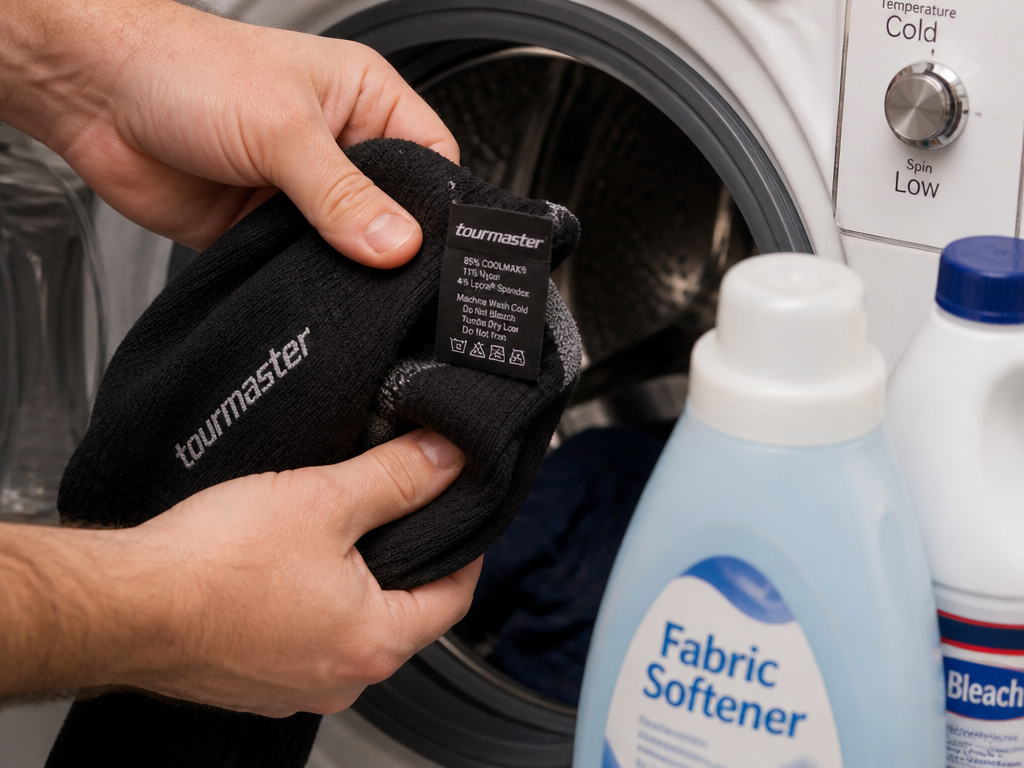
A $30 pair of technical socks can be ruined in two wash cycles. Care matters.
- Wash Cold, Tumble Dry Low. Always follow the care label, but this is the universal rule for synthetic and wool blends. Hot water and high heat break down elastic fibers (spandex/elastane), destroying the sock’s fit and compression.
- Avoid Fabric Softener and Bleach. These chemicals coat the fibers, clogging the moisture-wicking capabilities. Your socks will eventually feel like they’re made of plastic.
- Rotate Your Pairs. Never wear the same pair of riding socks two days in a row. Let them dry out completely. This airing-out period is the best way to manage odor and let the elastic fibers recover their shape.
- Inspect for Wear. Thin spots usually appear first at the heel, ball of the foot, and under the toes. Once the cushioning is compressed flat or a hole forms, the sock’s job is done. Wearing them further invites blisters.
A simple foot hygiene routine goes a long way. Dry your feet thoroughly before putting on socks. On multi-day trips, a light foot powder can help manage moisture. The goal is to keep your foot’s environment as dry and stable as possible for as long as you’re in the boot.
Specific Brand and Model Recommendations
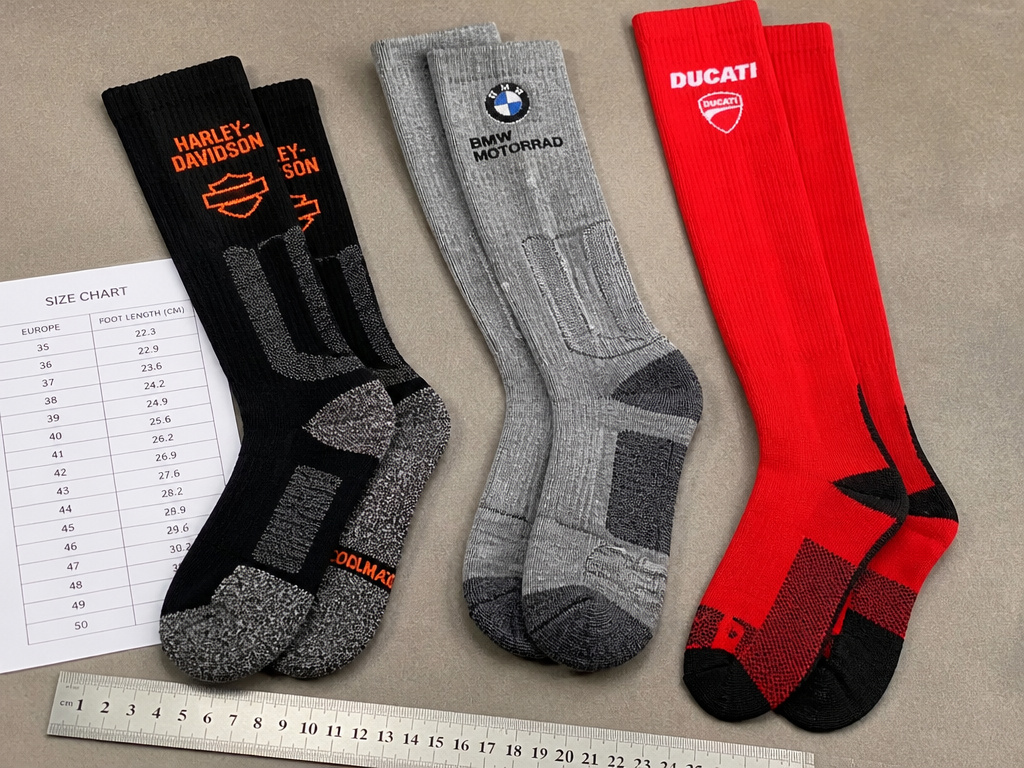
Several major motorcycle apparel brands offer dedicated riding socks. The Harley-Davidson Core Riding Sock uses a synthetic blend for moisture wicking and includes a cushioned sole with a reinforced heel and toe. BMW Motorrad’s All-season functional socks are calf-length, use a wool blend for temperature regulation, and feature padding in motorcycle-specific zones. For warmer weather, their TourSummer socks are lightweight, knee-length, and have padding in the gearshift lever area. Ducati offers Cool Down socks with protectors in high-friction zones and Warm Up socks that blend merino wool with technical fibers. Brands like Alpinestars incorporate silver-based fibers for odor control. Sizing often follows European foot-length ranges, so checking a brand’s specific size chart is essential for a fit that matches your foot length.
Frequently Asked Questions
What are the best socks for motorcycle riding?
There is no single “best” sock. The best sock for you matches your climate, boot fit, and riding style. For hot weather, a lightweight synthetic like the Harley-Davidson Core Riding Sock is a solid performer. For variable conditions and multi-day trips, a merino wool blend like the BMW All-season functional sock is more versatile. Always prioritize correct fit first.
Can I just wear ski socks or hiking socks?
You can, but it’s not ideal. Ski socks are often too thick and insulated for anything but the coldest motorcycle rides, and they can overheat your feet. Hiking socks are closer, as they are designed for moisture management and cushioning over long periods. However, they lack the specific reinforcement zones (like shifter padding) that motorcycle socks are designed around. They’re a better backup than cotton socks, but not a perfect replacement.
How often should I replace my riding socks?
Replace them when the cushioning is visibly compressed and no longer springs back, or when thin spots or holes develop. With proper care (cold wash, air dry, rotation), a pair of technical riding socks can maintain their performance. If they’re losing their fit and starting to slide down into your boot, the elastic is gone—time for a new pair.
Do I need compression socks for riding?
Most riders do not need medical compression socks. However, many riding socks offer light compression or “support” in the arch and calf to reduce muscle vibration fatigue. This is a comfort feature, not a medical one. If you experience leg fatigue or swelling on very long rides, a dedicated compression undersuit is a more appropriate solution to explore.
What is the “sock rule for guys”?
This is a general style guideline about not showing bare skin between your sock and pant leg when sitting down. For motorcycling, the practical rule is to ensure your sock is long enough that it won’t get pulled down below your boot cuff, exposing your skin to boot leather, zippers, or the elements. A mid-calf sock is usually sufficient.
Before You Go
The single most important thing you can do is try a few types. Buy one pair of a synthetic blend and one pair of a merino blend. Wear them on your regular rides, in your usual boots, and note the difference after two hours. Your feet will tell you which one works.
Fit is everything you can’t see on a product page. A perfectly engineered merino wool sock that bunches at your toes is a worse choice than a basic synthetic that fits your foot and boot like a second skin. Use the brand’s foot-length chart, not the generic size on the tag.
Finally, these are wear items. They are not a one-time purchase. Budget for them as part of your regular gear maintenance. A fresh pair of properly fitting socks is a cheap upgrade that pays you back in comfort on every single mile.
