
Motorcycle Compression Undersuit Benefits: How to Choose
This post contains affiliate links. As an Amazon Associate, we earn from qualifying purchases.
A motorcycle compression undersuit improves cooling, reduces muscle fatigue, makes putting on and taking off your leathers easier, and protects your skin from chafing. It’s a thin, tight layer of technical fabric worn under a race suit or riding jacket and pants. A purpose-built moto undersuit beats generic athletic gear because it’s cut for a riding posture, uses moto-specific fabrics, and includes features like sleeve loops and crotch zippers.
That’s the direct answer. But whether you actually need a compression fit, or just a smooth second skin, is where brands disagree. The difference changes how the garment feels and what it does for you on a long ride, which is why understanding motorcycle compression undersuit benefits is key.
This guide explains the four real benefits, the fit debate, the moto-specific features you should look for, and the temperature limits where an undersuit stops working. By the end, you’ll know whether to buy a compression model or a forgiving stretch model, and how to keep it from smelling like a locker room after three track days.
Key Takeaways
- A compression undersuit reduces muscle vibration fatigue on long rides, while a forgiving stretch fit prioritizes comfort and ease of movement; brands disagree on whether an undersuit should be a compression layer (Bison Track, Lid Logic) or a smooth second skin (MOTO-D).
- Wash after every use in cold water and never use fabric softener; it coats the fibers and destroys the wicking performance permanently.
- Above 85°F, even a summer undersuit feels oppressive; pre-cooling it in a cooler or refrigerator before track days buys you 20-30 minutes of noticeably cooler starts.
- Most purpose-built undersuits are designed to be worn commando (no underwear) to eliminate seam chafing; seamless athletic underwear is the next best option.
- Look for moto-specific features: sleeve/leg loops, a crotch zipper, and long shirt tails on two-piece sets that stay tucked during aggressive riding.
The 4 Core Benefits of a Compression Undersuit
The first time you pull on an undersuit, the difference is physical. Your leathers slide on over arms and legs that suddenly feel slick, not sticky. That’s the most obvious motorcycle compression undersuit benefits, but it’s not the only one.
A good undersuit is smooth, form-fitting, moisture-wicking, and slippery enough that the leather can shift naturally around joints without pulling on your skin. It also makes getting the suit on and off dramatically easier.
1. Temperature and Moisture Management. This is the job every undersuit claims. A technical fabric like Dryarn, Toray Field Sensor, or a Lycra blend moves sweat away from your skin to the outer layer where it can evaporate. This keeps you drier than standing in a pool of your own sweat inside the suit. The SIXS BT STXL R V2 fabric offers SPF 50 protection.
2. Reduced Muscle Fatigue (The Compression Claim). This is the debated benefit. The idea is that elastic fibers support muscles and reduce vibration fatigue on long stints. Endurance racers and tourers swear by it. The MOTO-D brand explicitly says its undersuit is “high stretch, soft, and forgiving… (vs. A tight compression ‘muscle’ shirt).” Others, like Bison Track, describe their garment as fitting “like a second skin and act as a compression layer.” So which is it? It depends on the brand’s design intent. A true compression fit will feel supportive, almost like light medical hose. A stretchy second-skin fit prioritizes freedom of movement. Your choice hinges on whether you value potential fatigue reduction or all-day comfort.
3. Ingress/Egress. Putting On and Taking Off Your Leathers. This is the unsung hero. A sweaty arm against naked leather creates a suction seal. An undersuit breaks that seal. The suit slides over the smooth fabric, not your skin. It turns a two-person, grunting struggle into a one-person job in under a minute. Sleeve and leg loops (like on Bison suits) lock the undersuit in place so it doesn’t ride up as you wrestle the leathers on.
4. Skin Protection and Suit Preservation. Your skin isn’t meant to rub against a leather or textile suit interior for hours. Without a barrier, you get hot spots and friction burns. An undersuit provides that barrier. It also protects your expensive suit from your sweat and body oils, which break down leather and liner materials over time. A seamless construction, like on the Dainese Dry Suit or SIXS BT STXL R V2, eliminates the primary source of seam-based chafing.
Compression Fit vs. Forgiving Stretch: The Brand Disagreement
Not all tight-fitting undersuits are compression gear. This is where reading the product description matters more than the category label.
| Brand / Model | Stated Fit Philosophy | Best For |
|---|---|---|
| MOTO-D Cool-Tec | “High stretch, soft, and forgiving… acts like a smooth 2nd skin (vs. A tight compression ‘muscle’ shirt).” | Riders who prioritize comfort and range of motion over muscular support. |
| Bison Track | “Fits like a second skin and acts as a compression layer.” | Riders seeking a balance of second-skin smoothness with light supportive compression. |
| Lid Logic (Reference) | Lists “Compression” as a distinct category of purpose-built undersuit. | Riders specifically seeking muscle support and vibration damping for endurance events. |
The MOTO-D stance is clear: they are selling a stretch layer, not a compression layer. Their language directly contrasts with the “tight compression ‘muscle’ shirt” image. If you’ve worn compression gear for sports or recovery, you know the feeling, it’s snug, supportive, and can feel restrictive until you move.
The Bison Track description blurs the line, calling it both a second skin and a compression layer. In practice, this likely means a tight fit with some supportive properties, but not the medical-grade squeeze of true athletic compression wear.
So what should you buy? If you ride long distances and feel muscle fatigue, seek out a model explicitly marketed for compression benefits. If you value absolute freedom of movement and comfort, a stretchy second-skin like the MOTO-D is an option. Don’t assume “tight” means “compression.”
Material and Construction: What Makes It “Moto-Specific”
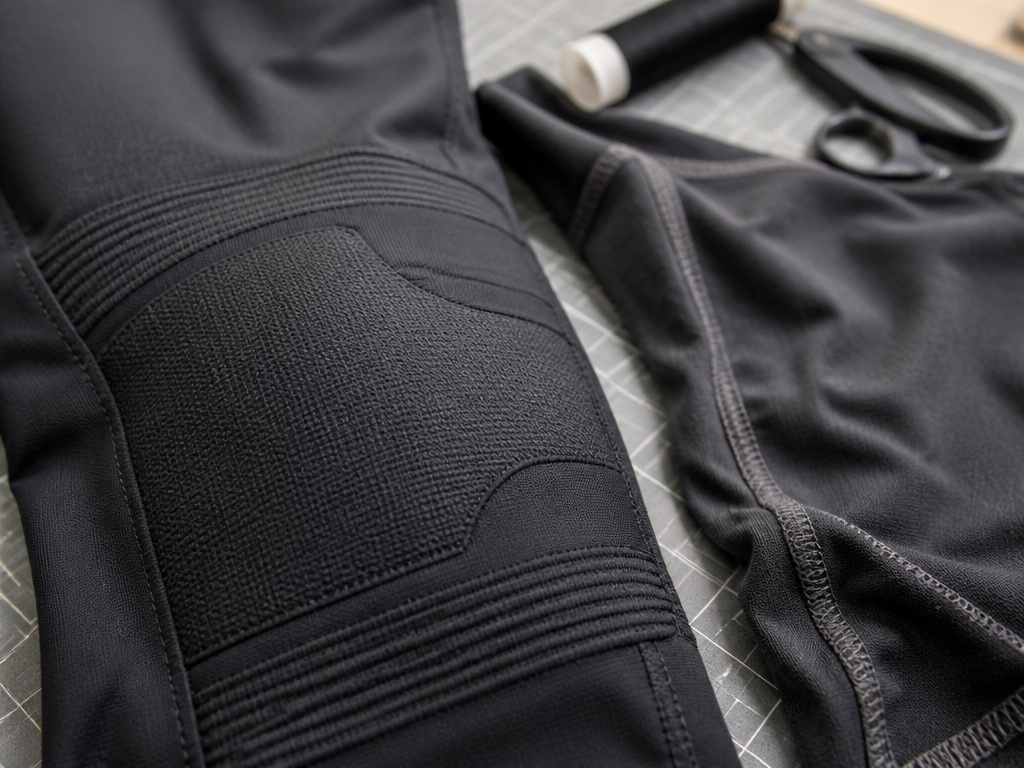
You can wear running tights under your suit. They might work. But purpose-built motorcycle undersuits use fabrics and constructions chosen for riding’s unique demands.
Fabrics: Look for proprietary technical names. Dainese uses Dryarn hydrophobic fabric for moisture management. Spidi uses Toray Field Sensor network fabric. SIXS uses a reinforced yarn in high-friction areas. These aren’t just marketing terms, they are specific fabric technologies aimed at wicking, durability, and temperature regulation in a high-sweat, high-abrasion environment. Generic polyester-spandex blends can work, but they often lack the reinforced panels in knees, seat, and shoulders.
Seamless Construction. This is a big one. Seams chafe. A seamless or lack of seams build, as noted on the Dainese and SIXS suits, removes those internal friction points. It’s why most guides recommend wearing these commando, adding underwear reintroduces seams and defeats the purpose.
Reinforcements. High-wear areas get extra attention. The Dainese Dry Suit has reinforcements on the most frequent contact areas. The SIXS BT STXL R V2 uses new reinforced yarn in critical high-friction zones. The Spidi Rider Undersuit includes stretch inserts on groin, knees, shoulders, and hips. These are signs the brand thought about where a suit rubs during riding.
Common mistake: Wearing cotton underwear under an undersuit. The cotton absorbs sweat, holds it against your skin, and introduces seam chafing. It makes you colder when moving and ruins the wicking performance of the undersuit.
One-Piece vs. Two-Piece Construction
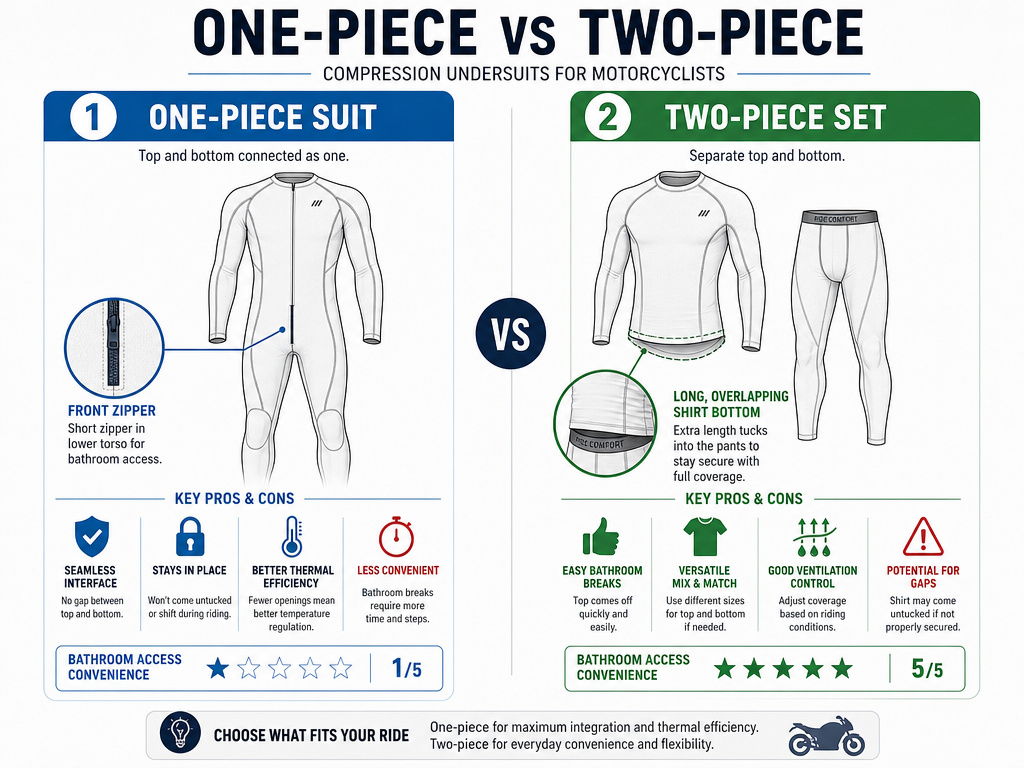
This choice is about convenience versus absolute performance.
One-Piece Undersuits mirror the shape of a one-piece leather race suit. They provide the smoothest, most uninterrupted interface between you and the suit. There are no waistbands to roll or shirts to untuck. They are the preferred choice for track work and racing. The downside is bathroom breaks, you have to nearly undress. Some, like the Bison 1-piece men’s undersuit, include a small zipper in the crotch area to mitigate this.
Two-Piece Undersuits (shirt and pants) are about practicality. They are easier to put on, and bathroom breaks are trivial. The key is to choose a design made for riding: Bison’s 2-piece sets have long shirt bottoms so they remain overlapped in a tuck. If the shirt is too short, it pulls out of the pants every time you get on the bike, leaving a gap of bare skin or underwear against your suit.
| Construction | Pros | Cons | Best For |
|---|---|---|---|
| One-Piece | Superior, seamless interface with suit. No bunching. Professional feel. | Difficult bathroom breaks. Harder to put on/take off. | Track days, racing, riders who value optimal performance. |
| Two-Piece | Easy bathroom breaks. Easy to put on. Can mix and match sizes. | Shirt can untuck. Potential for waistband bunching. | Street riding, touring, riders who prioritize convenience. |
Honestly, for most street riders, a two-piece is fine. For the track, where every bit of comfort and distraction matters, the one-piece is worth the bathroom hassle.
What to Wear Underneath (The Commando Rule)
This makes new riders blush, but it’s standard advice. Most purpose-built undersuits are designed to be worn commando, no underwear underneath.
The reason is seams. Your undersuit is seamless. Adding underwear adds seams back right where you don’t want them. Those seams become hot spots within an hour. If you absolutely cannot go commando, your only option is seamless athletic underwear specifically cut without side seams. Anything with a raised seam will announce its presence painfully.
Temperature Guidelines and Seasonal Use
An undersuit isn’t magic. It has temperature limits, and layering correctly matters more than buying the “warmest” one.
The Lid Logic source provides clear thresholds:
- Above about 85°F: Even a summer undersuit starts to feel oppressive.
- Below about 55°F: Add a merino wool mid-layer over the undersuit.
- Below 40°F: Add a wind-blocking shell or switch to a purpose-built cold-weather touring setup.
Trick for hot track days: Pre-cool the undersuit in a cooler or refrigerator before you head out. It buys you 20-30 minutes of noticeably cooler starts. In extreme heat above 90°F, the source notes that thin polyester still wins for pure evaporative cooling.
Where this goes sideways: Adding a thick fleece jacket under your suit. It bunches, restricts movement, and holds sweat against your skin. Multiple thin layers always beat one thick layer for undersuit purposes. A merino mid-layer over a thin undersuit is warmer and less bulky than one heavy base layer.
Care, Washing, and Longevity
This is how you keep a $100+ garment from becoming a smelly rag. The rules are specific and contradict common laundry habits.
- Wash after every use. Sweat and body oils immediately start to break down the wicking treatment. One unwashed ride begins the process.
- Machine wash cold. Heat damages the elastic fibers (Lycra, spandex).
- Tumble dry low or air dry. Again, avoid high heat.
- Do not use fabric softener. This is the critical one. Fabric softener coats the fibers and destroys the wicking performance permanently. It’s a one-way trip to a garment that feels soft but no longer works.
- Rotate two or three undersuits. This gives each one time to fully dry and air out, and you always have a fresh one ready. Serious track riders keep 4-5 in rotation.
Follow these steps and your undersuit will last for seasons. Ignore them, especially the fabric softener rule, and you’ll buy a new one next year wondering why it doesn’t work as well.
What are motorcycle undersuits made of?
Motorcycle compression undersuits are typically built from technical fabrics designed for performance. The material will almost always be lycra or a blend using lycra, which provides the necessary stretch. Specific fabrics include hydrophobic materials and seamless constructions to reduce friction. Some feature reinforced yarn in critical high-friction areas for durability, while others are described as antibacterial. Look for fabrics offering sun protection and those built to wick moisture effectively without the use of fabric softener, which can destroy performance.
Motorcycle undersuit vs generic athletic base layer
A purpose-built motorcycle undersuit is engineered for riding, while a generic athletic base layer is not. Compression is a distinct category of undersuit, using elastic fibers that support muscles and reduce vibration fatigue on long stints. They are designed to be worn directly against the skin for the smoothest interface under a race suit. Key moto-specific features include reinforcements on frequent contact areas, loops to keep sleeves in place, and one-piece construction that mirrors the shape of a leather suit. They prioritize a seamless, friction-free layer that generic base layers simply don’t provide.
Frequently Asked Questions
Do MotoGP riders wear compression undersuits?
Yes, virtually all professional road racers wear some form of technical undersuit. The exact brand and model vary by personal sponsorship, but they are all seamless, moisture-wicking, and form-fitting. The priority is temperature management and providing a consistent, slippery interface with their custom leathers.
Can I use running gear instead of a motorcycle undersuit?
Sometimes, if it’s tight, seamless, and made of technical fabric. The problem is that cheap running gear often has decorative seams, loose cuts, or inferior wicking. Purpose-built motorcycle undersuits are cut for a riding posture (longer arms, tailored torso) and have reinforcements where a suit rubs. It can work in a pinch, but it’s not optimal.
How do I stop my undersuit from smelling?
Wash it after every ride in cold water without fabric softener. Look for undersuits with antibacterial treatments in the fabric, like the SIXS BT STXL R V2. Rotating multiple suits also prevents the buildup of bacteria that causes odor.
What’s the difference between an undersuit and a base layer?
Semantics, mostly. “Base layer” is a broader term for any clothing worn next to the skin. “Undersuit” typically refers to a one-piece or two-piece set specifically designed to be worn under a motorcycle suit. All undersuits are base layers, but not all base layers (like a single long-sleeve shirt) are undersuits.
Is a compression undersuit necessary for street riding?
No, it’s not necessary. The benefits, easier suit donning, moisture wicking, skin protection, are valuable for any rider in full gear. But the specific muscle-support “compression” benefit is most felt on long, vibrating rides.
Before You Go
The value of an undersuit isn’t in hype. It’s in the three minutes you save struggling into your leathers, and in the motorcycle compression undersuit benefits like not ending a ride with raw patches on your shoulders and knees.
If you buy one, get the fit right. It should be snug but not circulatory-restricting. Look for moto-specific features: loops, reinforced knees, a crotch zipper if you go one-piece. And follow the care instructions like a religion, especially the no fabric softener rule. That alone decides whether the garment works in six months or just takes up space in your drawer.
It provides key benefits like moisture management and skin protection without the compression tightness or bathroom hassle of a one-piece.
