
How to Stay Dry Riding a Motorcycle in the RAIN
This post contains affiliate links. As an Amazon Associate, we earn from qualifying purchases.
To stay dry riding a motorcycle in the rain, you need gear that seals at the neck, wrists, and ankles, and you must adjust your riding for reduced traction. A one-piece rain suit or a jacket-pants combo with taped seams works. On the bike, lower your windscreen if you have one, avoid cruise control, and use a rain ride mode if your motorcycle has it.
That gear answer is the easy part. Staying dry is about managing the six points where water always wins, which is the core of how to stay dry riding a motorcycle in the rain.
What follows is the sequence that works: gear that seals, bike adjustments from the factory manuals, and the riding mindset that keeps you upright, all central to how to stay dry riding a motorcycle in the rain. We’ll start with what to wear, move to how to ride, and finish with what to do after the clouds break.
Key Takeaways
. – Seal the hood first. A rain jacket’s hood, worn under your helmet, stops the cold drip down your neck and back, the most miserable leak point. . – Adjust your windscreen below eye level if you ride a touring bike like a Honda Gold Wing. The factory manual says this gives better visibility in rain. . – Some riders prefer a separate rain suit worn over riding gear, believing it breathes better and avoids trapping sweat moisture inside, compared to using a jacket’s built-in waterproof liner. . – Never use cruise control in bad weather. This is a direct warning from the Honda Gold Wing owner’s manual for traction safety. . – Dry your gear immediately after the ride. Hang it in a warm, dry space; damp gear left packed will mildew by the next morning.
The Gear That Actually Works
Forget the marketing about 10K waterproof ratings. Staying dry is about physics: water finds the path of least resistance. That path is your neck, your wrists, your waist, and your ankles. A jacket with a perfect membrane is useless if its collar is open to the sky.
The hood is your first defense. A rain jacket with a built-in hood is designed to tuck under your helmet brim. You put the hood on before the helmet. That creates a seal at your collar bone. Without it, rain runs down your jacket’s inside liner and soaks your base layer in twenty minutes. I learned this on a coastal highway in a steady drizzle, cold water down the spine is a special kind of distraction.
Where this goes sideways: Putting on your rain gear after you’re already wet. You’re just sealing the moisture inside, and you’ll stay damp and chilled for the rest of the ride.
Your wrists and ankles are next. Rain pants should have long zippers and elastic or Velco seals at the cuff. Pull them over your boots, not tucked in. For your wrists, look for jackets with adjustable sleeve closures or wear your best waterproof gloves over the sleeve. If your gloves aren’t fully waterproof, consider separate waterproof glove covers; they’re cheap and they work.
| Gear Piece | Critical Feature | Common Failure Point |
|---|---|---|
| Jacket | Adjustable hood, taped seams, sleeve closures | Open collar, missing wrist seals |
| Pants | Full-length side zips, ankle seals | Short zippers, pants tucked into boots |
| Gloves | Gauntlet style, waterproof membrane | Soaked cuffs, lack of palm squeegees |
| Boots | Waterproof construction, high shaft | Low-cut design, worn-out gussets |
For the shell itself, I prefer a separate rain suit over my regular riding gear. A one-piece or two-piece suit from Frogg Toggs or Klim breathes enough to let sweat vapor out while keeping rain from getting in. Jackets with built-in waterproof liners trap that sweat vapor against your body. You end up just as wet, but from the inside. It’s a warmer wet, but it’s still wet.
Sealing the Leaks: Neck, Wrists, and Ankles
This is the hands-on part most riders skip. You can have the best motorcycle rain gear in the world, but if you don’t seal it, you’re just wearing a expensive trash bag.
Start at the neck. The jacket hood goes on, then your helmet. Adjust the helmet’s chin curtain if it has one. The goal is a layered seal: hood, then helmet skirt, then jacket collar. Any gap here is a direct funnel to your shirt.
Your wrists need positive closure. An elastic cuff isn’t enough if it’s loose. Choose a jacket with a hook-and-loop strap or a double-layer seal. If your jacket lacks this, wear a pair of rain pants with good sleeve gaiters or use a separate wrist seal, a piece of waterproof fabric with an elastic band.
Ankles are the third leak. Rain runs down your legs and into your boots if your pants don’t cover them completely. Your waterproof pants must have a zipper long enough to step into while wearing your boots. Then you seal the ankle with a tight cuff or a strap over the boot. Tucking pants into boots guarantees wet socks.
Your Motorcycle’s Role: Adjustments and Modes

Your gear keeps you dry; your bike’s settings keep you safe. Factory manuals have specific advice for wet weather that most riders never read.
If you ride a bike with an adjustable windscreen, like a Honda Gold Wing, lower it. The owner’s manual for the GL1800G states: “When riding in the rain, we recommend you adjust your windscreen height below eye level, if possible, for better visibility.” A screen at eye level catches rain and spray, creating a blurred, watery curtain right in your sightline. Below eye level, the windblast clears it.
Technical Note: Adjusting a windscreen below the rider’s direct line of sight reduces the accumulation of water droplets and road spray on the plastic, improving forward visibility in sustained precipitation. This is a manufacturer-recommended practice for touring models equipped with electric height adjustment.
Cruise control is off-limits. The same Honda manual is clear: “If the weather turns bad while you are riding, take extra care and do not use cruise control.” In the rain, you need to be modulating throttle constantly for traction. Cruise control removes that feedback and can induce a slide if you hit a puddle or painted line.
Modern bikes offer help. The Indian Motorcycle FTR 1200, for example, has a ‘RAIN’ ride mode. According to its manual, the throttle map for each mode “was designed with a specific application in mind.” Rain mode softens throttle response to prevent sudden power delivery that could break traction on wet asphalt. If your bike has this feature, use it. It’s not a gimmick.
Riding Adjustments That Matter
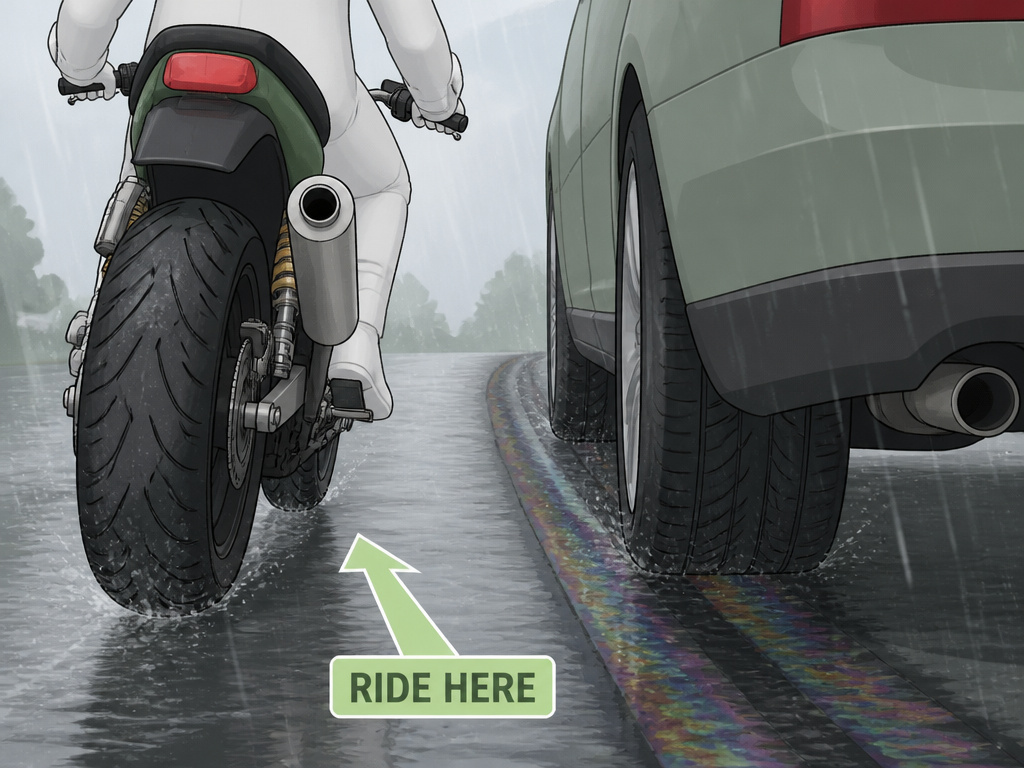
Riding in the rain requires smoother, more deliberate riding. Every input, throttle, brake, lean, needs to be deliberate and gradual.
Increase your following distance significantly. Stopping distances double on wet pavement. This isn’t a guess; it’s fluid dynamics. Your tires have less grip to convert kinetic energy into heat. You need more time and space to shed speed.
Look farther ahead. Your usual scanning distance needs to extend because hazards appear slower in the reduced visibility. Spot puddles, oil slicks (they’ll have a rainbow sheen), and manhole covers early so you can adjust your line smoothly. A sudden swerve can cause a low-side.
Brake earlier, and use both brakes together. Rely more on the front brake than you might in the dry, as it provides the majority of your stopping power. Squeeze, don’t grab. If your bike has ABS, trust it. Don’t pump the brakes, let the system do its job.
Common mistake: Riding in the tire tracks of cars. Those tracks are where oil and coolant drip accumulates, washed into a slippery slurry by the rain. Ride slightly offset in the lane where the water is cleaner.
Your body position shifts, too. Sit more upright to keep weight centered over the tires. In a corner, keep your upper body relaxed and let the bike lean underneath you. Stiff arms transfer every bump and slide directly to the handlebars, making the bike twitchy.
Visibility and Fogging
You can be perfectly dry and still crash because you couldn’t see. A fogged visor is a blackout curtain at 50 mph.
First, crack your visor open one or two detents. This creates enough airflow to equalize temperature and humidity between the inside and outside. This allows the fog to dissipate. Yes, a little rain might get in, but it’s better than zero visibility.
Second, treat your visor with an anti-fog product before you ride. Apply it to a clean, dry visor and buff it off completely. Don’t use a “water-dispersing product” on your windscreen, though, the Honda manual advises against it. For the helmet visor, a dedicated anti-fog spray or insert is safe.
If you wear glasses, they’ll fog too. Consider a pinlock insert for your helmet if it’s compatible. It’s a double-pane system that physically isolates a layer of air, preventing fog. It’s the single most effective fix for visor fogging.
Keep your visor clean. Road film, a mix of water, oil, and dirt, builds up quickly in rain. Use the glove squeegee on your left thumb (most riding gloves have one) to clear a spot every few minutes. If you don’t have a squeegee, a quick turn of the head to catch the windblast can clear it.
What to Do After the Rain Stops
The ride isn’t over when you park. Wet gear left packed will mildew, and a wet bike will corrode.
Hang your gear to dry immediately. Turn your rain jacket inside out. Open all vents and pockets. Don’t put it near a direct heat source like a radiator, which can damage the membrane. A room with good airflow is best. Your gloves are the slowest to dry, stuff them with newspaper to wick moisture from the inside.
For your bike, give it a quick rinse if you’ve been riding on roads treated with salt or brine. The Honda scooter manual notes that “seawater and salts used to prevent ice on roads promote the formation of corrosion.” Even regular rain leaves road grime. Dry the brakes by applying them lightly while riding slowly in a safe area, as some manuals suggest.
Check your chain or belt drive if you have one. The Indian Motorcycle manual cautions that drive belt tension “cannot be accurately measured if the belt or drive system is wet.” Let it dry fully before any adjustment.
Finally, unpack any bags or luggage you had on the bike. Water has a way of seeping into the smallest openings. Dry the contents and the bag itself to prevent mold.
Motorcycle Features for Wet Weather
Your motorcycle’s factory manual contains the best product advice for how to stay dry riding a motorcycle in the rain. For example, some touring bikes allow you to adjust the windscreen height below eye level for clearer vision. Other models offer dedicated ride modes, like a ‘RAIN’ setting, which alters the throttle response for smoother control on slick roads. The manual will warn against certain actions, such as using cruise control or applying water-dispersing products to the windscreen, which can create glare. These manufacturer-specific features are engineered for your bike’s application, making them more valuable than generic aftermarket gadgets. Always consult your owner’s manual first for tailored wet-weather guidance.
Frequently Asked Questions
How do bikers stay dry in the rain?
Bikers stay dry by wearing a full rain suit that seals at the neck, wrists, and ankles, and by adjusting their riding technique for smooth inputs and increased following distance. Gear alone isn’t enough; sealing the interface points is what prevents leaks.
What is the 12 second rule on a motorcycle?
An advanced visibility technique involves scanning the road far ahead of your current position. In the rain, this gives you more time to identify hazards like puddles, slick spots, or debris through the reduced visibility and spray.
How long after rain is it safe to ride a motorcycle?
It’s safest to wait a period of time after a heavy rain stops. This allows the first wave of oils and contaminants to be washed off the road surface. However, painted lines, metal surfaces, and bridge decks can remain slick for much longer, so caution is always needed.
Is it worth riding a motorcycle in the rain?
That depends on your gear, skill, and necessity. With proper waterproof gear and adjusted technique, riding in light to moderate rain is manageable and safe. For learning, heavy downpours, or freezing rain, the risk often outweighs the reward. The right wet weather riding skills make it a calculated choice, not a reckless one.
The Bottom Line
Staying dry is a checklist: a sealed hood, closed wrists, covered ankles, a lowered windscreen, and smooth hands on the controls. The gear keeps the water off your skin, and the riding adjustments keep the rubber on the road.
One threshold changes everything: if you feel water running down your back or your visor is a white wall of fog, you’ve already missed a step. Fix it at the next safe stop. The difference between a miserable ride and an manageable one is usually one unfastened strap.
So check your gear before the clouds open. And when you get home, hang it all up to dry. A dry rider tomorrow starts with a little work today.
