
What Is Scaphoid Protection in Motorcycle Gloves?
This post contains affiliate links. As an Amazon Associate, we earn from qualifying purchases.
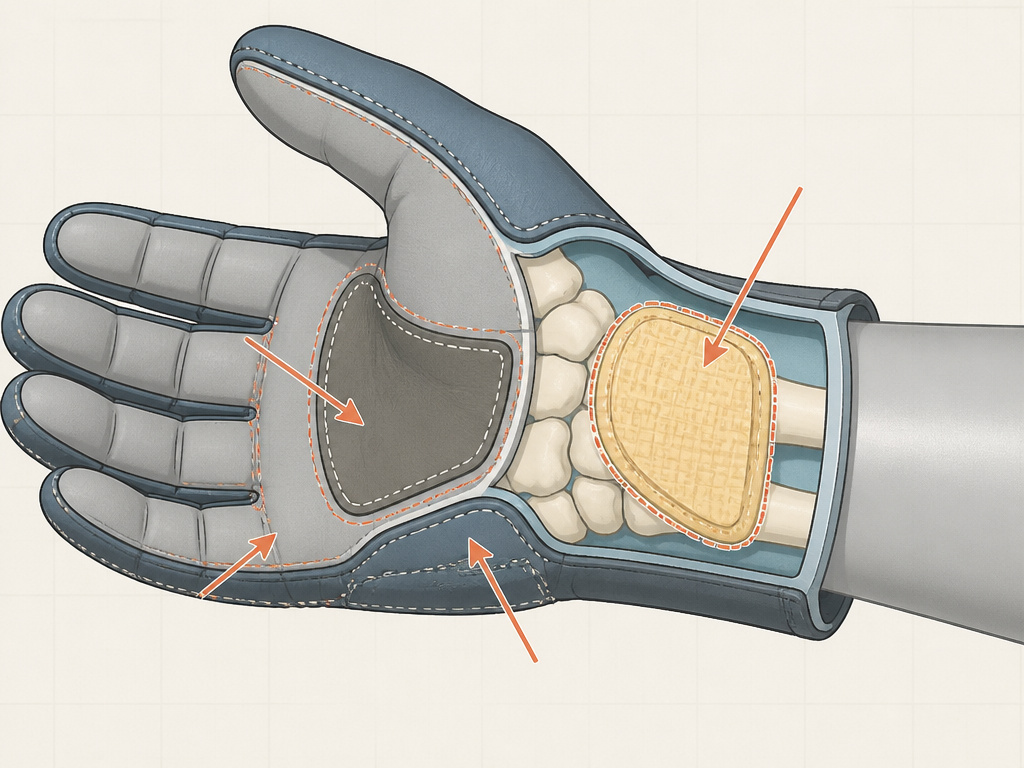
The Knox Scaphoid Protection System (SPS) is a patented palm-slider system designed to prevent a hyperextension injury to the scaphoid bone in your wrist during a crash. The Knox Scaphoid Protection System (SPS) uses low-profile plastic sliders on the palm to eliminate the ‘grab effect’ of leather on pavement, letting your hand slide instead of catching and twisting. This specific, patented design is different from generic palm sliders and is covered under European Patent No. EP1594378.
That patent number isn’t just marketing. It’s the difference between a feature that might help and one that’s been engineered to address a specific, documented failure mode in a slide. The goal is to stop your wrist from bending back violently when your palm hits the road, a motion that snaps the scaphoid bone more often than any other impact in a motorcycle fall. This is what is scaphoid protection in motorcycle gloves.
What follows: a breakdown of how that patented system works, why the scaphoid is such a problem, how to spot the real technology versus a lookalike, and what the glove manuals actually say about their limits and lifespan.
Key Takeaways
- Scaphoid protection targets a hyperextension break, not abrasion. It’s a wrist-saver, not a palm-wear item.
- The genuine Knox SPS system is covered by Patent EP1594378; generic “palm sliders” may not have the same low-profile, double-layer engineering.
- Gloves with this feature are still CE certified to EN 13594:2015, the baseline standard for protective motorcycle gloves.
- Manufacturers disagree on replacement rules: some say replace every three years, others say inspect before each ride and replace only after damage.
- If the glove is loose, the sliders can shift and the wrist closure won’t hold in a crash.
How Does Scaphoid Protection Actually Work?
The patented Knox Scaphoid Protection System (SPS) is a low-profile plastic slider integrated into the palm. Its sole job is to eliminate the “grab effect” that occurs when a leather palm contacts the road, reducing the risk of hyperextension which can cause a broken scaphoid. This is not an abrasion pad; it’s a mechanical pivot point.
Forget armor for a second. Think about physics. When you fall, your instinct is to put a hand down. If you’re wearing a standard leather glove, the rough palm can catch the asphalt like a hook. Your body’s momentum wants to keep moving forward, but your caught hand wants to stay put. The result is your wrist gets forced into a violent, backward bend, hyperextension.
The scaphoid bone is a small, peanut-shaped bone in your wrist that takes the brunt of that force. It’s the keystone of your wrist’s mechanics, and it has a terrible blood supply. A break there heals slowly, often requires surgery, and can lead to long-term arthritis even if it mends.
The SPS system places a smooth, low-friction plastic slider right where your palm makes first contact. That slider becomes the point of contact, not the leather. It’s designed to slide, not grab. This allows your hand to slide along the pavement, which spreads out the impact force and helps keep your wrist in a safer, more natural position. The goal isn’t to make you slide farther; it’s to stop your wrist from snapping.
You’ll find these sliders on gloves like the Knox Hadleigh. They’re not bulky. In fact, a poor design would be a thick pad that changes your grip on the handlebar. The patent describes a double-layer plastic construction where the first layer is injected directly onto a flat part made of leather or similar material, keeping the profile thin. That matters for feel.
The Scaphoid Bone: Why It’s a Rider’s Weak Point
Ever wondered why glove companies target this one specific bone? It’s not random. In off-road and street crashes where riders put a hand down, the scaphoid fracture is disproportionately common.
Its location is the problem. It sits right at the pivot point where your hand meets your arm. During hyperextension, it gets pinched between other bones. Combine that with its notoriously poor blood supply, and you have a recipe for a complicated, slow-healing injury that can sideline you for months.
This is why brands like Knox invested in a patented solution. It’s also why you see the feature on higher-end protective motorcycle gloves aimed at serious riders. It addresses the what is scaphoid protection in motorcycle gloves question with a specific mechanical fix.
Spotting Real SPS vs. Generic Palm Sliders
Not all palm sliders are scaphoid protection. This is the part that separates a marketing term from engineered safety.
A generic rubber or plastic patch on the palm might help with abrasion or add grip. It might even slide a bit. But it likely hasn’t been designed with the specific geometry, low-profile placement, and material science to reliably prevent the grab-and-twist mechanism.
The Knox SPS is the benchmark. If a glove claims “scaphoid protection,” look for a reference to Knox or the specific patent number EP1594378. Some brands may license the technology; others may have developed their own similar systems. The key question is: does the product literature explain how it prevents hyperextension, or does it just say “palm sliders”?
When you’re comparing a what is scaphoid protection in motorcycle gloves feature, dig into the description. Genuine engineering here is about crash biomechanics, not just adding a plastic bit.
| Feature | Generic Palm Slider | Knox SPS (Patented) |
|---|---|---|
| Primary Purpose | Often abrasion resistance or added grip | Prevent scaphoid fracture via hyperextension |
| Design Focus | Material durability | Crash kinematics (eliminating grab effect) |
| Integration | May be stitched or glued on top | Injected/directly laminated for low profile |
| Verification | Marketing claim | Covered by European Patent EP1594378 |
| Feel on Grip | Can be bulky if not designed thin | Designed specifically to maintain bar feel |
How Scaphoid Protection Fits Into Glove Safety Standards
Where this goes sideways: Assuming scaphoid protection replaces the need for a full safety certification. It doesn’t. It’s a specialized feature on top of a glove that must still pass the baseline impact, abrasion, and seam-strength tests.
Scaphoid protection is an added feature. The foundation is the EN 13594 standard. This is the CE certification you see on gloves like the Knox Hadleigh, which is approved to EN13594:2015.
EN 13594 is the harmonized European standard that sets the minimum requirements for impact protection, abrasion resistance, seam strength, and cut resistance for motorcycle gloves. A glove can have the fanciest scaphoid sliders in the world, but if it fails the basic abrasion test on the palm or the seams burst, it won’t get certified.
Think of it like this: EN 13594 ensures the glove survives the slide. Scaphoid protection tries to ensure your wrist survives the initial impact that starts the slide. One is about material integrity, the other is about injury mechanics. You need both.
This is also where the legal limits come in. Manuals for off-road gloves from SCOTT and Leatt are brutally clear: these are for “limited mechanical protection” against “minor hazards” like dirt and debris in a fall. They explicitly state they are not designed to protect against “hard collisions, crashes, or traumas.” That’s a crucial disclaimer. Even the best sport gloves or racing gloves have limits.
Fit, Feel, and the Reality of Riding With Sliders
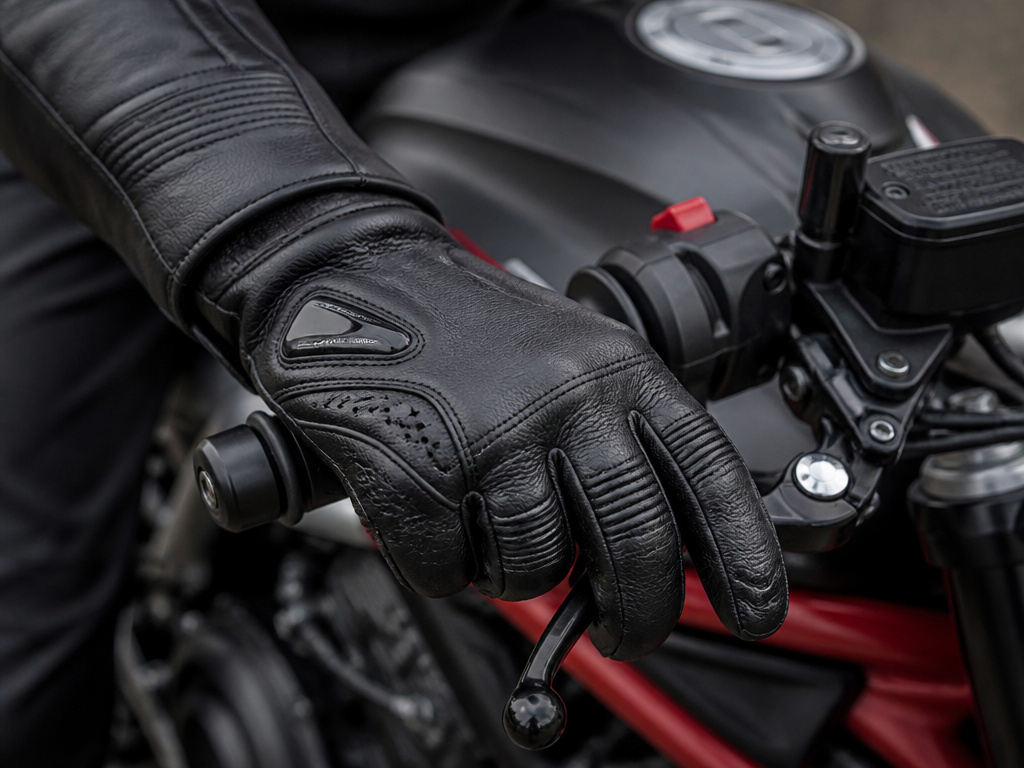
The sliders are useless if the glove doesn’t fit. If the glove is too big, your hand can shift inside on impact. The slider might not be where it needs to be, and the wrist closure, often a “Lift & Lock” strap or accordion cuff, won’t cinch down tightly to stabilize your joint.
Fit first, features second. A stiff glove that fights your grip is dangerous, slider or not. The best scaphoid protection is on a glove you forget you’re wearing because it moves with your hand.
I’ve sent gloves back because the seam sat right on the outer edge of my pinky finger. By the second hour of riding, that spot is raw. You can’t check that from a product photo. You have to try them on, make a fist, and grip something that mimics your handlebar.
The patent document hints at why feel is preserved: the protective plastic is injected in layers directly onto the leather base, keeping the assembly thin. That’s different from gluing a thick puck on top. It’s a small detail that makes a big difference when you’re trying to modulate brake pressure or work the clutch.
Manufacturer Warnings and Lifespan Disagreement
Here’s something most gear reviews skip: the manufacturers don’t agree on when to replace your gear. This isn’t about wear and tear; it’s about the degradation of protective materials over time.
- SCOTT’s manual says: “Replacing your product three (3) years after the purchasing date regardless of condition for optimum safety.” * Leatt’s manual says: “Replace every three (3) years under normal use conditions,” but also advises replacement after a heavy impact, visible damage, or if the gloves fail a pre-ride inspection, not solely a calendar interval. That’s a significant difference in philosophy. The Leatt approach is more practical, a glove stored properly for two years isn’t necessarily compromised, but one that’s been through a crash absolutely is, even if it’s only a month old.
Both, however, issue stern, specific warnings:
- Do not store in airtight containers (plastic bags, boxes). This traps moisture and degrades materials.
- Do not store under heavy objects, which compresses and ruins impact foam.
- Do not modify, paint, or drill holes in the protectors.
These aren’t suggestions. They’re conditions that void the protective rating. It means tossing your gloves in a sealed plastic tub at the end of the season is actively making them less safe.
Frequently Asked Questions
What are the most protective motorcycle gloves?
The most protective gloves combine a high CE certification (like EN 13594 Level 2), durable palm and knuckle armor, a secure wrist closure, and a proper fit. Features like scaphoid protection (Knox SPS) add specific injury prevention. Look for full-gauntlet designs from reputable brands for the highest level of coverage.
Why do motorcycle gloves have knuckle protection?
Knuckle protection guards the metacarpal bones on the back of your hand from direct impact with the ground or other objects. It’s primarily for impact absorption, not abrasion. According to SCOTT’s manual, if present, it should “cover the area of all four knuckles” to offer “limited impact and abrasion protection.”
What motorcycle gloves protect the wrist?
Wrist protection typically comes from a sturdy, adjustable closure (like a strap or zipper) that prevents the glove from being pulled off in a crash. Scaphoid protection specifically protects the bone in the wrist from hyperextension. Some gloves may have extended cuffs or incorporate flexible armor on the wrist bone itself, but the closure is the primary defense against dislocation.
Why are the pinky and ring finger connected on motorcycle gloves?
This design, often called a “finger bridge,” is common on race gloves. It reduces the chance of those two fingers splaying apart and getting caught or hyperextended in a crash. It can slightly reduce independent finger movement but increases structural integrity in a high-impact scenario.
The Bottom Line
Scaphoid protection is one of the few genuinely innovative safety features in motorcycle gloves in the last decade. It solves a specific, high-probability injury with a clever mechanical fix.
But it’s not a magic shield. It works only if the glove fits perfectly, if the sliders are the real engineered technology and not just decoration, and if the glove as a whole meets a rigorous standard like EN 13594. It also doesn’t change the fact that all gloves are rated for “limited protection”, a reminder that avoiding the crash is always the best strategy.
When you look at a pair, check for the patent reference or a detailed explanation of the slider’s purpose. Then check the CE tag for EN 13594. Then try them on and make a fist. If you can’t feel the grips naturally, keep looking. The best technology is the one you’ll actually wear, and that stays put when it matters.
