
How Do Motorcycle Riding Jeans Protect You?
This post contains affiliate links. As an Amazon Associate, we earn from qualifying purchases.
Motorcycle riding jeans protect you through a layered system: an abrasion-resistant outer shell (often blended with fibers like Kevlar or Dyneema), CE-certified impact armor at the knees and hips, and reinforced stitching in high-risk zones. This combination is tested and certified under standards like EN 17092, which assigns a protection class (AAA, AA, or A) to the finished garment. Regular denim shreds in under a second in a slide; a certified riding jean is engineered to resist tearing long enough to let you stop.
That certification is the difference between a marketing claim and a verified level of safety. It’s not about a single “magic” fabric. The protection comes from how the shell, the optional liner, and the removable armor work together as a tested system under a specific European legal framework. This is how do motorcycle riding jeans protect you.
What follows: a breakdown of the three physical layers that stop road rash and absorb impacts, the meaning behind the AAA/AA/A labels you see on tags, and the specific, sourced numbers that answer how do motorcycle riding jeans protect you.
Key Takeaways
- The outer shell’s job is abrasion resistance; materials like Dyneema blend with cotton to resist tearing far longer than regular denim.
- CE-certified impact armor (Level 1 or 2) in the knees and hips absorbs and spreads crash forces to protect bones and joints.
- A garment’s EN 17092 class (AAA, AA, or A) certifies the entire finished jean, not just its fabrics or armor. Class AAA offers the highest coverage, including the seat area.
- Fit is essential. Armor that shifts away from your knee or hip in a riding position offers zero protection at the moment of impact.
- Wash them inside-out at 30°C after removing all armor. Heat and agitation can degrade the protective fibers and compromise armor adhesives.
The Three Layers of Protection
Look at the business end of any gear review, and you’ll hear about shells, liners, and armor. For riding jeans, those three layers have very specific jobs. They don’t all appear in every pair, but understanding what each one does tells you what you’re buying.
The outer shell is what you see. It’s usually a cotton denim, but for protection, it’s blended with a high-performance fiber. Kevlar (an aramid) and Dyneema (a UHMWPE fiber) are the common names. Their job isn’t to make the jeans bulletproof. It’s to resist tearing.
Standard EN 1621-1 impact protector testing is conducted at 23°C. Armor certified to “T-” maintains its protective performance down to -10°C, an edge case the baseline standard doesn’t cover.
In a slide, regular cotton denim can shred in under a second. A blended shell with these fibers is designed to hold together for several seconds, long enough to scrub off speed and hopefully stop before the road reaches skin. The Spidi J&Dyneema® Evo jeans use a single-layer fabric composed of 60% Dyneema®, 38% Cotton, 2% Elastan.
The second layer is often a liner. This isn’t for warmth. In many jeans, a Kevlar or aramid lining is sewn behind the denim in high-impact zones like the hips and seat. For example, the ‘Mir-Plain-1223’ jeans use a Kevlar® 60/40, 250 g/m² lining on impact areas. This liner acts as a second barrier if the outer shell is compromised. Some jeans, like the Spidi J&K Straight Evo, use internal panels (Keramide, an aramid-based fiber) covering 30% of the inner surface instead of a full liner.
The third layer is the armor. This is the CE-certified impact protection. These hard or soft pads slot into pockets at the knees and, crucially, the hips. Their certification is separate from the jean’s.
| Armor Level | Maximum Force Transmission | Protection Level |
|---|---|---|
| Level 1 | < 35 kN | Basic impact protection |
| Level 2 | < 20 kN | Higher impact protection |
The Dainese Denim Stone jeans come with Pro-Shape 2.0 protectors certified to EN 1621.1 on the knees and have hip pockets predisposed for soft Pro-Shape 2.0 protectors. This adjustability is important because it allows you to place the hard cap right over your knee joint while seated on your bike. Armor in the wrong spot is just dead weight.
The Certification Decoder: AAA, AA, A
When you see a tag with “CE” and “AAA,” that’s not a brand patting itself on the back. It’s the output of a specific, legally defined testing regime under Regulation (EU) 2016/425 for Personal Protective Equipment. The standard is EN 17092.
This certification is awarded to the finished garment model after testing. It examines abrasion resistance, seam strength, tear resistance, ergonomics, and, critically, where the protective materials and armor cover the body. The class tells you the minimum level of protection the entire jean provides.
| EN 17092 Class | Protection Level | Key Coverage Difference |
|---|---|---|
| AAA | Highest | Requires the seat (bum) area to be treated as Zone 1 (highest protection). |
| AA | Middle | Seat area can be of a lower protection level. |
| A | Lowest | Seat area can be of a lower protection level; expected to have least ergonomic/weight penalty. |
The class definition from the KTM Orbit Jeans Women certificate states: Class A garments offer a minimum necessary degree of protection from impact and abrasion and are expected to have the least ergonomic and weight penalties.
Where this goes sideways: Buying a Class A jean because it’s cheaper and lighter, then assuming you’re getting seat protection. Under the standard, the seat area in AA and A jeans can be lower protection. If you slide on your tailbone, that’s the difference between a worn patch and road rash.
This zoning is why you can’t assume a “Kevlar-lined” jean is fully protective. The lining might only be in the knees, leaving the hips and seat as regular denim. The certification class, when legit, maps the coverage for you.
How Much Protection Do They Really Offer? (The Leather Comparison)
This is the question every rider asks when you compare a how do motorcycle riding jeans protect you: are these jeans as good as leather? The honest, sourced answer is: it depends on the jean, and they are measured differently.
Leather has been the benchmark for decades. Its abrasion resistance is measured by thickness and hide quality. Modern textiles are tested on machines like the Darmstadt impact-abrasion tester, which slides fabric specimens on concrete at a set speed.
Independent lab testing provides hard numbers. The Rokker Rokkertech Straight AAA jeans achieved 48% of the abrasion resistance of a single layer of 1.7mm-thick leather in independent lab testing.
Another test from the same source found a different AAA-rated model achieved only 25% of leather’s resistance. This gap shows that AAA certification does not automatically mean they’re as protective as leather. The class means it passed the standard’s test thresholds, not that it equals leather.
Common mistake: Equating a higher price tag with leather-like protection. The certification class is a safer guide than price. A true AAA jean from a reputable brand like Spidi or Roadskin has been tested to a known threshold; an expensive fashion-brand “riding jean” with no class rating is an unknown.
The takeaway isn’t that riding jeans are weak. It’s that they offer a different type of protection, often with a huge advantage in comfort, style, and everyday wearability. For many riders, that trade-off is worth it. But you should go in with your eyes open. If you want the maximum possible abrasion resistance, traditional leather or heavy textile pants still hold the crown.
The Non-Negotiables: Fit and Care
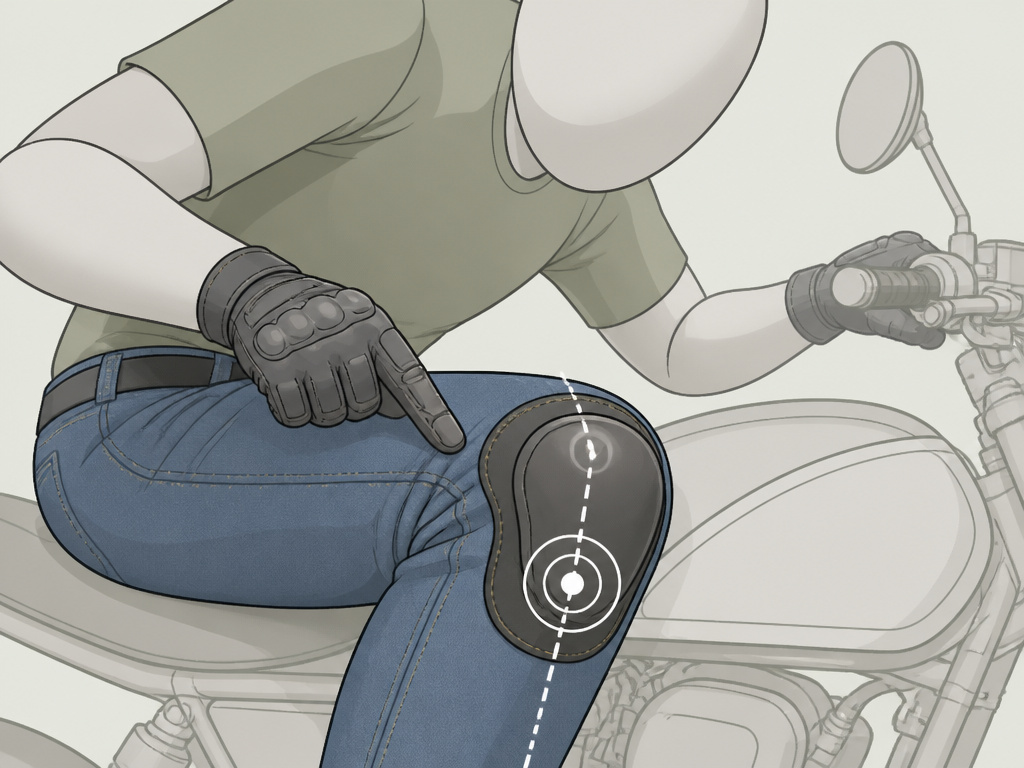
The best armor in the world is useless if it’s not over your joint when you hit the ground. Your instinct in a crash is to tuck and roll, your knees and hips will take the hit. If the armor has slid down to your shin during the ride, it’s not protecting your knee.
This is why every decent guide stresses fit. It’s not about vanity.
- Try them on in your riding position. Squat down, or sit on your bike if possible. Feel where the knee armor sits. It should center directly on your kneecap.
- Check the hip armor. Less common, but vital. If the jeans have hip protector pockets, ensure they cover the bony prominence of your hip when seated.
- Mind the length and rise. The jeans should be long enough that the cuff doesn’t ride up your calf on the peg, exposing skin. The back rise should be high enough that the waistband doesn’t dig in or expose your lower back when you lean forward.
Once you’ve bought them, you have to maintain them. The care instructions are part of the safety system.
Wash inside-out at 30°C. Higher heat can break down the synthetic protective fibers. Always remove the armor first, the agitation can damage the pocket closures or the armor’s own surface.
The Roadskin Spencer jeans should be washed inside-out gently at 30°C after removing armour. It sounds fussy, but it’s cheap insurance. Degrading the fibers or melting the adhesive on your armor pads is a silent failure. You won’t know it’s happened until you need it.
Frequently Asked Questions
How protective are jeans on a motorcycle?
Certified motorcycle riding jeans (with an EN 17092 AAA, AA, or A class) are significantly more protective than regular denim. They are engineered to resist abrasion for several seconds in a slide and include impact armor for joints. Regular jeans provide virtually no abrasion resistance and zero impact protection.
What is the best type of motorcycle riding jean?
The “best” type depends on your priority. For maximum abrasion resistance in a jean format, look for a AAA-certified jean with a shell blended with high-performance fibers like Dyneema. For more budget-friendly protection or cooler wear, a lined AA or A class jean with Kevlar in impact zones is a step up from regular denim. Always prioritize a certified class over marketing claims.
Can you wear motorcycle riding jeans every day?
Yes, that’s one of their main advantages. Brands design them to look and feel like regular jeans for office or casual wear. The protective liners and fibers are integrated internally. Just remember to remove the hard armor pads if you’ll be walking or sitting for long periods, as they can be uncomfortable off the bike.
How long do motorcycle riding jeans last?
With proper care, the protective materials should last for years of normal use. The abrasion-resistant fibers don’t degrade with simple wear. The main wear points are the usual areas: seams, belt loops, and the inner thigh from bike friction. Follow the wash instructions (cold, inside-out, no softener) to maximize the lifespan of the technical fabrics.
Do I still need armor if the jeans are AAA-rated?
Yes. The AAA rating applies to the garment system, which includes the required armor coverage. Those jeans will come with CE-certified armor for the knees and usually the hips. The rating assumes that armor is in place and correctly positioned. Riding without the included armor voids the protective premise of the garment.
Before You Go
Protection here is a system, not a single feature. The shell resists tearing, the armor absorbs impacts, and the certification proves it was all tested together.
One rule that reframes the search: if a jean doesn’t have a visible EN 17092 class label (AAA, AA, or A) sewn into it, it hasn’t been certified as protective equipment under the EU’s strict PPE regulation. You’re buying an assumption, not a standard.
That changes the value of every sale listing and review score you see. A certified Class A jean from a known brand gives you a known, if minimal, floor of protection. A non-certified “armored” jean at the same price gives you a question mark. For something you wear hoping you never use it, the known floor is the only answer that matters.
