
Motocross Roost Guard vs Body Armor: Which Should You Buy?
This post contains affiliate links. As an Amazon Associate, we earn from qualifying purchases.
The difference between a motocross roost guard and body armor is the certification standard printed on the tag. A roost guard (EN 14021) deflects rocks and debris. A certified chest protector or body armor (EN 1621-3) is engineered to absorb and disperse the impact force from a crash. Sources disagree on what is adequate: PiloteMX states a roost guard is enough for relaxed trail riding, but a certified chest protector is needed for rough ground or racing, while GearJunkie states CE Level 1 protection is generally adequate for motocross/enduro.
That EN number isn’t marketing. It’s a laboratory-tested performance threshold that tells you exactly what the gear is designed to survive. Choosing the wrong one means betting your ribs against a handlebar or the ground with a shield that was only built for flying dirt, which is a key difference in the motocross roost guard vs body armor discussion.
What follows is a breakdown of those standards, the real-world trade-offs in ventilation and fit, and a direct comparison of today’s top models. By the end, you’ll know which certification matches your riding and how to spot the difference on a product page.
Key Takeaways
- The EN 14021 standard certifies a product as a roost guard, designed to shield against kicked-up debris.
- The EN 1621-3 standard certifies a chest protector, engineered to absorb direct crash impacts to the sternum and ribs.
- For relaxed trail riding or flowing tracks, a basic roost guard like the Alpinestars A-1 is typically sufficient.
- PiloteMX recommends a product certified to EN 1621-3 for rough ground, jumps, woods, or racing, such as the Fly Racing Blueprint RCH-0 or Alpinestars A-4.
- GearJunkie states that CE Level 1 protection is generally adequate for motocross/enduro.
The EN Standard is the Decider
You can’t tell just by looking at it. A product called a “Roost Guard” might have EN 1621-3 certification, and a “Chest Protector” might only meet the roost standard. The label the manufacturer slaps on the box is less important than the four-digit code on the compliance tag.
A roost guard (EN 14021) is a shield against roost, the rocks, dirt clods, and debris kicked up by tires. A certified chest protector (EN 1621-3) is built to absorb and disperse impact force from crashes.
This isn’t a minor distinction. EN 14021 tests for “stone shield” penetration resistance, can a sharp object poke through? EN 1621-3 tests for force transmission, when you hit the ground, how much energy punches through the protector and into your body? One is for deflection, the other is for absorption.
| Standard | Common Name | Primary Purpose | Test Method | Typical Use Case |
|---|---|---|---|---|
| EN 14021:2003 | Roost Guard / Stone Shield | Deflects kicked-up debris | Penetration resistance | Relaxed trail riding, casual track days |
| EN 1621-3:2018 | Chest Protector | Absorbs direct crash impact | Force transmission (Level 1 or 2) | Motocross, enduro, rough terrain, jumping |
| EN 1621-2:2014 | Back Protector | Absorbs direct spine impact | Force transmission (Level 1 or 2) | Paired with either a roost guard or chest protector |
The real confusion starts when brands mix these certifications in a single product. The Dainese MX2 Roost Guard, for example, carries the EN1621-3 Level 2 certification for chest protection, it’s a chest protector in everything but name. Meanwhile, the Alpinestars A-1 has a front plate certified to EN 14021 (stone shield) but includes a back protector certified to EN 1621-2 Level 1. You have to read the fine print for every component.
What Are You Actually Protecting Against?
The gear you choose should match the threats you’ll face, which is central to the motocross roost guard vs body armor decision. Getting roosted by the rider in front of you is a constant, annoying hazard. Crashing is a sporadic, high-energy event. Your protection needs to be built for the worst of the two you expect to encounter.
For debris deflection, a hard polycarbonate or polymeric shell is the answer. It needs to be stiff enough to turn a sharp rock and angled to glance blows away from your body. This is what a basic roost guard does well. The threat from roost is forward-facing.
A crash introduces different vectors. It’s the handlebar that jabs into your side when you slide out. It’s the packed dirt you land on after casing a jump. The force isn’t glancing, it’s direct and concentrated. This is where an EN 1621-3 certified protector earns its keep. These use advanced materials like Rheon TPU (in the Fly Racing Blueprint) that are engineered to deform under impact, spreading the force over a larger area and slowing its transfer to your body.
Where this goes sideways: Choosing a basic roost guard for aggressive motocross. A handlebar to the ribs at speed can break bones; a debris shield isn’t designed to stop that kind of concentrated energy.
So, which injuries are we talking about mitigating? The motocross roost guard vs body armor comparison clarifies this: a roost guard is designed to shield against kicked-up debris, while a certified chest protector is built to absorb and disperse impact force from crashes. PiloteMX recommends certified protection for riding that includes jumps.
Roost Guard vs. Chest Protector: A Side-by-Side Breakdown
Here are the specific details. Here’s how the two categories stack up across the dimensions that matter on the bike.
| Feature | Typical Roost Guard (e.g., EVS Revo 5, Alpinestars A-1) | Certified Chest Protector (e.g., Fly Racing RCH-0, Alpinestars A-4) |
|---|---|---|
| Core Certification | EN 14021 (Stone Shield) | EN 1621-3 (Impact Protection) |
| Primary Materials | Hard plastic shell, simple foam padding | Advanced polymers (Rheon™, D3O®, Nucleon), multi-density foam |
| Weight & Bulk | Lighter, lower profile | Heavier, more substantial feel |
| Breathability | Often better due to simpler construction and perforated shells | Can be compromised by denser materials and fuller coverage |
| Best For | Trail riding, casual track days, minimizing roost sting | Motocross, enduro, hard enduro, jumping, racing |
| Price Range | Generally lower | Generally higher |
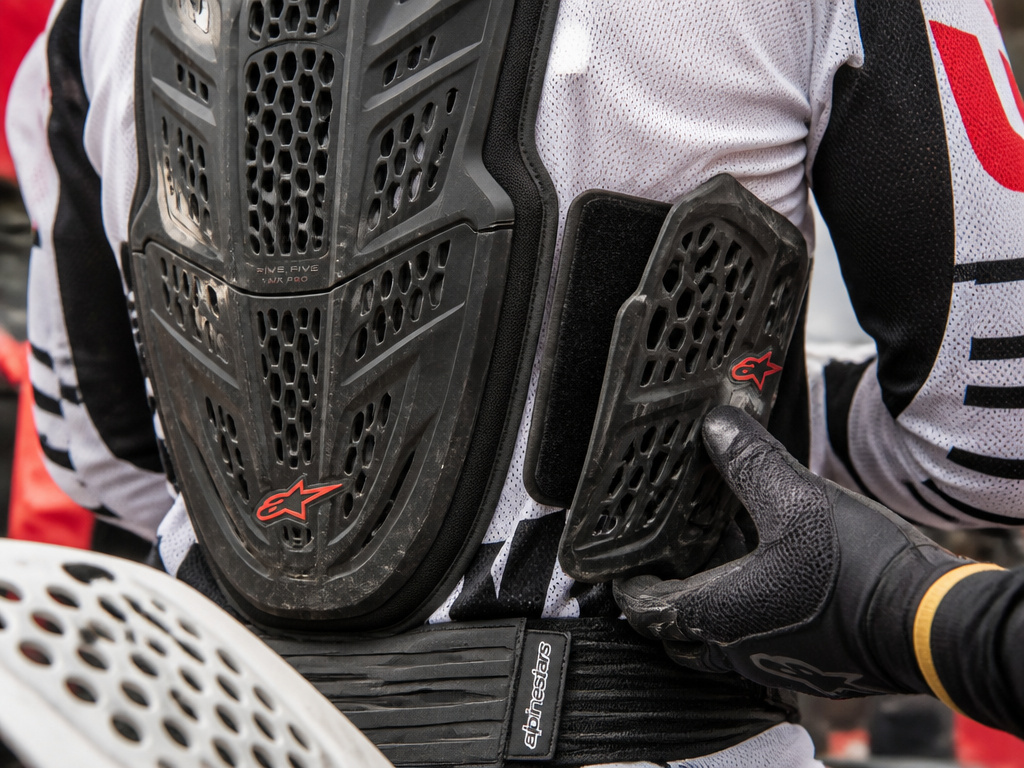
The Alpinestars A-1 features perforated shells for ventilation and removable components for customization, but not all roost guards share these specific features.
On the other side, the Fly Racing Blueprint RCH-0 uses a construction that is 40% Rheon TPU to manage impact forces, but certified chest protectors can use various advanced materials. It’s a motorcycle armor choice for the rider who won’t sacrifice mobility for safety.
The Alpinestars A-4 is a chest protector certified to EN 1621-3:2018 Level 1. It carries the EN 1621-3:2018 Level 1 chest certification, offering more impact absorption than a basic guard but in a slimmer package than a full armor suit. This hybrid approach is seen in models like the Alpinestars A-4.
A Real-World Look at Ventilation and Fit
Certifications are useless if the gear is so hot or ill-fitting that you don’t wear it. This is where manufacturer claims meet rider sweat.
Ventilation is the first point of contention. EVS claims its Revo 5 features CoreCool™ venting for “maximum airflow.” A professional tester compared it directly to an Alpinestars A1 and noted, “The Revo guards do not seem to have much of it [ventilation], when compared to my Alpinestars A1.” The A-1’s perforated shells create a clear physical advantage for air movement. The difference in ventilation may be noticeable during extended riding.
Fit is the other critical factor. A protector that shifts out of position is a protector that isn’t working. Sources disagree on the A-4’s side protector attachment: Alpinestars’ design implies seamless integration, but a tester found the Velcro didn’t stick well and the protectors didn’t stay attached without the side straps. The solution was to hold them in place while buckling the sides, a small, annoying extra step for proper security.
This is why trying on gear in a riding stance is essential. Sit on a bench, mimic your riding posture, and have someone check if the armor plates, front, back, and sides, stay centered over the areas they’re meant to protect.
How to Choose: Your Riding Style is the Guide
Forget the marketing. Your last five rides tell you what you need. Match your gear to the terrain and pace you actually keep.
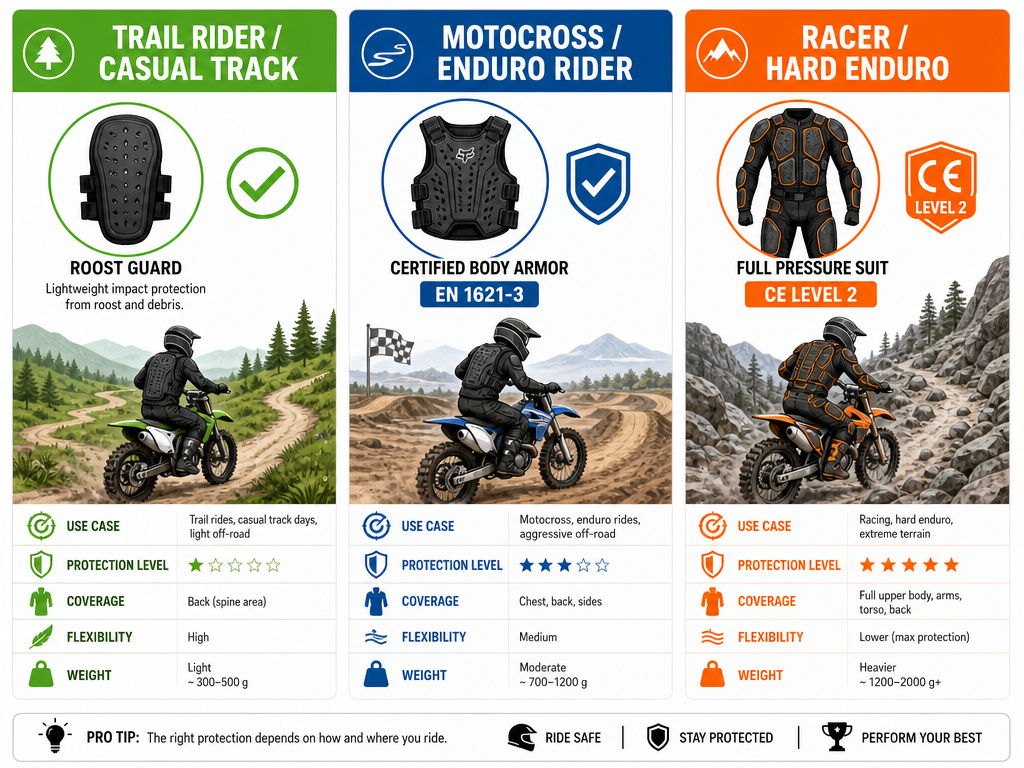
- The Trail Rider / Casual Track User: You spend most of your time on flowing singletrack or open trails, with the occasional sandy whoop section. Your crashes are typically low-speed tumbles. A roost guard like the EVS Revo 5 or Alpinestars A-1 is your match. It keeps the roost off and offers basic impact coverage without overheating you.
- The Motocross / Enduro Rider: Your riding includes jumps, whoops, technical woods sections, and higher speeds. You crash with more energy. You need EN 1621-3 certification. Look at the Fly Racing Blueprint RCH-0 for a balance of certification and flexibility, or the Alpinestars A-4 for a step up in coverage. This is where understanding the chest protector pros and cons, more protection vs. More bulk, becomes personal.
- The Racer / Hard Enduro Specialist: You demand maximum protection and are willing to trade some comfort for it. You should be looking at the highest CE Level 2 certified protectors, full pressure suits that integrate shoulder and elbow armor, or the most robust standalone chest protectors. The Dainese MX2, with its Level 2 chest rating, is built for this tier.
Still unsure? Here’s a blunt rule: if your riding involves consistent airtime, rocky technical terrain, or bar-banging competition, skip the roost guard category entirely. Start your search with EN 1621-3 certified products. The extra margin is worth the investment.
Maintenance and Making Your Gear Last
This gear takes a beating. Proper care isn’t about keeping it pretty; it’s about maintaining the integrity of the materials that protect you.
Most protectors use foams and polymers that break down with exposure to sweat, UV light, and harsh chemicals. The Fly Racing Blueprint RCH-0 care instructions are: Hand Wash Only, No Bleach, Dry Flat, No Iron, Wash Dark Colors Separately, Do Not Dry Clean. Never machine wash or tumble dry a roost guard or chest protector. The agitation can delaminate foams, crack plastic, and destroy Velcro.
After every few rides, wipe down the interior liner with a damp cloth and mild soap. Let it air dry completely away from direct heat or sunlight. Inspect the plastic shells for deep cracks (surface scratches are normal) and check that all stitching on straps and anchors is intact. A broken buckle or torn strap can render the whole unit unsafe.
Finally, store it properly. Don’t leave it crumpled in a gear bag or baking in a hot truck. Hang it up or lay it flat in a cool, dry place. This prevents the foams from taking a permanent, misshapen set and keeps the plastics from becoming brittle.
Pros and cons lists for each type
Roost guards are ultra-lightweight and built for breathability, with perforated shells for ventilation. They protect against rocks and debris kicked up by other riders, which is ideal for relaxed trail riding or casual group rides. The main trade-off is that they are not designed to absorb serious crash impacts. Certified chest protectors, which meet the EN 1621-3 standard, are built to disperse impact force from falls. This makes them essential for rough terrain, jumps, or racing. The con is that this added protection can come with less airflow and a bulkier feel compared to a basic roost shield.
Integration with other gear (neck braces, hydration packs)
Many modern protectors are designed to work with other safety gear. Some feature removable components specifically for compatibility with neck brace systems, allowing the brace to sit correctly without compromising protection. For hydration packs, check how the protector’s straps and back plate are configured. A low-profile back protector or adjustable side straps can often accommodate a pack’s bladder, but you need to try the combination to ensure nothing shifts or creates pressure points. Always secure all straps, as side protectors that attach with hook-and-loop can detach if not properly fastened.
Sizing and fit guides
Getting the right fit is about more than just chest measurement. A roost guard or chest protector should feel snug but not restrictive, allowing full range of motion for riding and operating controls. The shoulder straps should be adjustable to keep the unit from shifting, and the front plate must cover your sternum without riding up. Sizes often come in ranges; for example, the Fly Racing Blueprint RCH-0 comes in Small/Medium and Large/X-Large sizes. The best practice is to measure your chest according to the brand’s specific chart and read reviews about how a model runs. An ill-fitting protector can be uncomfortable and may not stay in the correct position during a fall.
Frequently Asked Questions
Is a roost guard the same as a chest protector?
No. While the terms are often used interchangeably, they refer to different protection standards. A roost guard is primarily for deflecting debris (EN 14021). A chest protector is for absorbing direct impact forces (EN 1621-3). Always check the certification on the product tag.
Do supercross riders wear chest protectors?
Yes, virtually all professional supercross and motocross riders wear some form of certified chest protection. The speeds and heights involved make direct impacts a severe risk. Many opt for integrated pressure suits that include chest, back, shoulder, and elbow armor in one garment.
What is the best body armour for motocross?
There’s no single “best” for everyone, as fit is paramount. For certified standalone protection, the Fly Racing Blueprint RCH-0 and Alpinestars A-4 are top contenders that balance protection and mobility. For maximum, all-in-one coverage, many riders prefer a full dirt bike pressure suit. The best choice is the one with the correct certifications that fits your body perfectly.
Can I wear a roost guard over my jersey?
Yes, most roost guards and chest protectors are designed to be worn either under or over your jersey. Wearing it over the jersey can improve ventilation but may snag more easily on branches. Wearing it under provides a sleeker profile and better keeps the armor in place.
How tight should a chest protector fit?
It should be snug enough that it does not shift noticeably when you move your arms, twist your torso, or assume a riding position. You should not have large gaps between the armor plates and your body. However, it should not be so tight that it restricts your breathing or circulation. The side straps should provide the primary adjustment for a secure fit.
The Bottom Line
Stop looking at the product name and start looking at the EN standard. If the tag says EN 1621-3, you’re holding impact protection. If it says EN 14021, you’re holding a debris shield. Match that capability to the worst impact you’re likely to experience on your rides.
Sources offer different guidance: PiloteMX recommends a certified chest protector for rough terrain, while GearJunkie states CE Level 1 protection is generally adequate for motocross/enduro. The peace of mind from knowing your gear is lab-tested for a crash is worth the extra weight and cost. Start your search with the Fly Racing Blueprint RCH-0 or the Alpinestars A-4, try them on while sitting on a bike, and feel the difference proper coverage makes. Your ribs will thank you.
